 Baldur's Gate 3
Baldur's Gate 3 baldurs gate 3 best warlock build
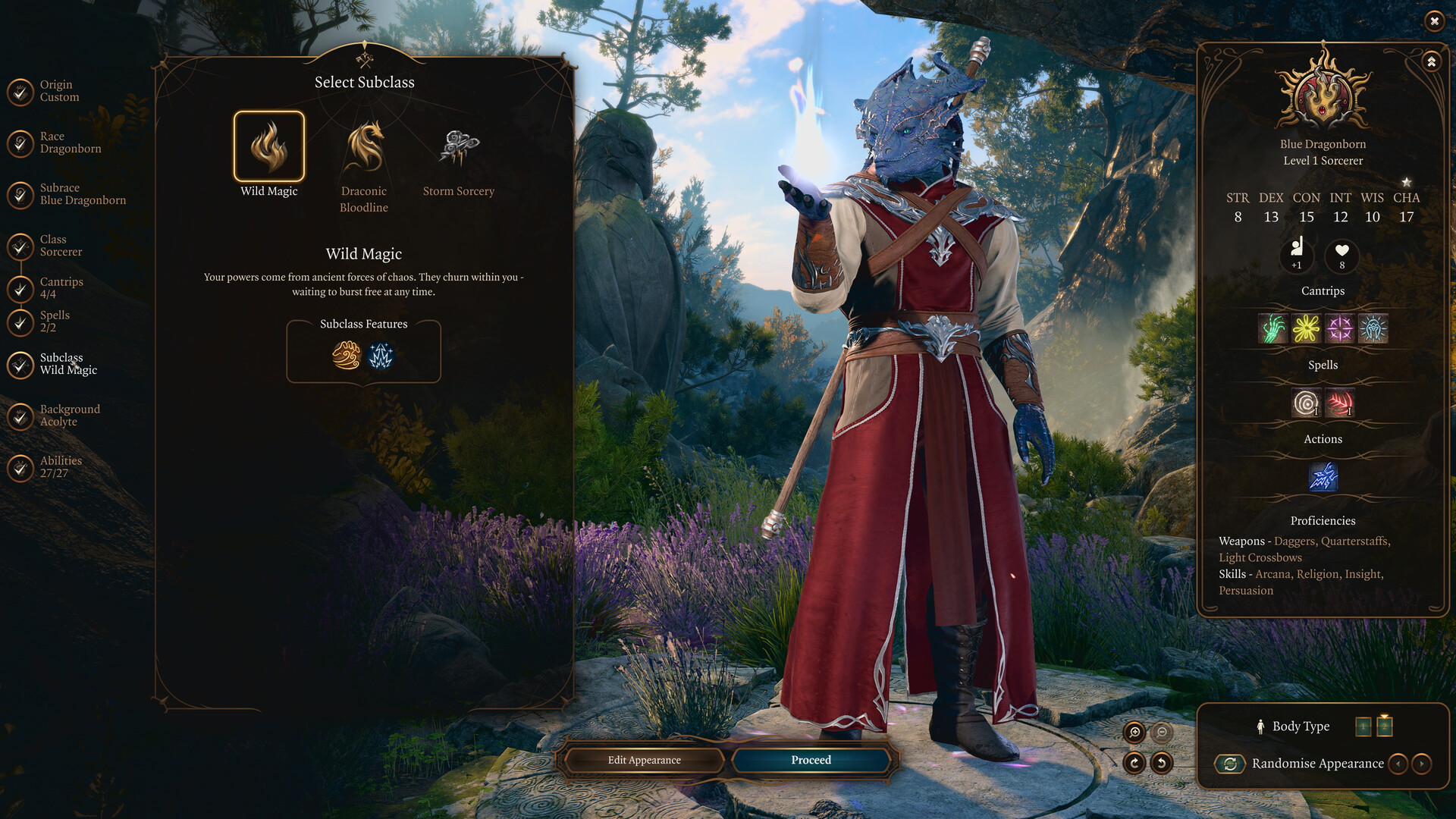
Quick Answer: The best Warlock build in Baldur’s Gate 3 is usually a Charisma-first Eldritch Blast caster with Pact of the Blade or Pact of the Chain support, strong control spells, and gear that boosts spell attack, critical rate, and mobility.
Build Identity
The best Warlock build in Baldur’s Gate 3 is a flexible control-and-burst caster that wins fights by forcing bad positioning, then punishing enemies with Eldritch Blast, control spells, and short-rest spell slots. Warlock is especially strong because its kit is compact, reliable, and easy to scale with Charisma, which makes it a natural fit for players who want a build that contributes every turn without needing a huge inventory of situational buttons.
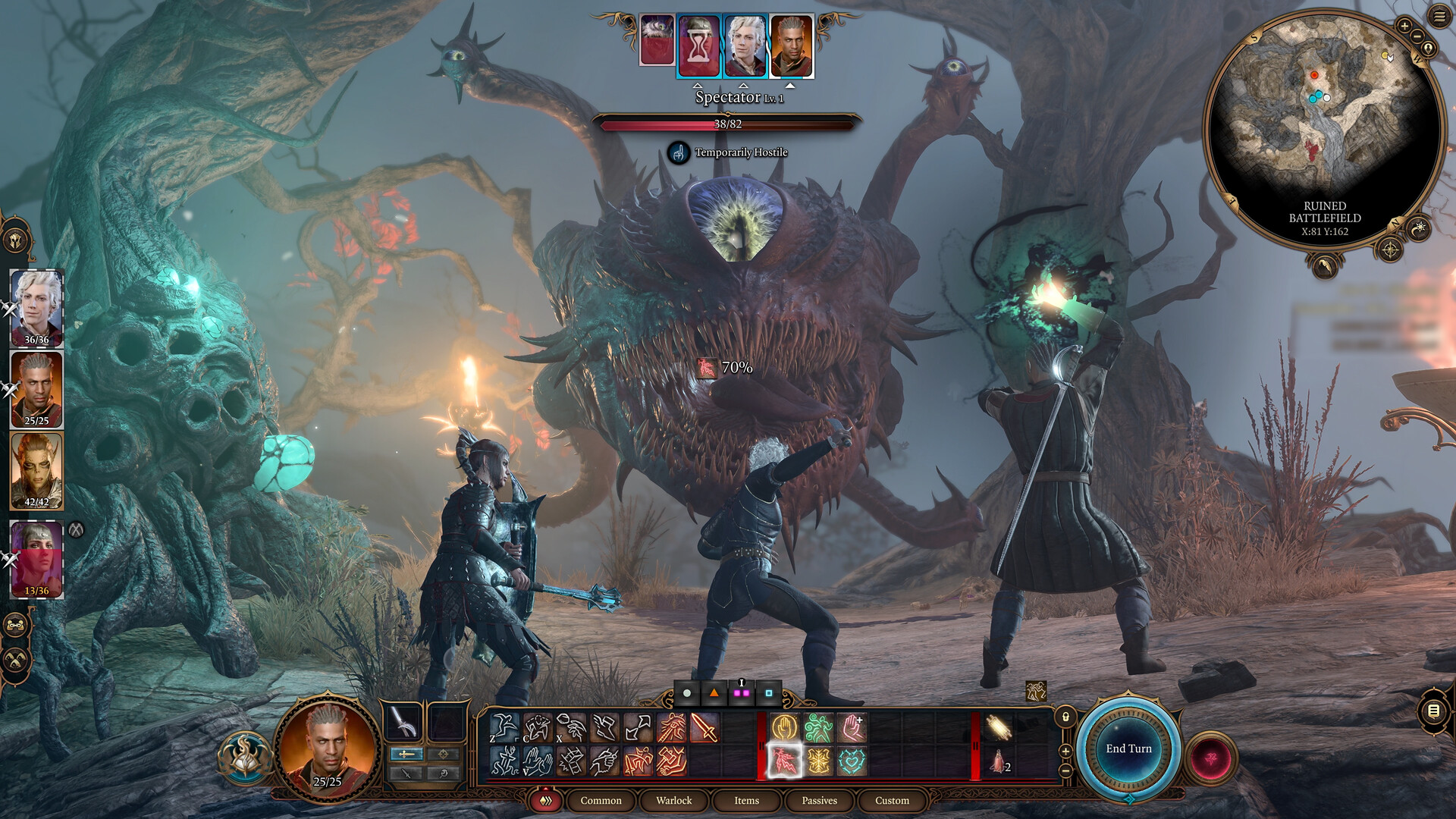
At the table, this build is best understood as a battlefield manipulator first and a damage dealer second. It can stand at medium range, push enemies off ledges, pin down dangerous targets with disabling magic, and still function when spell slots are low because Eldritch Blast never runs out. In a party, the Warlock often covers the role of opener, finisher, or utility face character, depending on dialogue choices and companion composition. That makes it one of the most practical answers to the search for a baldurs gate 3 best warlock build, because it performs well in normal story play, higher difficulty runs, and party setups that do not want to spend every turn micromanaging resources.
The strongest version for most players is a Charisma-focused Warlock that leans on Eldritch Blast, Hex, and a Pact choice that supports the campaign plan. Pact of the Blade is the most self-contained melee-adjacent option, Pact of the Chain offers utility and scouting, and Pact of the Tome adds broad spell access for players who want more out-of-combat depth. Examples of real in-game usage include opening on the goblins at the Goblin Camp from a ledge, controlling a clustered encounter in Moonrise Towers, or using knockback to deny enemy actions during fights in the Creche and later Act 3 choke points.
Baldur’s Gate 3 itself is a story-rich party RPG set in the universe of Dungeons & Dragons, and it remains widely played: Steam currently shows 52,201 players in game and 848,142 total reviews with an Overwhelmingly Positive summary, or 96.8% positive reviews Source. That matters here because the Warlock build’s popularity is not just theorycrafting noise; it is a practical response to a long, choice-heavy campaign where consistency matters more than flashy one-turn setups.
Stat Priorities
The best stat priorities for a Warlock are Charisma first, then Constitution, then Dexterity, with Strength, Intelligence, and Wisdom usually left behind unless your specific gear or role demands otherwise.
Charisma
This is your primary combat and dialogue stat, and it scales the Warlock’s spellcasting, social checks, and overall reliability. A Warlock with high Charisma is better at landingEldritch Blast, controlling enemies with spells likeHold Person, and carrying conversations withRaphael,Auntie Ethel, or theGortashpath without needing a companion to speak for them.Constitution
This keeps you alive when the enemy closes distance or when concentration checks start coming in under pressure. Warlocks are often exposed in open fights such as theShattered Sanctum, rooftop skirmishes in Baldur’s Gate, or chaotic multi-enemy encounters in the Lower City, so better Constitution helps your control spells stay active.Dexterity
This improves initiative and Armor Class, which matters because acting first is often what makes a Warlock feel oppressive. If you get the first turn in fights like theMoonrise Towersassault or a narrow corridor in theGauntlet of Shar, you can remove an enemy before it meaningfully participates.Wisdom, Intelligence, Strength
These are lower priority for the standard build. Wisdom can be helpful for saving throws and perception-based utility, but your build usually gets more from gear, positioning, and party support than from spreading points thin.
A simple stat table helps clarify the order:
| Priority | Stat | Why it matters |
|---|---|---|
| 1 | Charisma | Main spell stat, dialogue power, and core scaling |
| 2 | Constitution | Concentration, survivability, and stability under pressure |
| 3 | Dexterity | Initiative, AC, and first-turn reliability |
| 4 | Wisdom | Helpful for defenses, but not core to the build |
| 5 | Intelligence | Low value for most Warlock setups |
| 6 | Strength | Usually unnecessary unless a very specific hybrid plan is used |
The reason this ordering is so effective is that Warlock rewards doing one thing well rather than spreading points across several roles. A character built around Charisma can make Hex stick, can land offensive spells when Eldritch Blast is not enough, and can also serve as the party face when talking through major quest branches. In practical play, this is one of the main reasons the build remains such a popular recommendation across Act 1 to Act 3.
For itemized planning, the current Steam review snapshot is still 96.8% positive across 848,142 reviews Source, while HowLongToBeat lists roughly 72.71 hours for the main story and 179.74 hours for completion Source. Those figures are not build stats, but they do reinforce why stat priorities should favor a build that stays efficient over a very long run rather than one that spikes only in a few perfect fights.
You might also like
- Baldur's Gate 3 baldurs gate 3 best honour mode builds
- Baldur's Gate 3 Solve the Open Hand Temple Murders: Beginner Guide
- baldurs gate 3 best lae'zel build
- Baldur's Gate 3 baldurs gate 3 best rogue build
- Baldur's Gate 3 baldurs gate 3 best dual wield build
Best Leveling and Ability Priority
The best Warlock ability priority is to secure a reliable damage cantrip core early, then add one concentration tool, one mobility or defense option, and finally fill in your pact-specific plan as your levels rise.
A practical leveling priority for most runs looks like this:
Take
Eldritch Blastas soon as possible
This is your baseline combat button for most of the game. It scales with your level in a way that keeps it relevant, and it stays valuable even when you are conserving spell slots for boss fights likeKetheric Thorm,Orin, orAnsur.Use
Hexto improve single-target pressureHexis one of the cleanest early-game damage boosts because it stacks naturally with repeated attacks fromEldritch Blastor Pact melee turns. It is especially efficient against one high-value target in fights such as theZhentarim Hideoutambushes or duels where you want a target to fall before reinforcements matter.Pick a control spell for fights where damage is not enough
Hold Person,Hunger of Hadar, andDarknessare all useful depending on party plan and enemy type.Hold Personis better when you can isolate a humanoid;Hunger of Hadaris stronger in clustered or narrow terrain;Darknessworks best when your party can exploit vision rules better than the enemy can.Choose your Pact based on how you want to solve encounters
Pact of the Bladesupports direct combat and mixed melee turns.Pact of the Chainadds scouting and a familiar that can help pull attention or trigger reactions.Pact of the Tomebroadens the toolkit when you want more utility and exploration value.Invest in Eldritch Invocation choices that reinforce your main job
The build gets better when every choice points in the same direction. Prioritize invocations that improveEldritch Blast, range pressure, or utility rather than scattering into niche effects you will rarely use.
A simple combat priority list is easier to execute in live fights:
| Situation | Best first action | Why |
|---|---|---|
| Single dangerous target | Hex then Eldritch Blast |
Efficient pressure with low setup |
| Clustered enemies | Hunger of Hadar |
Punishes movement and crowds |
| Humanoid boss or elite | Hold Person if it can land |
Removes turns and opens burst windows |
| Enemy line on a ledge | Eldritch Blast push |
Environmental kills save resources |
| Low-resource cleanup | Cantrip spam | Conserves spell slots for bigger fights |
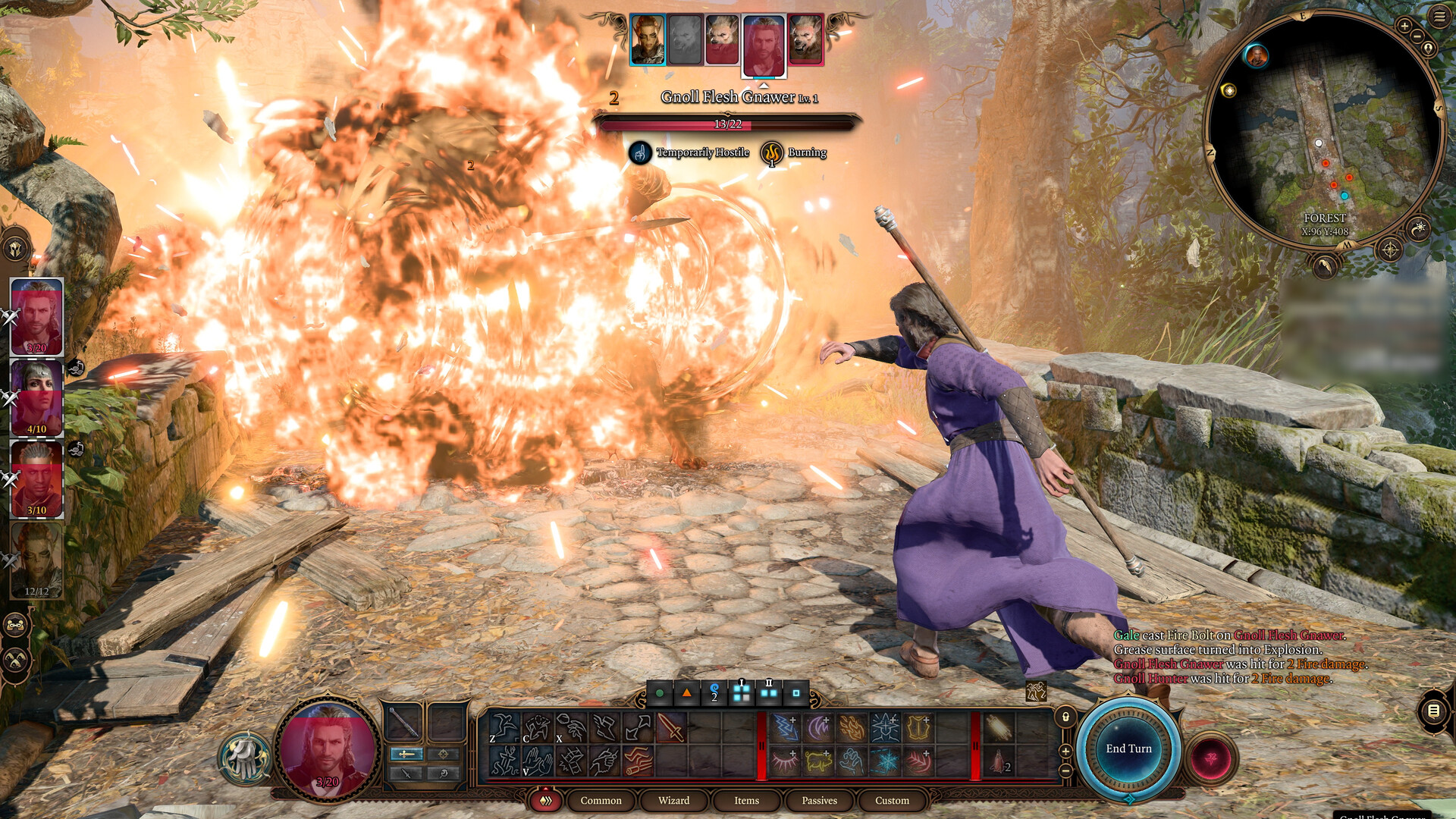
Warlock play is strongest when you stop thinking of the class as a traditional “spell slot battery” and start treating it as a tempo class. If you can spend one action to create a bad turn for the enemy, the rest of the fight often becomes easier for the whole party. That is why encounters like the Goblin Camp, the Creche, and the city fights in Act 3 are often excellent for a Warlock: terrain, chokepoints, and knockback all amplify your core toolkit.
This also aligns well with Baldur’s Gate 3’s long campaign structure. HowLongToBeat lists 72.71 hours for the main story and 115.69 hours with extras, with 179.74 hours for completion Source, so a leveling path that stays efficient without constant respecs is the right kind of design for most players.
Gear and Loadout
The best Warlock gear prioritizes spellcasting power, action economy, survivability, and anything that makes Eldritch Blast or Pact attacks hit harder or more often.
| Slot | Item | Reason |
|---|---|---|
| Weapon | Pact-synergy weapon of your choice | Pact of the Blade can make a simple weapon plan effective without demanding a full martial build |
| Ranged | Any stat-neutral utility piece if needed | Warlock usually gets more from spells than from a dedicated ranged weapon, but flexibility matters |
| Head | Spell-boosting or save-boosting helm | Helps landing control spells and improves consistency in longer fights |
| Chest | Defensive armor or robe that fits your AC plan | Keeps concentration safer while you stand at the range your spells want |
| Gloves | Spell damage, attack bonus, or utility gloves | Small bonuses matter because Warlock repeats the same high-value actions often |
| Boots | Mobility or repositioning boots | Warlock performance jumps when you can reach height, angle, or cover before the enemy does |
| Cloak | Defensive or positioning cloak | Survivability and positioning are more valuable than cosmetic synergy |
| Amulet | Spellcasting or utility amulet | Good amulets smooth out turn economy and help with concentration-heavy play |
| Ring 1 | Damage or save-pressure ring | Anything that raises consistency on your core spell loop is valuable |
| Ring 2 | Utility or defensive ring | Better concentration, mobility, or turn setup all matter |
| Consumables | Elixirs, scrolls, and situational resistance tools | Warlock is strongest when it uses consumables to cover rare gaps rather than brute-forcing every encounter |
Because Baldur’s Gate 3’s itemization is broad and route-dependent, the exact “best” pieces vary by Act, party comp, and whether you are playing a Blade or Blast build. The more useful way to think about gear is by function. If your Warlock is built around Eldritch Blast, then any item that increases attack reliability, damage riders, or tactical positioning is valuable. If you are running Pact of the Blade, then weapon and defensive layering matter more because you are likely to spend more turns in threat range. If you are using Pact of the Chain, then equipment that stabilizes concentration and survivability tends to outperform purely aggressive options.
Concrete examples of gear logic in the actual game include:
- early Act 1 fights around
Emerald Grovewhere accuracy and positioning are more valuable than raw damage spikes, - the
Goblin Campwhere ledges and funnels reward knockback and ranged pressure, - Act 2 battles in
Moonrise Towerswhere concentration protection becomes critical because fights can snowball quickly.
The biggest mistake players make with Warlock gear is chasing generic “best in slot” labels without matching items to a pact or role. A Blade Warlock and an Eldritch Blast Warlock do not want the exact same loadout. A good Warlock build understands that a smaller, coherent set of bonuses is usually better than a pile of mismatched stat lines.
For budget considerations, Baldur’s Gate 3 is not a free game and its current listed price sits at 59.99 USD at GOG in the cross-store snapshot Source. That does not affect the build itself, but it does underline that players are often working with the campaign as purchased content rather than live-service progression, so a build that scales cleanly from starter equipment to late-game uniques is the correct approach.
Budget vs Endgame Variant
The budget Warlock variant uses early-game spells, basic weapons, and generic defensive gear, while the endgame variant leans into specialized items, stronger save pressure, and tighter action sequencing.
The budget version should focus on what is guaranteed to be available early and often:
Eldritch Blastas the main damage tool.Hexfor single-target value.- A simple Pact choice that matches the party plan.
- The best AC or concentration gear you can find rather than waiting for a perfect named item.
- Scrolls and elixirs to cover gaps in exploration or boss fights.
This version is strong in Act 1 because the game gives you many fights where reliable cantrip pressure is enough. Examples include the Blighted Village, the Goblin Camp, and the early Underdark routes. In those encounters, the budget build does not need ornate gear to work; it only needs correct positioning and a clear turn plan.
The endgame version is where the build becomes more specialized. By Act 3, the Warlock can lean harder into:
- control tools that force enemies into bad terrain,
- gear that reinforces spell attack consistency,
- defensive layers that preserve concentration through long boss turns,
- and pact-specific synergies that make either melee or ranged play more efficient.
| Variant | Core idea | Strengths | Tradeoffs |
|---|---|---|---|
| Budget starter | Simple Eldritch Blast and Hex loop |
Easy to pilot, low gear dependence, strong early game | Less burst and fewer specialized answers |
| Midgame hybrid | Pact-supported damage plus control | Flexible and strong across mixed encounters | Requires better turn planning |
| Endgame specialist | Tuned for either Blade or Blast dominance | Higher ceiling, stronger boss performance, cleaner action economy | More gear-dependent and less forgiving |
If you want the most practical answer to “what should I run now and what should I aim for later,” the answer is simple. Start with the cheapest coherent loop you can execute every fight, then refine toward the version of Warlock that matches your preferred pacing. A player who likes direct combat should move toward Pact of the Blade. A player who likes control and resource efficiency should keep leaning into Eldritch Blast and spells like Hunger of Hadar. A player who wants the broadest utility should consider Pact of the Tome and let companions cover the rest.
The right way to judge the endgame version is not by raw damage screenshots. It is by whether the build still functions cleanly in hard scenes like the House of Hope, the Brain sequence, or the long Act 3 boss chain where short-rest management and positioning both matter. Warlock stays good there because it never loses its baseline turn.
Counters and Hard Matchups
The hardest counters to the best Warlock build are enemies that resist your main damage plan, shut down concentration, or force awkward line-of-sight and positioning.
Typical problem matchups include:
- High-mobility enemies that escape
Hunger of Hadaror close the gap before you can establish control. - Spell-resistant or save-strong foes that make single-target disable spells unreliable.
- Packed melee rushes that pressure concentration and force bad movement.
- Fight spaces with poor angles where
Eldritch Blastpush potential is limited. - Enemies that punish darkness or obscured terrain when your party does not share the same vision advantages.
This comes up in real scenes such as the Creche with fast-moving martial opponents, the Moonrise Towers sequence where multiple enemy types converge, and some late-game Act 3 encounters where the arena is too open or too cramped to rely on one trick.
The adaptation is usually straightforward:
- Use
Hunger of Hadarwhen enemies need to cross a lane. - Swap to
Hexplus cantrip pressure when a target resists control. - Reposition before the fight so your first turn matters more than the enemy’s first move.
- Keep a ranged backup plan even on a Blade setup.
- Bring party support that covers what Warlock does not, especially healing, counter-pressure, and emergency crowd control.
A more detailed counter table helps by category:
| Counter type | What it does to Warlock | How to adapt |
|---|---|---|
| Concentration pressure | Breaks Hunger of Hadar, Hold Person, or similar setup |
Raise Constitution, use defensive positioning, and avoid standing in the front line |
| Magic resistance | Makes control spells less reliable | Fall back to Eldritch Blast, terrain, and non-save-dependent pressure |
| Mobility | Lets enemies leave your zone control | Use chokepoints, knockback, and terrain-aware opening moves |
| Line-of-sight denial | Reduces blast angles and target access | Move first, climb, or split the battlefield with summons and allies |
| Multi-threat encounters | Forces too many reactions at once | Focus on one target, then collapse the fight in stages |
The key point is that Warlock does not need to win every fight in the same way. A good build changes gears when the encounter changes. That flexibility is one reason the class remains a strong answer to the baldurs gate 3 best warlock build search intent: the build is not just strong, it is stable against a wide range of campaign problems.
Common Mistakes
Players usually weaken the Warlock by treating it like either a pure blaster or a pure melee class instead of a hybrid tempo build.
Overinvesting in multiple stats
Players often spread points across Charisma, Strength, and Constitution because the class looks flexible. This happens when they want every option open. The fix is to commit to Charisma first and keep the rest supportive, not equal.Ignoring concentration protection
Warlocks lose a lot of value whenHunger of HadarorHold Persondrops early. Players usually assume damage alone is enough. The fix is to raise Constitution, stay out of the front line, and respect enemy archers and casters.Using spell slots too early
New players burn their limited slots in the first easy fight and then feel weak later. The habit comes from wanting to “get value” immediately. The fix is to letEldritch Blasthandle routine turns and save slots for meaningful encounters like bosses or elite packs.Choosing a pact without a plan
Pact of the Blade,Chain, andTomeall support different playstyles, but players sometimes pick one at random. The fix is to decide whether you want melee pressure, utility, or broad spell support before committing.Standing too far forward
Warlock damage looks tempting, so players overextend to get a clean angle. The problem is that this exposes the character to melee locks and concentration loss. The fix is to hold high ground, play near cover, and move only when the turn creates a real advantage.Overvaluing short fights
Some players think Warlock is only good if everything dies in one turn. That mindset leads to bad resource use and panic casting. The fix is to remember that sustainedEldritch Blastpressure is itself a win condition in a long campaign.Forgetting party synergies
Warlock works best when allies exploit what it creates. Players sometimes ignore this and play solo inside a party game. The fix is to pair Warlock control with martial follow-up, summon pressure, or another caster’s AoE.
Pro Tips
A strong Warlock becomes much better when you start using the environment as part of the kit.
Tip 1. Open from high ground whenever possible
If a fight begins on uneven terrain, take the elevation before you start blasting. This improves line-of-sight, increases the value of knockback, and makes it harder for enemies to reach you efficiently.
Tip 2. Use `Eldritch Blast` as a positioning tool, not just damage
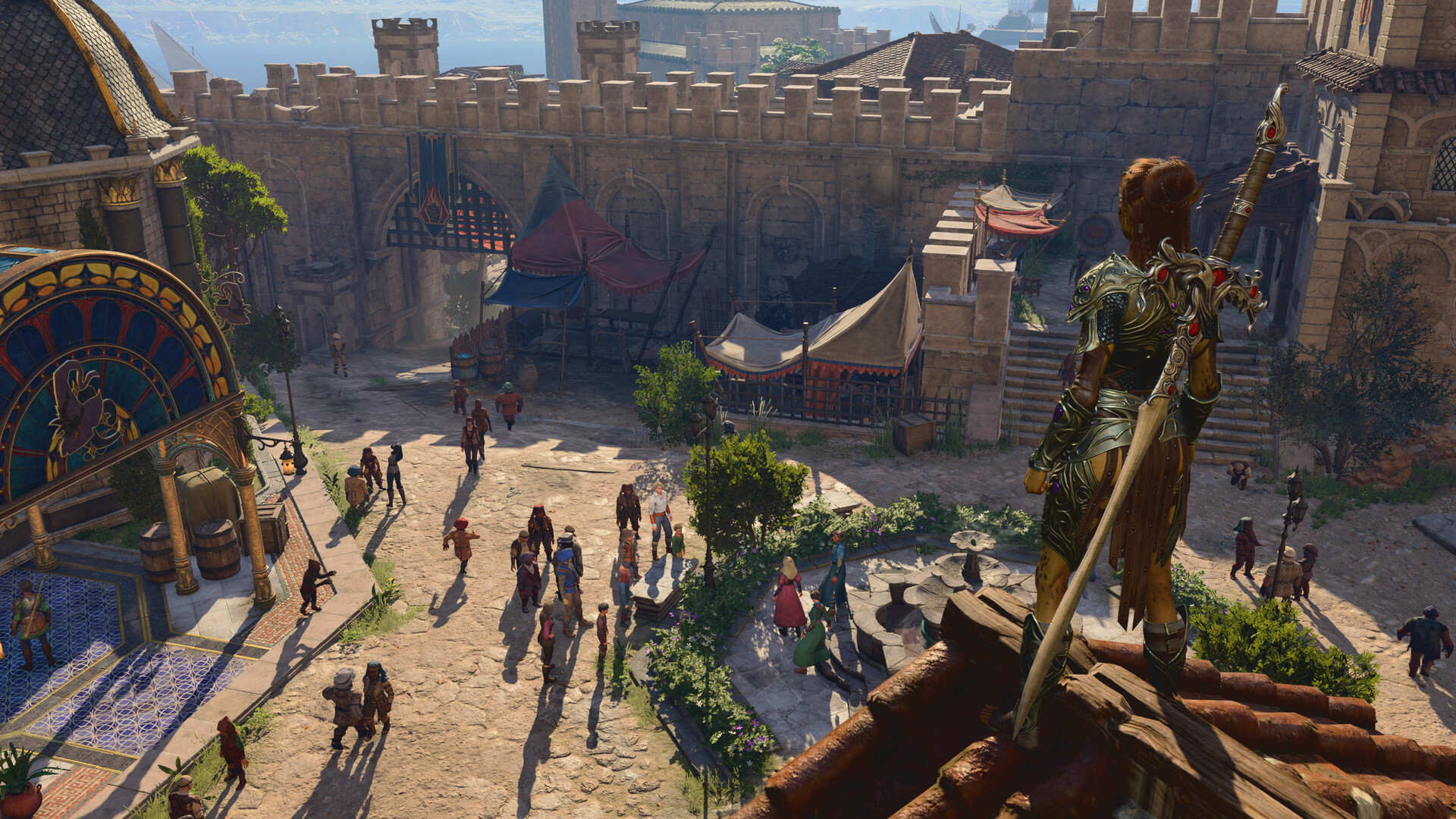
When an enemy stands near a ledge, into fire, or in a funnel, pushing them can be more valuable than raw damage. This is especially strong in places like the Goblin Camp or any rooftop fight in Baldur’s Gate.
Tip 3. Save control spells for enemy turns you want to delete
Hold Person and Hunger of Hadar are strongest when they stop a dangerous enemy from acting or force multiple enemies to waste movement. Cast them when the enemy is about to matter, not when the fight is already won.
Tip 4. Pair Warlock with a frontliner who can hold space
A Paladin, Fighter, or Barbarian companion can make your life easier by forcing enemies to stay where your control spells are best. That is especially useful in the Moonrise Towers assault and other layered fights.
Tip 5. Use rests intentionally
Warlock gets a lot from short-rest cadence, so your party routing should reflect that. When you know a hard encounter is coming, do not waste slots on minor cleanup fights if cantrips will finish the job.
Tip 6. Treat dialogue as part of the build
High Charisma lets this character handle checks that would otherwise need another companion. That matters in scenes with Raphael, Auntie Ethel, or major Act 3 negotiations where one clean line can avoid an unnecessary fight.
Tip 7. Keep a backup plan for charm-immune or save-resistant enemies
Not every target is worth trying to disable. When a control spell is unreliable, switch to terrain play, raw cantrip pressure, or a different party member’s damage pattern instead of forcing a bad cast.
FAQ
Is Warlock better as ranged or melee in Baldur’s Gate 3?
Ranged is usually easier and more consistent, while melee becomes stronger if you build deliberately around Pact of the Blade and supporting gear. The ranged version is safer in hard fights, but Blade can be excellent if you enjoy direct combat.
What is the best Pact for most players?
Pact of the Blade is the most straightforward if you want a combat-forward build, while Pact of the Tome is better for utility and Pact of the Chain is better for scouting and flexibility. The best choice depends on whether you want damage, utility, or mixed play.
Does Warlock need a lot of gear to work?
No. Warlock is one of the more self-sufficient classes because Eldritch Blast and Hex already form a strong baseline. Better gear improves the ceiling, but the class is functional early without rare items.
Can Warlock handle Honor Mode or higher difficulty play?
Yes, if you respect positioning and do not waste spell slots. The build’s value comes from consistency, not gambling on one perfect opener, which is exactly what hard runs reward.
What companions pair well with a Warlock?
Frontliners like Lae’zel, Karlach, or a well-built Paladin create space for your control spells, while support casters and skill-focused companions help cover the rest of the party’s needs. Warlock works best when someone else can anchor the front line.
Related Guides
- Baldur's Gate 3 Best Sorcerer Build
- Baldur's Gate 3 Best Paladin Build
- Baldur's Gate 3 Best Fighter Build
- Baldur's Gate 3 Best Bard Build
- Baldur's Gate 3 Best Cleric Build
- Baldur's Gate 3 Best Eldritch Blast Build
- Baldur's Gate 3 Best Pact of the Blade Build
Sources
- https://store.steampowered.com/app/1086940/
- https://howlongtobeat.com/?q=bg3
- https://www.cheapshark.com/redirect?dealID=KR6JzYIE5jQz4X%2FqfqZL7uqeWAALnY%2Beipr2lwHIFGI%3D
- https://steamcommunity.com/stats/1086940/achievements
See also
- Baldur's Gate 3 best multiclass builds
- Baldur's Gate 3 best ranger build
- Baldur's Gate 3 Best Tank Build
- Baldur’s Gate 3 baldurs gate 3 best shadowheart build
- Baldur's Gate 3 Kill Raphael's Old Enemy Beginner Guide
- Baldur's Gate 3 baldurs gate 3 best melee build
- Baldur's Gate 3 baldurs gate 3 best necromancer build
- Baldur's Gate 3 baldurs gate 3 best paladin build
- Baldur's Gate 3 baldurs gate 3 best karlach build
- Baldur's Gate 3 Investigate the Sel nite Resistance Beginner Guide
Screenshots

Reviewed by
BG3 Hub Editorial
Expertise: Editorial team behind BG3 Hub. Content is compiled from official patch notes, community wikis, and playthrough notes, then reviewed and updated on schedule.
Sources
Baldur's Gate 3 Classes Guides →
Browse the complete classes collection and its focused guides.
Related Guides
🔥 Popular Guides

bg3 class tier list act 1
Act 1 BG3 class tier list with S/A/B ranks, matchup flips, mistakes, tips, and an FAQ for new and returning players.
BG3 Top Baldur's Gate 3 Builds Guide
Best BG3 builds explained with roles, stats, gear, counters, budget swaps, and pro tips for any difficulty.
bg3 best builds for honor mode: Baldur’s Gate 3 Build Guide
Top BG3 Honor Mode builds, stat priorities, gear, counters, and budget options for a safer Baldur’s Gate 3 run.
Baldur's Gate 3 Class Tier List
S, A, and B class rankings for BG3 with methodology, situational flips, patch notes, mistakes, pro tips, and FAQs.
📋 Patch Notes & Updates
🛠️ Popular Tools
Frequently Asked Questions
Quick answers from the guide · click a question to expand.
Is Warlock better as ranged or melee in Baldur’s Gate 3?
Ranged is usually easier and more consistent, while melee becomes stronger if you build deliberately around Pact of the Blade and supporting gear. The ranged version is safer in hard fights, but Blade can be excellent if you enjoy direct combat.
What is the best Pact for most players?
Pact of the Blade is the most straightforward if you want a combat-forward build, while Pact of the Tome is better for utility and Pact of the Chain is better for scouting and flexibility. The best choice depends on whether you want damage, utility, or mixed play.
Does Warlock need a lot of gear to work?
No. Warlock is one of the more self-sufficient classes because Eldritch Blast and Hex already form a strong baseline. Better gear improves the ceiling, but the class is functional early without rare items.
Can Warlock handle Honor Mode or higher difficulty play?
Yes, if you respect positioning and do not waste spell slots. The build’s value comes from consistency, not gambling on one perfect opener, which is exactly what hard runs reward.
What companions pair well with a Warlock?
Frontliners like Lae’zel, Karlach, or a well-built Paladin create space for your control spells, while support casters and skill-focused companions help cover the rest of the party’s needs. Warlock works best when someone else can anchor the front line.
Was this guide helpful?
Rate this guide so we can improve it.
Share your own tip
Found something not in the guide? Submit it below — our editors review every tip before publishing. No account required.