 Baldur's Gate 3
Baldur's Gate 3 baldurs gate 3 best karlach build
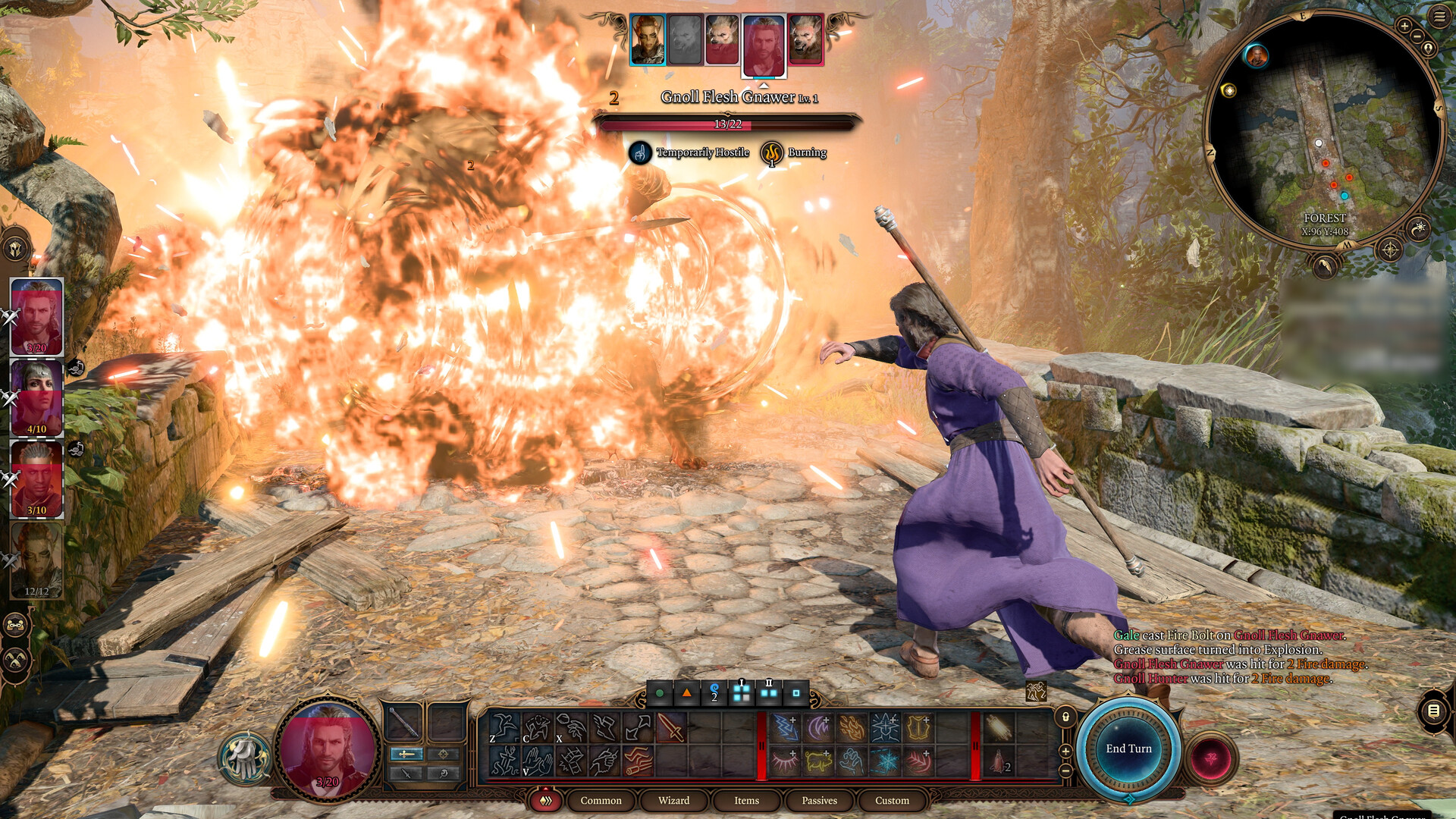
Quick Answer: The baldurs gate 3 best karlach build is usually a Berserker Barbarian that leans into Reckless Attack, high Strength, and Throw or melee burst damage, turning Karlach into a fast, angry frontline blender.
Karlach is one of the easiest companions to build into a devastating carry because her natural vibe already screams “hit first, ask questions never.” In Baldur’s Gate 3, Larian’s story-rich party RPG where choices shape survival and sacrifice, the big win is to make her either a pure melee wrecking ball or a throw-focused bruiser that controls the battlefield while doing stupid amounts of damage.
Build Identity: What This Karlach Setup Actually Does
This build turns Karlach into a frontline damage dealer who can also bully enemy positioning, soak pressure, and keep swinging through the mess. The playstyle is simple in the best way: get into range, force advantage with Reckless Attack, and either smash things with a weapon or hurl enemies and objects around like the world’s angriest forklift.
The core identity here is Berserker Barbarian with an emphasis on:
- high initiative and mobility,
- reliable damage every round,
- strong survivability through rage and HP,
- flexible offense through melee or thrown weapons.
If you want the short elevator pitch, this is it: Karlach becomes the party’s “problem solver” by deleting priority targets before they get to act. She shines in fights where enemies cluster up, where you can reach casters quickly, or where shove-and-throw tactics can disrupt the enemy plan. Examples include early goblin fights, the downstairs chaos at Moonrise Towers, and cramped late-game encounters where positioning matters more than raw stats.
A lot of players searching for the baldurs gate 3 best karlach build want something that feels powerful without requiring a spreadsheet and a monk’s level of patience. That’s why this setup works so well: it’s straightforward, but it still has real depth. You can play it as a classic two-handed bruiser, or pivot into a throw build if you want extra reach and battlefield control.
Why Karlach Fits This Role So Well
Karlach naturally benefits from being in the thick of things. She is thematically, narratively, and mechanically suited to aggressive frontlining. In practical terms, that means:
- she wants to be hit so Rage matters,
- she wants to be close enough to threaten backline enemies,
- she benefits hugely from gear that boosts Strength, mobility, and damage riders.
The best examples are fights against spellcasters like the cambions in the Nautiloid, humanoid packs in Act 1, and boss setups where one dead enemy is better than three wounded ones. Karlach also pairs well with support from companions like Shadowheart, Gale, or Astarion, because they can set up the fight while she finishes it. That’s the basic fantasy: everyone else prepares the table, Karlach flips it.
Stat Priorities and Ability Scores
Karlach’s stat priorities should favor Strength first, then Constitution, then Dexterity, with Wisdom and the rest left lower unless you are deliberately building for specific dialogue or saving throw preferences. If you are trying to make the build feel smooth in actual play, these priorities matter more than chasing a perfect “optimal” stat line.
Here is the practical priority order:
Strength
Strength is the engine of this build because it directly boosts melee accuracy, melee damage, jump distance, shove pressure, and throwing performance. A Karlach with high Strength can bully enemies from level 1 all the way into the late game. In examples like the Goblin Camp, the outskirts of the Blighted Village, and the Gauntlet of Shar, raw Strength keeps the build consistent when you need to land a hit now, not later.Constitution
Constitution keeps Karlach alive while she is standing in the blender. Barbarian durability loves extra HP, and the build often invites retaliation because Reckless Attack gives enemies easier access to her too. In fights like the fight with Minthara’s forces or the battlefield around Moonrise, extra Constitution means she can stay aggressive instead of retreating after every bad trade.Dexterity
Dexterity helps initiative and AC, which is especially useful if you want Karlach to move first and start the snowball. It is not as important as Strength for damage, but it smooths the early game and helps in encounters where acting before enemy casters matters. Think of fights with enemy archers, cultists, or surprise ambushes where first-turn tempo wins the whole exchange.Wisdom
Wisdom is a comfort stat more than a core stat. It can help with certain saves and perception-based situations, but it does not define the build. Keep it respectable if you can, but don’t sacrifice your combat identity for it.Intelligence / Charisma
These are low-priority for this build unless your party composition or roleplay goals ask for something unusual. Karlach is here to smash, not to ace a philosophy exam.
A clean way to think about stat allocation is shown below:
| Priority | Attribute | Why it matters | Build impact |
|---|---|---|---|
| 1 | Strength | Main damage, accuracy, jumping, shoving, throwing | Highest |
| 2 | Constitution | More HP and better concentration-like resilience via raw durability | Very high |
| 3 | Dexterity | Better initiative and survivability | Medium |
| 4 | Wisdom | Useful saves and perception | Low to medium |
| 5 | Intelligence | Rarely core for this setup | Low |
| 6 | Charisma | Usually handled by another party face | Low |
If you are going for the throw-heavy version, Strength becomes even more important because the whole plan is to weaponize gravity, backpacks, and enemies’ lack of common sense. If you are going for pure melee, Strength still rules, but Constitution becomes the “never die in the stupidest way possible” stat.
Ability Score Improvement Direction
When you get a chance to improve attributes, the general rule is:
- raise Strength toward the cap you are aiming for,
- keep Constitution healthy,
- only touch Dex if your gear or party setup leaves you sluggish.
For a pure melee version, the build is happiest when it can reliably connect on big swings and survive counterpressure. For the throw version, Strength remains the headline, but you will feel every point of initiative you can scrape together. That matters in fights like the Bridge ambush at Wyrm’s Crossing or the more chaotic Act 3 street battles where acting early saves a lot of healing resources.
You might also like
- Baldur's Gate 3 baldurs gate 3 best honour mode builds
- Baldur's Gate 3 baldurs gate 3 best dual wield build
- Baldur's Gate 3 best dark urge build
- Baldur's Gate 3 Solve the Open Hand Temple Murders: Beginner Guide
- Baldur's Gate 3 Kill Raphael's Old Enemy Beginner Guide
Skill Rotation and Ability Priority
Karlach’s ability priority should usually start with Rage, then position, then advantage creation, then high-value attacks like Reckless Attack, Frenzied Strike, or a strong throw sequence. The rotation is simple, but the order matters because Barbarian power comes from tempo, not complicated combo chains.
Standard Turn Priority
Rage if combat is expected to last more than one round.
Rage is the foundation of your durability and damage. Use it before you overcommit into a messy melee. Good examples include opener fights against goblin packs, iron guards, or any encounter where Karlach expects to eat multiple hits.Close distance with movement, jump, or Misty Step support from allies if needed.
Karlach wants to be in the enemy’s face. If the target is a backline caster like a Cultist Arkanist or a Moonrise mage, reaching them early is worth more than saving movement.Use Reckless Attack when the target is worth the trade.
The advantage helps ensure your big hit lands. This is especially strong against bosses, enemy leaders, and anything with annoying high AC.Spend extra attacks on priority targets.
If you can remove an enemy archer, mage, or support unit, do that before farming damage into a tank. In cramped fights, a dead caster is often better than chip damage on a big brute.Use bonus-action pressure through Berserker tools, shoves, or off-hand utility where applicable.
If you are running a throw variant, this is where the build gets funny: throw a javelin, a returning weapon, or even the enemy’s own friend if the setup allows it.
Example Rotations by Scenario
| Scenario | Opening sequence | Goal |
|---|---|---|
| Early goblin fight | Rage → move in → Reckless Attack → follow-up strike | Delete weak targets fast |
| Tight corridor battle | Rage → position in choke → attack nearest threat | Control movement and absorb pressure |
| Backline assassination | Jump/dash support → Reckless Attack → burst caster | Remove enemy spell pressure |
| Throw-focused turn | Rage → pick up targetable item/weapon → throw → reposition | Safe ranged pressure with barbarian scaling |
Ability Priority by Build Variant
- Pure melee Karlach: Rage, Reckless Attack, multi-hit pressure, shove if terrain is favorable.
- Throw Karlach: Rage, throw actions, high-value object/enemy positioning, then clean-up melee if something survives.
- Hybrid Karlach: Rage first, then adapt based on terrain and target type.
The biggest mistake players make is trying to “save” Rage or avoid using Reckless Attack because it sounds risky. Barbarians are allowed to be a little reckless. That’s kind of the brand. In fights like the Grymforge encounters or the Steel Watch-heavy areas later on, the build shines when you commit decisively instead of play defensively and slowly bleed value.
Gear and Loadout
Karlach’s gear should prioritize Strength, mobility, survivability, and damage riders, with the exact item choices depending on whether you want a melee bruiser or throw-centric bruiser. The ideal loadout is not one single perfect list for every playthrough; it is a progression path that gets stronger as your campaign opens up more options.
| Slot | Item | Reason |
|---|---|---|
| Weapon | Returning Pike | Excellent early throw weapon and smooths out ranged pressure |
| Weapon | Any strong two-handed weapon you find early | Simple melee damage and easy upgrades while you level |
| Head | Any helmet with defensive value or Strength support | Keeps the build durable and lets Karlach stay in the fight |
| Armor | Medium or unarmored-friendly defensive gear depending on your setup | Barbarian durability works best when you are not overcomplicating AC |
| Gloves | Gauntlets or gloves that add damage, Strength, or attack value | Boosts core combat output without changing your playstyle |
| Boots | Mobility boots or anti-prone options | Helps Karlach stick to priority targets |
| Cloak | Defensive cloak or anything that rewards aggression | More survivability when she dives deep |
| Amulet | Utility or survivability amulet | Gives room for Karlach to keep brawling longer |
| Ring 1 | Accuracy, damage, or Strength-supporting ring | Helps turn near-misses into real kills |
| Ring 2 | Defensive or momentum-based ring | Good for maintaining tempo in longer fights |
Early-Game Loadout Ideas
In the early game, don’t wait for some mythical perfect legendary setup before Karlach starts carrying. A decent weapon and a survivability-focused accessory spread are enough. Good examples include:
- a simple two-handed weapon for direct melee,
- a Returning Pike-style throw weapon if you want to play around with terrain and safe damage,
- any gear that prevents Karlach from being control-locked or knocked down constantly.
This matters a lot in Act 1 fights like the goblin gate scenarios, the Underdark skirmishes, and the Moonrise-adjacent story beats if you move there through normal progression. The point is to make her functional now, not “eventually good.”
Mid-Game Transition
Mid-game is where the build starts feeling absurdly stable. You want to look for:
- gear that improves Strength or damage riders,
- items that reward aggressive positioning,
- survivability tools that let Karlach stay in enemy faces without needing constant babysitting.
In actual combat, this is where she starts outperforming a lot of squishier damage dealers because she does not have to choose between being present and being alive. She can often do both, which is deeply annoying for enemies and deeply funny for you.
Endgame Direction
At endgame, the best version of the build is the one that preserves consistent hit chance, improves action economy, and either amplifies melee output or throw damage. By Act 3, fights against steel constructs, high-armor elites, and elite spellcasters reward builds that can maintain pressure even when the battlefield gets crowded. Karlach is excellent here because she does not need perfect setup every turn. She just needs a target and room to move.
If you want a quick tier-style summary of the common Karlach loadout paths, here’s a practical ranking:
| Tier | Setup | Strengths | Weaknesses |
|---|---|---|---|
| S | Berserker throw bruiser | Great reach, control, and damage | Needs good positioning awareness |
| S | Pure melee Berserker | Simple, explosive, reliable | Can be kited more easily |
| A | Hybrid throw/melee | Flexible and forgiving | Slightly less specialized |
| A | Defensive tank Karlach | Hard to kill | Slower kills and less carry power |
| B | Thematic casual setup | Fun and roleplay-friendly | Less consistent in harder fights |
Budget vs Endgame Variant
Karlach’s budget version should use whatever strong Strength-scaling or high-damage gear is available early, while the endgame version should focus on consistency, mobility, and action economy. The good news is that this build is friendly to a normal playthrough because its core function does not depend on one rare item to turn on.
Budget Variant: Cheap Starter Substitutes
If you are just getting started, use practical substitutes instead of chasing best-in-slot perfection.
- Weapon substitute: any solid early two-handed weapon or a basic throw weapon like a javelin-style setup.
- Armor substitute: the best defensive gear you currently own that still fits your barbarian plan.
- Accessory substitute: choose raw survivability, movement, or accuracy over niche effects.
- Consumables: potions of healing, speed-style effects, and situational elixirs can keep Karlach online in harder fights.
This version is ideal for Act 1 content like the goblin stronghold, the Risen Road, and early Underdark encounters. You are mostly trying to avoid dead turns and make sure Karlach can actually reach the fight without burning the rest of the party’s resources.
Endgame Variant: What You Upgrade Into
The endgame version is less about “finding a single magic weapon” and more about stacking all the right little advantages:
- better initiative,
- better damage consistency,
- better movement,
- better survivability under focus fire,
- better synergy with the party’s buffs and control.
By the time you are dealing with Act 3 threats, you want Karlach to be the kind of companion who starts a fight and ends it before the enemy gets comfortable. Think of high-stakes encounters where an enemy boss, elite guard, or dangerous caster can swing the fight if left alone. The endgame version is built to say “nope” to that.
Budget vs Endgame Comparison
| Category | Budget Karlach | Endgame Karlach |
|---|---|---|
| Damage | Reliable but basic | Higher burst and better scaling |
| Defense | Good enough | Stronger sustain and survivability |
| Mobility | Functional | Excellent |
| Complexity | Very easy | Still simple, but more optimized |
| Best for | New players and early acts | Harder fights and optimized parties |
The best part is that you do not need to respec into something completely different to stay relevant. The core loop stays the same: rage, engage, pressure the right target, and keep moving. If you want the strongest possible version of the baldurs gate 3 best karlach build, this is why Berserker remains such a clean answer: the build scales naturally from “good early” to “terrifying late” without asking you to relearn the game.
Counters and Hard Matchups
This build struggles most against enemies that can deny movement, force bad positioning, or punish reckless melee commitment, and you should adapt by using terrain, ranged support, or turn-order control when those matchups show up. Karlach is amazing when she gets to play her game; she is less happy when the enemy says “actually, no.”
What Shuts the Build Down
- Hard crowd control like immobilize, prone loops, and movement denial can stop Karlach from reaching the target she wants.
- Flying or highly mobile enemies can waste her turn if she cannot close the gap efficiently.
- High-AC elites can punish reckless swings if you overuse attack-boosting aggression without support.
- Damage reflection or retaliation mechanics make mindless all-in plays a little silly.
- Terrain-heavy arenas can block jumps, throws, or direct pathing.
Real examples include:
- enemy casters in fortified positions,
- narrow ledges or broken terrain in the Underdark,
- boss rooms where you cannot freely sprint to the backline.
How to Adapt
- Use your party to soften the target first.
A held or slowed enemy is much easier for Karlach to delete. - Approach from better angles.
Don’t waste the build’s strength by walking straight into a trap lane if you can flank or jump in from the side. - Switch from melee to throw pressure.
If the target is unreachable, Karlach can still contribute. - Save resources for the right fight.
Don’t blow all your movement or utility before the dangerous enemy actually reveals itself.
Matchup Table
| Problem | Why it hurts | Best adaptation |
|---|---|---|
| Heavy control | Karlach cannot stick to targets | Use ranged support and terrain-aware positioning |
| Flying enemies | Reach becomes awkward | Throw build or ally setup first |
| High-AC bosses | Misses waste turns | Use advantage, debuffs, or safer target priority |
| Reflective enemies | Aggression backfires | Reduce all-in pressure and let allies test the field |
| Tight terrain | Movement and throws get awkward | Reposition, jump, or let allies create openings |
The real trick is not to panic when the map looks ugly. Karlach is still useful even when she cannot full-send every round. Sometimes the smart play is to let Gale, Shadowheart, or another control-heavy companion set the board first, then bring Karlach in to cash the check. That is how you keep the build from feeling feast-or-famine.
Common Mistakes
The most common mistakes with Karlach are overcommitting too early, ignoring positioning, and building her like a generic tank instead of a damage-first bruiser. These slip-ups happen because Barbarian looks simple, so players assume they can auto-pilot it. The class absolutely rewards aggression, but not mindless aggression.
Using Rage too late
Players hold Rage “just in case” and lose early-round value.
Why it happens: it feels like a limited resource, so people hoard it.
Fix: activate Rage as soon as the fight is clearly serious, especially in multi-round battles like goblin strongholds or boss rooms.Reckless Attacking into the wrong enemy
Players use advantage on a target that was never dangerous.
Why it happens: the button looks exciting and it is easy to click.
Fix: spend Reckless Attack on casters, bosses, or high-priority threats first.Building too much defense and not enough damage
Karlach ends up surviving fine but killing too slowly.
Why it happens: players fear melee range and overcorrect into tankiness.
Fix: keep enough durability to live, then prioritize Strength and offensive gear.Standing in bad terrain
Players get stuck on ledges, awkward stairs, or blocked lanes.
Why it happens: combat starts fast and the map is messy.
Fix: move first, then attack; use jump paths and clean approach lines.Ignoring throw options
Players think the build is only about weapon swings.
Why it happens: they see Karlach as a “barbarian = sword only” character.
Fix: use throw setups when enemies are out of reach or when the map favors ranged pressure.Wasting turns on low-value enemies
Players chase whatever is closest instead of whatever matters.
Why it happens: melee characters naturally gravitate to the nearest target.
Fix: prioritize enemy casters, archers, and support units that are shaping the fight.Not coordinating with the party
Karlach dives alone while the rest of the team is still setting up.
Why it happens: the build feels strong enough to solo, so players get greedy.
Fix: let control spells, buffs, and debuffs land first when the encounter is dangerous.
Pro Tips
Karlach becomes much stronger when you stop thinking of her as “just hit things” and start using her as a tempo piece that decides where fights happen. These are the little advantages that make the build feel unfair.
Tip 1. Open fights from jump range whenever possible
If the battlefield gives you high ground, broken walls, or a clean angle, use jumps to cut travel time and start the turn already threatening the backline. This is especially good in outdoor skirmishes and cramped fort fights where a normal walk wastes too much momentum.
Tip 2. Save your hardest commit for the enemy caster
When the enemy includes a healer, controller, or blaster, Karlach should usually be pointed at that target first. A dead caster in Moonrise Towers or a dead support in a cultist camp often matters more than shaving HP off the nearest brute.
Tip 3. Use throws when melee is inefficient
If an enemy is separated, elevated, or behind a nuisance zone, throwing a weapon or object lets Karlach contribute without spending the whole turn jogging. This is one of the easiest ways to keep damage uptime high in messy maps.
Tip 4. Pair her with control, not just more damage
A slowed, rooted, or held enemy is basically a gift-wrapped target for Karlach. Shadowheart-style control, Gale-style setup, or any ally who can make a target stationary increases her real damage more than tiny bonus numbers ever will.
Tip 5. Don’t be afraid to “waste” a hit on terrain value
Knocking someone off a ledge, into a hazard, or into a worse position can be stronger than raw damage. The build is especially nasty when it turns a simple hit into a map-control play in places like cliffs, bridges, or narrow catwalks.
Tip 6. Finish short fights aggressively
If combat is clearly won, don’t slow down and overmanage resources. Karlach’s whole purpose is to end encounters fast. In lower-stakes battles, that means fewer rounds taken, fewer enemy turns, and less healing needed afterward.
FAQ
Is Berserker Barbarian the best Karlach build?
Yes, for most players, Berserker Barbarian is the strongest and most straightforward Karlach setup because it turns her into a reliable damage dealer with great tempo and simple execution.
Should Karlach use a two-handed weapon or throw build?
Both work well, but the throw version is better if you want range and flexibility, while the two-handed version is easier and very satisfying for direct melee play.
What stat matters most for Karlach?
Strength matters most because it powers her damage, accuracy, jumping, shoving, and throw performance.
Is Karlach good for beginners?
Absolutely. She is one of the easiest companions to build because her ideal game plan is direct and forgiving: rage, charge in, and hit hard.
Can Karlach tank for the party?
Yes, but she is usually better as a bruiser who can absorb pressure while also killing things quickly. Pure tanking is possible, but it is usually not the strongest use of her kit.
Does Karlach need special gear to be good?
No. She works well with ordinary strong melee or throw gear early on, then improves naturally as you find better Strength and damage-supporting items.
Related Guides
- Baldur’s Gate 3 Best Shadowheart Build
- Baldur’s Gate 3 Best Astarion Build
- Baldur’s Gate 3 Best Lae’zel Build
- Baldur’s Gate 3 Best Gale Build
- Best BG3 Beginner Builds
- BG3 Best Party Composition
- Baldur’s Gate 3 Best Barbarians Guide
- BG3 Best Early Game Weapons
Sources
- https://store.steampowered.com/app/1086940/
- https://howlongtobeat.com/?q=bg3
- https://store.steampowered.com/app/1086940/
- https://steamcommunity.com/stats/1086940/achievements
- https://www.protondb.com/app/1086940/
- https://www.cheapshark.com/redirect?dealID=KR6JzYIE5jQz4X%2FqfqZL7uqeWAALnY%2Beipr2lwHIFGI%3D
See also
- Baldur's Gate 3 best hexblade build: a complete BG3 guide
- Baldur's Gate 3 baldurs gate 3 best jaheira build
- Baldur's Gate 3 Best Healer Build
- Baldur's Gate 3 baldurs gate 3 best halsin build
- Baldur's Gate 3 Investigate the Sel nite Resistance Beginner Guide
- Baldur's Gate 3 baldurs gate 3 best gale build
- Baldur's Gate 3 baldurs gate 3 best barbarian build
- Baldur's Gate 3 baldurs gate 3 best cleric build
- Baldur's Gate 3 Save the Grymforge Gnomes Beginner Guide
- Baldur's Gate 3 Steal a Githyanki Egg Beginner Guide
Screenshots

Reviewed by
BG3 Hub Editorial
Expertise: Editorial team behind BG3 Hub. Content is compiled from official patch notes, community wikis, and playthrough notes, then reviewed and updated on schedule.
Sources
Baldur's Gate 3 Classes Guides →
Browse the complete classes collection and its focused guides.
Related Guides

🔥 Popular Guides
Baldur's Gate 3 baldurs gate 3 best zauberer build
Draconic Bloodline Sorcerer build guide for BG3 with stats, Metamagic, gear, counters, budget picks, and endgame tips.
BG3 Top Baldur's Gate 3 Builds Guide
Best BG3 builds explained with roles, stats, gear, counters, budget swaps, and pro tips for any difficulty.

bg3 class tier list act 1
Act 1 BG3 class tier list with S/A/B ranks, matchup flips, mistakes, tips, and an FAQ for new and returning players.
bg3 patch notes history: Baldur’s Gate 3 patch notes explained
A clear breakdown of Baldur’s Gate 3 patch history, major winners and losers, and what players should change now.
📋 Patch Notes & Updates
🛠️ Popular Tools
Frequently Asked Questions
Quick answers from the guide · click a question to expand.
Is Berserker Barbarian the best Karlach build?
Yes, for most players, Berserker Barbarian is the strongest and most straightforward Karlach setup because it turns her into a reliable damage dealer with great tempo and simple execution.
Should Karlach use a two-handed weapon or throw build?
Both work well, but the throw version is better if you want range and flexibility, while the two-handed version is easier and very satisfying for direct melee play.
What stat matters most for Karlach?
Strength matters most because it powers her damage, accuracy, jumping, shoving, and throw performance.
Is Karlach good for beginners?
Absolutely. She is one of the easiest companions to build because her ideal game plan is direct and forgiving: rage, charge in, and hit hard.
Can Karlach tank for the party?
Yes, but she is usually better as a bruiser who can absorb pressure while also killing things quickly. Pure tanking is possible, but it is usually not the strongest use of her kit.
Does Karlach need special gear to be good?
No. She works well with ordinary strong melee or throw gear early on, then improves naturally as you find better Strength and damage-supporting items.
Was this guide helpful?
Rate this guide so we can improve it.
Share your own tip
Found something not in the guide? Submit it below — our editors review every tip before publishing. No account required.