 Baldur's Gate 3
Baldur's Gate 3 baldurs gate 3 best melee build

Quick Answer: The best melee build in Baldur's Gate 3 is usually a high-Strength martial that stacks extra attacks, reliable accuracy, and action economy, then snowballs with Great Weapon Master, Tavern Brawler, or Smite support.
Data note: Live data unavailable at time of writing; check the KPI panel above.
Build Identity
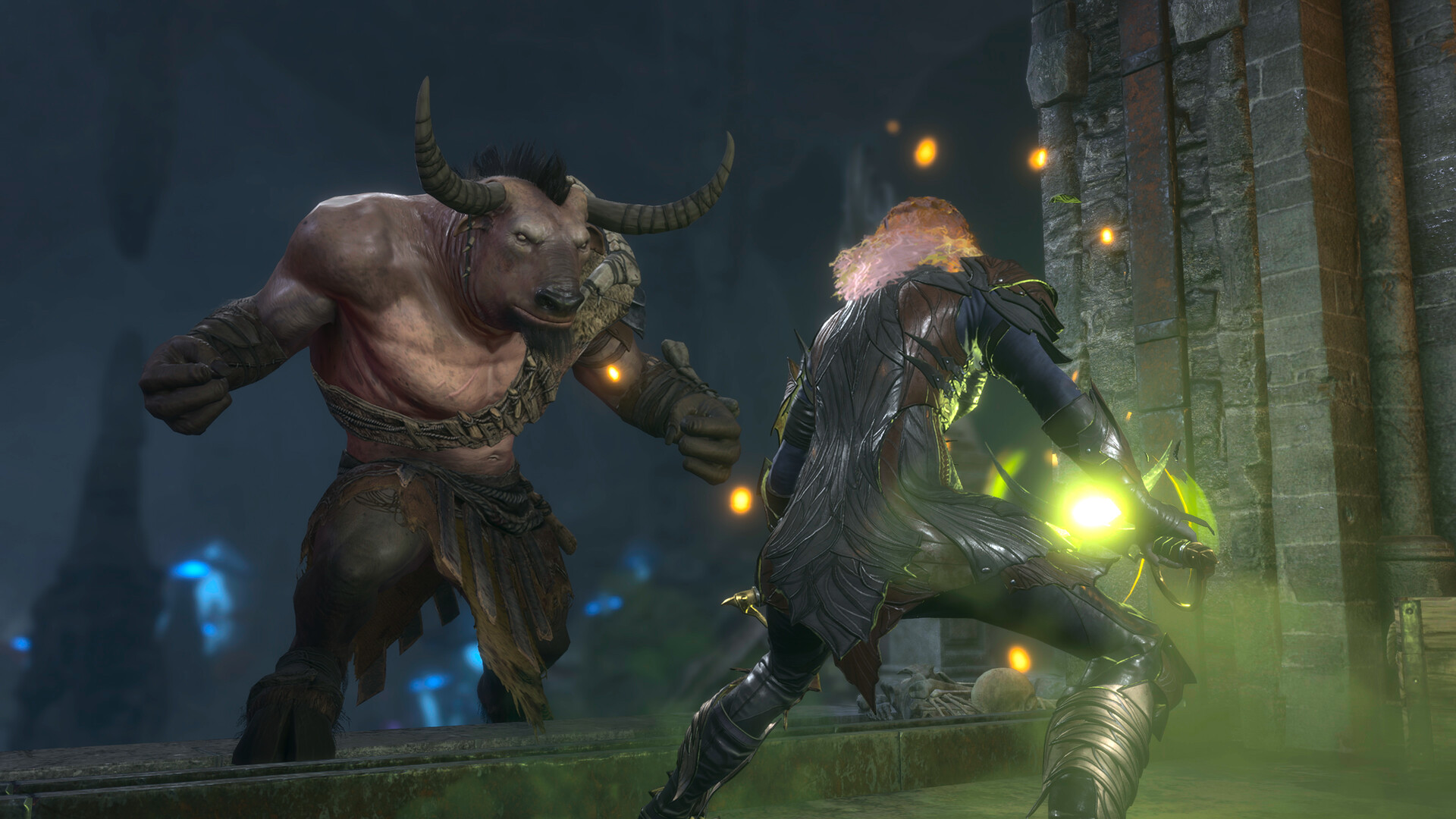
This build is a front-line damage dealer built to delete targets in close range while still surviving the enemy focus fire that comes with being in the pocket. In the current meta, the most reliable version is a Strength-based martial core that can force advantage, convert action economy into burst, and remain useful in both short fights and long dungeons. It is the kind of setup that feels good against common campaign threats like cultists in Act 2, steel watch-style elite enemies in Act 3, and any boss that can be reached and locked down before it fully stabilizes.
The clean elevator pitch is simple: you walk into melee, win the first exchange, and keep winning exchanges until the encounter ends. That can mean a heavy weapon bruiser, a dual-wield or one-handed duelist with more defensive layers, or a hybrid that adds spell slot burst through smites. For most players searching for the baldurs gate 3 best melee build, the winning pattern is not “highest paper damage in a vacuum”; it is the best combination of early consistency, scaling, and fight control.
A good melee build in BG3 has to solve three problems at once. First, it needs accuracy, because missing with a big swing wastes the turn and leaves you exposed. Second, it needs action economy, because extra attacks and bonus-action value matter more than raw weapon tooltip damage. Third, it needs a plan for enemies that do not politely stand next to you, such as ranged casters on ledges, flying targets, or bosses protected by dangerous terrain. The strongest melee setups answer all three through class features, feat timing, and gear synergy.
For practical play, the melee role usually falls into one of three lanes:
- Pure striker: Bard-adjacent or fighter-style damage focus that turns every turn into pressure.
- Bruiser: Paladin, barbarian, or similar front-liner that mixes damage and durability.
- Hybrid carry: A build that adds mobility, stealth, or spells to keep melee uptime high.
The most meta-stable approach is usually a Strength melee shell with a feat plan around Great Weapon Master or Tavern Brawler, depending on whether the build is weapon-centric or throw-adjacent. If you want a straightforward answer, this guide centers on the most broadly applicable melee line: a heavy-weapon, high-Strength frontline carry that can be adapted with class mix-ins and gear from early game to endgame.
Stat Priorities
Your stat priority should start with the attribute that makes your primary attacks land, then layer the attribute that lets you act more often, and only then pay attention to secondary defenses. BG3 is forgiving in the sense that respecs exist, but the best melee builds are still the ones that enter Act 1 with a coherent stat plan instead of trying to patch over weak accuracy later.
- Strength: This is the main damage and hit-chance stat for a weapon-first melee build, and it scales directly with the kind of heavy attacks that define the build.
- Constitution: More hit points and better concentration resilience matter because melee characters are the ones getting targeted, pushed, and chipped down first.
- Dexterity or Wisdom, depending on class: Dexterity helps with initiative and some defense; Wisdom matters if your class relies on resisting control effects or maintaining perception-based utility.
- Charisma or Intelligence, only if your subclass needs it: These are build-specific and should not be forced into a martial chassis unless a subclass payoff justifies the trade.
For a Strength melee bruiser, the practical stat split is usually built around high Strength and solid Constitution, with enough mobility or save coverage to avoid getting hard-stopped by control effects. The exact spread depends on whether you are playing a class like Fighter, Barbarian, or Paladin, but the logic stays the same: do not dilute your damage stat to chase flashy utility that another party member can cover.
Here is the priority logic in table form:
| Priority | Attribute | Why it matters in melee |
|---|---|---|
| 1 | Strength | Drives weapon accuracy and damage for most heavy melee setups |
| 2 | Constitution | Keeps you upright when you are absorbing aggro at point blank |
| 3 | Dexterity or Wisdom | Helps with initiative, defense, or save coverage depending on class |
| 4 | Class-scaling mental stat | Only invest if your subclass or multiclass actually converts it into value |
In an actual campaign, this means your early leveling should not be scattered across too many half-useful stats. A melee character with strong Strength and Constitution will usually feel more consistent in fights like the Goblin Camp, the Underdark skirmishes, or the first major Act 2 set pieces than a stat-hungry hybrid that tries to do everything. That consistency is the real reason this style sits at the top of many “best melee build” discussions.
If you are using gear that sets or boosts Strength later, the stat plan can shift slightly toward Constitution and utility. That is where endgame optimization starts to matter: when equipment can cover a weakness, your point-buy or feat choices can cover something else. Still, the default answer for the baldurs gate 3 best melee build remains Strength first, durability second, everything else after.
You might also like
- Baldur's Gate 3 baldurs gate 3 best honour mode builds
- Baldur's Gate 3 baldurs gate 3 best dual wield build
- Baldur's Gate 3 Solve the Open Hand Temple Murders: Beginner Guide
- Baldur's Gate 3 baldurs gate 3 best karlach build
- Baldur's Gate 3 Kill Raphael's Old Enemy Beginner Guide
Core Rotation and Combat Priority
Your combat priority is to spend your first turn turning contact into a favorable trade, then preserve that advantage with repeat attacks, crowd control, or threat denial. Melee in BG3 is not a “press attack until dead” role; the best versions of it are about sequencing. You want to enter combat with positioning that lets you reach priority targets, then use your action economy so the enemy loses more turns than you do.
A solid rotation for a heavy-weapon melee carry looks like this:
- Open with positioning and advantage setup
- Use high ground, jump, Misty Step, Rage movement, or simple pathing to reach a target cleanly.
- If you can pre-buff with a party member, do it before contact so your first attack matters more.
- Spend your first attack sequence on the most fragile high-value target
- Prioritize enemy casters, archers, or support units in fights like the Moonrise Tower corridors or the Steel Watch-style dense encounters in Act 3.
- Do not overcommit to a tank if the backline is exposed.
- Convert bonus actions and extra attacks into pressure
- Features like Extra Attack, bonus-action smites, or off-hand follow-ups should not sit unused while the enemy is still threatening your backline.
- Use control or defensive tools only when they change the turn order
- Stuns, pushes, frighten effects, prone setup, and threat denial are best when they prevent multiple enemy actions rather than simply adding flavor.
- Reposition after the kill if the fight will continue
- A melee character that ends a turn badly placed can lose the next exchange to ranged focus fire or area denial.
The details vary by class, but the priority stays consistent. A Fighter wants to convert Action Surge and extra attacks into a kill swing. A Paladin wants to layer burst into a hit that matters, especially when a critical or smite line appears. A Barbarian wants to stay in rage and leverage raw pressure while staying hard to dislodge. If you are playing a hybrid, the rule is the same: use the class-specific burst window on the turn where it actually changes the fight.
This is also why melee builds often outperform on boss pulls with tight space. In places like Wyrm’s Rock, hostile interiors, or narrow bridges, a properly built frontline character can pin targets, force awkward pathing, and deny the enemy clean casting lanes. By contrast, a weak melee build gets kited, blinded, feared, or burned down while doing low-impact damage.
The main difference between an average and elite melee turn is intent. Average play attacks whoever is nearest. Elite play attacks whoever is most likely to reduce the enemy’s total turns by dying or being controlled first. That is the mental model behind the most effective versions of the baldurs gate 3 best melee build.
Gear and Loadout
Your gear should reinforce your chosen melee lane instead of trying to fix core class weaknesses after the fact. The best loadout is the one that makes your attack pattern simpler, your accuracy more reliable, and your survivability less dependent on perfect party support. For a heavy-weapon melee build, that usually means a weapon that rewards repeated hits, armor that lets you stay in contact, and accessories that improve accuracy, mobility, or burst.
Here is a practical loadout table with example pieces that fit the role at different stages:
| Slot | Item | Reason |
|---|---|---|
| Weapon | A strong two-handed martial weapon available in your current act | Heavy weapons scale well with Strength and with on-hit burst windows |
| Off-hand or shield | Shield, if your class allows it and you are playing a tankier variant | Helps you survive focus fire when you need to hold a line |
| Armor | The heaviest armor your class can use without crippling your plan | Melee builds benefit from staying upright in prolonged fights |
| Gloves | Any gloves that improve unarmed or weapon attack value, depending on your setup | Gloves often add hidden efficiency to a build that attacks every round |
| Boots | Mobility or gap-closing boots | Reaching the target is often more important than raw defense |
| Helmet | Anything that improves accuracy, initiative, or save resilience | The best melee builds lose less to control and missed turns |
| Cloak | Defensive cloak or a cloak that helps positioning | Small survivability increases matter because melee gets hit first |
| Amulet | Utility amulet that supports action economy, defense, or sustain | Melee power is often won through turn efficiency, not raw numbers |
| Ring 1 | Accuracy or on-hit ring | Helps convert attack rolls into real damage more consistently |
| Ring 2 | Defensive or utility ring | Gives flexibility against casters, hazardous terrain, or attrition fights |
Because BG3 itemization is broad, the exact “best” item changes with what you have found, what questlines you completed, and whether your party already covers a role. For example, if you are playing a Paladin-style version, anything that improves burst consistency is more valuable than a small passive damage bump. If you are playing a Barbarian-style version, anything that helps you stay in range and keep swinging is premium. If you are using a fighter-style chassis, then gear that supports repeated attacks and turn reliability rises in value.
A useful way to think about melee gear is by function rather than by item name. The major functions are:
- Accuracy support, especially when using strong feats that lower hit chance.
- Mobility support, especially in open maps or multi-level encounters.
- Durability support, especially for fights with ranged focus fire.
- Burst support, especially for boss windows and elite packs.
For example, in early Act 1 you are usually prioritizing basic weapon quality and survivability over perfect synergy. By Act 2, the build starts to care much more about whether your gear can help you reach priority targets through enemy control and terrain. By Act 3, your loadout becomes a real optimization puzzle, where the difference between a generic weapon and a synergy piece can decide whether your damage is efficient or merely adequate.
The strongest endgame melee loadouts usually solve at least one of these problems: improving hit consistency, adding bonus damage on hit, or improving your ability to keep attacking without wasting movement. Once that is true, the rest is mostly about tailoring to party composition. If your team already has heavy control, your gear can lean more offensive. If your team is light on protection, your gear should lean harder defensive.
Best Class Path and Ranking
The best class path for a melee build is the one that gives you the strongest mix of extra attacks, burst, and survivability without forcing awkward resource management. In most real campaigns, the top tier is still occupied by classes or mixes that can repeatedly convert turns into damage while staying simple enough to pilot under pressure.
| Tier | Class path | Why it ranks here |
|---|---|---|
| S | Fighter-based melee | Most reliable action economy, strong feat scaling, easy to pilot |
| S | Paladin-based melee | Exceptional burst and boss deletion when resources are available |
| A | Barbarian-based melee | Excellent durability and pressure, strong in straightforward fights |
| A | Rogue melee variants | Strong for utility and single-target setups, but less universal |
| B | Monk-style melee hybrids | Powerful in the right hands, but more dependent on gear and execution |
Fighter is often the safest answer when a player asks for the baldurs gate 3 best melee build because it gives you the least friction. You get clean scaling, straightforward extra attacks, and easy adaptation to two-handed or shield-based versions. It is hard to make a Fighter feel bad if your stats are sensible and your weapon choice matches your feat plan.
Paladin is the answer when you want burst and boss pressure. If the fight is about one or two critical targets, paladin-style melee can erase them before they get to fully express their threat. That said, it is more resource-sensitive than Fighter and wants better judgment on when to spend spell slots. That matters in longer dungeon crawls and in encounters where the party needs to conserve more heavily.
Barbarian shines when you want a melee build that can take punishment and keep the line stable. In fights where enemies try to burst you down or force you into bad positions, the Barbarian lane can be brutally efficient. It is less nuanced than some hybrids, but that simplicity is part of its value.
Rogue melee variants and monk-style hybrids have narrower conditions. They can be strong, but they are less universally “best” because they ask more from positioning, gear, or specific fight structure. If the goal is an all-purpose article answer, the top recommendation remains Fighter or Fighter-adjacent melee with Strength stacking and strong feat value. That is the most consistent interpretation of “best melee build” for a broad player base.
If you want the shortest practical verdict: Fighter is the best default, Paladin is the best burst option, and Barbarian is the best aggression-and-survival option. All three can be built to hit hard, but Fighter gives the cleanest overall return for the average player.
Budget vs Endgame Variant
Your budget version should function with random Act 1 loot and basic martial staples, while the endgame version should exploit synergy pieces and feat timing to sharpen the build’s identity. A good melee guide needs both because many players are not at Act 3 when they start searching, and the build has to be playable long before the full power curve comes online.
| Version | What you use | What it solves |
|---|---|---|
| Budget starter | Basic Strength weapon, heavy armor you can equip, simple accuracy rings or gloves | Lets you play the build immediately without rare item dependence |
| Midgame bridge | Better weapon quality, mobility boots, defensive cloak, attack-support accessories | Smooths out Act 1 into Act 2 consistency |
| Endgame optimized | Synergy weapon, feat-aligned gear, accuracy or burst accessories, best-in-slot defensive layers | Maximizes damage per turn and reduces wasted actions |
For a budget starter, the goal is not perfection; it is making sure you can land hits and survive while you learn the encounter patterns. A simple Strength weapon and the heaviest legal armor you can wear are enough to carry the build through early quests, goblin fights, and the first major wilderness skirmishes. If you have a shield-capable variant, that is often the easiest way to stabilize. If you are running a two-handed setup, then prioritize accuracy and positioning even more heavily.
For an endgame version, you want every gear slot to reinforce your chosen lane. If your build is about two-handed burst, then any item that improves hit chance, critical impact, or bonus action value becomes more relevant. If your build leans defensive, then the best pieces are the ones that let you stay in melee without asking for constant emergency healing. The important point is that the endgame build should not look radically different in playstyle from the budget version. It should feel like the same character with sharper edges.
Two practical examples make the split clearer:
- Early game example: a Strength frontliner with a basic heavy weapon and heavy armor can already carry fights like the goblin outposts and roadside ambushes.
- Late game example: the same character, once equipped with better synergy gear and feat support, becomes a boss-pressure tool that can open an encounter by forcing the enemy to respond immediately.
That continuity is what makes the build attractive. You are not waiting until the last act to become functional; you are gradually refining a core gameplay loop. This is one reason the melee carry archetype remains one of the most popular answers to “what is the best melee build in Baldur’s Gate 3?” It is easy to start, easy to understand, and still scales into the highest-value fights.
Counters and Hard Matchups
The main counters to a melee build are control, kiting, forced movement, and fights that punish direct contact with persistent area damage. Melee wins by being in range and staying in range, so anything that denies that access will reduce your value sharply if you do not adapt.
The most common hard matchups are:
- Ranged-heavy encounters: Archers, spellcasters, and elevated enemies can pressure you before you close distance.
- Control-heavy bosses and elites: Fear, stun, hold, and similar effects can waste your turn or break your tempo.
- Hazardous terrain fights: Fire, acid, spikes, void zones, or platform edges can make straight-line engagement risky.
- High-mobility targets: Enemies that teleport, disengage, or fly can force you to chase instead of convert damage.
- Summon spam or body-blocking fights: If the board fills up, your pathing and target selection get worse.
The answer is not to abandon melee; it is to adapt your tools. A melee character with mobility, defensive layers, and a clear priority list can still dominate these matchups. The real weakness is a build that assumes every enemy will stand still and trade. That is rarely true in BG3, especially later in the campaign where enemy composition becomes more layered.
A practical adaptation table looks like this:
| Counter type | What shuts the build down | How to adapt |
|---|---|---|
| Ranged focus fire | You lose HP while pathing into range | Use mobility tools, cover, and party control to shorten the approach |
| Hard control | You lose your turn or lose contact | Improve save coverage and keep a backup plan for repositioning |
| Terrain denial | You take damage just for standing where you need to stand | Move the fight, use jump routes, and avoid overcommitting |
| Kiting | Enemies back away faster than you can pressure | Prioritize reach tools and target the enabler first |
| Summons/body blocks | You cannot access the real threat | Clear trash efficiently or use area control before charging the backline |
Two concrete examples are especially relevant. Against archers on high ground, you want either a fast lane into melee or a way to force their position to collapse. Against control casters, you want pre-emptive pressure so they do not get multiple casts while you are stuck watching the turn order. In both cases, the build is still strong, but only if you play the map instead of only the health bars.
This is also where party composition matters. A melee carry becomes much better when the rest of the team can pin enemies in place, soften targets at range, or prevent hostile movement. If your group already has battlefield control, your melee build can stay aggressive. If your group is light on control, you must be more disciplined about target selection and engage timing.
Common Mistakes
The most common mistakes with melee builds are usually about overvaluing raw damage and undervaluing reliability. Players see a big weapon or a flashy feat and assume the build is solved, but BG3 punishes bad turn structure more than it rewards theorycrafting on paper.
Taking damage feats too early: Players want bigger numbers immediately, so they pick offensive feats before the build can consistently hit.
Fix: Improve accuracy first through stats, gear, or party buffs, then layer damage feats once your hit rate is stable.Ignoring initiative and positioning: Players focus on strength and forget that acting late can lose fights before melee even starts.
Fix: Use mobility, pre-buffing, and fight setup so your frontliner reaches priority targets early.Overcommitting into bad terrain: Players sprint into lava, clouds, or choke points because they want to connect immediately.
Fix: Pull enemies to safer ground or use the map so your melee character is not eating environmental damage every round.Chasing the closest target: Players attack the nearest enemy because it is convenient.
Fix: Prioritize casters, archers, support enemies, and the unit most likely to swing the fight if left alive.Building too many secondary stats: Players spread points around and end up mediocre at everything.
Fix: Keep the core melee stat high, keep Constitution respectable, and let gear or party members handle side utility.Forgetting resource pacing: Players spend every strong tool in the first fight, then enter the next one drained.
Fix: Reserve burst for encounters where it actually changes the outcome, especially against named enemies or multi-phase fights.Treating every melee class the same: Players use the same habits on Fighter, Paladin, and Barbarian even though the resource loops are different.
Fix: Match your play pattern to the class. Fighter wants repeatable value, Paladin wants planned burst, Barbarian wants sustained pressure and survival.
The cleanest correction for most of these mistakes is to think in terms of encounter value, not single-hit damage. If your action can remove an enemy turn, that is usually better than adding a little more damage to a target that was dying anyway. That mindset separates an average melee character from one that actually plays like the baldurs gate 3 best melee build.
Pro Tips
The best melee play comes from small, repeated advantages that make your turns cleaner than the enemy’s. These tips are practical because they trigger off real combat states, not vague optimization advice.
Tip 1. Pre-position before initiative if the fight allows it
If you can enter combat from a doorway, ledge, or side angle, do it. A melee character that starts two steps closer to a priority target often wins the entire first exchange because the enemy loses its setup turn.
Tip 2. Use jump routes to ignore bad pathing
When a corridor, staircase, or broken bridge makes walking inefficient, jump instead of taking the long line. This matters in cramped environments where one extra move can decide whether you connect with a mage or waste the turn reaching empty space.
Tip 3. Spend burst only when it removes a threat
If your class has a resource burst like smite or action surge-style power, use it on a target that actually matters. The best trigger is usually an enemy caster, an elite, or a boss add that would otherwise get another full turn.
Tip 4. Keep one answer for control effects
A melee build that has no plan for fear, stun, prone, or hold is eventually going to lose tempo. Use gear, party support, or positioning so that one failed save does not end your entire turn cycle.
Tip 5. Force enemies to move through your threat zone
You do not always need to chase. In some fights, standing on a choke, stair, or doorway makes the enemy walk into your range on its own, which is far better than sprinting across open ground and giving up your action economy.
Tip 6. Swap priorities when the backline is exposed
If a ranged enemy or caster is one movement action away from being reachable, that target usually outranks the nearest tank. The correct melee decision is often to ignore the visible frontliner and cut off the source of pressure instead.
FAQ
What is the best class for a melee build in Baldur's Gate 3?
Fighter is the safest all-around answer because it gives strong action economy, clean scaling, and low mechanical friction. Paladin is the best burst option, and Barbarian is the best straightforward aggression pick.
Is Great Weapon Master always the best feat?
No. It is strong when your accuracy is already stable, but it can underperform if you are missing too often. A melee build that cannot reliably hit should fix accuracy before stacking more damage pressure.
Is a sword-and-shield melee build viable?
Yes. It is usually better for durability and consistency than for maximum burst, and it can be the right choice if your party already has enough damage but needs a stable front line.
Can melee builds work in Honor mode?
Yes, but they need cleaner positioning, better save coverage, and more respect for enemy control. The same build that feels dominant in normal play can become risky if you ignore initiative, terrain, or burst timing.
Do I need multiclassing for the best melee build?
Not necessarily. Many of the strongest melee setups work well as straight class builds, especially for players who value consistency over complexity. Multiclassing is a tuning tool, not a requirement.
Related Guides
- Best Fighter Build in Baldur's Gate 3
- Best Paladin Build in Baldur's Gate 3
- Best Barbarian Build in Baldur's Gate 3
- Best Early-Game Builds for Baldur's Gate 3
- Best Honor Mode Builds in Baldur's Gate 3
- Best Weapons in Baldur's Gate 3
- Best Feats in Baldur's Gate 3
Sources
- https://store.steampowered.com/app/1086940/
- https://howlongtobeat.com/?q=bg3
- https://store.steampowered.com/app/1086940/
See also
- Baldur's Gate 3 best hexblade build: a complete BG3 guide
- Baldur's Gate 3 baldurs gate 3 best jaheira build
- Baldur's Gate 3 Investigate the Sel nite Resistance Beginner Guide
- Baldur's Gate 3 Best Healer Build
- Baldur's Gate 3 baldurs gate 3 best gale build
- Baldur's Gate 3 baldurs gate 3 best halsin build
- Baldur's Gate 3 baldurs gate 3 best barbarian build
- Baldur's Gate 3 baldurs gate 3 best cleric build
- Baldur's Gate 3 Save the Grymforge Gnomes Beginner Guide
- Baldur’s Gate 3 How to Steal the Sacred Idol: Beginner Guide
Screenshots

Reviewed by
BG3 Hub Editorial
Expertise: Editorial team behind BG3 Hub. Content is compiled from official patch notes, community wikis, and playthrough notes, then reviewed and updated on schedule.
Sources
Baldur's Gate 3 Classes Guides →
Browse the complete classes collection and its focused guides.
Related Guides
🔥 Popular Guides

bg3 class tier list act 1
Act 1 BG3 class tier list with S/A/B ranks, matchup flips, mistakes, tips, and an FAQ for new and returning players.
BG3 Top Baldur's Gate 3 Builds Guide
Best BG3 builds explained with roles, stats, gear, counters, budget swaps, and pro tips for any difficulty.
bg3 best builds for honor mode: Baldur’s Gate 3 Build Guide
Top BG3 Honor Mode builds, stat priorities, gear, counters, and budget options for a safer Baldur’s Gate 3 run.
Baldur's Gate 3 Class Tier List
S, A, and B class rankings for BG3 with methodology, situational flips, patch notes, mistakes, pro tips, and FAQs.
📋 Patch Notes & Updates
🛠️ Popular Tools
Frequently Asked Questions
Quick answers from the guide · click a question to expand.
What is the best class for a melee build in Baldur's Gate 3?
Fighter is the safest all-around answer because it gives strong action economy, clean scaling, and low mechanical friction. Paladin is the best burst option, and Barbarian is the best straightforward aggression pick.
Is Great Weapon Master always the best feat?
No. It is strong when your accuracy is already stable, but it can underperform if you are missing too often. A melee build that cannot reliably hit should fix accuracy before stacking more damage pressure.
Is a sword-and-shield melee build viable?
Yes. It is usually better for durability and consistency than for maximum burst, and it can be the right choice if your party already has enough damage but needs a stable front line.
Can melee builds work in Honor mode?
Yes, but they need cleaner positioning, better save coverage, and more respect for enemy control. The same build that feels dominant in normal play can become risky if you ignore initiative, terrain, or burst timing.
Do I need multiclassing for the best melee build?
Not necessarily. Many of the strongest melee setups work well as straight class builds, especially for players who value consistency over complexity. Multiclassing is a tuning tool, not a requirement.
Was this guide helpful?
Rate this guide so we can improve it.
Share your own tip
Found something not in the guide? Submit it below — our editors review every tip before publishing. No account required.