 Baldur's Gate 3
Baldur's Gate 3 Tier List Companions: Best Party Members Ranked
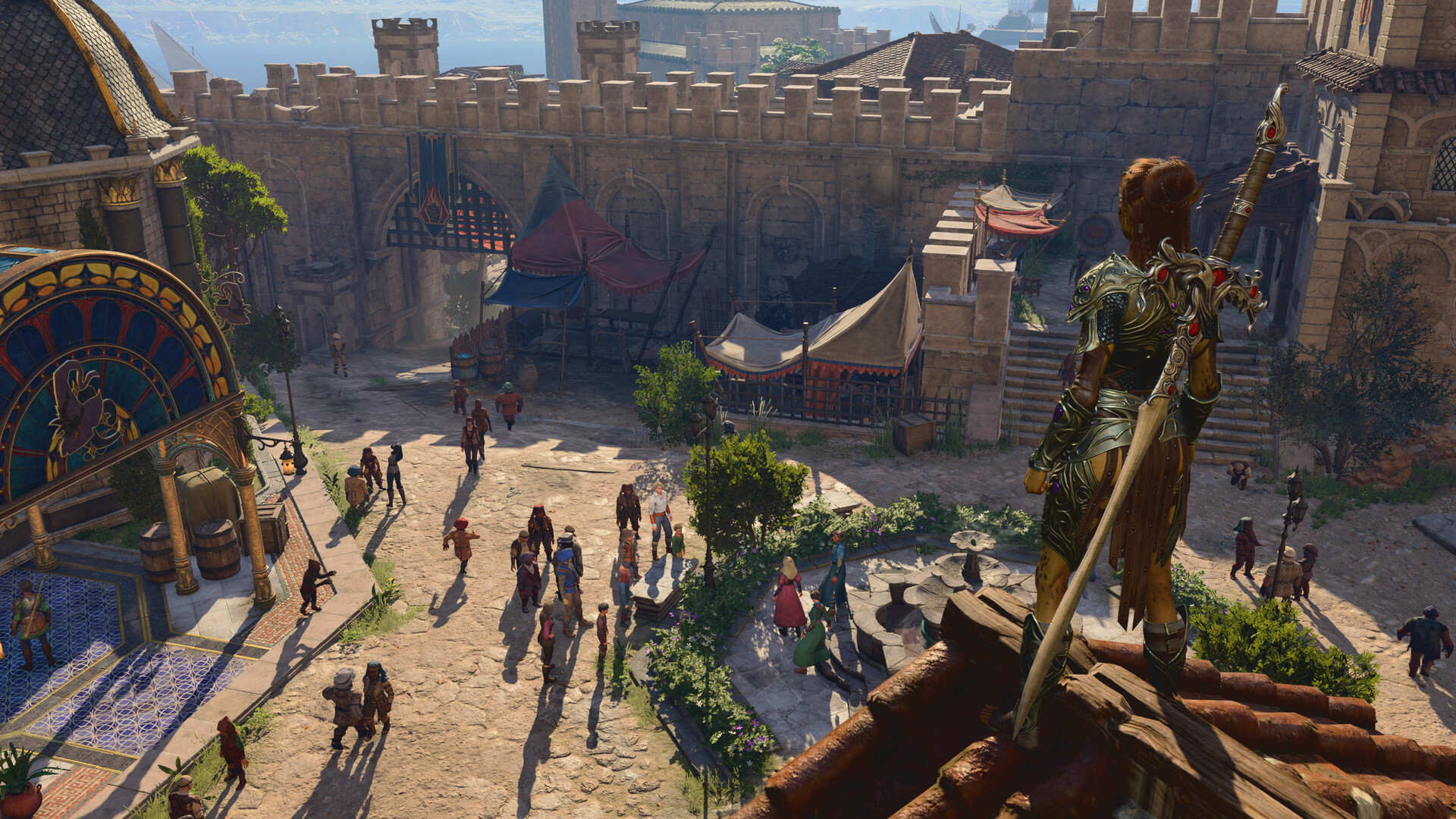
Quick Answer: Lae’zel, Astarion, Shadowheart, Minthara, and Gale are the strongest all-purpose companions, while Karlach, Wyll, Halsin, Jaheira, and Minsc remain excellent when your party composition or story choices suit them.
Ranking Methodology
This Baldur's Gate 3 tier list companions ranking evaluates party members by combat impact, build flexibility, action economy, availability across a typical playthrough, utility outside combat, and how much effort each character requires to perform well. The list is aimed at players planning balanced parties on Explorer, Balanced, Tactician, or Honour Mode, rather than at players ranking companions only by dialogue, personal preference, or romance appeal.
The primary ranking question is not simply “Who deals the most damage?” A high-performing companion should contribute consistently across different encounters. For example, Astarion gains value when the party can create advantage or isolate a target, Lae’zel is especially effective when the group needs reliable weapon pressure, and Shadowheart can fill several support or damage roles depending on how she is built. A companion who performs one job brilliantly may still rank below a flexible character who solves more encounter types.
The evaluation uses the following criteria:
- Combat ceiling: How powerful the companion can become with a coherent class, subclass, equipment, and ability-score setup.
- Combat floor: How useful the companion remains with a simple or lightly optimized build.
- Action economy: Whether the character can turn actions, bonus actions, reactions, concentration, and positioning into meaningful results.
- Party coverage: Whether the companion adds damage, control, healing, buffs, skill checks, mobility, or defensive tools that the rest of the group may lack.
- Build flexibility: Whether respeccing or multiclassing opens multiple effective roles.
- Encounter consistency: Whether the character performs across bosses, groups of weaker enemies, difficult terrain, ambushes, and dialogue-led situations.
- Story and route constraints: Whether recruiting or retaining the character depends on decisions that may not fit every campaign.
The supplied source material explicitly notes that companion differences can be relatively small and that players can change their active party when a current companion is not working for them. That principle matters here: tiers communicate practical power and convenience, not an objective verdict on character quality. A B-tier companion can be the correct pick for a particular run, while an S-tier companion can be awkward in a party that already duplicates their role.
This ranking is anchored to the current meta as represented by the available reference material. No reliable patch-specific companion balance data or dated official patch reference was supplied, so the article does not claim a precise patch number, win rate, damage percentage, or live-patch placement. The list is therefore an experience-based PvE ranking for the full campaign, with special attention to difficult encounters and repeatable party construction.
Baldur’s Gate 3 is a story-rich, party-based RPG in which player choices shape the campaign, according to the Steam store description Steam. That makes a purely numerical tier list especially limited. The best companion is often the one whose combat role, personal quest direction, and approval dynamics fit the decisions your protagonist is already making.
S/A/B Tier List
The table below gives the complete S/A/B ranking and a one-line explanation for every placement.
| Tier | Companion | Primary practical value | Why this rank |
|---|---|---|---|
| S | Lae’zel | Consistent martial pressure and strong frontline presence | She offers dependable weapon damage and remains highly effective when the party needs a direct answer to priority targets. |
| S | Astarion | Burst damage, mobility, and skill coverage | He rewards advantage, stealth, positioning, and target selection with some of the most explosive single-target turns. |
| S | Shadowheart | Support, utility, and adaptable divine magic | Her Cleric foundation supports healing, buffs, control, and damage, making her useful in almost every campaign. |
| S | Minthara | Paladin damage, buffs, and debuffs | Her Paladin build combines high single-target pressure with party support, although her route and build complexity reduce general accessibility. |
| S | Gale | Area damage, control, and spell versatility | He brings answers to clustered enemies, dangerous terrain, defensive checks, and encounters where martial damage alone is insufficient. |
| A | Karlach | Durable melee damage and aggressive momentum | She is easy to use, hits hard in close quarters, and fits parties that want a straightforward second frontline threat. |
| A | Wyll | Ranged pressure, control, and social utility | His Warlock toolkit can be effective, but his default Fiend setup is more demanding and scales less comfortably without adjustment. |
| A | Halsin | Durable spellcasting and battlefield control | He can cover crowd-control and frontline-adjacent duties, though his value depends more heavily on party needs than the S-tier picks. |
| A | Jaheira | Flexible late-campaign spell and weapon support | Her broad role coverage makes her valuable once available, especially when the party needs another adaptable caster or hybrid. |
| B | Minsc | Strong personality and usable frontline contribution | He can contribute in combat, but he generally offers less universal party coverage than the higher-ranked companions. |
The S tier contains the most reliable all-purpose picks. Lae’zel, Astarion, Shadowheart, Minthara, and Gale each solve a different party problem. Lae’zel provides direct martial pressure, Astarion converts positioning into burst, Shadowheart stabilizes the group, Minthara adds Paladin utility, and Gale expands the party’s spell-based options. Taking four S-tier characters is not always optimal because it can create duplicated roles, but almost any three of them can anchor a strong team.
The supplied companion reference places Minthara in S tier and second overall, specifically highlighting her single-target damage, buffs, debuffs, initiative, Superior Darkvision, and resistance to charm through Fey Ancestry Deltia’s Gaming. The same reference places Shadowheart third and Wyll seventh, which aligns with this list’s broad conclusion: Shadowheart has unusually high role flexibility, while Wyll needs more deliberate execution or a class change to compete with the top options.
The A tier companions are not weak. Karlach is often the most comfortable choice for players who want a durable melee character without spending much time planning a complicated rotation. Wyll can become much better when his class or subclass is adjusted, and a Warlock can bring ranged attacks and control that are valuable when the party lacks them. Halsin and Jaheira are more composition-dependent because their strengths overlap with other spellcasters and hybrids.
Minsc is placed in B because this list emphasizes repeatable mechanical value over personality or novelty. He can still be a good party member, particularly for players who want to use him as a martial character or who enjoy his story presence. The tier reflects opportunity cost: when only a few party slots are available, the higher-ranked companions usually provide more distinct coverage.
You might also like
- Baldur's Gate 3 patch 8 release date: Patch Notes Explained
- Baldur's Gate 3 best class patch 8: Patch Notes Explained
- Baldur's Gate 3 Steam Deck Update: Patch Notes Explained
- Baldur's Gate 3 Guide Character Creation
- baldurs gate 3 how to get lae'zel down: Beginner Guide for New Players
S-Tier Companions
S-tier companions are Lae’zel, Astarion, Shadowheart, Minthara, and Gale because they provide the strongest combination of immediate impact, scaling, and party-wide usefulness.
Lae’zel
Lae’zel is the most reliable S-tier martial companion for players who want a decisive frontline damage dealer. Her value comes from consistency: she does not need an elaborate setup to threaten priority targets, and she remains useful when a fight prevents stealth, interrupts concentration, or scatters the party across difficult terrain.
She is particularly strong when the protagonist is a support caster, ranged specialist, or skill-focused character. In that structure, Lae’zel can spend her turns forcing enemies to respond to her rather than allowing the entire encounter to develop on the opponent’s terms. She also pairs naturally with Shadowheart because support spells and defensive positioning help a frontline character stay active across multiple rounds.
Lae’zel’s main limitation is role overlap. A party built around Karlach, Minthara, and a martial protagonist may not need another close-range attacker. Her rank remains high because she is excellent at her job, not because every party needs that job twice.
Astarion
Astarion is one of the best companions for players who plan encounters around positioning, advantage, stealth, and target priority. His damage is most meaningful when the party identifies a dangerous enemy and creates a clean opportunity to remove or heavily weaken that target before the opposition can act repeatedly.
He is also valuable outside combat because a mobile, dexterity-oriented character can help with exploration and skill checks that a heavy frontline party may otherwise struggle to cover. This matters in a game where combat, dialogue, environmental interaction, and investigation frequently overlap. Astarion can justify a party slot even when another character technically deals similar damage, because his utility is not restricted to a single encounter type.
His weakness is that careless positioning lowers his ceiling. If he is left exposed, denied advantage, or forced into a prolonged frontal exchange, he becomes less distinctive. Astarion therefore ranks S for players willing to think about approach angles and target selection, while a player who prefers a simple stand-and-attack party may find Karlach easier.
Shadowheart
Shadowheart is an S-tier companion because her Cleric foundation allows her to cover support, healing, buffs, control, and damage. The reference material ranks her third and describes her as capable of functioning as a group healer, support specialist, or hard-hitting Trickery Domain damage dealer Deltia’s Gaming. That flexibility is the central reason she performs so well in this ranking.
She is especially valuable in blind or first-time campaigns. Players do not always know whether the next encounter will punish low defenses, require sustained healing, reward area control, or demand an answer to a particular enemy type. Shadowheart gives the party tools for several of those situations without forcing the protagonist to commit to a full support build.
Her practical ceiling improves when the player treats healing as one part of her kit rather than her entire identity. Defensive buffs, concentration management, positioning, and timely control can prevent more damage than repeatedly restoring health after the party has already lost momentum. Her limitations are mostly execution-related: poor concentration choices, weak positioning, or using every turn on low-impact healing can make her appear weaker than she is.
Minthara
Minthara is an S-tier option for players who can recruit her and are comfortable with a more demanding Paladin-centered playstyle. The supplied reference ranks her second overall and highlights her single-target damage, buffs, debuffs, initiative, Superior Darkvision, and charm resistance from Fey Ancestry Deltia’s Gaming.
Her strongest use case is a party that wants one character to combine frontline threat with team support. She can pressure a priority enemy while still contributing to the party’s broader combat plan through buffs or debuffs. This lets her compete with Lae’zel for a frontline slot rather than simply duplicating a basic weapon attacker.
Minthara ranks below Lae’zel for general accessibility because her recruitment path and build demands are less universally convenient. She is also less suitable for players who want to avoid route-specific decisions or who prefer a low-maintenance companion setup. In the right campaign, however, she can be one of the most impactful party members in the game.
Gale
Gale rounds out the S tier because spell versatility solves problems that weapon damage cannot. He is a strong answer when enemies group together, when the party needs area control, or when a fight rewards changing the battlefield rather than attacking one target at a time.
He works particularly well beside Lae’zel or Karlach. Martial companions can pressure enemies into predictable positions, while Gale punishes clusters or controls the routes that enemies need to use. He also gives the protagonist permission to specialize elsewhere; a character built around dialogue, stealth, or melee does not have to carry the party’s entire spell toolkit.
Gale is not automatically dominant. Spell selection, concentration, line of sight, and resource management matter. A player who uses only direct damage may get less value than expected, while a player who prepares for the encounter can make him feel irreplaceable. That distinction is why he belongs in S rather than being treated as a universal replacement for every other companion.
A-Tier Companions
A-tier companions are Karlach, Wyll, Halsin, and Jaheira because each can be excellent but usually requires a more specific party context, build choice, or campaign stage than the S-tier group.
Karlach
Karlach is the best A-tier pick for players who want direct, durable melee pressure with minimal setup. She is easy to understand in practice: move toward the important enemy, survive the return pressure, and keep forcing the fight to revolve around her presence. That simplicity is a genuine competitive advantage in a long campaign because fewer decisions are wasted on a poorly defined role.
She is excellent with Gale, who benefits when enemies are held in place or forced into predictable movement, and with Astarion, who benefits when Karlach creates a clear front line and draws attention away from a vulnerable damage dealer. She also works well with a protagonist focused on ranged attacks or dialogue skills.
Karlach falls short of S tier because her role is narrower than Shadowheart’s or Gale’s and overlaps heavily with Lae’zel and Minthara. If the party already has a strong melee specialist, replacing Karlach with a caster or skill-oriented companion can improve overall coverage. Still, an A-tier ranking should not obscure how effective she is in ordinary encounters.
Wyll
Wyll is ranked A in this editorial list despite the supplied reference placing him seventh overall and warning that the default Fiend Warlock setup becomes harder to execute over the course of the game Deltia’s Gaming. The difference reflects a practical distinction: his default configuration is less forgiving, but his overall toolkit remains valuable when the party needs ranged pressure, control, or a socially capable companion.
Players often underrate Wyll because they compare him with companions whose damage is more immediately visible. Warlock play is more sensitive to positioning, spell selection, limited spell slots, and maintaining concentration. When those factors are handled correctly, he can contribute without competing for the same space as Lae’zel or Karlach.
His most important improvement is intentional build direction. A respec or subclass adjustment can make him better suited to the party’s needs, a possibility also recommended in the source material. Wyll is therefore a strong pick for players who are willing to tune a companion rather than accepting every default setup unchanged. He drops toward B only when the player wants a completely passive, low-maintenance companion.
Halsin
Halsin is an A-tier companion for parties that need additional spellcasting, control, or a character capable of standing closer to the frontline than a fragile back-row caster. His value increases when the protagonist is not already covering those jobs and when the party expects encounters with multiple enemies rather than a single isolated target.
He pairs well with Astarion because battlefield control can create the space and target access that a precision damage dealer needs. He also complements Karlach: the melee character benefits when enemies are slowed, blocked, redirected, or otherwise prevented from freely surrounding the party.
Halsin is less universally ranked than Gale because players may already have a caster with a broader prepared toolkit. He can also create awkward duplication if the protagonist is already built around the same spellcasting role. His placement represents strong performance with a real opportunity-cost question, not a lack of power.
Jaheira
Jaheira is a flexible A-tier addition for parties that want another hybrid character capable of contributing through spells, weapons, and utility. She is especially attractive during the later parts of a campaign when the player has a clearer understanding of the party’s weaknesses and can choose a companion to fill a specific gap.
Her greatest strength is adaptability. She can support a party that needs another caster, help a martial-focused group add utility, or provide a different set of answers from a pure frontliner. She is a good choice beside Minthara when the party wants to avoid using another straightforward weapon specialist.
Jaheira is not placed in S because her timing and role overlap make her less universally relevant from the start of a campaign. A companion who arrives later or competes with established party members has to provide a clear reason to change the roster. Jaheira does that for flexible parties, but not for every composition.
B-Tier Companion
Minsc is placed in B tier because he remains usable and enjoyable but generally provides less universal value than the other companions in this ranking.
Minsc
Minsc can contribute effectively when the party needs another martial presence and the player is choosing companions primarily for story, personality, or campaign theme. He is not a trap pick. The B placement reflects comparative opportunity cost: Lae’zel, Karlach, Minthara, Astarion, and the adaptable casters usually provide a more clearly differentiated function.
This matters most in difficult fights, where every party slot should either solve a particular problem or amplify another character’s strengths. Minsc can attack, move into danger, and support a martial game plan, but he does not always add the same breadth of control, skill coverage, or role compression as the higher tiers.
He rises when the protagonist already supplies the party’s missing utility. For example, a party with a dedicated support caster, an area-control specialist, and a stealth-oriented damage dealer may have room for a character chosen mainly for frontline contribution and story presence. He also rises for players who are not trying to optimize every encounter.
The ranking should not be mistaken for a recommendation to leave him unused. Baldur’s Gate 3 supports party rotation, and the supplied reference emphasizes that players are free to choose the companions they prefer. Minsc is a good example of why tier lists need context: B-tier combat efficiency can still be the best campaign experience for a player whose priorities are character interaction and narrative continuity.
When the Ranking Changes
The ranking changes when party composition, campaign route, difficulty, or encounter requirements alter the value of each companion.
Scenario 1: The party already has a frontline martial character
Karlach and Lae’zel lose relative value when the protagonist is already a dedicated melee damage dealer and Minthara occupies the second frontline slot. In that situation, Shadowheart or Gale usually provides more useful coverage because support, control, and area damage address weaknesses that another weapon attacker does not.
A protagonist built around melee damage may still prefer Astarion because his positioning-based burst is different from ordinary frontline pressure. Wyll can also rise because ranged control gives the group a way to influence encounters before enemies enter melee range.
Scenario 2: The party lacks reliable support
Shadowheart moves from “excellent” to “near-mandatory” in practical value when the rest of the party lacks healing, defensive buffs, recovery tools, or divine utility. A party containing Astarion, Lae’zel, Karlach, and a martial protagonist may deal tremendous physical damage but struggle to recover from failed initiative, area damage, or prolonged fights.
In this composition, Shadowheart’s flexibility matters more than her personal damage ceiling. She can help preserve the party’s action economy by preventing characters from spending repeated turns recovering or disengaging. Gale can also rise because control reduces incoming pressure rather than repairing it afterward.
Scenario 3: The campaign prioritizes stealth and single-target elimination
Astarion becomes the clear priority when the group is built around stealth, surprise, scouting, and removing one dangerous enemy before the main battle develops. His value rises further when the protagonist can create advantage or use control effects that leave an enemy vulnerable.
Gale remains useful here, but his area-damage role may be less important than precise control. Karlach and Minsc fall slightly because a loud, direct assault can undermine the party’s preferred approach. Lae’zel remains strong if the stealth plan fails and the party must transition into a conventional fight.
Scenario 4: The player recruits Minthara
Minthara changes the frontline ranking because she combines Paladin pressure with buffs and debuffs. Once she is available and properly built, she can challenge Lae’zel or Karlach for a core party slot rather than functioning as an occasional specialist.
The best response is usually to rotate the redundant frontline companion rather than remove a caster or skill specialist. For example, Minthara, Shadowheart, Gale, and Astarion cover more distinct functions than Minthara, Lae’zel, Karlach, and another melee-focused protagonist.
Scenario 5: The player wants a low-maintenance party
Karlach and Lae’zel rise for players who do not want to manage complex spell preparation, concentration, or conditional positioning. Wyll and Minthara may fall because their strongest results require more deliberate setup, while Astarion falls if the player does not consistently exploit positioning and target priority.
A simple party is not automatically a weak party. In practice, reliable turns can outperform a theoretically stronger build that the player cannot execute consistently. This is particularly relevant in Honour Mode, where a bad tactical sequence can have a larger cost than a small difference in theoretical damage.
Patch Delta
No verified previous-patch comparison is available, so this article does not claim that a specific companion moved between patches.
The supplied material contains a current-style ranking and individual evaluations for Minthara, Shadowheart, and Wyll, but it does not provide a dated before-and-after tier list, official balance notes, or patch-specific combat data. Without that evidence, assigning a patch delta would create false precision. The rankings above should therefore be read as a current-meta editorial assessment rather than a documented change log.
The most important balance-adjacent point is that companion performance can change without the companion itself receiving a direct adjustment. A patch may alter a spell interaction, item behavior, class feature, enemy encounter, or respec convention, and those changes can affect a companion’s practical position. For example, a character whose value depends on concentration control may rise when defensive tools become easier to use, while a character built around one damage interaction may fall if that interaction is corrected.
The following table separates confirmed information from editorial interpretation:
| Patch-delta category | Confirmed status | Practical reading |
|---|---|---|
| Companion-specific movement | Unknown from supplied data | Do not treat this list as evidence that a named companion was buffed or nerfed. |
| Minthara’s S-tier placement | Supported by the supplied reference | Her Paladin damage, buffs, debuffs, initiative, and defensive traits justify a high ranking. |
| Shadowheart’s high placement | Supported by the supplied reference | Her support and subclass flexibility remain central to her value. |
| Wyll’s lower default placement | Supported by the supplied reference | His default Warlock setup is more demanding and may benefit from a class or subclass change. |
| Exact patch number | Not provided | This guide uses current-meta phrasing instead of inventing a version anchor. |
| Official balance statistics | Not provided | No win rate, damage share, or pick-rate claims are made. |
Players updating an older guide should compare their installed game version with official patch notes before changing a build solely because of this ranking. A tier list is most useful as a party-planning tool; it is not a substitute for checking whether a specific interaction still behaves as expected.
Common Mistakes
The most common companion mistakes come from treating the tier list as a fixed party prescription rather than a framework for matching roles to encounters.
Mistake 1. Keeping the same four companions for the entire campaign
Players often assume that changing the active party means they made an earlier mistake, so they keep the same roster even when a companion’s skills no longer fit the next section.
This happens because the game encourages attachment to characters and because party changes can feel like abandoning their stories. The fix is to rotate companions before difficult fights, exploration-heavy sections, and major dialogue sequences. Use Lae’zel for a high-pressure combat stretch, Astarion for stealth and precision work, and Shadowheart or Gale when the party needs utility.
Mistake 2. Ranking companions by default class alone
A companion’s starting class is a useful baseline, but it is not a permanent verdict on their potential. Wyll is a clear example: the supplied reference specifically notes that changing his class or subclass can improve his performance.
Players fall into this mistake because the character sheet presents the default setup as the intended identity. The workaround is to evaluate what the party lacks before deciding. If Wyll’s ranged control is useful but his current configuration is awkward, respec him around the role the party actually needs.
Mistake 3. Using Shadowheart only as a healing button
Shadowheart is frequently reduced to emergency healing, even though her Cleric foundation can support buffs, control, utility, and damage. The supplied reference emphasizes this versatility.
Players make this mistake because healing is easy to recognize and feels safe. The fix is to prevent damage through positioning, buffs, and control whenever possible, then reserve healing for stabilizing a character, enabling a key turn, or recovering from unavoidable area damage.
Mistake 4. Sending Astarion into open combat without a setup
Astarion loses much of his value when he is treated like a generic frontline attacker. His best turns usually depend on target selection, advantage, mobility, and access to a vulnerable enemy.
The mistake comes from seeing his damage after the setup and forgetting the setup itself. The practical fix is to scout, choose a priority target, create a favorable angle, and avoid ending his turn where several enemies can retaliate. If the battlefield becomes chaotic, use movement and disengagement tools to regain control.
Mistake 5. Duplicating frontline roles without a plan
Lae’zel, Karlach, and Minthara can all occupy valuable frontline space, but taking multiple similar companions without adding support or control may leave the party unable to handle ranged enemies, clustered targets, or defensive encounters.
Players fall into this pattern because frontline damage feels universally useful. The fix is to ask whether the next party slot adds a new solution. Replace the third melee character with Gale, Shadowheart, Astarion, or Wyll when the party lacks area control, support, stealth, or ranged pressure.
Mistake 6. Ignoring concentration and positioning
Many companion builds become weaker when the player treats every spell or ability as independent of the battlefield. Concentration can be lost, melee characters can be blocked, and ranged attacks can suffer when line of sight is poor.
This mistake happens because the character sheet highlights abilities more clearly than it explains turn sequencing. The fix is to establish the battle plan before spending the first major action: decide who holds concentration, who creates space, who attacks the priority target, and who remains protected from counterattack.
Mistake 7. Treating B tier as unusable
Minsc’s B-tier position is not a statement that he cannot complete encounters. It means that, under an all-purpose optimization lens, other companions usually offer more distinct or reliable coverage.
Players make this mistake because tier labels look absolute. The fix is to compare the companion against the actual party, not the table in isolation. If the party already has support, control, stealth, and ranged damage, Minsc may be exactly the role it needs.
Pro Tips
Advanced companion play comes from building the party around encounter plans, resource timing, and role compression rather than simply selecting the highest labels.
Tip 1. Assign the first-turn job before combat starts
Before initiating a difficult encounter, decide whether the opening turn belongs to Astarion’s priority-target burst, Gale’s area control, Lae’zel’s pressure, or Shadowheart’s defensive setup. This prevents all four characters from spending their strongest actions on the same low-value enemy.
Tip 2. Respec around missing coverage
When Wyll, Halsin, Jaheira, or another flexible companion feels underpowered, first identify the party’s missing function. A ranged control role, a support role, a hybrid frontliner, and an area-control caster require different builds. Respeccing is most effective when it solves a specific gap rather than chasing a generic damage template.
Tip 3. Use party rotation to preserve resources
Do not wait until a companion is nearly unusable before changing the roster. Rotate between characters whose abilities answer different encounter patterns. Astarion can handle scouting and precision work, while Gale and Shadowheart can be reserved for sequences where spell utility has the greatest impact.
Tip 4. Pair control with burst instead of treating them as separate plans
Gale’s battlefield control becomes more valuable when Astarion or Lae’zel can immediately exploit the space it creates. Likewise, Shadowheart’s support tools can make Minthara or Karlach more likely to maintain pressure. The strongest turns often come from two companions amplifying one another rather than each dealing independent damage.
Tip 5. Protect the companion whose resource is winning the fight
If Gale is maintaining the spell that controls the encounter, protect his concentration. If Astarion is positioned to remove the priority target, do not force him into unnecessary retaliation. If Shadowheart is sustaining the group, avoid spending her action economy on low-impact attacks. The correct defensive play is often the one that preserves the party’s most valuable active effect.
Tip 6. Use the lower-ranked companion when the story route makes them stronger
Minthara’s ranking assumes that the player can recruit her and wants to accommodate the route and build decisions involved. Wyll, Halsin, Jaheira, and Minsc may become better choices when their personal stories align with the campaign’s direction. Narrative availability and mechanical strength are connected because a companion who is present for relevant scenes can be more valuable to the campaign than a theoretically stronger character left at camp.
Tip 7. Build around the protagonist’s weakness, not their favorite companion
If the protagonist already covers dialogue, stealth, and ranged damage, the party may need a frontliner and support caster. If the protagonist is a melee specialist, adding Lae’zel and Karlach may be less useful than choosing Shadowheart and Gale. Companion selection should complete the character’s profile rather than repeat it.
Building the Best Party From the List
The best party is usually one that combines a damage anchor, a support or control anchor, a flexible specialist, and a character who covers the protagonist’s missing skills.
A balanced core can use Lae’zel, Shadowheart, Gale, and Astarion. Lae’zel provides direct frontline pressure, Shadowheart provides support and utility, Gale handles area damage and control, and Astarion specializes in mobility and single-target burst. This composition is strong because each member has a distinct job and because the party can transition between stealth, open combat, control, and recovery.
A more aggressive core can replace Gale with Karlach or Minthara. Lae’zel, Karlach, Shadowheart, and Astarion create a high-pressure party that wants to close distance quickly and remove priority targets before extended control becomes necessary. The tradeoff is reduced access to broad area manipulation, so the protagonist may need to cover that weakness through class selection, consumables, or prepared abilities.
A caster-heavy structure can use Shadowheart, Gale, Halsin, and Wyll around a martial protagonist. This setup offers extensive spell utility and ranged options, but it demands more attention to concentration, positioning, and resource management. It is powerful when the player understands encounter pacing and less comfortable when every fight is approached as a prolonged exchange of basic attacks.
Minthara changes the party-building equation because she compresses frontline pressure and support into one slot. A party containing Minthara, Shadowheart, Gale, and Astarion has clear role separation and strong access to both damage and utility. A party containing Minthara, Lae’zel, Karlach, and a melee protagonist may have excessive physical overlap.
The table summarizes practical templates:
| Party template | Recommended companions | Best use case | Main weakness |
|---|---|---|---|
| Balanced core | Lae’zel, Astarion, Shadowheart, Gale | General campaign coverage and varied encounters | Requires active positioning and spell management |
| Aggressive frontline | Lae’zel, Karlach, Shadowheart, Astarion | Fast melee pressure and priority-target removal | Less broad area control |
| Paladin-centered | Minthara, Astarion, Shadowheart, Gale | Single-target pressure combined with buffs and control | Depends on recruitment route and build comfort |
| Ranged-control core | Wyll, Gale, Shadowheart, Astarion | Encounters where distance and battlefield manipulation matter | Less forgiving if enemies reach the back line |
| Flexible hybrid group | Jaheira, Halsin, Shadowheart, Karlach | Players who want overlapping spell and frontline options | Role overlap can reduce specialization |
| Story-first rotation | Any preferred four, including Minsc | Character-focused campaigns and personal quest continuity | May require more tactical adaptation |
The most important rule is to rotate before the fight exposes a weakness. A party that is technically lower on the tier list may outperform an S-tier lineup when it is built around the encounter’s likely demands. Use the ranking to understand opportunity cost, then let the protagonist, route, and preferred playstyle determine the final roster.
Related Guides
The most useful companion-focused follow-up guides should explain builds, party roles, recruitment choices, and encounter-specific substitutions rather than repeat the same tier placements.
- Baldur’s Gate 3 Best Companion Builds
- Baldur’s Gate 3 Best Party Compositions
- Baldur’s Gate 3 Best Classes and Subclasses
- Baldur’s Gate 3 Lae’zel Build Guide
- Baldur’s Gate 3 Astarion Build Guide
- Baldur’s Gate 3 Shadowheart Build Guide
- Baldur’s Gate 3 Gale Build Guide
- Baldur’s Gate 3 Minthara Build and Recruitment Guide
- Baldur’s Gate 3 Honour Mode Party Guide
A build guide should explain how to turn a companion’s class foundation into a complete combat role, including ability priorities, equipment principles, and the kinds of encounters where that role is strongest. A party-composition guide should address duplication, action economy, concentration, and the tradeoff between damage and utility.
Recruitment-focused guides are also valuable because availability can change the practical ranking. Minthara is a prominent example: the supplied reference ranks her highly but describes her build and recruitment as more complex. A player who cannot or does not want to use that route needs a replacement plan, usually involving Lae’zel, Karlach, Gale, or Wyll depending on the missing role.
The best sibling content should preserve the same distinction used in this article: a character’s narrative appeal and mechanical value are both legitimate, but they answer different questions. A companion tier list helps choose a strong roster, a build guide helps optimize one character, and a party guide helps ensure those characters do not compete for the same slot.
Sources
See also
- Baldur's Gate 3 How to Open Gilded Chest: Beginner Guide
- Baldur's Gate 3 Walkthrough Act 2
- baldurs gate 3 tips and tricks for beginners
- Baldur's Gate 3 Walkthrough Act 1
- baldurs gate 3 how to get owlbear cub Beginner Guide
- baldurs gate 3 how to get to the underdark: Beginner Guide
- Baldur's Gate 3 bg3 tactician difficulty complete guide
- Baldur's Gate 3 Walkthrough Act 3
- baldurs gate 3 walkthrough ign: Complete Act-by-Act Guide
- Baldur's Gate 3 guide act 1 Walkthrough
Screenshots


Reviewed by
BG3 Hub Editorial
Expertise: Editorial team behind BG3 Hub. Content is compiled from official patch notes, community wikis, and playthrough notes, then reviewed and updated on schedule.
Sources
Baldur's Gate 3 Companions Guides →
Browse the complete companions collection and its focused guides.
Related Guides
🔥 Popular Guides
Baldur's Gate 3 Tier List Patch 8
Patch 8 subclass tier list explained with winners, losers, and what to respec or reroll today.
Baldur's Gate 3 Character Tier List Maker: Best Classes and Builds
S/A/B tier BG3 class rankings, matchup notes, mistakes, and pro tips for the best character builds.
Baldur's Gate 3 Tactician Class Tier List
Compare every BG3 class for Tactician, with S, A, and B rankings, matchup flips, mistakes, tips, and party advice.
Baldur's Gate 3 every possible fate for arabella save
Every possible fate for Arabella in BG3, including save, death, and grove consequences, plus where to trigger the quest and best outcomes.
📋 Patch Notes & Updates
🛠️ Popular Tools
Was this guide helpful?
Rate this guide so we can improve it.
Share your own tip
Found something not in the guide? Submit it below — our editors review every tip before publishing. No account required.