 Baldur's Gate 3
baldurs gate 3 how to get to the underdark: Beginner Guide
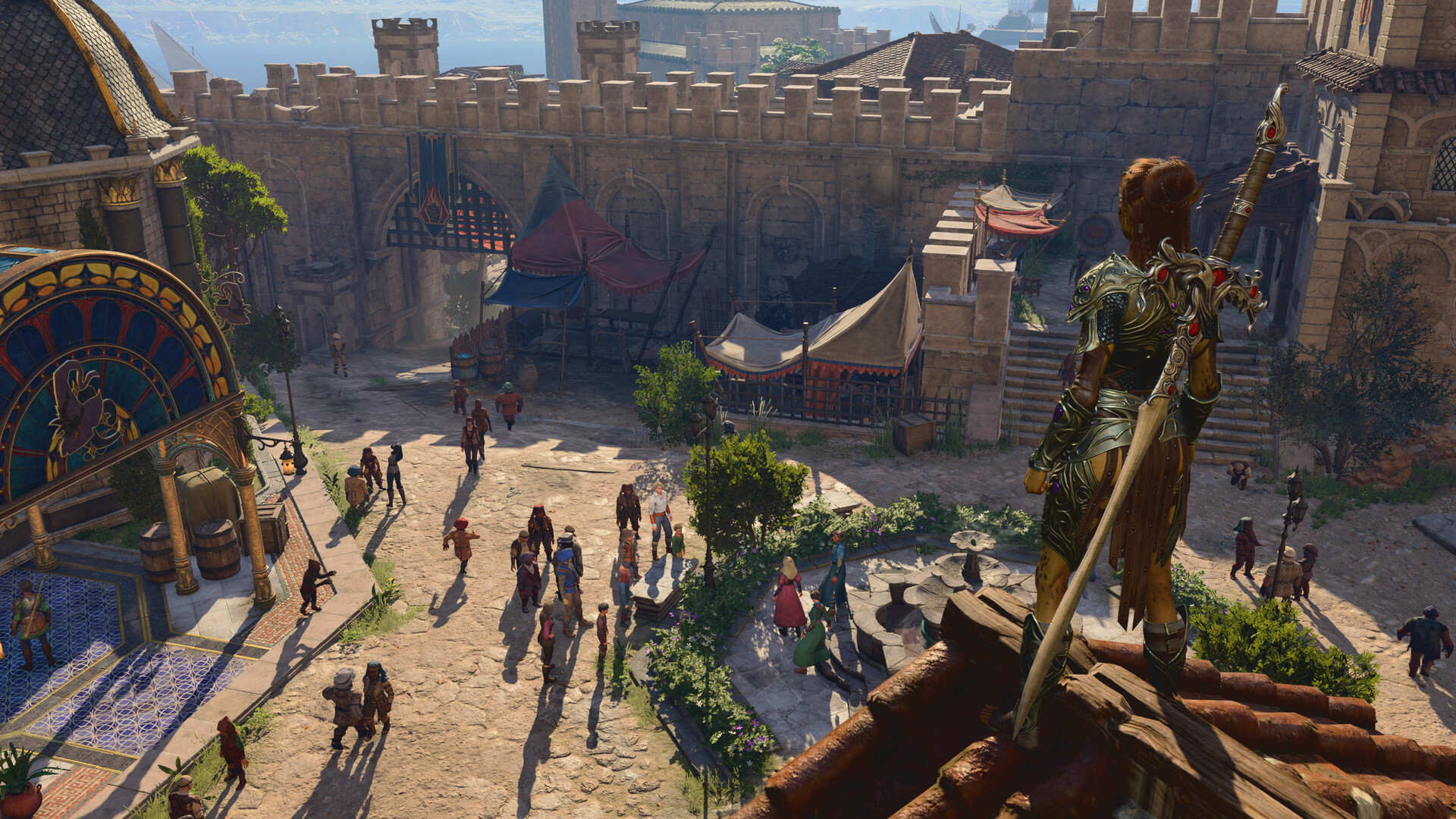
Quick Answer: In Baldur’s Gate 3, you can reach the Underdark through several routes in Act 1, most famously via the Goblin Camp, the Defiled Temple, or the Whispering Depths, with each path rewarding different loot, fights, and shortcuts.
Baldur’s Gate 3 is a story-rich, party-based RPG where your choices shape the whole ride, which is why the Underdark feels like such a big milestone instead of just “some cave downstairs” Source. The game’s scope is huge, and even the early hours can branch into wildly different outcomes, so this guide keeps things beginner-friendly while still giving you a clean path to the subterranean zone.
What the Underdark actually is and why beginners should care
The Underdark is one of the most important early-game regions because it opens up better loot, stronger encounters, and new ways to progress the main Act 1 flow. For a new player, it is less about “beating” a zone and more about reaching a deeper layer of the game where the level design starts to reward exploration, vertical movement, and party planning.
You will usually hear players talk about the Underdark as if it were a hidden second half of Act 1, and that is basically true. It is not a tiny secret room; it is a full subterranean area with multiple entry points, a distinct atmosphere, and several quest threads that can carry your party into later content. If you are searching for baldurs gate 3 how to get to the underdark, the most useful mindset is this: you are looking for a route, not a single door.
There are a few practical reasons beginners should prioritize reaching it:
- The area gives you more exploration options than the surface map alone.
- It usually rewards careful scouting, which helps teach core BG3 systems.
- It often contains useful items, XP, and quest progress that make Act 1 smoother.
- It can be reached from several places, so you are not locked into one “correct” path.
Three common examples of how players first discover it:
- By finding the Whispering Depths beneath the Blighted Village.
- By sneaking through or fighting in the Goblin Camp and using the Defiled Temple.
- By progressing through the Myconid Colony route after entering underground tunnels.
For beginners, the key takeaway is simple: the Underdark is where Baldur’s Gate 3 starts asking you to play the long game. You will feel that shift in encounter difficulty, enemy positioning, and how much value you get from stealth, crowd control, and party synergy.
baldurs gate 3 how to get to the underdark: every reliable route
The easiest answer to baldurs gate 3 how to get to the underdark is that you have multiple reliable entry paths, and the best one depends on your party, your quests, and whether you prefer sneaking, puzzle-solving, or straightforward combat.
Route 1: The Whispering Depths under the Blighted Village
The Whispering Depths is one of the cleanest beginner routes because it teaches you how BG3 hides major content behind ordinary-looking places. You can reach this area by exploring the Blighted Village and finding the well entrance, then navigating the spider-filled underground spaces below it.
This route is popular because it is easy to miss but not too hard to access. Once inside, you are often dealing with caves, webbing, and hazardous terrain, which means a cautious approach pays off. If you are underprepared, the area can be rough, but it is still one of the most beginner-friendly “I found something secret” experiences in the game.
Useful examples in this route:
- The Blighted Village well as the access point.
- The Phase Spider Matriarch area, which teaches you that boss fights are often about the environment as much as the enemy.
- Side tunnels that can lead you closer to deeper underground regions.
Route 2: The Goblin Camp and Defiled Temple
The Goblin Camp route is probably the most famous because it naturally funnels you toward the Underdark if you keep exploring instead of just talking your way through the camp. The Defiled Temple is the major landmark here, and it connects to a puzzle-like entry path into the lower caverns.
This is a great route if you like combat and dialogue in equal measure. You can sneak, bluff, fight, or carefully pick your targets. Beginners should remember that the Goblin Camp is not just one quest hub; it is a layered space where one wrong move can pull in half the camp, but a smart route can get you underground with minimal pain.
Useful examples in this route:
- The Defiled Temple moon puzzle area.
- The Goblin Camp itself, which can be approached socially or aggressively.
- The hidden passage below the temple that leads toward the Underdark.
Route 3: Alternative tunnels and connected underground spaces
Baldur’s Gate 3 loves making one underground region connect to another, so once you find one cave network, you may stumble into a second path naturally. This is why the Underdark feels so satisfying to reach: it often looks like you “found” it, even though the game has been quietly directing you there.
Examples of connected routes include:
- Cave systems that branch from quest areas rather than obvious exploration points.
- Underground passages tied to optional objectives or hidden loot.
- Travel routes that lead into the Myconid Colony and nearby subterranean landmarks.
Which route should you pick first?
| Route | Best for | Difficulty feel | Beginner note |
|---|---|---|---|
| Whispering Depths | Explorers and cautious players | Moderate | Great if you like hidden doors and tight dungeon spaces |
| Goblin Camp / Defiled Temple | Combat and quest-focused players | Moderate to high | Offers the most iconic “path to the Underdark” experience |
| Connected tunnels | Curious players and looters | Variable | Easy to wander into if you fully explore the map |
If you are asking which one is “best,” the honest answer is: the best route is the one that matches your party’s strengths. If your team has solid stealth and ranged options, the Whispering Depths feels safer. If your party is strong in dialogue and burst damage, the Goblin Camp route can be smoother. If you are the type who opens every door and checks every crack in the wall, you may find the underground by accident before you even finish the surface quests.

You might also like
- baldurs gate 3 how to recruit minthara: Beginner Guide for New Players
- baldurs gate 3 how to free shadowheart: Beginner Guide
- baldurs gate 3 best class for beginners: A Beginner Guide to Starting Strong
- baldurs gate 3 beginner class: Beginner Guide for New Players
- baldurs gate 3 how to multiclass: Beginner Guide for New Players
First-hour checklist for a smooth start
Your first hour should focus on party setup, exploration habits, and one clean underground objective rather than sprinting ahead blindly. Baldur’s Gate 3 punishes rushed play a little more than many RPGs, but it is also extremely generous to players who pause, inspect, and use their whole toolkit.
What to do in the first ~60 minutes
- Recruit your first companions as soon as you can so you are not wandering with a lonely one-person disaster squad.
- Talk to everyone in your immediate route because early dialogue often unlocks shortcuts, side quests, and better positioning in later areas.
- Loot containers and corpses carefully, but do not overload yourself with junk you will never use.
- Set up a balanced party with at least one melee frontliner, one ranged or caster option, one utility-focused character, and one flexible support role.
- Learn to use high ground and cover because BG3 combat is basically a game of “who gets the better angle?”
- Mark one underground goal like the Whispering Depths or Goblin Camp instead of trying to clear the entire map at once.
- Save often, especially before dialogue checks, suspicious levers, and obvious boss rooms.
A beginner mistake is trying to “finish the area” before you know how the game wants you to move. A better approach is to build momentum. For example, if you find Astarion, Gale, and Shadowheart, that already gives you a better early toolkit than many players realize. If you then continue toward the Blighted Village, you can test stealth, combat, and dialogue before heading underground.
This is also the time to get comfortable with the game’s rhythm. BG3 is not about speed; it is about efficiency. A good first hour might include:
- one major exploration objective,
- one combat encounter you actually learn from,
- one merchant visit,
- and one long rest after your resources get stretched.
If you want to reach the Underdark quickly, do not treat the opening like a checklist of chores. Treat it like calibration. You are building the habits that will keep the next ten hours from becoming a chain reaction of “oops.”
Resource priority order: what to spend, hoard, and use first
Your best resource priority is simple: spend consumables that help you survive, hoard rare utility items, and save long-term crafting or upgrade materials for when they solve a real problem. BG3 is generous enough that beginners often over-hoard out of fear, then die with a backpack full of “someday” items.
Spend first
- Healing potions when a character is in real danger, not just mildly scratched.
- Scrolls that solve a situation your party currently cannot handle.
- Throwables and surface items such as grease, alchemist’s fire, or similar tools when a fight is getting messy.
- Camp supplies when you need a long rest to recover spell slots and abilities.
Hoard first
- Rare scrolls that cover unusual spells or emergency utility.
- Special arrows, grenades, and one-time crowd control items for hard fights or boss rooms.
- Quest items unless the quest clearly tells you they are no longer needed.
- Class-specific gear that sounds bad now but may become valuable after a level-up or respec.
Use or convert first
- Basic healing items if your party is taking repeated chip damage.
- Low-value alchemy components if you actually craft from them.
- Duplicate gear that no one uses, especially if it can be sold to fund better armor, weapons, or spell scrolls.
Here is a beginner-friendly priority table:
| Resource type | Early priority | Best use case | Beginner mistake to avoid |
|---|---|---|---|
| Healing potions | High | Emergency healing mid-fight | Saving them until someone is already down |
| Scrolls | High | Covering missing spells | Hoarding them forever “just in case” |
| Camp supplies | High | Long rests and recovery | Avoiding rests so long that your party collapses |
| Throwables | Medium-high | Opening fights with advantage | Forgetting to use them at all |
| Crafting materials | Medium | Situational upgrades | Selling everything before checking recipes |
A practical example: if you have a wizard and no one in your party can reliably handle a certain hazard, a scroll can be worth more than another piece of random loot. Another example: if your frontliner is at low health before a big fight, burning a potion now is better than watching them get knocked out and then panicking later. Third example: if you are about to enter the Goblin Camp or a spider tunnel, your best “resource” might actually be a full long rest, because spells and class features matter more than a backpack full of junk.
The big beginner lesson is that survival value beats theoretical value. If an item helps you win a fight now, it is probably worth more than whatever fantasy version of “perfect inventory management” you had in mind.
Common mistakes beginners make and how to fix them
Beginners usually fail in Baldur’s Gate 3 because they play like it is a straight corridor RPG, not a toolbox game where positioning, preparation, and dialogue all matter. The good news is that almost every early mistake has a clean fix.
Mistake 1: Running into fights with an unbalanced party
Players do this because every companion looks cool and it is tempting to just grab whoever. The fix is to make sure you have a frontliner, a ranged damage dealer, a utility character, and some form of support or control. For example, pairing Lae’zel, Shadowheart, Gale, and Astarion gives you a much more flexible early team than four characters doing the same job.
Mistake 2: Ignoring vertical position
People fall into this because the terrain looks decorative until combat starts. The fix is to start fights from high ground whenever possible and move ranged characters to rooftops, ledges, or raised platforms. Good examples include village roofs, cliff edges, and elevated temple areas where enemies have to waste movement to reach you.
Mistake 3: Hoarding every consumable
New players often think the game will become harder later, so they “save” everything. The fix is to spend healing potions, scrolls, and throwables during fights that actually matter. If an item would prevent a wipe or turn a tough encounter into an easy one, use it.
Mistake 4: Forgetting to save before dialogue and puzzle moments
This happens because players trust the vibe and assume one bad roll is part of the story. The fix is to make manual saves before major conversations, suspicious levers, and temple puzzles. If a dialogue check affects a companion, merchant, or hidden path, you want a rollback option.
Mistake 5: Trying to brute-force every puzzle
Beginners often assume every locked door is meant to be kicked down. The fix is to inspect the environment, rotate the camera, and look for alternative entry points, switches, pressure plates, or nearby clues. The Defiled Temple and Whispering Depths both reward patience more than raw aggression.
Mistake 6: Overexploring while underrested
Players do this because they want “just one more room” before camping. The fix is to long rest before your spellcasters are dry and your frontliners are half-dead. BG3 expects you to rest; using it is not weakness, it is the intended pacing.
Mistake 7: Selling useful-looking gear too early
This happens because inventory clutter gets annoying. The fix is to check item tags, class fit, and passive effects before selling. A piece of armor or a weapon that looks mediocre now may be exactly what a different companion needs after the next level-up.
If you want the fastest improvement as a beginner, fix mistakes 1, 2, and 4 first. Those three alone will make the early game feel much less chaotic.
Pro Tips for getting through the early game smarter
These advanced tips go beyond “click enemies until they fall over,” and they matter a lot if you want your route to the Underdark to feel smooth instead of accidental.
Tip 1: Start fights on your own terms
If you can enter combat from stealth, a dialogue advantage, or a hidden position, do it. Opening with a surprise attack, a disabling spell, or a well-placed ranged hit can change the whole encounter before enemies fully react. This is especially useful around the Goblin Camp, where one clean opener can prevent a messy group brawl.
Tip 2: Treat the camera like a scouting tool
Before you enter a room, move the camera around corners, up onto ledges, and behind obstacles. BG3 hides ladders, crawlspaces, and side routes everywhere, and the camera often reveals them before your character does. This helps in the Blighted Village, the Whispering Depths, and temple interiors where alternative paths matter.
Tip 3: Keep one character flexible for utility
A character who can do more than just damage is a gift. A spellcaster with control spells, a rogue with lockpicking, or a cleric with support magic can save you from having to backtrack for a specific solution. Utility wins more early fights than raw damage does, even if raw damage is flashier.
Tip 4: Use surfaces to control the battlefield
Grease, fire, poison, webs, and other ground effects are not just visuals; they are position control. If enemies have to cross dangerous terrain to reach you, you are effectively buying time and forcing mistakes. This matters a lot in cave systems and tunnels where chokepoints are common.
Tip 5: Bring dialogue skills into your party plan
A high-Charisma character can often turn a dangerous encounter into a safer one or unlock a path you would otherwise miss. A good example is approaching hostile groups where a Persuasion, Deception, or Intimidation option can preserve resources. Even when a fight still happens, the setup can be much better.
Tip 6: Long rest before your team becomes a liability
If your spell slots are gone, your hit points are low, and your consumables are draining, stop pretending you are “fine.” Long rest, reset, and go back in prepared. The game is balanced around resource management, not heroically limping through every room.
Tip 7: Read quest rewards before you leave an area
Some early quests give gear, companions, or route advantages that matter more than random loot. Before you move on, check whether you gained anything that changes your next move. A new ring, a useful scroll, or a companion dialogue change can make the path underground much easier.
Graduation threshold: when you are no longer a beginner
You are out of the beginner phase when you can predict fights, manage resources without panic, and choose routes through the Underdark based on strategy instead of surprise. That moment usually arrives once you stop asking “what is this item?” for every other thing in your inventory and start asking “what does this solve?”
A few signs you have graduated:
- You know when to long rest without feeling guilty.
- You can build a party that covers damage, defense, utility, and conversation.
- You look for high ground, chokepoints, and environmental hazards automatically.
- You save before risky conversations and puzzles without being reminded.
- You can enter the Underdark and immediately decide whether to push deeper, farm loot, or complete nearby quest objectives first.
Examples of beginner-to-intermediate growth:
- You stop wasting scrolls on random trash fights and save them for encounters that matter.
- You start using companion abilities in combinations instead of one character acting like a lone hero.
- You recognize that the Goblin Camp, Whispering Depths, and similar areas are not just obstacles but opportunities to set up your next quest chain.
A good benchmark is this: if you can reach the Underdark, survive the opening encounters, and keep your party functional without feeling lost, you are already past the “I have no idea what I’m doing” stage. At that point, Baldur’s Gate 3 becomes less about survival and more about optimization, build identity, and story consequences.
That is also when it becomes worth reading deeper strategy guides. Once you understand the basics, you can start deciding whether your next step is a stronger build, a better party composition, or a more efficient Act 1 walkthrough.
Related Guides
- get owlbear cub tips — BG3 best early-game builds for beginners
- related guide — Baldur’s Gate 3 companion recruitment guide
- baldur's gate 3 vs elden ring — BG3 Act 1 walkthrough and quest order
- related guide — Baldur’s Gate 3 class tier guide for new players
- beginner class reddit tips — Baldur’s Gate 3 combat basics and action economy
- related guide — BG3 hidden loot and secret areas guide
- beginner tips reddit tips — Baldur’s Gate 3 stealth guide for beginners
Sources
- https://store.steampowered.com/app/1086940/
- https://en.wikipedia.org/wiki/Baldur's_Gate_(video_game)
See also
- Baldur's Gate 3 Character Builder: Paladin Oathbreaker Frontliner
- Baldur's Gate 3 Paladin Build Guide
- Baldur's Gate 3 Druid Builds
- Baldur's Gate 3 guide for beginners: A Practical Start-to-Finish Primer
- Baldur’s Gate 3 Beginner Guide: Getting Started Without Bricking Your Run
- Baldur’s Gate 3 Best Beginner Builds Guide
- Baldur’s Gate 3 Beginner Guide: How to Start Strong Without Getting Smited by the Tutorial
- Baldur's Gate 3 Monk Build
- Baldur’s Gate 3 Fun Builds: A Complete Build Guide
- Baldur's Gate 3 Jaheira Build
Screenshots


Reviewed by
BG3 Hub Editorial
Expertise: Editorial team behind BG3 Hub. Content is compiled from official patch notes, community wikis, and playthrough notes, then reviewed and updated on schedule.
Sources
Related Guides
%27/><stop offset=%271%27 stop-color=%27hsl(80,50%,18%)%27/></linearGradient></defs><rect width=%27460%27 height=%27215%27 fill=%27url(%23g)%27/><text x=%27230%27 y=%27115%27 text-anchor=%27middle%27 font-family=%27sans-serif%27 font-size=%2724%27 font-weight=%27700%27 fill=%27rgba(255,255,255,0.85)%27>App 1086940</text><text x=%27230%27 y=%27142%27 text-anchor=%27middle%27 font-family=%27sans-serif%27 font-size=%2711%27 fill=%27rgba(255,255,255,0.6)%27>no image yet</text></svg>)
🔥 Popular Guides

bg3 class tier list act 1
Act 1 BG3 class tier list with S/A/B ranks, matchup flips, mistakes, tips, and an FAQ for new and returning players.
BG3 Top Baldur's Gate 3 Builds Guide
Best BG3 builds explained with roles, stats, gear, counters, budget swaps, and pro tips for any difficulty.
bg3 best builds for honor mode: Baldur’s Gate 3 Build Guide
Top BG3 Honor Mode builds, stat priorities, gear, counters, and budget options for a safer Baldur’s Gate 3 run.
Baldur's Gate 3 Class Tier List
S, A, and B class rankings for BG3 with methodology, situational flips, patch notes, mistakes, pro tips, and FAQs.
📋 Patch Notes & Updates
🛠️ Popular Tools
Was this guide helpful?
Rate this guide so we can improve it.
Share your own tip
Found something not in the guide? Submit it below — our editors review every tip before publishing. No account required.