 Baldur's Gate 3
baldurs gate 3 how to free shadowheart: Beginner Guide

Quick Answer: Free Shadowheart in the prologue by looting the pod area, using the nearby console to release her, and then recruiting her before the Nautiloid escape; if you miss that moment, you can still meet and help her later on the beach.
Baldur’s Gate 3 is a story-rich, party-based RPG set in Dungeons & Dragons where your choices shape both combat and the fate of your companions, so early decisions matter a lot. Source
How to Free Shadowheart in the Opening Sequence
Freeing Shadowheart is one of the first important actions you can take, and the safest beginner method is to do it during the Nautiloid prologue before the ship crashes. You encounter her trapped in a pod in the area with mind flayers, devils, and other stranded victims, and the interaction is straightforward once you know what to click. If you are searching for baldurs gate 3 how to free shadowheart, this is the exact moment most new players mean.
The key idea is simple: explore the pod room carefully, interact with the nearby control panel, and open her pod. That immediately puts her on your path as a temporary ally and then as a recruitable companion after the crash sequence. The game does not require a special class, rare item, or hidden stat check for the basic rescue. What matters is not running past the room in the panic of the intro.
What to do step by step
- Move through the Nautiloid until you reach the room containing Shadowheart’s pod.
- Look for the control console near the pods rather than clicking random scenery.
- Open her pod, then speak with her once she is free.
- Continue through the prologue and make sure she survives the escape sequence.
- After the crash, look for her again on the beach if the opening encounter ends awkwardly.
There are a few useful examples that help beginners understand the scene. In one run, you may free Shadowheart and have her join your side immediately for the rest of the prologue. In another, you might rescue her, then get separated during the emergency and have to regroup after the crash. In a third, you can miss the pod entirely, which is not fatal because the game gives you another chance to meet her later.
Why this early rescue matters
Freeing her early is useful because Shadowheart is a strong support companion for beginners. She brings healing, buffs, and reliable early-game utility that makes the first fights less punishing. That can matter in encounters like the early mind flayer chaos, the beach skirmishes near the crash site, and your first few turns against low-level bandits or wildlife. Even if you do not plan to keep her in your final party, learning how to free her teaches you the game’s rhythm: inspect the environment, interact with obvious mechanisms, and talk to every companion you find.
A beginner-friendly habit is to treat every locked or trapped companion encounter the same way. If you see a pod, cage, or magical restraint, check for the nearby lever, button, or control rune before attacking blindly. Baldur’s Gate 3 rewards curiosity, and Shadowheart’s rescue is one of the clearest early lessons the game offers.
First-Hour Checklist
Your first hour should focus on survival, party setup, and learning the basics of exploration, because Baldur’s Gate 3 is much easier when you stabilize your team early. The goal is not to clear everything perfectly; the goal is to leave the opening area with a functioning party, a few consumables, and a basic grasp of combat and dialogue flow.
Do these actions first
- Free Shadowheart in the Nautiloid and recruit her if possible.
- Recruit at least one other companion you find early so your party has more options.
- Loot every obvious container in the starting areas, especially camp supplies, scrolls, and healing items.
- Read weapon and armor tooltips before equipping gear.
- Save often before dialogue checks or suspicious traps.
- Try one combat encounter using both melee and ranged attacks so you learn action economy.
A beginner should not rush past the first few scenes. The prologue teaches several systems at once: movement, elevation, turn order, item use, and party control. For example, a scroll of Fire Bolt can finish a low-health enemy when your spell slots are tight; a simple healing potion can keep a frontliner alive after an unlucky critical hit; and a high-ground archer can often solve a fight before it becomes messy. These are not edge cases—they are the kind of small advantages that add up quickly.
What to explore in the opening hour
- The crash site beach and surrounding shoreline.
- The overgrown area with low-level enemies and early loot.
- Camp conversation opportunities with companions.
- Hidden paths, locked chests, and trapped doors.
- Any nearby vendor or friendly NPC if you reach a settlement edge.
The most important habit is to slow down whenever the game presents multiple routes. Baldur’s Gate 3 often hides good rewards behind side paths that look optional. A chest near a cliff may hold a useful ring, a concealed path may lead to a safer ambush angle, and a conversation choice may unlock a peaceful solution that saves resources. That is especially helpful in the opening hour, when you do not yet have a deep inventory of potions, spell slots, or scrolls to fall back on.
You should also start building the habit of party coordination early. Use Shadowheart’s support magic, let a sturdier frontliner stand ahead, and keep ranged characters where they can shoot from safety. If you only do one thing in the first hour, make it this: learn to separate “fight now” from “fight smarter.” That mindset will save more resources than any single item.
You might also like
- baldurs gate 3 best class for beginners: A Beginner Guide to Starting Strong
- baldurs gate 3 beginner class: Beginner Guide for New Players
- Baldur's Gate 3 Character Builder: Paladin Oathbreaker Frontliner
- Baldur's Gate 3 Paladin Build Guide
- Baldur's Gate 3 guide for beginners: A Practical Start-to-Finish Primer
Resource Priority Order
Your resource priority should be survival tools first, long-term upgrades second, and luxury purchases last, because beginners usually lose runs by overspending or hoarding the wrong items. In the current meta, the safest rule is to spend on consistency and hoard anything that could solve a future emergency. Since Baldur’s Gate 3 is built around flexible encounters, the best resources are often not flashy weapons but the quiet items that keep your party functional.
Spend, hoard, and craft in this order
| Priority | What to do | Why it matters | Beginner example |
|---|---|---|---|
| High | Spend on healing, revives, and essential consumables | These directly prevent wipes and reduce rest pressure | Healing potions before a dungeon push |
| High | Hoard useful scrolls and elemental arrows | They can solve problems your class cannot | Scroll of Feather Fall, Arrow of Fire |
| Medium | Upgrade one main weapon or armor piece at a time | Small gear gains help, but overbuying slows you down | A better bow for your ranger |
| Medium | Craft only when ingredients are abundant | Early crafting is helpful, but not worth emptying your bag | Potions or basic alchemy components |
| Low | Buy niche luxury items too early | They often sit unused while you need basic survival tools | Decorative gear, situational trinkets |
A good beginner rule is to keep emergency items in reserve. Use healing potions when someone is down or near death, not merely because a character is slightly scratched. Save scrolls for moments when they create a major swing, like disabling a dangerous enemy, escaping a bad position, or finishing a boss with one guaranteed attack. Hoard lockpicks and thieves’ tools if you have a rogue or a dexterous companion, because locked chests and doors often hide better value than shops do.
Practical examples of smart spending
- Buy or keep healing potions before entering a cave, crypt, or goblin area.
- Save scrolls like Misty Step, Feather Fall, or Revivify if you find them early.
- Upgrade a character who attacks every round before buying backup gear for a bench player.
- Stock camp supplies if you know you will need a Long Rest after a hard fight.
- Spend gold on items that solve current problems, not hypothetical future perfection.
Crafting deserves a cautious approach. If you have enough ingredients to make a potion that prevents a wipe, do it. If crafting would consume rare materials you might need later, hold off. Baldur’s Gate 3 gives you many ways to solve encounters, so you do not need to be stingy with every consumable—but you do need a plan. The game is much kinder when you treat potions, scrolls, arrows, and tools as part of your combat kit rather than as collectibles.
The simplest priority order for most beginners is: stay alive, keep options open, then polish your build. That order will save you more gold than trying to optimize every purchase on sight.
Common Mistakes
Common beginner mistakes in Baldur’s Gate 3 usually come from rushing, ignoring the environment, or treating every fight like a brawl, and each one has a simple fix. New players often assume the game wants them to brute force encounters, but it usually rewards positioning, dialogue, and preparation just as much as raw damage.
Mistake 1: Missing Shadowheart in the prologue
You can miss the opening rescue because you sprint forward, follow the wrong corridor, or assume the pod is decorative. New players do this because the Nautiloid is chaotic and the game throws multiple threats at you at once. The fix is to slow down in the pod room, inspect the console near the restraint system, and open her pod before leaving the area.
Mistake 2: Burning all consumables on minor fights
Players often drink potions too early or use a powerful scroll on a random enemy because they are afraid of taking damage. That habit usually comes from other RPGs where healing is scarce, or from panic after an unlucky hit. The fix is to save strong consumables for fights that threaten your whole party, such as enemy clusters, boss phases, or ambushes in tight spaces.
Mistake 3: Ignoring vertical positioning
Beginners stand wherever the fight starts and never look for high ground, cover, or choke points. They do this because the battlefield can look like a flat arena at first glance. The fix is to move archers and casters to ledges when possible, use stairs or cliffs to limit enemy access, and let melee enemies waste turns climbing toward you.
Mistake 4: Skipping dialogue and only fighting
A lot of new players charge into every encounter, even when talking could avoid a battle or improve its setup. This happens because the combat system is exciting and conversation can feel slower at first. The fix is to speak to suspicious NPCs, try persuasion or deception when the option fits your character, and remember that many encounters have peaceful or partially peaceful solutions.
Mistake 5: Splitting the party too far apart
Beginners often send one character scouting alone and leave the rest behind. That feels smart until a trap, ambush, or difficult check isolates the scout. The fix is to keep the group close unless you are deliberately using stealth, and if you do split up, make sure the isolated character can escape or be reinforced quickly.
Mistake 6: Equipping gear without reading the effects
A shiny item can look better than it is, and a lower-looking item may actually fit your class better. Players make this mistake because loot text is easy to skim. The fix is to compare weapon properties, armor proficiencies, and passive bonuses before equipping anything, especially on Shadowheart, Lae’zel, or your main damage dealer.
Mistake 7: Resting too late or too early
Some beginners refuse to Long Rest because they want to “save” supplies, while others rest after every tiny skirmish and burn through camp resources needlessly. The fix is to rest when your spell slots, class features, or hit points are low enough that another fight would be risky, but not after every single encounter if you still have plenty left.
These mistakes are normal, not signs that you are bad at the game. Baldur’s Gate 3 asks you to think like a planner, not just a fighter, and every mistake above becomes much less painful once you understand the pattern behind it.
Graduation Threshold
You are out of the beginner phase when you can reliably manage your party, read encounters before they go wrong, and solve fights with a mix of positioning, dialogue, and resource use. There is no official badge for this, but you will feel the shift when the early systems stop surprising you and start becoming tools you can plan around.
Signs you have graduated from beginner status
- You free Shadowheart, recruit companions, and handle the prologue without confusion.
- You know when to spend a scroll and when to save it.
- You check terrain, elevation, and enemy numbers before starting a fight.
- You can identify which party member should open combat, heal, or control the field.
- You understand why a fight is hard before you lose it.
- You rest based on resources, not panic.
The clearest sign is confidence in decision-making. For example, if you see a group of enemies near a bridge, you should immediately start thinking about shove angles, ranged pressure, and whether a fire surface could help or hurt your own team. If you find a locked room, you should already know whether to pick the lock, smash the door, or look for a hidden route. If Shadowheart is in your party, you should know when her support spells are more valuable than another damage spell from someone else.
Another sign is that you stop treating your first party composition as permanent. Beginner players often think they must force a single setup to solve everything. More experienced players swap gear, spells, and party roles depending on the encounter. One fight may want a frontliner, healer, and two ranged attackers; another may reward stealth, area control, and utility spells. That flexibility is one of the biggest lessons Baldur’s Gate 3 teaches.
You are also ready to move beyond beginner mode when you can handle “soft failure” without panicking. A missed check, failed sneak attempt, or lost item should not derail you. You can adapt, rest, reposition, or use another companion’s tools. Once you accept that, the game becomes much more enjoyable. If you want a natural next step, move from learning the opening to learning your class identity with a ring which should you on early builds, then follow up with a related guide on companion roles and a related guide on the Act 1 walkthrough path.
Pro Tips
Advanced play in Baldur’s Gate 3 starts with small habits that create big advantages, and these tips help you win fights without relying on perfect rolls. Each one has a practical trigger so you can use it in real sessions, not just remember it in theory.
Tip 1. Open fights from stealth when the terrain favors you
If your party is near cover, rooftops, or a blind corner, start combat with your best opener instead of walking straight in. A hidden archer, a carefully placed spell, or a surprise shove can give you an entire round of momentum before enemies act.
Tip 2. Use Shadowheart as a stabilizer, not just a healer
When Shadowheart is in the party, treat her support kit as proactive control. Her buffs, healing, and utility matter most before a character drops, especially in fights where one ally is exposed or a caster needs time to set up.
Tip 3. Keep one mobility tool in reserve
If your party has Misty Step, Jump, Feather Fall, or a similar movement trick, save it for emergencies rather than using it the moment it appears. That mobility can rescue a trapped ally, cross a deadly gap, or reach a high-value target in one turn.
Tip 4. Attack the battlefield, not only the enemy
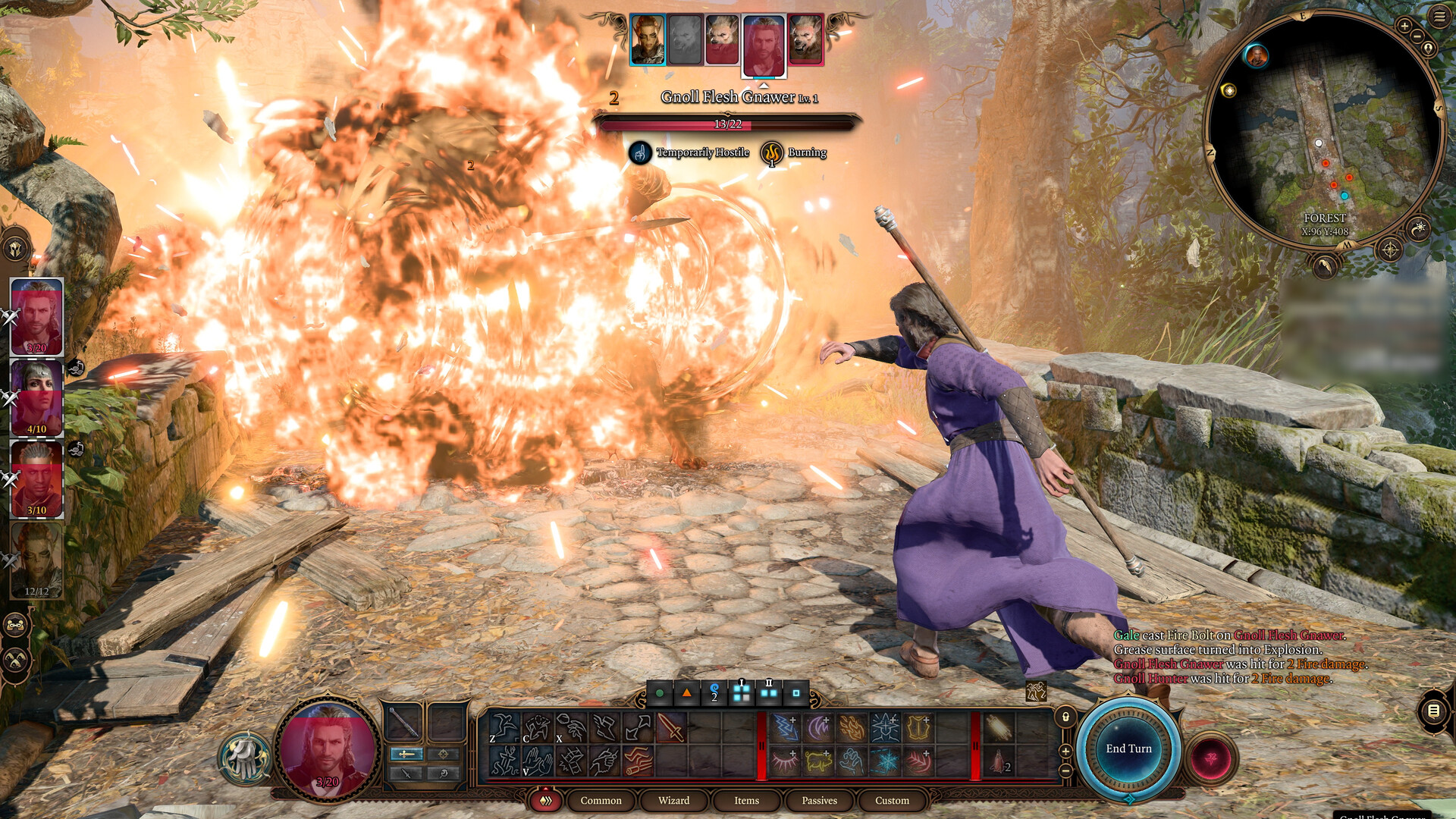
When you see explosive barrels, hanging objects, grease, fire, or narrow ledges, think about the environment as a weapon. A single shove off a cliff, fire surface, or collapsing position can be worth more than a standard attack.
Tip 5. Examine before you interact in suspicious rooms
If a room looks too neat, too sealed, or too full of magical hardware, stop and inspect it first. Traps, hidden switches, and puzzle mechanisms are common, and the safest beginner habit is to look around before clicking the first glowing object.
Tip 6. Rotate party roles based on the next encounter
If you know you are heading into a dungeon, a social area, or a boss fight, swap equipment and prepared abilities before you enter. One room may reward stealth and burst damage, while the next may need healing, crowd control, or a character with high dialogue skills.
Tip 7. Use low-value consumables to test difficult fights
If you are unsure how a battle will play, spend a cheap potion, basic scroll, or simple arrow first instead of saving every tool for a theoretical perfect moment. Testing the enemy’s behavior is often better than dying with a full inventory.
These habits are what separate “I survived the opening” from “I understand the game.” Baldur’s Gate 3 is generous to players who prepare, and a little foresight goes a long way.
Related Guides
These sibling articles are the natural next steps once you understand the opening rescue and basic survival loop.
- honor mode builds tips Early Baldur’s Gate 3 build guide for new players
- related guide Baldur’s Gate 3 companion roles and party basics
- related guide Baldur’s Gate 3 Act 1 walkthrough for beginners
- beginner class reddit tips Baldur’s Gate 3 best early-game classes
- related guide Baldur’s Gate 3 combat basics and action economy
- beginner tips reddit tips Baldur’s Gate 3 beginner inventory and loot guide
Sources
- https://store.steampowered.com/app/1086940/
- https://en.wikipedia.org/wiki/Baldur's_Gate_(video_game)
See also
- Baldur’s Gate 3 Beginner Guide: Getting Started Without Bricking Your Run
- Baldur’s Gate 3 Beginner Guide: How to Start Strong Without Getting Smited by the Tutorial
- Baldur’s Gate 3 Best Beginner Builds Guide
- Baldur’s Gate 3 Bard Build: Best Support, Control, and Damage Setup
- Baldur's Gate 3 Build Guide: Build Ideas That Actually Work
- Baldur’s Gate 3 Beginner Guide: Smart Start, Priority Resources, and Early-Game Mistakes
- Baldur's Gate 3 Build Guide: Paladin-Lock Smite Build
- Baldur's Gate 3 Builds Reddit: Best Build Guide
- Baldur's Gate 3 Character Creation Beginner Guide
- Baldur's Gate 3 Treasure Pack Beginner Guide
Screenshots



Reviewed by
BG3 Hub Editorial
Expertise: Editorial team behind BG3 Hub. Content is compiled from official patch notes, community wikis, and playthrough notes, then reviewed and updated on schedule.
Sources
Baldur's Gate 3 Companions Guides →
Browse the complete companions collection and its focused guides.
Related Guides
%27/><stop offset=%271%27 stop-color=%27hsl(80,50%,18%)%27/></linearGradient></defs><rect width=%27460%27 height=%27215%27 fill=%27url(%23g)%27/><text x=%27230%27 y=%27115%27 text-anchor=%27middle%27 font-family=%27sans-serif%27 font-size=%2724%27 font-weight=%27700%27 fill=%27rgba(255,255,255,0.85)%27>App 1086940</text><text x=%27230%27 y=%27142%27 text-anchor=%27middle%27 font-family=%27sans-serif%27 font-size=%2711%27 fill=%27rgba(255,255,255,0.6)%27>no image yet</text></svg>)


🔥 Popular Guides

bg3 class tier list act 1
Act 1 BG3 class tier list with S/A/B ranks, matchup flips, mistakes, tips, and an FAQ for new and returning players.
BG3 Top Baldur's Gate 3 Builds Guide
Best BG3 builds explained with roles, stats, gear, counters, budget swaps, and pro tips for any difficulty.
bg3 best builds for honor mode: Baldur’s Gate 3 Build Guide
Top BG3 Honor Mode builds, stat priorities, gear, counters, and budget options for a safer Baldur’s Gate 3 run.
Baldur's Gate 3 Class Tier List
S, A, and B class rankings for BG3 with methodology, situational flips, patch notes, mistakes, pro tips, and FAQs.
📋 Patch Notes & Updates
🛠️ Popular Tools
Was this guide helpful?
Rate this guide so we can improve it.
Share your own tip
Found something not in the guide? Submit it below — our editors review every tip before publishing. No account required.