 Baldur's Gate 3
Baldur's Gate 3 Guide Character Creation
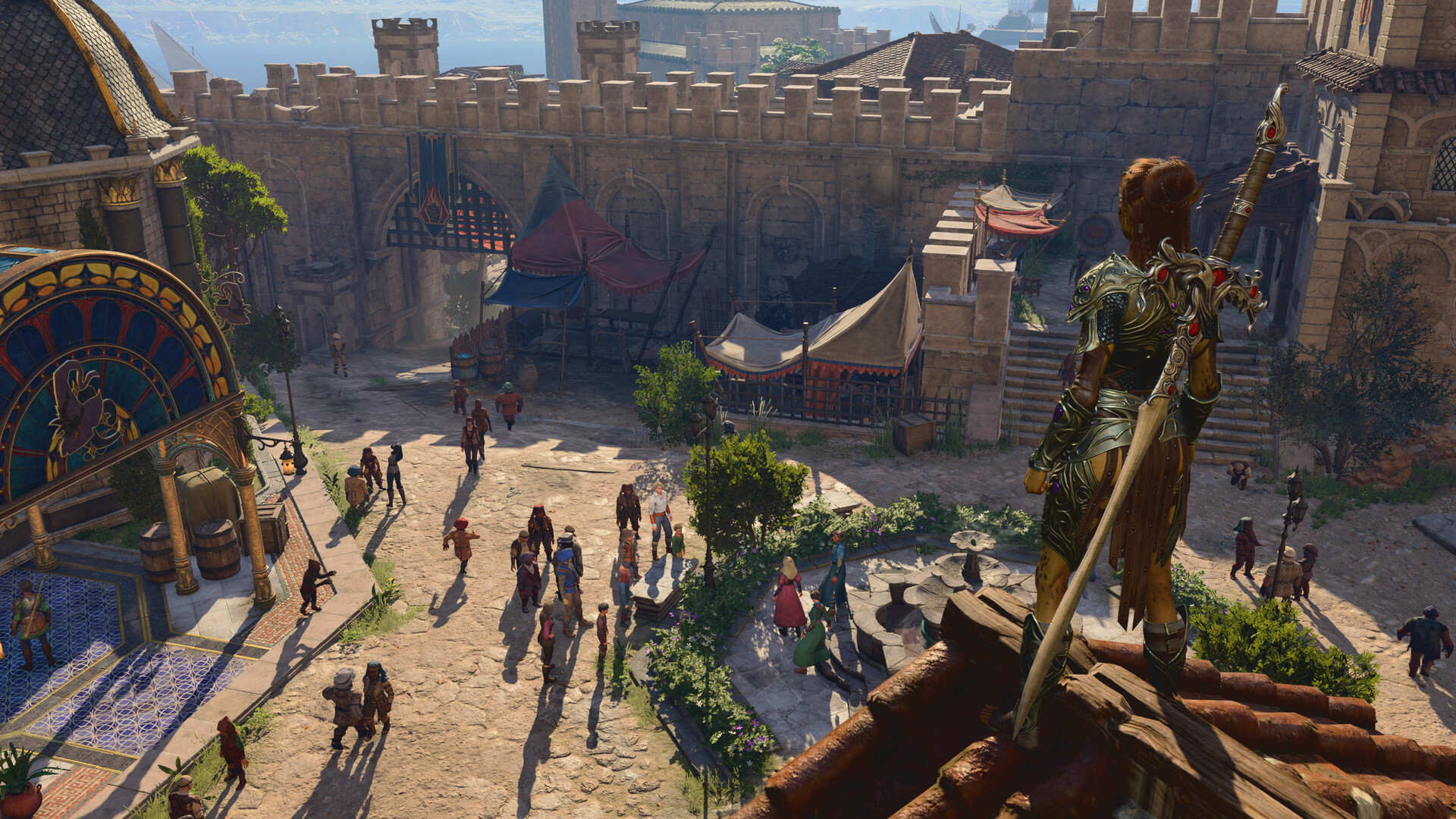
Quick Answer: The best baldur's gate 3 guide character creation approach is to choose a forgiving class, cover all major party roles, prioritize useful ability scores, and lock in dialogue, stealth, and survival tools for Act 1.
What Character Creation Should Prioritize
Character creation in Baldur's Gate 3 should prioritize party role, survivability, and early-game utility before niche roleplay flavor. That is the cleanest way to approach a strong start, especially if you are new to party-based RPGs or tabletop-inspired rules. Larian describes Baldur's Gate 3 as a story-rich, party-based RPG where your choices shape a tale of survival, sacrifice, and power Source, and that matters here because your custom hero is not just a combat unit. Your protagonist is also your main face in conversations, exploration, lockpicking support, trap handling, and social checks that can completely change how encounters begin.
A solid baldur's gate 3 guide character creation mindset starts with one question: what job do you want your main character to perform every time the game asks something important of you? In practice, most players want one of these paths:
- A reliable frontliner who survives mistakes, such as a Fighter, Paladin, or Barbarian.
- A flexible spellcaster who controls fights, such as a Wizard, Sorcerer, or Cleric.
- A stealth and utility specialist, such as a Rogue, Ranger, or Bard.
- A social leader who passes dialogue checks often, such as a Bard, Paladin, Sorcerer, or Warlock.
The trap many players fall into is building for a fantasy instead of a function. A great example is making a Wizard with weak Intelligence because the armor looked interesting, or creating a Rogue without investing in Dexterity and then wondering why stealth, lockpicking, and ranged attacks feel unreliable. Another common example is choosing a class with many concentration spells, like Cleric or Druid, and then standing in the middle of melee without a plan to protect that concentration.
You should also think in terms of companion overlap. Shadowheart, Astarion, Gale, and Lae'zel each arrive with clear strengths. If you build a sneaky Dexterity character, Astarion becomes less essential. If you make a heavy-armor Paladin, Lae'zel is no longer your only dependable frontliner. If you play a Charisma-based Bard or Sorcerer, many social checks become easier to funnel through your main character instead of swapping around the party.
The older series roots still help explain this structure. The original Baldur's Gate released in 1998 Source and focused on a player-made character traveling with companions across the Sword Coast Source. That same party-first design logic is alive here: your hero does not need to do everything alone, but they should do one or two critical things exceptionally well.
Prerequisites for a Smooth Character Creation Start
The practical prerequisites for good character creation are understanding party roles, picking a difficulty that matches your rules knowledge, and knowing what your starting class needs to function. You are not choosing late-game gear here, but you are choosing how easy your first several hours will feel.
Before you lock in your character, make sure these basics are covered:
- Level expectation: You begin at the start of the game, so your build needs to be useful immediately rather than after several later features unlock.
- Equipment expectation: Early armor, simple martial weapons, light crossbows, bows, shields, and basic spellcasting tools matter more than dream gear. A Fighter with a shield, a Rogue with finesse weapons, and a Cleric with medium armor all feel stable early.
- Party coverage: Try to cover at least these jobs across your team:
- Frontline durability
- Healing or recovery support
- Ranged damage or spell control
- Lockpicking and trap disarming
- Dialogue skills
- Difficulty choice: Explorer is best if you want freedom to experiment. Balanced is a strong default. Tactician asks more of positioning, encounter knowledge, and resource control.
- Attribute focus: Put your best score in the stat your class actually uses. Examples:
- Strength for many melee Fighters and Barbarians
- Dexterity for Rogues, Rangers, and finesse builds
- Intelligence for Wizards
- Wisdom for Clerics and Druids
- Charisma for Bards, Sorcerers, Paladins, and Warlocks
- Origin vs custom character: A custom character is the most direct route if your goal is to learn the system through your own build. Origin characters are excellent, but they come with stronger premade identity and story framing.
- Background planning: Pick a background that supports what you already want to do. Charlatan helps a deceptive face character, Urchin suits stealth and sleight of hand, and Soldier fits martial play.
- Skill coverage: Make sure your party can handle Persuasion, Perception, Sleight of Hand, and at least one knowledge or insight style skill.
- Rest management: Classes like Warlock, Fighter, and some support builds can feel easier for new players because they recover important tools more comfortably than some spell-heavy alternatives.
- Race and utility: Useful movement, darkvision, weapon familiarity, or defensive traits can smooth out Act 1. Wood Elf mobility, Half-Elf versatility, and Dwarf toughness are all easy examples.
If you want a low-friction recommendation, three starting templates consistently work well in this baldur's gate 3 guide character creation context:
| Build path | Why it works early | Real examples of payoff |
|---|---|---|
| Paladin face character | Durable, high Charisma, strong melee burst | Easier dialogue leadership, frontline tanking, punishing priority targets |
| Bard utility leader | Skill-heavy, strong social play, flexible support | Talking through goblin situations, lock support, healing and control |
| Fighter beginner route | Straightforward action economy, durable, gear-friendly | Strong in the nautiloid, reliable against goblin groups, easy weapon upgrades |
These are not the only good options. They are simply dependable starting points when you want your first run to feel clear instead of chaotic.
You might also like
- Baldur's Gate 3 patch 8 release date: Patch Notes Explained
- baldurs gate 3 how to get lae'zel down: Beginner Guide for New Players
- Baldur's Gate 3 How to Open Gilded Chest: Beginner Guide
- Baldur's Gate 3 Walkthrough Act 2
- baldurs gate 3 tips and tricks for beginners
Step-by-Step Character Creation Route
The best step-by-step route is to choose your role first, then align class, race, background, skills, and ability scores around that role. This keeps your whole build coherent instead of scattering points across flashy but disconnected ideas.
Step 1. Decide whether your main character is the party face, the damage dealer, or the utility specialist
Start by choosing your identity in moment-to-moment play.
- Pick party face if you want to lead most conversations: Bard, Paladin, Sorcerer, or Warlock.
- Pick damage dealer if you want combat simplicity and strong target removal: Fighter, Barbarian, Ranger, or Paladin.
- Pick utility specialist if you want stealth, scouting, traps, and flexible problem-solving: Rogue, Bard, or Ranger.
- Pick control caster if you enjoy setup, terrain effects, and spell timing: Wizard, Druid, Cleric, or Sorcerer.
Examples of where this matters show up immediately. In the druid grove, social classes can defuse tension more smoothly. In the Blighted Village, stealth and mobility help you control sightlines and traps. In early crypt or cave exploration, perception and disarming tools save resources before combat even begins.
Step 2. Choose a class that does that job from level one
Do not pick a class for a later fantasy if it feels weak to you right now.
- Fighter: Great for beginners, easy action choices, solid with bows or melee weapons.
- Paladin: Excellent if you want Charisma plus frontline durability, though oath management adds a roleplay layer.
- Barbarian: Strong for aggressive melee and straightforward survivability.
- Bard: One of the easiest all-purpose leaders because of dialogue, support, and flexibility.
- Rogue: Excellent for stealth and locks, but rewards careful positioning.
- Cleric: Strong support with real battlefield impact, not just healing.
- Wizard: High utility and control, but more fragile and planning-heavy.
- Warlock: Simple ranged pressure and strong Charisma scaling.
If you are following a newcomer-friendly baldur's gate 3 guide character creation route, Bard, Fighter, and Paladin are usually the cleanest entries.
Step 3. Pick a race that supports your first hours, not just your headcanon
Race is rarely the entire build, but it can smooth rough edges.
- Choose races with darkvision if you dislike awkward low-light fights.
- Choose races with movement or weapon familiarity if you want smoother early combat.
- Choose tougher races if you are worried about mistakes during Act 1.
Concrete examples:
- A Wood Elf or Wood Half-Elf helps with movement and positioning in goblin ambushes.
- A Dwarf works well for martial durability in tight spaces like the ruined chapel or underground encounters.
- A Half-Elf is often comfortable for social and hybrid builds.
Step 4. Set ability scores around one primary stat
Your build becomes weaker when you try to be good at everything.
- Put your highest score into your class's main combat or spell stat.
- Keep Constitution respectable on almost everyone.
- Avoid dumping Dexterity too hard unless your class and armor plan truly support it.
Common good habits:
- Wizard: prioritize Intelligence, then survivability.
- Rogue: prioritize Dexterity, then Constitution.
- Paladin: prioritize Strength or Dexterity depending on weapon style, while keeping Charisma relevant.
- Bard: prioritize Charisma, then Dexterity or Constitution depending on role.
Step 5. Pick background and skills that your party will actually use
Background is not just flavor. It influences proficiencies and inspiration triggers.
- Charlatan works for deception-heavy play.
- Soldier fits martial aggression.
- Urchin supports stealth and sleight of hand.
- Sage suits knowledge-focused casters.
- Guild Artisan works well for social builds in many conversations.
Then add skills with your party in mind:
- Sleight of Hand for locks and traps
- Persuasion or Deception for dialogue
- Perception for spotting danger
- Insight for reading NPCs
- Arcana, Religion, or Nature if your class supports lore checks
Step 6. Finalize appearance and roleplay choices after the mechanics are coherent
Appearance matters for immersion, but it should be the last step if performance is your concern. Once the build works, shape the personality around it. A stern Oath of Devotion Paladin feels different from a manipulative Bard, and that affects how the run unfolds through places like the goblin camp, the grove, and companion approval scenes.
Hardest Early Character-Creation-Related Encounters
The hardest encounters tied to character creation are the early fights that punish bad role coverage, weak positioning, or poor stat choices. These moments are where a shaky build feels exposed, but they also teach exactly why balanced creation matters.
The Intellect Devourer fight after the tutorial ship
This fight is hard because it punishes fragile characters and bad opening turns. If your custom hero has low survivability, weak ranged options, or no control tool, these enemies can overwhelm you before your party stabilizes.
Concrete tactic:
- Open from range if possible.
- Use height and choke points instead of rushing.
- Let the sturdier character take the forward position.
- If your class has utility, use it early rather than saving everything for a “real” fight.
This is where Fighters, Rangers, and Paladins feel immediately stable. A Wizard or Sorcerer can still do well, but they need better spacing. A Rogue can shine here too, provided you avoid getting pinned in a direct trade.
The bandits and trapped chapel area
This stretch is hard because it mixes environmental danger, awkward angles, and the possibility of getting surprised. Players who skipped Perception, poor positioning, or trap awareness often take avoidable damage before the main fight starts.
Concrete tactic:
- Scout before committing the whole party.
- Put your lockpicker and scout ahead.
- Use high ground and doorway control.
- Separate party members slightly so one explosive surface or shove does not punish everyone.
This encounter is where Rogue, Bard, and Ranger utility becomes very noticeable. It also shows why a support Cleric or a durable Fighter smooths the run even if your protagonist is a social build.
The goblin camp and nearby skirmishes
These fights are hard because they test social, stealth, and combat flexibility all at once. A character built only for raw melee damage can still win, but often loses options that a Bard, Warlock, or Paladin face character can create through dialogue first.
Concrete tactic:
- Use dialogue to thin the field or improve positioning before combat.
- Start fights on your terms rather than walking into the center.
- Focus dangerous ranged or support enemies first.
- Use area denial and elevation whenever possible.
A Sorcerer with conversation strength and control spells, a Bard with support and manipulation, or a Paladin who can both talk and front-line all do strong work here. This is one of the clearest examples of why your main hero's social role matters in a baldur's gate 3 guide character creation setup.
The harpies near the grove
This encounter is hard because charm-like pressure and positioning mistakes can pull your party apart. New players often enter with weak Wisdom coverage, poor spacing, or no plan to break the encounter's rhythm.
Concrete tactic:
- Spread your party before the trigger if you know it is coming.
- Prioritize the enemies creating the disruptive effect.
- Use ranged focus fire and avoid wasting turns on low-impact movement.
- Bring healing and control rather than relying on pure auto-attacks.
The main lesson here is that no single class fixes everything. Good character creation reduces pressure, but party composition and encounter setup finish the job.
Rewards, Loot, and What Strong Character Creation Unlocks
The rewards for smart character creation are smoother fights, more successful checks, better companion flexibility, and access to loot or outcomes that weaker builds often miss. In a game built around party interaction and player choice, rewards are not only items on the ground. They also include access, efficiency, and options.
Here is what good creation tends to unlock early:
- More successful dialogue outcomes
- Persuasion on a Bard or Paladin can avoid or reshape fights.
- Deception on a Warlock or Charlatan build can open doors other classes must force.
- Insight on a Wisdom-friendly character helps read dangerous NPC intent.
- More environmental rewards
- Sleight of Hand opens locked containers and side rooms.
- Perception reveals buried stashes, hidden buttons, and trap triggers.
- Mobility traits help reach vertical loot spots around ruined structures and camp spaces.
- Safer encounter rewards
- Durable frontliners preserve healing resources.
- Control casters prevent wipes and protect spell slots by ending fights cleanly.
- High initiative or stealth pressure lets you remove priority enemies before they act.
- Party freedom
- If your main character handles dialogue, you can bring damage-heavy companions.
- If your main character handles locks and scouting, Astarion becomes optional rather than mandatory.
- If your main character tanks, you can swap Lae'zel more freely.
Concrete loot examples depend heavily on the route you choose through Act 1, but the pattern is consistent:
- A character with trap and lock tools gets more out of the ruined chapel and similar side areas.
- A Charisma build gets better leverage in social spaces like the grove and goblin-controlled zones.
- A stealth-capable hero finds better angles on ambushes and treasure access in places like the Blighted Village.
There is also an important campaign-level reward: your custom hero becomes easier to build around for dozens of hours. The game released on Aug 3, 2023 and holds a 96 critic score on Metacritic in the provided stats, which fits its reputation for deep replayability and reactive choices. A clean early build matters because you are investing in a long campaign, not just a short tutorial stretch.
If you want companion and gear ideas that branch from your starting archetype, a 3 walkthrough act for best early companions, a related guide for best beginner classes, and a related guide for Act 1 loot routes would be natural next reads.
Missables You Can Lose During Character Creation and Early Progress
The main missables tied to character creation are party roles, proficiency coverage, dialogue leverage, and early encounter solutions that become awkward or permanently inaccessible once you move past them. You can respec later in the game, but that does not fully erase early losses in experience, loot access, or companion synergy.
Here are the most important things players often miss:
- Skipping Sleight of Hand coverage
- If no one in your party can reliably handle locks and traps, some early containers, routes, and safer approaches become much more annoying.
- Example: trapped interiors and hidden side loot in early ruins become resource drains instead of easy gains.
- Ignoring Charisma on the main character
- You can still complete the game, but many first-contact conversations become rougher if your protagonist constantly fails Persuasion, Deception, or Intimidation.
- Example: goblin and grove interactions often feel less flexible when your main face cannot carry dialogue.
- Choosing a fragile class without a protection plan
- A Wizard or Sorcerer can be outstanding, but if you also neglect Constitution, positioning, and party frontline support, early fights punish you hard.
- Example: the intellect devourer encounter and cramped ambushes feel much harsher.
- Duplicating a companion role without intention
- Playing a Rogue while also expecting Astarion to fill the same job can waste a party slot unless you have a distinct build plan.
- Example: dual utility characters can work, but only if one shifts toward archery, burst damage, or social coverage.
- Forgetting darkvision or light management
- Some players underestimate how awkward low-visibility engagements can feel early on.
- Example: ranged accuracy and clean target selection suffer in caves, ruins, and nighttime-style encounters.
- Locking into roleplay choices that clash with class features
- Paladins in particular should understand that their behavior can matter to their oath identity.
- Example: impulsive cruelty or betrayal can create consequences if you are not planning around that.
- Passing on useful backgrounds
- A background is easy to dismiss at creation, but inspiration triggers and skill support add up over time.
- Example: Charlatan, Urchin, and Soldier all naturally reinforce common Act 1 play patterns.
The big lesson is that missables here are rarely one dramatic item. They are a chain of lost efficiencies. A solid baldur's gate 3 guide character creation route protects your future self by making sure your first hours generate momentum instead of friction.
Common Mistakes
The most common character creation mistakes are scattered ability scores, redundant party roles, and picking flavor without a gameplay plan. These errors are normal for first runs, but each has a practical fix.
Mistake 1: Spreading points across too many ability scores
Why it happens: New players want a “well-rounded” hero.
Fix: Commit to one primary stat, keep Constitution healthy, and let companions cover your weaker areas.Mistake 2: Building a pure healer mindset on Cleric
Why it happens: Players bring assumptions from other RPGs.
Fix: Use Cleric as a battlefield control and support class too; healing is strongest when paired with offense, buffs, and positioning.Mistake 3: Making the protagonist bad at dialogue
Why it happens: Combat stats feel more visible during creation.
Fix: If your class is not Charisma-based, still consider Persuasion or Insight support, and let companions handle specialized checks when possible.Mistake 4: Choosing Rogue but never using stealth setup
Why it happens: Players enter open combat too quickly.
Fix: Start encounters from concealment, attack priority targets, and reposition instead of trading hits face-to-face.Mistake 5: Taking a fragile caster without frontline support
Why it happens: Spell lists look powerful on paper.
Fix: Pair squishy casters with Lae'zel, Shadowheart, or a tough custom build and fight from protected angles.Mistake 6: Duplicating roles accidentally
Why it happens: Companion recruitment is not fully known on a first run.
Fix: If your hero is a lockpicker, let companions shift into damage or control. If your hero is a tank, free your party for ranged pressure and utility.Mistake 7: Underestimating Dexterity and initiative
Why it happens: Big weapon or spell fantasies overshadow turn order.
Fix: Keep enough Dexterity or gear support to avoid always acting late and getting pressured before your plan begins.Mistake 8: Ignoring background synergy
Why it happens: Background reads like flavor text.
Fix: Match it to your real behavior. Deceptive face characters like Charlatan, scouts like Urchin, and martial leaders like Soldier all get more practical value.
Pro Tips
The best advanced character creation tips focus on hidden efficiency: build around conversations, terrain, and companion overlap rather than just raw damage.
Tip 1. Build your main character for the conversations you do not want to reload
If you dislike redoing scenes, start with Bard, Paladin, Sorcerer, or Warlock. The trigger is simple: many major social beats happen with your protagonist in front, not the perfect specialist standing three steps behind.
Tip 2. Use your class choice to free a companion slot
If you play a Rogue-style utility lead, you are no longer locked into always bringing Astarion. If you play a durable frontliner, Lae'zel becomes a choice instead of a requirement. This matters as soon as your camp roster starts growing.
Tip 3. Pick Perception or support someone who has it
The setup is any early ruin, cave, or trapped room. Hidden switches, buried containers, and trap reveals save real resources, and the value compounds through Act 1.
Tip 4. Respect concentration when choosing your caster identity
If you plan to use Cleric, Druid, or Wizard control tools, build and play like concentration matters. The trigger is every fight where enemies can tag your caster repeatedly and shut down your best spell.
Tip 5. Keep your first run honest and simple
A straightforward Fighter, Paladin, or Bard often teaches the system better than a fragile, high-complexity setup. The trigger is your own uncertainty: if you are still learning actions, surfaces, advantage, and party positioning, clarity beats novelty.
Tip 6. Let race solve a real annoyance
Choose darkvision if you hate awkward low-light combat, choose movement if you value positioning, and choose toughness if you expect some mistakes. The trigger is not optimization culture; it is identifying what actually frustrates you.
Tip 7. Plan your first companion trio before you hit confirm
Think in practical examples: custom Bard plus Lae'zel, Shadowheart, and Gale gives a balanced shell. Custom Paladin plus Astarion, Shadowheart, and Gale also works smoothly. This pre-planning prevents your hero from stepping on every companion's role.
Related Guides
- Best beginner classes in Baldur's Gate 3
- Best party composition for Act 1
- How to respec your character in Baldur's Gate 3
- Best early-game weapons and armor
- How dialogue checks work in Baldur's Gate 3
- Best companions for a custom character run
- Act 1 missables and secret loot
- Baldur's Gate 3 leveling guide
Sources
- https://store.steampowered.com/app/1086940/
- https://en.wikipedia.org/wiki/Baldur's_Gate_(video_game)
See also
- baldurs gate 3 how to get owlbear cub Beginner Guide
- baldurs gate 3 how to get to the underdark: Beginner Guide
- Baldur's Gate 3 bg3 tactician difficulty complete guide
- Baldur's Gate 3 Walkthrough Act 3
- baldurs gate 3 beginner class reddit: Beginner Guide for New Players
- Baldur’s Gate 3 baldurs gate 3 how to save mayrina Beginner Guide
- Baldur’s Gate 3: how to baldurs gate 3 cross play for beginners
- baldur's gate 3 vs elden ring: which should you play?
- baldurs gate 3 how to recruit minthara: Beginner Guide for New Players
- Baldur’s Gate 3 beginner tips reddit: A Complete Beginner Guide
Screenshots

Reviewed by
BG3 Hub Editorial
Expertise: Editorial team behind BG3 Hub. Content is compiled from official patch notes, community wikis, and playthrough notes, then reviewed and updated on schedule.
Sources
Related Guides
🔥 Popular Guides
Baldur's Gate 3 Update Today: Patch Notes Explained
Baldur's Gate 3 update today explained with current context, winners, losers, and what players should change now.
Baldur's Gate 3 PS5 Best Character Build: Oath of Vengeance Paladin
The best BG3 PS5 build is an Oath of Vengeance Paladin with simple stats, strong smites, and durable gear for all acts.
Baldur's Gate 3 Is There Crossplay Updated 8/3/2023 Crossplay for is currently unavailable Beginner Guide
Learn BG3 basics, first-hour priorities, common mistakes, and the current crossplay status in this beginner guide.
Baldur's Gate 3 Best Character Build for Beginners: Easy Oath of Devotion Paladin
Easy BG3 beginner Paladin build with stats, gear, rotation, counters, budget swaps, and pro tips for a smooth first run.
📋 Patch Notes & Updates
🛠️ Popular Tools
Was this guide helpful?
Rate this guide so we can improve it.
Share your own tip
Found something not in the guide? Submit it below — our editors review every tip before publishing. No account required.