 Baldur's Gate 3
Baldur's Gate 3 Get Gortash's Netherstone Beginner Guide
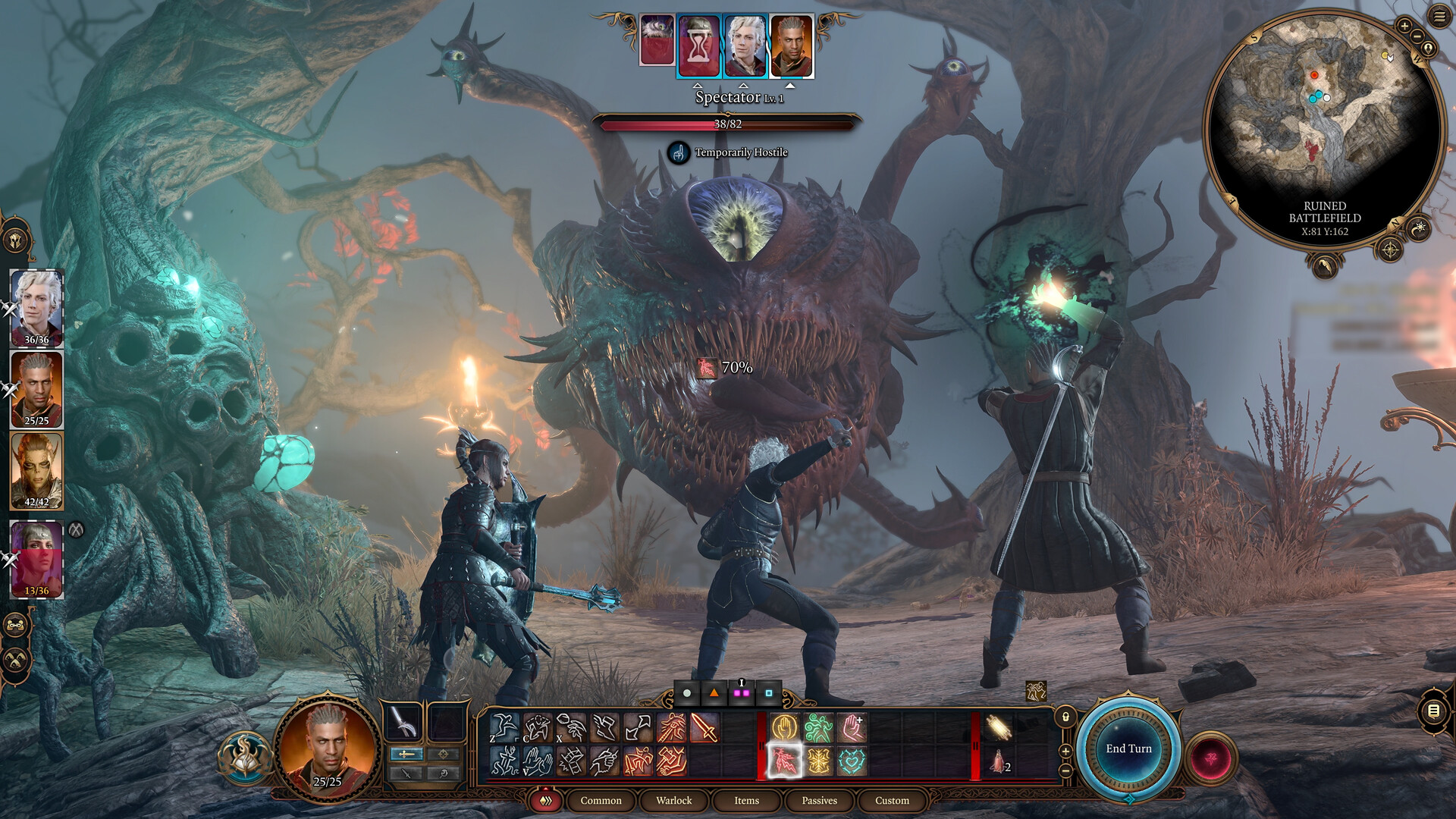
Quick Answer: To get Gortash’s Netherstone, advance through Act 3, reach Wyrm’s Rock and the Steel Watch Foundry, remove Gortash’s defenses, then defeat him in the audience chamber and claim the Netherstone from his body.
Baldur’s Gate 3 is a long, choice-heavy RPG, so if your goal is specifically Baldur's Gate 3 Get Gortash's Netherstone, the safest beginner approach is to prepare in Act 2, explore Lower City carefully, and only challenge Gortash once you understand his traps, allies, and political leverage.
Baldur’s Gate 3 is a story-rich, party-based RPG set in the universe of Dungeons & Dragons, and the game’s scale matters here because a focused story run still takes roughly 72.71 hours for the main path and 115.69 hours with extras according to HowLongToBeat Source. If you are trying to get one specific quest reward in the late game, it helps to think like a planner instead of a tourist.
What Gortash’s Netherstone is and when you can get it
Gortash’s Netherstone is one of the key late-game quest items you obtain by defeating Enver Gortash during Act 3. In practical terms, it is not a collectible you can simply walk up and pick up early; you must push the main story far enough to reach Baldur’s Gate, then deal with the Steel Watch, the political tensions around Wyrm’s Rock, and Gortash’s own layered security.
The important beginner lesson is that this is a main-quest milestone, not a side objective. If you are still wondering which district to enter, who to trust, or whether to detour into companion quests, you are probably not at the point where Gortash himself should be your immediate target. You can absolutely arrive in Act 3 and start his questline, but the game expects a stronger party, better gear, and a firmer grasp of your class tools before you force the confrontation.
A few concrete examples help set expectations:
- If you have only recently escaped the Shadow-Cursed Lands, you are not ready to rush Gortash.
- If your party is still wearing the same low-value equipment from the Goblin Camp or Last Light Inn era, you should upgrade first.
- If your spellcasters are still conserving every slot because you have not learned when to short rest or long rest safely, Gortash’s area will punish that hesitation.
The path to his Netherstone also feels different depending on how you play. A sneaky Rogue can scout Wyrm’s Rock, a Wizard can solve more problems with control spells, and a Paladin or Fighter can survive direct combat better, but all three still need the same story progression. The game’s official Steam description emphasizes how choice-driven the journey is, with fellowship, betrayal, survival, and sacrifice all shaping the tale Source. That is exactly why Gortash matters: the route to him is never just “follow the marker and win.”
What usually gates the fight
You generally need to:
- Reach Act 3 and enter Baldur’s Gate.
- Interact with the quests tied to Wyrm’s Rock, the Steel Watch, and the political web around the city.
- Survive or bypass the defenses that protect Gortash’s power base.
- Defeat him and claim the Netherstone from his corpse.
If you are doing this blind, assume that the quest can branch. In Baldur’s Gate 3, the game often rewards alternate solutions, and that means the “correct” way is not always the only way. A dialogue-heavy party may talk through one encounter, while a combat-focused group may have to fight its way through the same space. The beginner-friendly mindset is to keep your journal updated, inspect the quest log after every major scene, and never assume a single NPC dialogue line is harmless.
First-hour checklist for a strong Act 3 start
Your first hour after arriving in Act 3 should be spent stabilizing your party, not sprinting straight at Gortash. The fastest way to make the Netherstone hunt easier is to build a secure baseline: rest, sort your inventory, unlock safe travel points, and learn which districts are dangerous before committing resources.
Here is a practical first-hour checklist:
- Long rest once you enter Act 3 if you arrive with a half-empty spell lineup.
- Visit your camp and respec if needed by talking to Withers, especially if your class feels awkward in city combat.
- Check every party member’s consumables: healing potions, scrolls, arrows, and any special grenades or coatings.
- Unlock nearby waypoints in the areas you can safely reach so you are not walking through hostile streets repeatedly.
- Sell clutter and identify what you actually use; city vendors are more convenient than most earlier merchants.
- Read your journal carefully to separate Gortash-related steps from side content.
- Keep one lockpicker and one face character in your active party if possible, because Baldur’s Gate has many doors, chests, and dialogue checks.
The reason this checklist matters is simple: Act 3 is where a lot of players start hoarding resources so aggressively that they never use them, or they spend everything on random fights and then arrive at the Gortash confrontation underprepared. The city is also dense, which means you can waste a surprising amount of time just moving from one marker to another if you do not unlock travel points early.
A good first hour also includes scouting the broader political map. Wyrm’s Rock is not just a dungeon; it is a controlled zone with conversations, guards, and consequences. If you enter with an unbalanced party, you may discover too late that you lack a solid source of crowd control, invisibility, or non-lethal problem solving. Examples of useful tools include Misty Step for vertical routes, Enhance Ability for social checks, and Invisibility for repositioning or theft-heavy play.
If you are new to Baldur’s Gate 3, remember that the game is available on multiple platforms and is designed for solo or group play Source. That flexibility is nice, but it also means your first hour should be about learning your own tempo. Solo players often benefit from safer, slower scouting, while co-op parties should assign roles so no one wastes turns on the same job.
You might also like
- Baldur's Gate 3 Rescue the Gnome and Stop the Windmill Beginner Guide
- Baldur's Gate 3 Silver Sword of the Astral Plane Beginner Guide
- Baldur's Gate 3 Ask the Goblin Priestess for Help: Beginner Guide
- Baldur's Gate 3 Deliver Nere's Head Beginner Guide
- Baldur's Gate 3 baldurs gate 3 build dark urge Guide
Resource priority order: what to spend, hoard, and craft first
Your resource priority should favor survival, mobility, and key consumables before luxury purchases or niche crafting. Beginners often spend gold on every shiny weapon they see, but in Baldur’s Gate 3 that is usually the wrong instinct, especially when you are trying to reach and defeat Gortash with enough strength left for the next major story beat.
Spend first
- A replacement weapon or armor piece only if it is a clear upgrade for the character using it.
- Healing potions when your party lacks reliable healing between fights.
- Scrolls for utility spells like mobility, silence, or crowd control if your party does not already cover them.
- Camp supplies if you are running low enough that long resting becomes a problem.
Hoard first
- Rare crafting materials and special quest items you do not immediately understand.
- High-value scrolls such as revive tools, escape options, or strong control spells.
- Inspiration and special consumables that only solve uncommon problems.
- Gold reserves for vendors with exceptional Act 3 gear.
Craft or convert first
- Healing and status-removal items when your current supply is thin.
- Poisons, coatings, and surface-based tools if your build benefits from opening turns with damage over time.
- Arrows, grenades, and throwables if your party already has the feats or ability scores to use them efficiently.
A simple table helps show the order of urgency:
| Priority | What to do | Why it matters for Gortash |
|---|---|---|
| Highest | Keep healing, revives, and mobility tools | Gortash’s area punishes bad positioning and attrition |
| High | Save gold for real upgrades | Random purchases rarely matter as much as one strong Act 3 item |
| Medium | Stock control scrolls and throwables | They let weak characters contribute without spending spell slots |
| Low | Buy flavor gear or duplicate backup weapons | Nice to have, but not essential for the Netherstone run |
A beginner mistake is to think “hoarding” means never spending anything. That is not the lesson. The better rule is to spend when a purchase changes how you handle a fight or dialogue scene. A scroll of Dimension Door, for example, can create entirely new positioning options in a tense room; a random +1 trinket that nobody uses rarely does.
Crafting and consumables matter even more if your party composition is uneven. Examples:
- A party with Lae’zel and another frontliner may need fewer basic melee upgrades but more anti-control items.
- A caster-heavy party with Gale and Shadowheart may want extra emergency healing and concentration protection.
- A stealthier party with Astarion may value lockpicks, invisibility tools, and poison.
Remember that Baldur’s Gate 3’s scale is huge, with Steam showing 52201 players in game right now in one snapshot and the title carrying an “Overwhelmingly Positive” review summary across 848142 reviews Source. That popularity is not just trivia: it usually means a deep, battle-tested meta exists, and the meta lesson for newcomers is to overvalue safety items until you are comfortable. The path to Gortash is a good place to be conservative.
Common newbie mistakes and how to fix them
New players usually fail at the Gortash route for predictable reasons: they overcommit early, ignore quest structure, or enter major fights without a plan. The good news is that every one of these mistakes is fixable without restarting your campaign.
Mistake 1: Rushing straight to Gortash with an underprepared party
Players do this because the main quest marker feels urgent and the story makes Gortash seem like the obvious next target. The fix is to finish your Act 3 preparation loop first: upgrade gear, unlock waypoints, restock consumables, and clear at least a few smaller encounters so you understand the city layout.
Mistake 2: Spending all gold on minor upgrades
This happens because vendors in the city have lots of tempting items, and beginners often buy “maybe useful” gear for every companion. The fix is to reserve most of your gold for only the upgrades that clearly change a character’s role, such as a better weapon for your primary damage dealer or armor that solves a real survivability issue.
Mistake 3: Ignoring the Steel Watch and its related threats
Many players think Gortash is just one boss room, but his security network is part of the challenge. The fix is to treat the Steel Watch Foundry and related city tensions as part of the same problem, not separate errands. If your journal points you toward disabling or bypassing his support structure, take that seriously.
Mistake 4: Entering fights without scouting the room
Beginners often trigger combat on the first visible enemy and then discover traps, height differences, or reinforcements. The fix is to send your stealthiest character forward first, examine the battlefield, and note anything suspicious before your main party steps in. A Rogue, Ranger, or any character with invisibility can do this well.
Mistake 5: Forgetting to use consumables
A lot of new players save every potion and scroll “for later,” then finish the game with a full inventory and an underused toolkit. The fix is to use consumables in routine fights so you can save your strongest spell slots and class resources for the Gortash chain and the battles around it.
Mistake 6: Treating dialogue as harmless filler
In Baldur’s Gate 3, one wrong line can lock in a fight, change a location’s state, or remove an easy path. The fix is to quick save before tense conversations, especially when a guard, noble, or Steel Watch-related NPC is involved.
These mistakes show up because BG3 rewards improvisation, but it also punishes laziness. The game’s narrative is built around choice and consequence, with the party trying to cure the Illithid parasite while survival and betrayal reshape every act Source. In that framework, “beginner-safe” means making fewer assumptions, not avoiding risk altogether.
Common Mistakes
The following are the most common errors I see players make when chasing Gortash’s Netherstone, along with the real-world reason they happen and the cleanest fix.
Mistake: Entering Act 3 with no plan for city traversal.
Why it happens: The map is crowded, and players assume quests will naturally guide them.
Fix: Unlock waypoints as soon as it is safe, and use camp travel to avoid backtracking.Mistake: Splitting the party too aggressively in hostile interiors.
Why it happens: New players want to scout and fight at the same time.
Fix: Keep a tight formation unless one stealth character is deliberately scouting ahead.Mistake: Burning high-level spell slots on trivial enemies.
Why it happens: The game gives many encounters, so players get nervous about “saving too much.”
Fix: Use cantrips, basic attacks, and minor control on trash fights; reserve big tools for elite enemies and boss setups.Mistake: Walking into trap-heavy areas without perception checks or scouting.
Why it happens: It is easy to miss environmental hazards when the story is moving quickly.
Fix: Swap in a perceptive character, move slowly, and inspect the floor before entering obvious chokepoints.Mistake: Ignoring companion abilities that solve positioning problems.
Why it happens: Players fixate on raw damage numbers and forget utility.
Fix: Bring at least one mobility or control option such as Misty Step, Hold Person, or a knockback skill.Mistake: Not quick saving before important dialogue.
Why it happens: Conversations feel low-risk until they suddenly are not.
Fix: Save before every confrontation tied to Gortash, his allies, or major city authority figures.
For beginners, the main correction is mental: stop treating Gortash as a single fight and start treating him as a sequence. When you approach it that way, each mistake becomes easier to isolate and fix. If one route fails, you can reroute. If one fight is too hard, you can come back after better gearing.
Pro tips
The best advanced advice for getting Gortash’s Netherstone is to make the game solve part of the problem for you by using positioning, dialogue, and terrain instead of only raw damage.
Tip 1. Scout with a stealth character before committing the whole party
Send Astarion, a hidden Ranger, or any character with Invisibility ahead when you enter suspicious rooms, because seeing traps and elevation changes first can turn a bad encounter into a clean ambush.
Tip 2. Save hard control for key enemy turns
If your party includes Gale, Shadowheart, or another caster with disabling spells, hold effects like Hold Person, Silence, or area control for the enemy who would otherwise reshape the fight, not the first random guard.
Tip 3. Use verticality to break enemy formation
In rooms with stairs, ledges, balconies, or tight corridors, place ranged characters above the fight and force enemies to waste movement. This is especially useful in city interiors and Wyrm’s Rock-style spaces.
Tip 4. Treat every boss-adjacent area like a mini-puzzle
Before attacking Gortash’s allies, ask what the room wants from you: a lever, a trap disarm, a speech check, or a route around the front door. The game often rewards problem-solving more than frontal damage.
Tip 5. Keep one emergency escape option on every character
A scroll, potion, racial movement tool, or class skill that repositions a character can save a run when you get boxed in by guards or summoned threats. One stuck companion can ruin an otherwise winning fight.
Tip 6. Bring a conversation specialist even in combat-heavy parties
A high-Charisma character such as a Bard, Paladin, or Warlock can change how smoothly you move through Act 3, because not every Gortash-related problem needs violence to start.
Tip 7. Don’t ignore rest timing
Long rest when your party is genuinely depleted, but avoid mindlessly burning rests after every small encounter. A stable rhythm lets you enter the Gortash chain with your best abilities available and your camp supplies under control.
These tips are especially useful because Baldur’s Gate 3 is one of those games where success often comes from making the enemy fight your plan instead of your party. The game’s broad popularity and huge review count are a good reminder that many players have already tested this route from different angles Source. The beginner advantage is to borrow the collective wisdom: scout, save, position, and only then commit.
Graduation threshold: how to know you are out of the beginner phase
You are out of the beginner phase when you can reach major Act 3 objectives, including Gortash’s Netherstone path, without feeling surprised by the basics of combat, inventory, or quest structure. In other words, you have graduated when the city stops feeling like a maze and starts feeling like a system you can read.
A practical way to judge this is by looking for the following signs:
- You can build a party with clear roles: frontliner, damage dealer, support, and utility.
- You know when to use spell slots, scrolls, and consumables instead of saving everything forever.
- You can identify when a fight is better solved by dialogue, stealth, or terrain.
- You are comfortable swapping gear and respeccing with Withers when a build needs adjustment.
- You are no longer surprised by trap rooms, ambushes, or locked story branches.
Concrete examples of graduation include clearing challenging Act 2 content without frequent reloads, entering Act 3 with a healthy stock of supplies, and reading quest text closely enough to understand which faction move will anger whom. If you can handle a place like Wyrm’s Rock without needing every step explained, you are no longer in “new player” territory.
Another useful benchmark is how you recover from failure. Beginners usually ask, “How do I avoid dying here?” Advanced beginners ask, “Which part of the encounter did I misread, and what tool should I use next time?” That shift matters more than any single class choice. A Fighter who understands positioning will outperform a “stronger” build played carelessly; a Wizard who respects concentration and line of sight will solve more encounters than a player who just throws their biggest spell every round.
You can also use time as a reality check. Since HowLongToBeat places the main story around 72.71 hours and completion at 179.74 hours Source, it is normal if your first playthrough takes a long time. You are not behind. The beginner phase ends when the systems become legible, not when the credits roll.
Related Guides
- gate 3 seek protection from Baldur’s Gate 3 best early-game classes
- related guide Baldur’s Gate 3 beginner party builds
- open hand temple murders Baldur’s Gate 3 Act 3 walkthrough
- related guide Baldur’s Gate 3 Steel Watch Foundry guide
- related guide Baldur’s Gate 3 Gortash boss fight guide
- related guide Baldur’s Gate 3 best companions for beginners
- silent library puzzle Baldur’s Gate 3 respec and Withers guide
Sources
- https://store.steampowered.com/app/1086940/
- https://howlongtobeat.com/?q=bg3
- https://en.wikipedia.org/wiki/Baldur%27s_Gate_3
- https://store.steampowered.com/app/1086940/
- https://howlongtobeat.com/?q=bg3
See also
- baldurs gate 3 lae'zel build: Best Fighter Setup for Lae’zel
- Baldur's Gate 3 baldurs gate 3 best honour mode builds
- Baldur's Gate 3 Kill Raphael's Old Enemy Beginner Guide
- Baldur's Gate 3 necromancy build
- Baldur's Gate 3 baldurs gate 3 best dual wield build
- Baldur's Gate 3 Investigate the Sel nite Resistance Beginner Guide
- baldurs gate 3 best lae'zel build
- Baldur's Gate 3 baldurs gate 3 builds delta
- Baldur's Gate 3 baldurs gate 3 best wizard build
- Baldur's Gate 3 baldurs gate 3 builds youtube Build Guide
Screenshots

Reviewed by
BG3 Hub Editorial
Expertise: Editorial team behind BG3 Hub. Content is compiled from official patch notes, community wikis, and playthrough notes, then reviewed and updated on schedule.
Sources
Related Guides
%27/><stop offset=%271%27 stop-color=%27hsl(80,50%,18%)%27/></linearGradient></defs><rect width=%27460%27 height=%27215%27 fill=%27url(%23g)%27/><text x=%27230%27 y=%27115%27 text-anchor=%27middle%27 font-family=%27sans-serif%27 font-size=%2724%27 font-weight=%27700%27 fill=%27rgba(255,255,255,0.85)%27>App 1086940</text><text x=%27230%27 y=%27142%27 text-anchor=%27middle%27 font-family=%27sans-serif%27 font-size=%2711%27 fill=%27rgba(255,255,255,0.6)%27>no image yet</text></svg>)
🔥 Popular Guides

bg3 class tier list act 1
Act 1 BG3 class tier list with S/A/B ranks, matchup flips, mistakes, tips, and an FAQ for new and returning players.
BG3 Top Baldur's Gate 3 Builds Guide
Best BG3 builds explained with roles, stats, gear, counters, budget swaps, and pro tips for any difficulty.
bg3 best builds for honor mode: Baldur’s Gate 3 Build Guide
Top BG3 Honor Mode builds, stat priorities, gear, counters, and budget options for a safer Baldur’s Gate 3 run.
Baldur's Gate 3 Class Tier List
S, A, and B class rankings for BG3 with methodology, situational flips, patch notes, mistakes, pro tips, and FAQs.
📋 Patch Notes & Updates
🛠️ Popular Tools
Was this guide helpful?
Rate this guide so we can improve it.
Share your own tip
Found something not in the guide? Submit it below — our editors review every tip before publishing. No account required.