 Baldur's Gate 3
Baldur's Gate 3 baldur's gate 3 classes update Patch 8 Explained
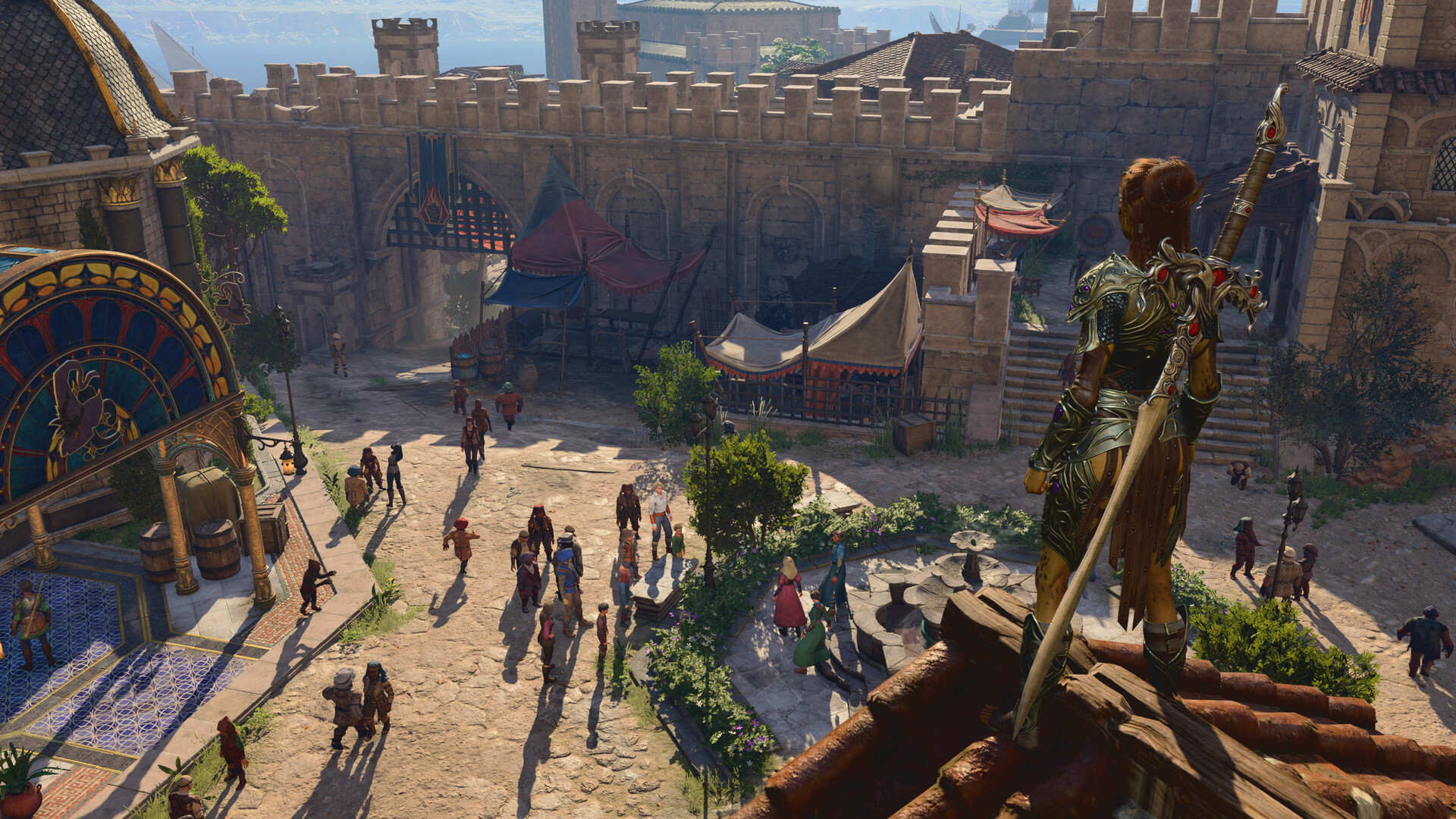
Quick Answer: The Baldur's Gate 3 classes update is Patch 8, the game’s final major patch, released on April 15, 2025. It adds Photo Mode and 12 new subclasses, one for each class, which is a huge shake-up for builds.
TL;DR: what shipped in the final major patch
Patch 8 is the last major update for Baldur’s Gate 3, and it landed on April 15, 2025, so this is the point where the game’s class sandbox got its biggest official shake-up before Larian moved on. That’s the clean headline for anyone scanning the patch notes over their morning coffee: new toys, new subclass paths, and a fresh reason to dust off your old Tav or trigger a full respec. The patch’s main pillars are Photo Mode and a new subclass for each of the game’s 12 classes, which means every party setup got at least one new angle to play with. Source
The important thing for the baldur's gate 3 classes update is that this wasn’t a tiny tuning pass or a handful of bug fixes hiding under a flashy banner. It was an expansion-style systems update focused on character building, with new subclass identity, new abilities, cantrips, summons, and combat animations entering the mix. That’s the sort of patch that doesn’t just tweak the meta; it makes players ask the classic question: “Do I rebuild my whole party now, or do I pretend my current setup was always a masterpiece?” Source
For context, Baldur’s Gate 3 is still very much a long-tail monster in the RPG space. Steam lists it as having an “Overwhelmingly Positive” review summary at 96.8% positive across 849191 reviews, and Steam also shows about 59591 players in game right now. Source That matters because a patch this large hits an already massive installed base, and any class update of this scale is instantly relevant to active saves, late-game respecs, and those “fine, I’ll start another run” moments.
Winners: the classes and builds that gained the most
The biggest winners are all 12 classes, because each one received a brand-new subclass that expands its build space in a very literal way. Patch 8 doesn’t just sprinkle in a few passive bonuses and call it a day; it gives every class a new lane, which is why the update feels so much bigger than a standard balance patch. In practice, that means the best “winner” is often the class you were already interested in, because now it has another way to specialize without forcing a multiclass detour. Source
The 12 new subclasses are the real headline
The patch introduced 12 new subclasses, one for each existing class, and those subclasses add new abilities, cantrips, summons, and combat animations. That is the heart of the Baldur's Gate 3 classes update, and it’s why the patch lands like a mini-expansion for theorycrafters. Source
Here’s the cleanest way to think about the winners:
| New subclass feature type | What it changes in practice | Example impact |
|---|---|---|
| New abilities | Gives the class a fresh combat role | A frontline class can become more control-focused |
| Cantrips | Improves at-will utility | A caster gets a better low-commitment option between spell slots |
| Summons | Adds extra board presence | A build can pressure enemies without spending every turn attacking |
| Combat animations | Improves feel and readability | A subclass feels distinct instead of being a cosmetic reskin |
That table matters because Patch 8 isn’t just about raw power. Sometimes the “winner” in a patch is the build that finally feels complete. A class getting a new summon, for instance, isn’t just more damage on paper; it can also change how encounters like the Goblin Camp, Moonrise Towers, or the fight around the Steel Watch approach are handled, because extra bodies on the field alter target priority and turn sequencing. Even without turning this into a spreadsheet religion, the practical effect is obvious: more subclass identities means more viable party drafts in the current meta. Source
Standout examples that look especially strong
Not every new subclass got equal hype, but some names immediately stood out to players and guide writers because they offer obvious payoff in both solo and party play. The Hexblade Warlock is the flashiest example in the discussion around Patch 8, largely because it brings the new spell Shadow Blade, strong multiclass potential, and relevance across all acts. That combination is exactly why it keeps popping up in best-of lists: it’s flexible, aggressive, and easy to imagine slotting into a wide range of party compositions. Source
A few other examples from the patch’s subclass highlights show how varied the winners are:
- Oath of the Crown Paladin gets battlefield control flavor, with the ability to interrupt and taunt enemies, plus Divine Allegiance to absorb damage for allies while restoring their health, as long as the paladin keeps their oath. That’s classic tank energy, which makes it appealing in fights where protecting a squishier back line matters. Source
- A Druid subclass benefits from the usual Wild Shape beast options, which means it keeps the shape-shifting identity intact while gaining another subclass layer on top. If you already liked turning into a walking nature problem, Patch 8 gives you more reason to stay in that lane. Source
- A Monk option gains Drunkard’s Luck at level 11, letting you spend 2 Ki Points to negate disadvantage on an Ability Check, Attack Roll, or Saving Throw when you’re under disadvantage. That is a very specific kind of clutch tool, but it is exactly the sort of tool that can swing awkward turns in late-game combat or dialogue-heavy sequences. Source
The broader lesson is simple: the classes that were already strong in the hands of experienced players became even more interesting, while some previously straightforward builds now have a more flavorful, more tactical version of themselves. If you are the type who likes to optimize around boss fights like Ketheric Thorm, Gortash, or the Netherbrain finale, Patch 8 gives you more ways to specialize without abandoning your favorite class fantasy. Source
Who benefits most in practical play
The classes that benefit most are the ones that already scale well with subclass identity and action economy. Since Patch 8 adds new subclass-specific tools rather than reworking the base class from the ground up, the biggest gains go to builds that can convert one fresh feature into a major combat plan. That often means casters, hybrid frontliners, and characters that were already good at exploiting bonus actions, reactions, or summons.
In real party terms, that means:
- A Paladin player can now lean into a more protective role with Oath of the Crown.
- A Warlock can get a more explosive damage plan with Hexblade-style synergy.
- A Monk can shore up problem rolls with Drunkard’s Luck at a point in the game where every failed check starts to feel personal.
- A Druid gets another way to turn the battlefield into a mess, which is very on-brand and frankly a little rude to enemies. Source
If you were already planning a fresh run, this is the patch that makes “just one more class” a dangerous sentence. If you were halfway through Act 2 or Act 3, it also makes a strong case for respeccing rather than rerolling, because the new subclass options are broad enough to justify salvaging an existing save. For related build planning, see classes patch 8 explained.
You might also like
- Baldur's Gate 3 act 2 where find arabella parents: Complete Guide
- Baldur's Gate 3 Find a way into Wyrm's Rock fortress Beginner Guide
- Baldur's Gate 3 every possible fate for arabella save
- Baldur's Gate 3 Steam Deck Performance Guide and Best Settings
- Baldur's Gate 3 A Home for Every Working Baldurian Reference Guide
Losers: what got pushed down, trimmed, or made less special
Patch 8’s losers are mostly old subclass identities and builds that lose relative value because the new options simply do more, not because the patch hard-nerfed a long list of numbers into the ground. That distinction matters. This was not a classic “these skills now deal 10% less damage” situation based on the facts we have; it was more of a power redistribution patch where the biggest casualty is exclusivity. If every class gets a new subclass with fresh mechanics, the old “best-in-slot” picks no longer get to coast on being the only interesting route. Source
Old subclass comfort picks lost exclusivity
The first thing that got nerfed, in a practical sense, was the value of sameness. Before Patch 8, plenty of players stuck with established favorites because those choices were known, tested, and stable. After Patch 8, that safety blanket is still usable, but it is no longer the only smart pick. The update gives every class a new subclass branch, so any old build that relied on being the “special” version of that class has to compete with a shiny newcomer. Source
That affects different classes in different ways:
- Warlock players who were happy with a standard Eldritch Blast-focused route now have Hexblade entering the conversation, especially if they want better melee or multiclass flexibility.
- Paladin players who liked straightforward oath gameplay now need to consider whether a more taunt-heavy or tank-oriented path is simply more useful.
- Monk players who enjoyed consistent damage may find the new level 11 utility package more attractive in the late game, particularly when disadvantage starts showing up at the worst possible time.
- Druid players who were already comfortable with shape-shifting may see less novelty in older subclass choices because Patch 8 adds more subclass flavor on top of the existing Wild Shape identity. Source
Builds that rely on narrow niche value are the most at risk
The biggest “losers” are not entire classes but niche builds that depended on having no real competition for their role. Patch 8 introduces new subclass-specific actions, passives, and spells, so a build that once stood out for being the only way to do a particular thing now has to justify itself against a class-native alternative. That’s especially true for utility-first or roleplay-first setups where the mechanical ceiling was already lower than the flavor ceiling. Source
A few practical examples make this easier to see:
| Previously comfortable build style | Why Patch 8 pressures it | What to compare against now |
|---|---|---|
| Generic tank Paladin | New Crown-style tools add more battlefield control | Oath of the Crown |
| Standard Warlock damage loop | New subclass options can improve melee or spell flexibility | Hexblade Warlock |
| Pure support Druid | New subclass depth can outperform “safe” choices | New Druid subclass options |
| Straightforward Monk utility | New level 11 trick gives late-game anti-disadvantage utility | Drunkard’s Luck |
The key thing to understand is that this is a relative nerf, not necessarily an absolute one. You can still clear Honour mode, still beat the game in Tactician, and still build around what you like. But the patch absolutely devalues inertia. If your build choice was “I always pick this because it works fine,” Patch 8 quietly asks, “Sure, but have you tried the new thing?” That’s a very Larian kind of problem to create. Source
Photo Mode also steals attention from gameplay-only purists
Photo Mode is a winner feature for the community, but it is a loser for anyone who wanted the final major patch to be purely about combat systems. Patch 8 clearly splits its spotlight between style and substance, and some players will feel that the camera tooling got precious update bandwidth that could have gone toward encounter tuning or additional class balancing. That isn’t a numbers-based nerf, but it is a patch-economy tradeoff: every minute spent on posing Karlach in dramatic light is a minute not spent buffing or nerfing a spell. Source
So if you’re ranking losers by vibes, the biggest casualty is the old expectation that a “classes update” should only touch combat. Patch 8 did more than that, and some of the class-only crowd definitely felt the camera feature sneaking into their patch notes like a raccoon at a campfire.
Player action items: what you should do differently starting today
You should respec, re-evaluate multiclass plans, and revisit your party roles now that every class has a new subclass option. That is the most useful response to the baldur's gate 3 classes update, because the patch changes the opportunity cost of sticking with an old setup. If your current build was already borderline, Patch 8 probably gives you a better alternative. If your current build was strong, Patch 8 may give you a stronger or at least more interesting version of the same class fantasy. Source
Re-roll or respec if your build was “good enough,” not exciting
You should strongly consider a respec if your build fell into the “works fine but never wowed me” category. That is especially true for:
- Warlock characters that want more melee pressure or multiclass flexibility now that Hexblade-style value is in the room.
- Paladin characters that need a better defensive or aggro-control identity.
- Monk characters where level 11 utility suddenly matters because disadvantage is ruining your day.
- Druid characters who want a fresher shape-shift or spell plan rather than just repeating the same Wild Shape rhythm. Source
If you are in Act 1 or early Act 2, a full reroll is still reasonable because you will feel the new subclass from the ground up. If you are already deep into the campaign, a Withers respec is the cleaner call. Baldur’s Gate 3 rewards experimentation, and Patch 8 basically hands you a giant neon sign that says “Try the new subclass, you coward.” Source
Rebuild your party around roles, not just class labels
You should stop thinking in terms of “I need a fighter, a wizard, a cleric, and a rogue” and start thinking in terms of what the new subclasses actually do for encounter flow. Since Patch 8 adds new abilities, cantrips, summons, and animations, the role a class plays matters more than the class name on its own. A Crown Paladin and a more old-school Paladin are not the same party problem solver anymore. A Hexblade Warlock and a traditional Warlock can serve different lanes in the same encounter. Source
A good post-patch party checklist looks like this:
- Do you have enough frontline control for fights like the Steel Watch or other crowded battles?
- Do you have enough late-game save manipulation for situations where disadvantage and high-stakes rolls pile up?
- Do you have at least one summon or extra body option if you like action economy abuse?
- Do you have a clean answer for single-target burst and battlefield disruption? Source
This is also the moment to compare your current composition with the new subclass options before you commit to another long run. With Baldur’s Gate 3’s full campaign length sitting at roughly 72.7 hours for the main story, 115.73 hours with extras, and 180.05 hours for completion, a bad party plan is not a small mistake; it is a many-evenings mistake. Source
Change your farming and prep habits if you are chasing achievements
You should also adjust your prep loop if your goal is completion, achievement hunting, or a clean late-game build grind. SteamHunters lists 54 achievements and 0 currently unobtainable achievements, which means Patch 8 doesn’t appear to have broken the completion path for the game as a whole. Source
That matters because a final major patch with new subclasses often tempts players into resetting their progression, but BG3 remains a game where long-term save management is valuable. If you are farming for specific achievements like Foehammer for Honour mode or Jack-of-all-Trades for multiclassing through every class in one playthrough, the update is a nudge to re-check your route rather than blindly continue. Source
Use this short action list:
- Respec before Act 2 or Act 3 major fights if your class identity no longer matches your plan.
- Review multiclass splits if your build wants to exploit new subclass synergy.
- Keep a backup save before swapping into a brand-new subclass route.
- Revisit your achievement route if you are hunting rare clears like Honour mode or full multiclass runs. Source
If you’re a “I only want the strongest thing” player, this patch is basically an invitation to rebuild. If you’re a “I want the coolest thing” player, this patch is a buffet. If you’re both, well, sorry in advance to your free time.
What the patch means for long-term BG3 play
Patch 8 turns Baldur’s Gate 3 from a finished RPG into a more flexible build playground, even though it is the final major update. That sounds contradictory until you look at what was actually shipped: the game is done in a content sense, but it received enough subclass depth to make replaying it feel meaningfully different. That’s why the baldur's gate 3 classes update matters even after the dust settles. It doesn’t just add “more stuff”; it changes the answer to the question “What class should I play next?” Source
The long-term winners are players who enjoy replayability and character experimentation. A game with a main story length of 72.7 hours, extra-content length of 115.73 hours, and completionist length of 180.05 hours already asks for commitment, and Patch 8 makes that commitment more interesting rather than less. Source The game’s current Steam review summary is still “Overwhelmingly Positive” at 96.8% positive across 849191 reviews, which tells you the player base was already highly invested before this final patch layered on more build variety. Source
For active players, the safest mental model is this:
- Treat your old favorite subclass as a baseline, not a final answer.
- Treat the new subclass for your main class as a serious respec candidate.
- Treat party composition as a role puzzle, not a habit.
- Treat Patch 8 as the point where “one more run” becomes “one more run, but with a different class identity.”
If you’re coming back after a break, this is one of the easiest reasons to boot the game again. The patch didn’t just add Photo Mode to make your screenshots prettier; it gave every class a fresh route into the campaign, which is exactly the sort of update that keeps a massive RPG alive in the post-launch era. For build-planning follow-ups, see currently unavailable beginner.
Sources
- https://bg3.wiki/wiki/Guide:Patch_8_preview
- https://www.ign.com/wikis/baldurs-gate-3/New_Subclasses_in_Patch_8
- https://howlongtobeat.com/?q=bg3
- https://store.steampowered.com/app/1086940/
- https://steamhunters.com/apps/1086940
See also
- Baldur's Gate 3 Fine at Home: A Cookery Book Reference Guide
- Baldur's Gate 3 All Interactive Maps and Locations Beginner Guide
- Baldur's Gate 3 Rescue the Gnome and Stop the Windmill Beginner Guide
- Baldur's Gate 3 Seek Protection from the Shadow Curse: Beginner Guide
- Baldur's Gate 3 Best Character Build for Beginners: Easy Oath of Devotion Paladin
- Baldur's Gate 3 How to Solve the Silent Library Puzzle
- Baldur's Gate 3 Get Help from Healer Nettie Beginner Guide
- Baldur's Gate 3 Wyll Origin Character Details: Beginner Guide for New Players
- Baldur's Gate 3 Ask the Goblin Priestess for Help: Beginner Guide
- Baldur's Gate 3 Silver Sword of the Astral Plane Beginner Guide
Screenshots

Reviewed by
BG3 Hub Editorial
Expertise: Editorial team behind BG3 Hub. Content is compiled from official patch notes, community wikis, and playthrough notes, then reviewed and updated on schedule.
Sources
Baldur's Gate 3 Classes Guides →
Browse the complete classes collection and its focused guides.
Related Guides
🔥 Popular Guides
Baldur's Gate 3 every possible fate for arabella save
Every possible fate for Arabella in BG3, including save, death, and grove consequences, plus where to trigger the quest and best outcomes.
Baldur's Gate 3 act 2 where find arabella parents: Complete Guide
Find Arabella’s parents in Act 2 by heading to the House of Healing after speaking to her in Reithwin Town.
Baldur's Gate 3 best baldurs gate 3 classes patch 8: Patch Notes Explained
Patch 8 adds 12 subclasses, shifts class rankings, and highlights the strongest and weakest picks for BG3 players.
Baldur's Gate 3 Fine at Home: A Cookery Book Reference Guide
Learn what Fine at Home: A Cookery Book does, where it fits, and when to keep it in BG3.
📋 Patch Notes & Updates
🛠️ Popular Tools
Was this guide helpful?
Rate this guide so we can improve it.
Share your own tip
Found something not in the guide? Submit it below — our editors review every tip before publishing. No account required.