 Baldur's Gate 3
Baldur's Gate 3 Monk Build

Quick Answer: A baldurs gate 3 monk build is a fast, mobile melee striker that punches above its weight with burst damage, control, and stun pressure; it shines when you can isolate targets and keep moving.
Build Identity
This baldurs gate 3 monk build is a skirmisher and assassin-style frontliner that turns mobility into damage, then uses control to keep enemies from fighting back. If you like zooming across the battlefield, deleting priority targets, and laughing at enemies who thought standing near you was a good idea, this is your kind of chaos.
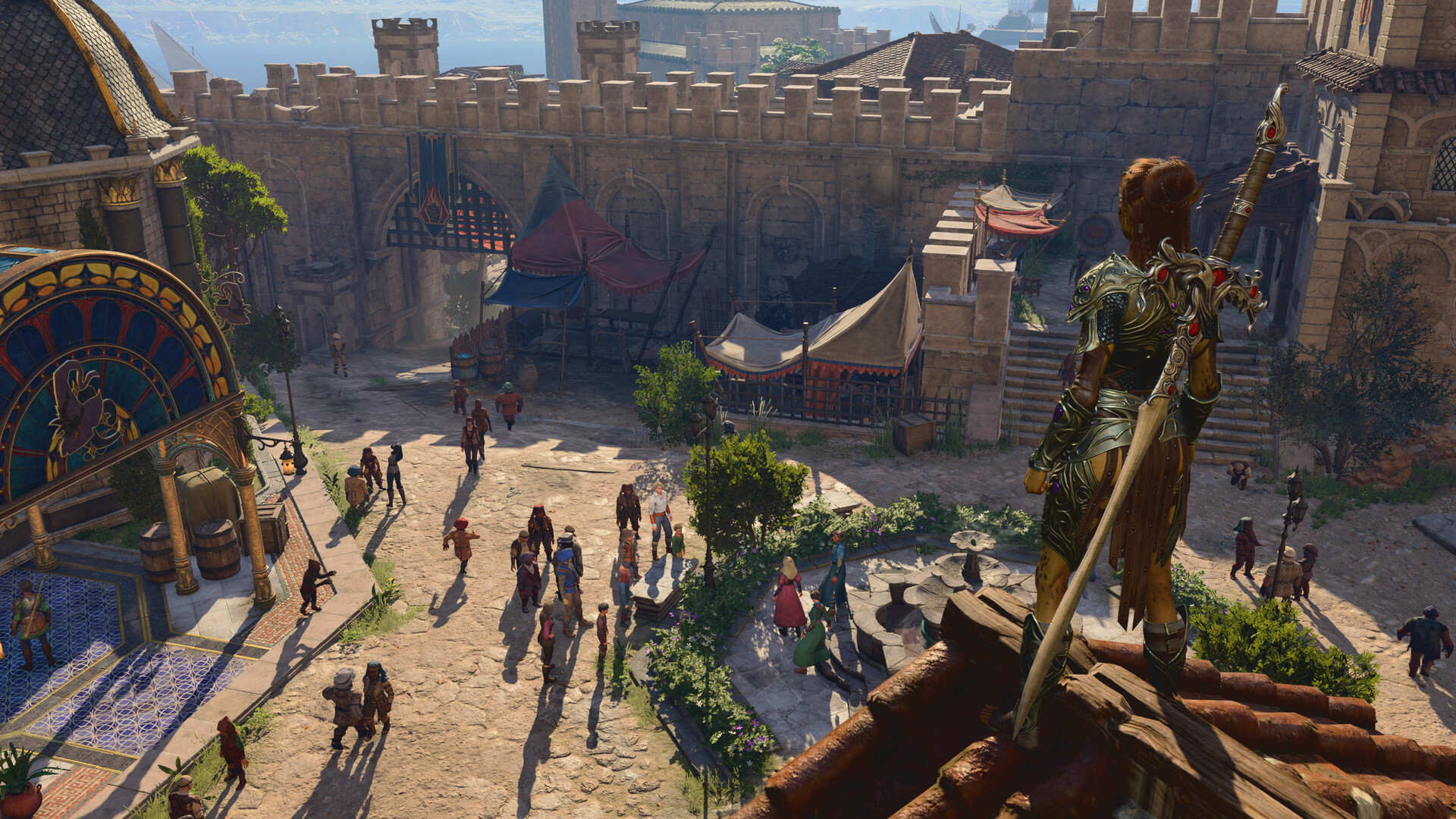
Baldur’s Gate 3 is a story-rich, party-based RPG set in the universe of Dungeons & Dragons, where your choices shape a tale of fellowship and betrayal, survival and sacrifice, and the lure of absolute power. Source
What this build does well
- Reaches backliners quickly without needing fancy setup.
- Delivers strong single-target pressure with chained attacks.
- Uses control effects to swing fights before enemies stabilize.
- Works well in tactical play because positioning is half the damage.
What this build is trying to be
The monk is not the “stand there and trade hits forever” class. It is the “touch grass, then teleport-kick you into the dirt” class. Your job is to pick the right target, get there first, and make that target’s turn look canceled.
Best fit for
- Players who enjoy high-mobility melee.
- Anyone who likes active turns instead of passive auto-piloting.
- Parties that can handle a fast striker without needing a second tank.
- Runs where you want a flexible bruiser who still scales into late game.
Stat Priorities
Your stat priority should favor Dexterity first, then Wisdom, then Constitution for a monk that hits hard, survives long enough to keep punching, and keeps your class features relevant.
- Dexterity — Improves attack accuracy, initiative, and Armor Class, which is basically monk fuel.
- Wisdom — Boosts survivability and monk scaling, especially if your setup leans into defenses and class DCs.
- Constitution — Gives you more staying power so you do not fold after the first bad engagement.
- Strength — Usually not the main plan for a standard monk; nice if your specific gear or gimmick supports it, but not the core focus.
- Intelligence / Charisma — Low priority for combat performance in this build.
Why this order works
A monk wins by acting early, landing hits reliably, and not getting deleted by one bad round. Dexterity supports all three. Wisdom makes your defensive layers feel less paper-thin. Constitution is the “please don’t sneeze on me and end my turn” stat.

Ability Priority and Combat Rotation
Your combat priority is to close distance, apply pressure to the highest-value enemy, and spend resources on control or burst when the fight is actually worth it.
Core turn flow
- Open with mobility to reach vulnerable ranged enemies, casters, or isolated elites.
- Spend your strongest attacks on the most dangerous target rather than splitting damage.
- Use control or disable effects when a dangerous enemy needs to lose a turn.
- Reposition after the kill so you are not standing in the middle of five angry responses.
- Save resources for spike turns instead of spending everything on a harmless mop-up round.
Priority table
| Situation | Priority | Why it matters |
|---|---|---|
| Enemy mage or archer exposed | Highest | Removing the damage source often prevents more damage than healing later. |
| Clustered enemies | High | Control and area pressure gain value when enemies bunch up. |
| Boss with dangerous next turn | High | Denying a key action can be stronger than raw damage. |
| Weak leftover enemies | Medium | Clean them up if it secures objectives or tempo. |
| Safe, faraway target | Lower | If chasing it costs your positioning, it may not be worth it. |
Simple monk combat rules
- Do not waste your best resources on low-impact targets.
- Do not overcommit if it strands you without support.
- Do not forget that movement is part of your damage plan.
- Do use high ground, flanks, and open paths whenever possible.
Best Gear and Loadout
The best gear for this monk build is whatever improves mobility, unarmed performance, survivability, or on-hit value without forcing you to abandon your core stat plan.
| Slot | Item | Reason |
|---|---|---|
| Weapon | Finesse-compatible option or monk-synergy weapon | Keeps your attacks aligned with your primary stats and playstyle. |
| Gloves | Unarmed or strike-boosting gloves | These are often some of the most important pieces for monk damage scaling. |
| Boots | Mobility or initiative-focused boots | Going first and reaching the right target is huge for this build. |
| Cloak | Defensive cloak | Helps you survive when you need to dive into danger. |
| Armor | Light, monk-friendly setup | Heavy armor usually fights the class fantasy and can fight your stats too. |
| Amulet | Utility or protection amulet | Extra survivability or combat utility is always welcome. |
| Rings | Damage, accuracy, or defense rings | Flexible slots for patching whichever weakness your current gear has. |
Loadout notes
This build values items that reward repeated attacks, movement, and pressure more than slow scaling gimmicks. If an item looks flashy but does not help you reach targets, survive the counterpunch, or improve your attack routine, it is probably just loot-shaped temptation.
Gear selection checklist
- Prefer items that support speed, accuracy, and survivability.
- Take gloves and boots seriously; monks feel gear changes more than many classes.
- Avoid pieces that force awkward stat investment unless the payoff is clearly worth it.
- If you are unsure, choose the option that helps you act first or hit harder.
Budget vs Endgame Variant
Your budget version should focus on easy-to-find stat-supporting gear and simple survivability, while the endgame version can lean into specialized monk synergies and tighter combat optimization.
Budget starter setup
- Use any light or monk-compatible gear that keeps your AC and mobility comfortable.
- Prioritize basic stat boosters over niche effects.
- Equip gloves that help unarmed or melee strikes even if they are not perfect.
- Choose boots that improve movement so your turn always has reach.
- Take the safest rings and amulets you can find if you are still learning positioning.
Endgame optimized setup
- Stack monk-synergy gloves that improve your core attack pattern.
- Look for defensive pieces that let you stay in melee without falling over.
- Favor initiative and movement bonuses because acting first is often worth more than minor defensive gains.
- Pick utility that helps you keep tempo rather than slow, reactive bonuses.
Cheap substitute philosophy
If you do not have the dream gear yet, do not panic and do not reroll your whole plan. The monk works well with functional placeholders because the class already brings excellent baseline mobility and turn efficiency. Your job is to keep the engine running until the fancy parts show up.
Counters and Hard Matchups
This build struggles most against enemies that can punish movement, deny positioning, or force you to spend turns getting back into the fight.
What shuts the build down
- Heavy control effects that stop you from closing distance.
- Explosive ranged pressure that punishes a forward dive.
- Enemies with strong reactions or retaliation when you stay adjacent too long.
- Crowded terrain that blocks lanes and ruins your mobility advantage.
- High-armor or hard-to-hit targets if your accuracy setup is behind the curve.
How to adapt
- Approach from angles instead of straight lines.
- Wait for enemy formation mistakes before diving.
- Use party support to soften or distract the threat first.
- Prioritize anti-control tools and positioning aids when available.
- If a fight is bad for solo diving, become a cleanup assassin instead of a hero.
Matchup survival tips
- Save your movement for exits, not just entrances.
- Hit the caster if you can, but do not ignore the enemy that is about to stun you.
- If terrain is awful, play slower and let the battlefield open up.
- Remember that sometimes the best monk turn is the one where you do not become a highlight reel for the enemy.
Build Variants and Progression Path
A monk build can branch depending on whether you want more damage, more survivability, or more utility, but the core loop stays the same: move fast, hit hard, and make enemies miserable.
Early game focus
- Build around consistency rather than flashy combos.
- Use the best available mobility and defensive gear.
- Learn enemy threat ranges so you can commit safely.
- Keep your turns clean and avoid resource waste.
Mid game focus
- Start leaning into your strongest attack pattern more aggressively.
- Pick fights that reward speed and isolation.
- Improve your initiative and survivability so your first strike matters more.
- Look for gear that amplifies your main attack rhythm.
Late game focus
- Specialize into the version of the monk that best matches your party.
- Tighten your target priority so every turn has a purpose.
- Use control, burst, and movement together instead of as separate ideas.
- At this stage, your monk should feel less like a brawler and more like an execution plan with fists.
Why This Monk Build Fits Baldur’s Gate 3
This build fits Baldur’s Gate 3 because the game rewards tactical movement, encounter control, and flexible party roles as much as raw damage. Baldur’s Gate 3 has remained massively visible in player discussion, with Steam user recommendations listed at 745155 and a Metacritic score of 96 in the provided stats, which lines up with how much the game rewards smart buildcrafting and replay experimentation. Source
That matters for a monk because the class thrives in a game where terrain, initiative, and target choice all carry real weight. In other words, this is not a “press one button and watch a spreadsheet” build. It is a “read the room, then ruin the room’s day” build.
FAQ
Is a monk good for a first playthrough?
Yes, because the class is straightforward in combat once you learn positioning. The learning curve is more about battlefield awareness than complicated button sequences.
Do I need perfect gear for this build?
No, and that is the good news. A monk build stays functional with budget gear as long as your stats and positioning are sensible.
Is this build better at single-target or crowd control?
It is strongest at single-target pressure, but it can contribute to crowd control when you use movement and disable tools well.
Does the monk rely on rest-heavy resource management?
It can, depending on how aggressively you spend your special actions, so pace your big turns and do not blow everything on trivial fights.
Can this build work without min-maxing?
Absolutely. You will still get strong mobility and solid combat value if you keep your priorities clean and do not sabotage your own stat spread.
Sources
Screenshots


Reviewed by
BG3 Hub Editorial
Expertise: Editorial team behind BG3 Hub. Content is compiled from official patch notes, community wikis, and playthrough notes, then reviewed and updated on schedule.
Sources
Baldur's Gate 3 Classes Guides →
Browse the complete classes collection and its focused guides.
Related Guides
🔥 Popular Guides
Baldur's Gate 3 Ceremonial Practices for Initiate Umberlants
Book guide to Ceremonial Practices for Initiate Umberlants, including what it is, where to find it, and how it compares to ritual spells.
Baldur's Gate 3 areas hidden missed act 2
Find the hidden and easily missed Act 2 areas in BG3, including Reithwin Town, Moonrise Towers, and the Shadowfell point of no return.
Baldur's Gate 3 How to Get to Moonrise Towers
Fast route to Moonrise Towers in BG3, including shadow curse protection, route steps, pitfalls, and verification.
Baldur's Gate 3 achievements Guide
Complete BG3 achievements guide with rarest unlocks, missables, hidden trophies, and the best route to 100%.
📋 Patch Notes & Updates
🛠️ Popular Tools
Frequently Asked Questions
Quick answers from the guide · click a question to expand.
Is a monk good for a first playthrough?
Yes, because the class is straightforward in combat once you learn positioning. The learning curve is more about battlefield awareness than complicated button sequences.
Do I need perfect gear for this build?
No, and that is the good news. A monk build stays functional with budget gear as long as your stats and positioning are sensible.
Is this build better at single-target or crowd control?
It is strongest at single-target pressure, but it can contribute to crowd control when you use movement and disable tools well.
Does the monk rely on rest-heavy resource management?
It can, depending on how aggressively you spend your special actions, so pace your big turns and do not blow everything on trivial fights.
Can this build work without min-maxing?
Absolutely. You will still get strong mobility and solid combat value if you keep your priorities clean and do not sabotage your own stat spread.
Was this guide helpful?
Rate this guide so we can improve it.
Share your own tip
Found something not in the guide? Submit it below — our editors review every tip before publishing. No account required.