 Baldur's Gate 3
Baldur's Gate 3 Classes Beginner Guide

What You Need to Know First
Baldur’s Gate 3 is a story-rich, party-based RPG set in the universe of Dungeons & Dragons, where your choices shape a tale of fellowship and betrayal, survival and sacrifice, and the lure of absolute power Source. That matters because this is not a game where you simply chase the biggest damage number and call it a day. Your dialogue choices, party composition, spell selection, and even how you solve encounters all matter.
If you are just getting started, the biggest early decision is usually your class. The phrase baldurs gate 3 classes gets thrown around a lot because class choice affects almost everything: combat style, skill checks, survivability, and how much micromanagement you will do. Some classes are simple and forgiving, while others reward planning, positioning, and resource management.
The good news? You do not need to know every rule from tabletop Dungeons & Dragons to enjoy the game. You only need to understand a few core systems and make smart early decisions. Baldur's Gate 3 is built to let you experiment, respec later, and grow into your build. So if your first character is not perfect, that is fine.
For beginners, think about three questions:
- Do you want to fight up close or from range?
- Do you want simple actions or more complex spell management?
- Do you want your character to handle dialogue, stealth, healing, or raw damage?
Those answers will point you toward the right baldurs gate 3 classes for your first run.
Core Mechanics
Classes shape your role
Each class gives you a different identity in combat and exploration. A Fighter is usually straightforward and durable. A Wizard gives you broad magical options. A Rogue excels at stealth, initiative, and single-target pressure. A Cleric can support, heal, and still contribute in battle. When people compare baldurs gate 3 classes, they are really comparing how those roles feel moment to moment.
If you are overwhelmed, pick a class that matches how you naturally play:
- Want easy early combat? Try a martial class.
- Want big tactical choices? Try a spellcaster.
- Want flexibility? Try a hybrid option.
Ability scores matter a lot
Your class determines which stats matter most. Strength helps heavy melee characters. Dexterity supports initiative, armor class, and finesse weapons. Intelligence, Wisdom, and Charisma are the main spellcasting stats for different classes. If you invest in the wrong abilities, your character can feel weak even if the class itself is strong.
A simple rule: prioritize the main stat your class uses, then add survivability. New players often spread points too thin. That usually hurts more than it helps.
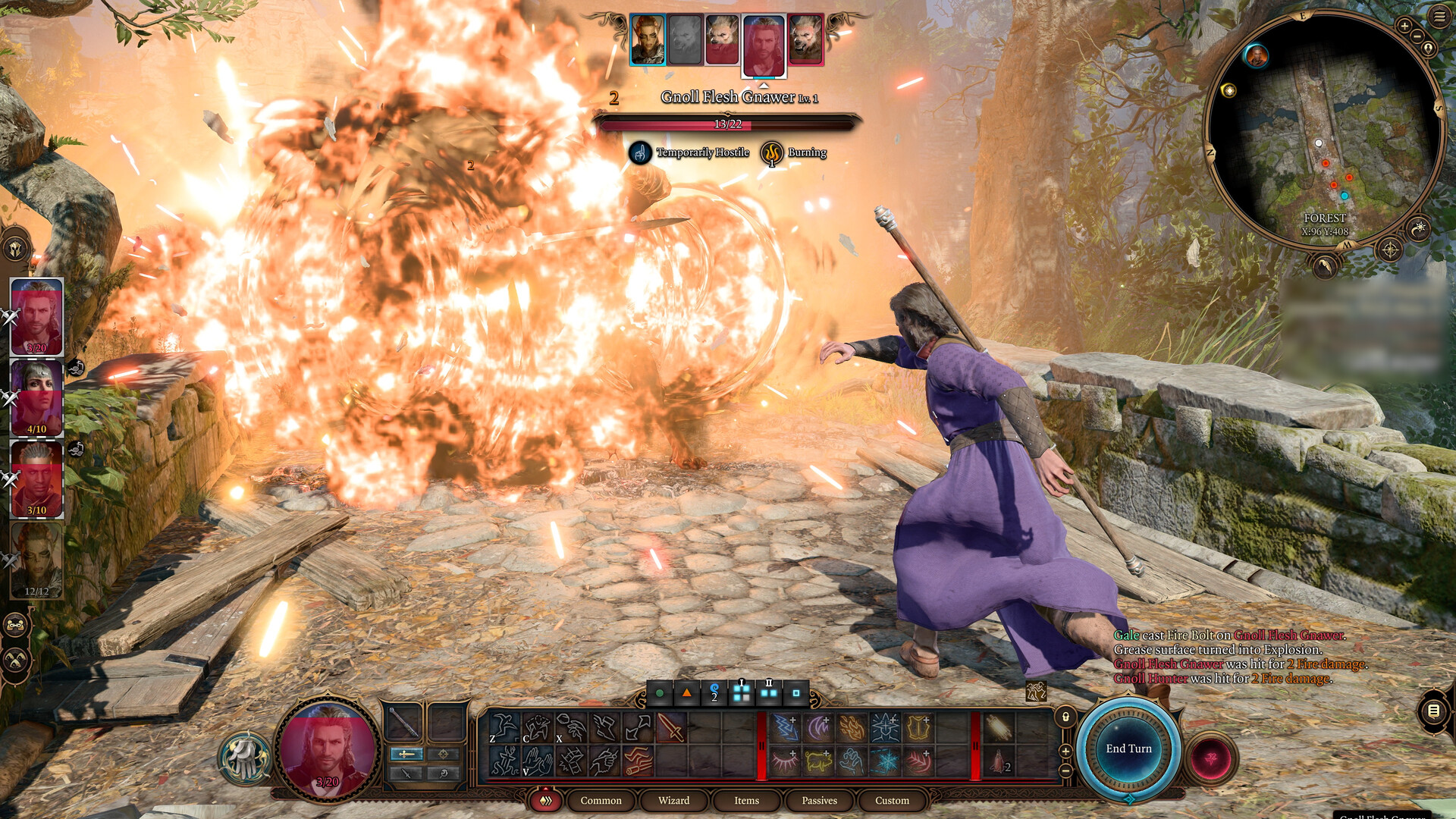
Action economy is everything
Most turns in combat are built around:
- an action
- a bonus action
- movement
- sometimes a reaction
The best players do not just ask, “What can I do?” They ask, “What is the best use of my turn?” That is especially important for spellcasters and stealth classes, where one well-timed action can swing a fight.
Positioning beats raw stats
High ground, chokepoints, surprise, and environmental hazards are huge. Push enemies off ledges. Set up area damage. Protect your backline. Even a strong build can feel weak if you stand in the wrong place.
Resting is part of the loop
Many classes rely on limited-use abilities. If you are hoarding everything for “later,” you may be playing too cautiously. Use your strong tools, then rest when needed. Baldur’s Gate 3 expects you to spend resources, not save them forever.
Early-Game Priorities
Pick a class that feels good, not just “strong”
When people search baldurs gate 3 classes, they often want the “best” one. For beginners, the best class is usually the one you will actually enjoy learning. A mechanically strong class is worthless if you dislike managing it.
Good beginner-friendly priorities:
- clear attack options
- survivability
- useful utility outside combat
- low punishment for mistakes
Build a balanced party
Because the game is party-based, your own class is only one piece of the puzzle. Try to cover these jobs across your group:
- frontliner
- ranged damage
- utility or control
- healing or support
You do not need every role on one character. In fact, spreading responsibilities across the party is usually easier.
Talk to companions
Companions are not just story flavor; they are part of your build planning. Their classes can fill gaps in your party. If you are playing a fragile character, bring sturdier allies. If you are a melee class, consider a ranged spellcaster and a support character.
Explore before forcing fights
Early areas reward curiosity. Loot containers, check side paths, read notes, and talk to NPCs. You often gain better gear, extra quest options, and smarter ways to handle encounters. The game is generous to players who investigate.
Learn your action tooltips
The interface gives you the information you need, but it is easy to skim past it. Before combat, read what each ability actually does. Small details like range, concentration, or whether something requires a saving throw can change your decision.
Use class identity to solve problems
A stealthy character can scout ahead. A strong melee class can break obstacles. A caster can manipulate terrain or influence conversations. The most satisfying part of baldurs gate 3 classes is that they do not only change combat; they change how you approach the world.
For more on party setup and progression, see our related guide.
Common Mistakes to Avoid
Chasing complexity too early
A lot of new players want the flashiest class on their first run. That can backfire. If you pick a complicated spellcaster and do not yet understand concentration, spell slots, and positioning, the class may feel weaker than it really is.
It is often smarter to start with a class that lets you focus on learning the game itself.
Ignoring your party composition
If your entire team is built around one niche, you will struggle. For example, four fragile damage dealers may destroy easy fights and collapse in tougher encounters. Use a party that covers multiple roles.
Forgetting to rest
New players sometimes play too conservatively and end up underpowered because key abilities are always unavailable. Resting is not failure. It is part of how the game is balanced.
Not reading tooltips
Baldur’s Gate 3 is generous, but it does expect you to read. A spell that sounds simple may require concentration. A weapon might scale differently than expected. A buff may only last until your next rest. Understanding details makes a huge difference.
Building around one favorite move
It is tempting to make your entire character revolve around a single attack or spell. That can work for a while, but balanced characters tend to hold up better across the campaign. The strongest baldurs gate 3 classes are often the ones that can adapt when a plan fails.
Overlooking social skills
Dialogue matters a lot. Even a combat-focused character benefits from good conversation tools somewhere in the party. If your main character is not built for charisma, let another companion handle certain interactions when possible.
Next Steps
Once you understand the basics, your next goal is to learn how your chosen class fits into the larger campaign. Here is a simple progression path:
- Learn your class’s main combat loop.
- Identify which stats matter most.
- Keep one eye on party coverage.
- Upgrade gear that supports your role.
- Revisit your build whenever you unlock new options.
If you are still undecided, try a class that is forgiving and clear in its role, then branch out on a second playthrough. That is the best way to appreciate how broad baldurs gate 3 classes really are.
You can also improve faster by paying attention to:
- which enemies are dangerous at range
- which fights reward control effects
- which companions cover your weak spots
- how often your character succeeds in dialogue and exploration
A beginner should not aim for perfection. Aim for consistency. A character who does their job well in most situations is far better than one who is amazing in theory but awkward in play.
The game’s strength is that it encourages experimentation. If you later decide your class is not the right fit, you can adjust your approach without restarting your entire adventure. That makes Baldur’s Gate 3 especially friendly for players who want to learn by doing.
FAQ
What are the best Baldur's Gate 3 classes for beginners?
The best beginner classes are usually the ones with a clear job and low punishment for mistakes. Simple melee classes are often easiest to understand, while some support classes are also very forgiving because they contribute in many situations.
How do I choose between melee and magic?
Pick melee if you want direct, dependable combat and straightforward turns. Pick magic if you enjoy planning, utility, and controlling the battlefield. If you are unsure, choose the style that sounds more fun, not the one that sounds most optimal.
Can I change my class later?
You can adjust your build later, so an early choice is not permanent forever. That said, it still helps to pick a class that feels comfortable, especially while you are learning the basics.
Is Baldur's Gate 3 hard for new players?
It can be demanding at first because of the systems, but it is very learnable. Once you understand action economy, positioning, and party roles, the game becomes much easier to manage.
What should I focus on first after creating a character?
Focus on your main stat, a weapon or spell style you enjoy, and a party that covers different roles. Do not try to master everything at once.
How important is party composition?
Very important. Baldur’s Gate 3 is built around a team, so your companions should help cover healing, damage, control, and dialogue support.
Can I still enjoy the game if I do not know Dungeons & Dragons?
Yes. The game teaches you what you need gradually. You do not need tabletop experience to enjoy the story or the combat.
You might also like
- Baldur's Gate 3 Best Build: Open Hand Monk and Thief Rogue
- Baldur’s Gate 3 Best Builds Guide
- Baldur's Gate 3 Tier List
- Baldur’s Gate 3 Fun Builds: A Complete Build Guide
- Baldur's Gate 3 Xbox Beginner Guide
Sources
- https://store.steampowered.com/app/1086940/
- https://en.wikipedia.org/wiki/Baldur's_Gate_(video_game)
You might also like
- Baldur's Gate 3 How to Rescue the Grand Duke Beginner Guide
- Baldur’s Gate 3 Beginner Guide: Dice, Early Progression, and Smart Starts
- Baldur's Gate 3 Build Guide: Build Ideas That Actually Work
- Baldur's Gate 3 Beginner Guide: Baldur’s Gate 3 Codes, Early Progress, and Smart Starts
- Baldur’s Gate 3 Find the Missing Letters Beginner Guide
See also
- Baldur’s Gate 3 Bard Build: Best Support, Control, and Damage Setup
- Baldur's Gate 3 Necromancer Build Guide
- Baldur's Gate 3 Warlock Build Tier List: Best Pacts, Subclasses, and Party Roles
- Baldurs Gate 3 PS5 Beginner Guide
- Baldur's Gate 3 Build Guide: Paladin-Lock Smite Build
- Baldur's Gate 3 Xbox Series X Beginner Guide
- Baldur's Gate 3 Monk Build
- Baldur's Gate 3 Builds: Best Core Build Guide
- Baldur's Gate 3 Treasure Pack Beginner Guide
- Baldur’s Gate 3 Astarion Beginner Guide
- Baldur's Gate 3 Jaheira Build
- Baldur's Gate 3 Confront the Elder Brain: Beginner Guide
- Baldur's Gate 3 Karlach Build Guide
- Baldur’s Gate 3 Evelyn Beginner Guide
- Baldur's Gate 3 Builds Reddit: Best Build Guide
See also
- Baldur’s Gate 3 Achievements Beginner Guide
- Baldur's Gate 3 Investigate the Suspicious Toys Beginner Guide
- Baldur's Gate 3 Investigate the Sel nite Resistance Beginner Guide
- Baldur's Gate 3 Beginner Guide
- Baldur's Gate 3 How to Cure the Poisoned Gnome: Beginner Guide
- Baldur's Gate 3 Build Guide: Best All-Rounder Party Carry
- Baldur's Gate 3 Gloves of Soul Catching Beginner Guide
- Baldur's Gate 3 Kill Raphael's Old Enemy Beginner Guide
- Baldur's Gate 3 Walkthrough
- Baldur's Gate 3 The Blood of Lathander Beginner Guide
- Baldur’s Gate 3 How to Steal the Sacred Idol: Beginner Guide
- Baldur's Gate 3 How to Find Dribbles the Clown
- Baldur's Gate 3 Character Creation Beginner Guide
- Baldur's Gate 3 Find the Missing Shipment Beginner Guide
- Baldur's Gate 3 Save the Grymforge Gnomes Beginner Guide
Screenshots



Reviewed by
BG3 Hub Editorial
Expertise: Editorial team behind BG3 Hub. Content is compiled from official patch notes, community wikis, and playthrough notes, then reviewed and updated on schedule.
Sources
Baldur's Gate 3 Classes Guides →
Browse the complete classes collection and its focused guides.
Related Guides
🔥 Popular Guides
Baldur's Gate 3 how save arabella daughter mother father thief locke komira kagha snake tieflings
Save Arabella in BG3 by stopping Kagha, rescuing the tiefling child, and earning Komira’s Locket.
Baldur's Gate 3 disco elysium harry du bois custom character
Build a Harry Du Bois-style custom character in Baldur's Gate 3 with class picks, dialogue tips, and roleplay limits.
Baldur's Gate 3 dark urge romance reactions astarion laezel shadowheart
Dark Urge romance reactions for Astarion, Lae'zel, and Shadowheart, with approval thresholds, route fit, and common misreads.
Baldur's Gate 3 List of magic items in Act One
Act One BG3 magic items, their effects, requirements, locations, best uses, and missable triggers.
📋 Patch Notes & Updates
🛠️ Popular Tools
Frequently Asked Questions
Quick answers from the guide · click a question to expand.
What are the best Baldur's Gate 3 classes for beginners?
The best beginner classes are usually the ones with a clear job and low punishment for mistakes. Simple melee classes are often easiest to understand, while some support classes are also very forgiving because they contribute in many situations.
How do I choose between melee and magic?
Pick melee if you want direct, dependable combat and straightforward turns. Pick magic if you enjoy planning, utility, and controlling the battlefield. If you are unsure, choose the style that sounds more fun, not the one that sounds most optimal.
Can I change my class later?
You can adjust your build later, so an early choice is not permanent forever. That said, it still helps to pick a class that feels comfortable, especially while you are learning the basics.
Is Baldur's Gate 3 hard for new players?
It can be demanding at first because of the systems, but it is very learnable. Once you understand action economy, positioning, and party roles, the game becomes much easier to manage.
What should I focus on first after creating a character?
Focus on your main stat, a weapon or spell style you enjoy, and a party that covers different roles. Do not try to master everything at once.
How important is party composition?
Very important. Baldur’s Gate 3 is built around a team, so your companions should help cover healing, damage, control, and dialogue support.
Can I still enjoy the game if I do not know Dungeons & Dragons?
Yes. The game teaches you what you need gradually. You do not need tabletop experience to enjoy the story or the combat.
Was this guide helpful?
Rate this guide so we can improve it.
Share your own tip
Found something not in the guide? Submit it below — our editors review every tip before publishing. No account required.