 Baldur's Gate 3
Baldur's Gate 3 A Home for Every Working Baldurian Reference Guide
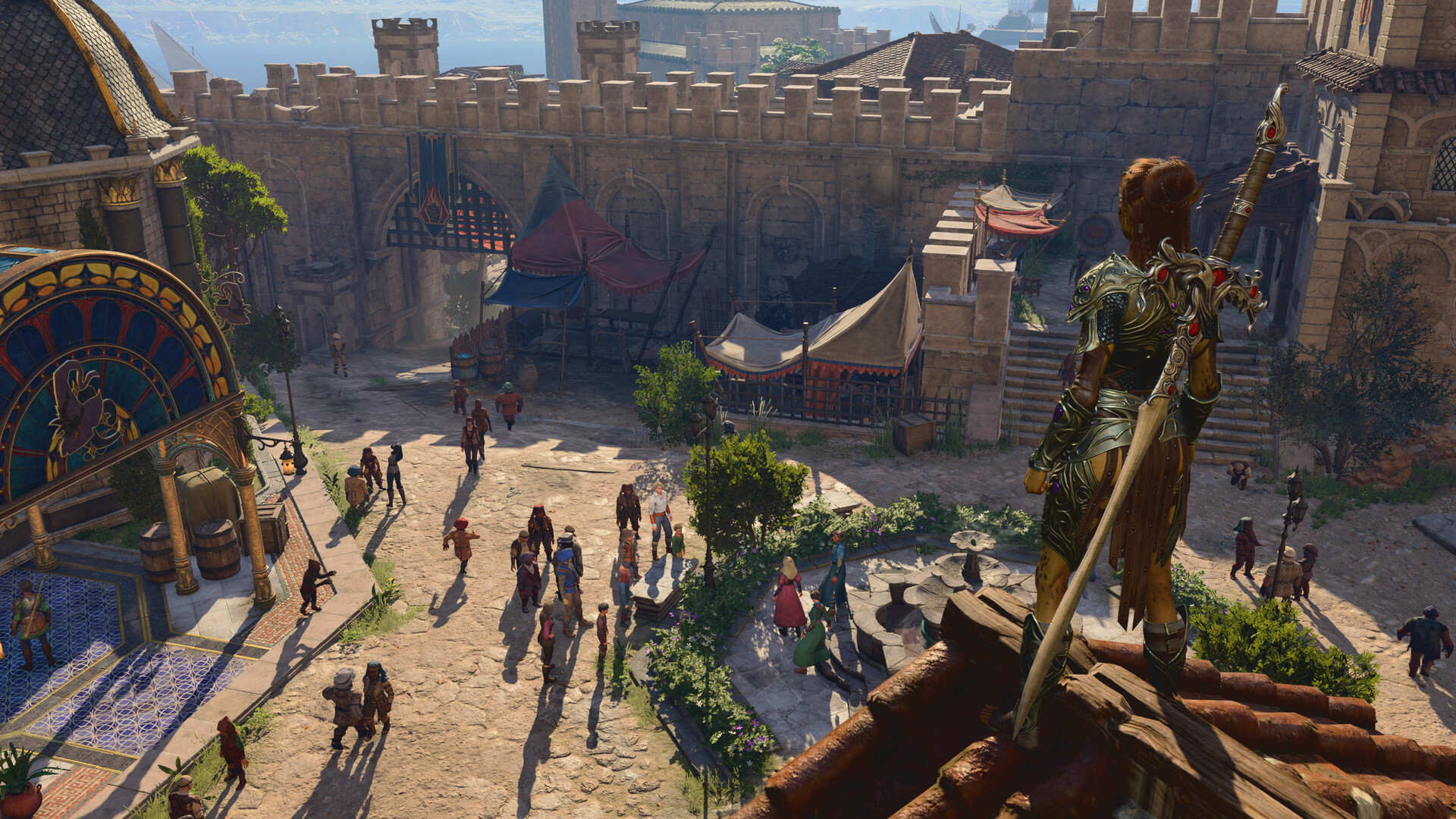
Quick Answer: A Home for Every Working Baldurian is a flyer item in Baldur's Gate 3 that you can pick up in Baldur's Gate; it mainly serves as a piece of worldbuilding, with a hardline “working Baldurian” message rather than a combat or quest reward.
What A Home for Every Working Baldurian Does
A Home for Every Working Baldurian is a readable flyer, not a weapon, armor piece, consumable, or quest-critical objective, and its effect is essentially narrative flavor. The in-game text frames Baldur’s Gate as a city that “entitles” workers to a decent life while rejecting the lazy, which makes the handout feel like propaganda or civic dogma rather than a gameplay tool. That matters because players sometimes assume any named paper item in Baldur’s Gate 3 must open a secret scene, trigger a hidden journal update, or unlock an approval check. In this case, the evidence points to a collectible lore object instead.
The most concrete thing to understand is that this is a flyer found in Baldur’s Gate itself, and the item exists as a specific book/readable record with the internal identifier shown on the wiki page. In other words, it is a discrete in-world object with text attached, not a system mechanic. If you are looking for buffs, vendor discounts, key progression flags, or companion reactions, this is not one of those. Its value comes from context: it reflects how the city presents itself to newcomers, laborers, and anyone who belongs to the streets rather than the upper houses.
This sort of item is easy to misread because Baldur’s Gate 3 mixes environmental storytelling, readable lore, and quest triggers all over the place. For example, the game also uses letters, notes, posters, and flyers in places like the Lower City, Wyrm’s Crossing, and the city’s social spaces to flesh out factions and attitudes. But unlike a letter tied to a quest board, this flyer is best treated like a lore collectible. If you are building a completion route, you can pick it up for your personal archive; if you are optimizing combat or dialogue choices, you can safely deprioritize it.
For a broader reference on how BG3 handles city lore objects, see currently unavailable beginner and book and note collectibles guide.
Definition, Requirements, and In-Game Limits
A Home for Every Working Baldurian is a flyer that can be found in Baldur’s Gate, and its main limitation is that it does not function as a progression gate or active item. The text on the flyer is the defining feature: “If you work, you are entitled to a decent life. If you don't, you don't belong in Baldur's Gate. There is no room for the lazy in the pearl of the Sword Coast.” That line gives the item its identity and makes it useful as a piece of setting commentary, but not as a mechanical reward.
What kind of item it is
The item sits in the category of readable world objects, which means:
- It can be picked up and read like other lore papers and books.
- It does not need to be equipped.
- It does not occupy a combat slot or hotbar role.
- It does not appear to grant a spell, passive, or passive bonus.
- It does not require a class, race, or background to use.
That is the simplest way to think about it. If you have ever found a city flyer, proclamation, or pamphlet in BG3 and wondered whether it mattered, this is the same family of object: story first, mechanics second, if mechanics at all.
Hard limits and what the sources support
The source material does not support any combat effect, quest unlock, or crafting use. It also does not support an equipping requirement, because a flyer is not equipment in the usual Baldur’s Gate 3 sense. The strongest grounded facts are:
- It is a flyer found in Baldur’s Gate. Source
- Its text is a labor-and-civic slogan about who “belongs” in the city. Source
- The game’s internal entry includes the book/item identifier
BOOK_LOW_Baldur'sMouth_AHomeForEveryWorking Baldurian2and UUID6fe093c7-0bdf-4a49-b93b-9fa1c17114b6, which confirms it is a specific, tracked object rather than generic flavor text. Source
Practical takeaway
If you want the shortest possible functional read: this item is a lore pickup, not a build choice. Keep it if you collect every readable in a playthrough; ignore it if you are only interested in combat efficiency or route speed. The game does not ask you to carry it, equip it, or combine it with anything based on the evidence available here.
For nearby item-reference coverage, check readable notes and flyers in Baldur’s Gate and quest items that actually matter.

You might also like
- Baldur's Gate 3 Steam Deck Performance Guide and Best Settings
- Baldur's Gate 3 All Interactive Maps and Locations Beginner Guide
- Baldur's Gate 3 Rescue the Gnome and Stop the Windmill Beginner Guide
- Baldur's Gate 3 Seek Protection from the Shadow Curse: Beginner Guide
- Baldur's Gate 3 Best Character Build for Beginners: Easy Oath of Devotion Paladin
Where to Find and Trigger It
A Home for Every Working Baldurian can be found in Baldur’s Gate, and the important part is that it is tied to the city proper rather than the wilderness or an early-act zone. The source excerpt does not give a tighter map pin, vendor name, or exact room, so the safest grounded answer is to look for it while exploring Baldur’s Gate spaces where posters, notices, and city propaganda are commonly placed.
Likely search pattern in play
When players hunt for items like this, the best results usually come from checking areas where the game naturally stages civic messaging:
- Street-side walls and notice clusters in Baldur’s Gate’s urban districts
- Interior spaces where factions, local authorities, or merchants post notices
- Places with loose papers, flyers, and readable clutter rather than locked containers
- Areas that thematically discuss labor, status, citizenship, or gatekeeping
That broad pattern fits this item because the flyer’s text is explicitly about work, worth, and belonging in the city. A pamphlet like this is more likely to appear near public-facing urban spaces than in a dungeon chest or enemy loot pile.
How players typically trigger the “find it” moment
The item is usually “triggered” simply by interacting with it. In BG3 terms, that means you click the object, add it to inventory, and then read it from your bags or examine it on the ground. There is no evidence here that it starts a cutscene, locks a conversation branch, or requires a check. The trigger is the pickup itself.
Why this can be easy to miss
This kind of object can blend into the environment because BG3 uses a lot of incidental paper clutter. Players often overlook flyers when they are:
- Focused on nearby combat or patrol routes
- Using a camera angle that makes wall clutter hard to scan
- Moving quickly through the city to reach a quest marker
- Filtering objects by only “important-looking” loot
That is one reason lore collectors often sweep city maps slowly and interact with readable objects even when there is no quest pin. Baldur’s Gate is dense, and papers with strong political or cultural language are often tucked into places that reward careful exploration.
Related route advice
If you are already clearing the city for other collectibles, make a habit of checking any readable posted material in the same sweep. The best overlap usually comes from routes that also pick up faction notices, pamphlets, and letters connected to the Lower City and Wyrm’s Crossing. For that, see into wyrm's rock fortress and Baldur’s Gate city collectibles route.
Best Uses and When to Skip It
A Home for Every Working Baldurian is best used as a lore anchor, a completionist collectible, or a roleplay prop, and it is safe to skip whenever you are not actively collecting readable items. That may sound obvious, but it is the most honest evaluation: the flyer’s best value is contextual, not mechanical.
Best use cases
The flyer earns a place in your inventory if you care about one or more of the following:
- Roleplay flavor: The slogan paints a sharp picture of Baldur’s Gate’s attitude toward labor and social worth.
- Lore collection: It is a concrete example of how the city sells itself to residents.
- Completionist runs: If your goal is to read as much of the game’s text as possible, this belongs in the pile.
- Screenshots and reference archives: It can be useful for documenting the city’s tone, especially if you are comparing faction messaging.
- Character-specific immersion: A city-born or streetwise character may have a different reaction to the flyer than an outlander, druid, or outsider.
For example, a Baldurian background-style character concept may find the flyer amusing or irritating in a way that a Forest Gnome druid or Outlander would not. A Paladin who cares about civic order may interpret it differently from a Bard who sees it as propaganda in print. A Rogue drifting through the Lower City might pocket it as another bit of local color, while a Wizard may just catalog it and move on.
When to skip it
You can skip the flyer if your run falls into one of these categories:
- Speed-focused playthroughs: Readables rarely matter for route efficiency.
- Combat-first builds: It has no visible combat payoff.
- Minimalist inventory habits: If you only keep items with active use, this is clutter.
- Already-seen content runs: There is no strong evidence here that the flyer changes outcomes after the first read.
- Challenge or Honor-mode focus: Your limited attention is usually better spent on positioning, resources, and encounter prep.
Replacement value
Because the item does not appear to offer a mechanical payoff, its “replacement” is simply any other lore object you care more about. In a story-heavy game like Baldur’s Gate 3, that might be a letter tied to a companion, a shop notice with faction significance, or a book that explains a local landmark. If you are choosing between this flyer and a more directly connected city note, the more quest-adjacent object usually wins.
Use-case comparison
| Situation | Keep A Home for Every Working Baldurian? | Why |
|---|---|---|
| Full lore sweep of Baldur’s Gate | Yes | Strong city flavor and readable text |
| Fast Act 3 routing | No | No mechanical payoff supported |
| Roleplay as a local or labor-minded character | Yes | The flyer’s message fits the angle |
| Inventory-cleanup run | No | It is informational, not functional |
| Collecting every readable object | Yes | It is a tracked, specific item |
For more on what is worth carrying in urban exploration, see baldur's gate 3 tips and Act 3 readable collectibles.
Troubleshooting and Common Misreads
A Home for Every Working Baldurian causes confusion mostly because players expect a named flyer to do more than it actually does. The common failure mode is not “the item is broken”; it is “the item was never meant to be a quest tool.” Understanding that saves a lot of time and a few false bugs reports in your head.
Common mistake 1: Assuming it starts a quest
It does not appear to start a quest based on the source material. Some BG3 papers immediately update journals or point you toward a target, so it is understandable to test this flyer for hidden progression. But the grounded facts only support that it is a flyer found in Baldur’s Gate with lore text attached. If you pick it up and nothing happens, that is expected behavior.
Common mistake 2: Looking for an equip slot or passive effect
This is not armor, a ring, a trinket, or a consumable. There is no supported sign that it grants a bonus to persuasion, gold gain, city reputation, or worker-related dialogue. If you were hoping it unlocked a “working Baldurian” tag in conversations, the available evidence does not back that up.
Common mistake 3: Treating it like a faction token
The flyer talks like a civic manifesto, so it is easy to overread it as an allegiance marker. In practice, it looks much more like setting dressing than a membership certificate. A Guild artisan, Lower City resident, or merchant-adjacent character concept may connect with the text, but that is roleplay interpretation, not game-state confirmation.
Common mistake 4: Missing it because of camera or clutter
Papers in Baldur’s Gate are often visually noisy. If you are missing the flyer in live play, the issue is usually environment scanning rather than hidden scripting. Try rotating the camera, checking wall mounts, and hovering interactable objects more carefully in dense urban zones. This is especially useful in areas with overlapping signs, crates, and readable objects.
Common mistake 5: Expecting a numbered reward or unique combat utility
Players sometimes assume every named collectible has a hidden reward tier. That expectation works for some quest books and rare notes, but not for every flyer in the city. If you are trying to plan a build around it, stop there: there is no support here for a build-defining effect.
When a “bug” is probably just a misread
If the flyer seems absent, already collected, or unimportant, the likeliest explanation is one of these:
- You already picked it up on this save.
- You are in the wrong city zone.
- You are looking for a mechanical reward it does not provide.
- You are expecting a quest marker from a lore-only item.
That is usually enough to rule out actual failure. If you want a deeper compare-and-contrast with real quest items, see related guide and city note versus quest item reference.
Related Systems, Background Implications, and Internal Links
A Home for Every Working Baldurian fits into BG3’s broader system of readable lore, background interpretation, and city identity, even though it does not appear to be a rules-heavy object. That broader context is where the flyer becomes interesting. Baldur’s Gate 3 is not just about combat and spell lists; it is also about how the game frames your character as someone from somewhere, and the fandom discussion around “Baldurian” labeling shows that players notice when the game assigns a default civic identity.
One community discussion notes that BG3 dropped some backstory flavor from backgrounds and defaults non-origin characters to a generic Baldurian label, while also suggesting that people living near Baldur’s Gate in nearby wilderness may be labeled Baldurians too. Source That context matters because this flyer is basically the city’s self-image in miniature: Baldur’s Gate claims authority over who counts as legitimate, productive, and belonging. For a character who grew up outside the walls, that language can feel exclusive or even insulting. For a native, it might feel like ordinary civic propaganda.
The broader BG3 setting also supports that reading. The game is a story-rich, party-based RPG where choices shape fellowship, betrayal, survival, sacrifice, and the lure of power, and the party’s underlying crisis is the Illithid parasite infection. Source Against that backdrop, a flyer about work and belonging may look small, but it helps sell the texture of the city you are trying to save, manipulate, or leave behind.
Sibling guides and nearby reading
If you are building out a reference library, this item naturally sits next to other city and lore guides. Useful adjacent pages include:
- Baldur’s Gate 3 city flyers and posters guide
- Baldur’s Gate 3 Act 3 readable collectibles
- Baldur’s Gate 3 Baldurian dialogue references
- Baldur’s Gate 3 quest letters and notes guide
- Baldur’s Gate 3 Lower City exploration guide
Who gets the most out of this item
The flyer is most interesting for players who enjoy:
- Reading every scrap of city flavor text
- Comparing how BG3 presents Baldur’s Gate to how companions talk about home
- Tracking background identity and roleplay framing
- Building a complete archive of readable objects
A Bard or Rogue character might appreciate the street-level messaging. A Cleric may read it as moral posturing. A Druid or Outlander can easily see why one forum poster objected to being forced into a Baldurian identity, because the flyer’s language is very much “city people talking about city people.” That tension is part of the fun: the item tells you as much about Baldur’s Gate’s ego as it does about the player character.
Pro Tips and Common Mistakes to Avoid
A Home for Every Working Baldurian is easiest to appreciate when you treat it as part of your exploration habits rather than as loot with a payoff, and that mindset prevents most disappointment. The flyer is simple, but there are still a few smart habits that make it more useful in practice.
Pro tips
- Read it in the context of the district you found it in. The slogan hits harder when you are already in Baldur’s Gate’s urban core, surrounded by merchants, laborers, and gatekeeping language.
- Use it as a roleplay prompt. A character from the wilderness, a labor activist type, or a city-born opportunist may each react differently.
- Pair it with other Baldurian-facing notes. The best value comes when you compare it with notices, local propaganda, and companion banter.
- Keep a “city text” tab in your notes. If you like reference play, separating flyers from quest-critical papers makes later review much easier.
- Don’t overinvest time if your run is combat-centric. A lore pickup is worth far less than a strong potion, scroll, or tactical advantage in an Honor-style encounter.
Common mistakes
- Assuming “flyer” means small quest chain. It does not, at least not from the supported facts.
- Trying to equip or consume it. It is a readable object, not an action item.
- Reading it as a faction contract. The wording is political, but that does not make it a system unlock.
- Hunting for a hidden stat bonus. There is no evidence of one.
- Ignoring it in a lore run and then forgetting where you saw it. If you are collecting readable items, log where and when you found city propaganda so you can cross-reference later.
Practical example scenarios
- A Paladin who values order may see the flyer as harsh but understandable civic messaging.
- A Barbarian from the wilds may take offense at the “lazy” rhetoric.
- A Bard might pocket it for the absurdity of the slogan and use it as inspiration for roleplay.
- A Wizard researching Baldur’s Gate’s social structure may classify it as a primary-source style pamphlet.
- A Rogue may simply loot it because it was there, then read it later for context.
Those examples all show the same thing: the flyer is about interpretation, not optimization. That is why it is a reference item, not a build item.
Sources
- bg3.wiki — A Home for Every Working Baldurian!
- Steam Community discussion on Baldurian labeling
- Baldur’s Gate 3 Steam store page
See also
- Baldur's Gate 3 How to Solve the Silent Library Puzzle
- Baldur's Gate 3 Get Help from Healer Nettie Beginner Guide
- Baldur's Gate 3 Wyll Origin Character Details: Beginner Guide for New Players
- Baldur's Gate 3 Ask the Goblin Priestess for Help: Beginner Guide
- Baldur's Gate 3 Silver Sword of the Astral Plane Beginner Guide
- Baldur's Gate 3 Update 5 Patch Notes Beginner Guide
- Baldur's Gate 3 PS5 Best Character Build: Oath of Vengeance Paladin
- Baldur's Gate 3 How to Respec Your Character: Beginner Guide
- Baldur's Gate 3 A New Character Introduced Beginner Guide
- Baldur's Gate 3 Shar's Spear of Evening Beginner Guide
스크린샷



검수
BG3 Hub Editorial
전문 분야: Editorial team behind BG3 Hub. Content is compiled from official patch notes, community wikis, and playthrough notes, then reviewed and updated on schedule.
출처
🔥 지금 뜨는 검색어

Baldur's Gate 3 Steam Deck 성능 가이드와 최적 설정
BG3를 위한 Steam Deck 최적 설정 모음. 30 FPS 제한, 성능 프로필 팁, 그리고 사람이 많은 구역에서 끊김을 줄이는 방법까지 정리했다.
Baldur's Gate 3 클래스 패치 8: 패치 노트 해설
패치 8은 BG3의 모든 클래스에 새 서브클래스를 추가하고, 사진 모드와 새 주문까지 더합니다. 누가 이득을 보고, 누가 밀리고, 지금 뭘 해야 하는지 알아보세요.
Baldur's Gate 3: Xbox에서 숨어 이동하는 방법
Baldur's Gate 3에서 Xbox용으로 가장 빠른 은신 세팅을 알아보세요. 깔끔하게 숨어 다니는 데 필요한 단계, 해결법, 팁, 흔한 실수를 정리했습니다.
bg3 Patch 8 최적 Dark Urge 클래스: Baldur’s Gate 3 패치 노트 해설
Patch 8에서는 12개의 신규 서브클래스가 추가됐지만 Dark Urge에 직접적인 변화는 없습니다. 최고의 BG3 Dark Urge 클래스, 승자와 패자, 그리고 지금 할 일까지 정리했습니다.
📋 패치 노트 해설
🛠️ 인기 도구
이 가이드가 도움이 되었나요?
더 나은 가이드를 위해 평가해 주세요.
Share your own tip
Found something not in the guide? Submit it below — our editors review every tip before publishing. No account required.