 Baldur's Gate 3
Baldur's Gate 3 Legendary Action: Mind Claw of Tu'narath

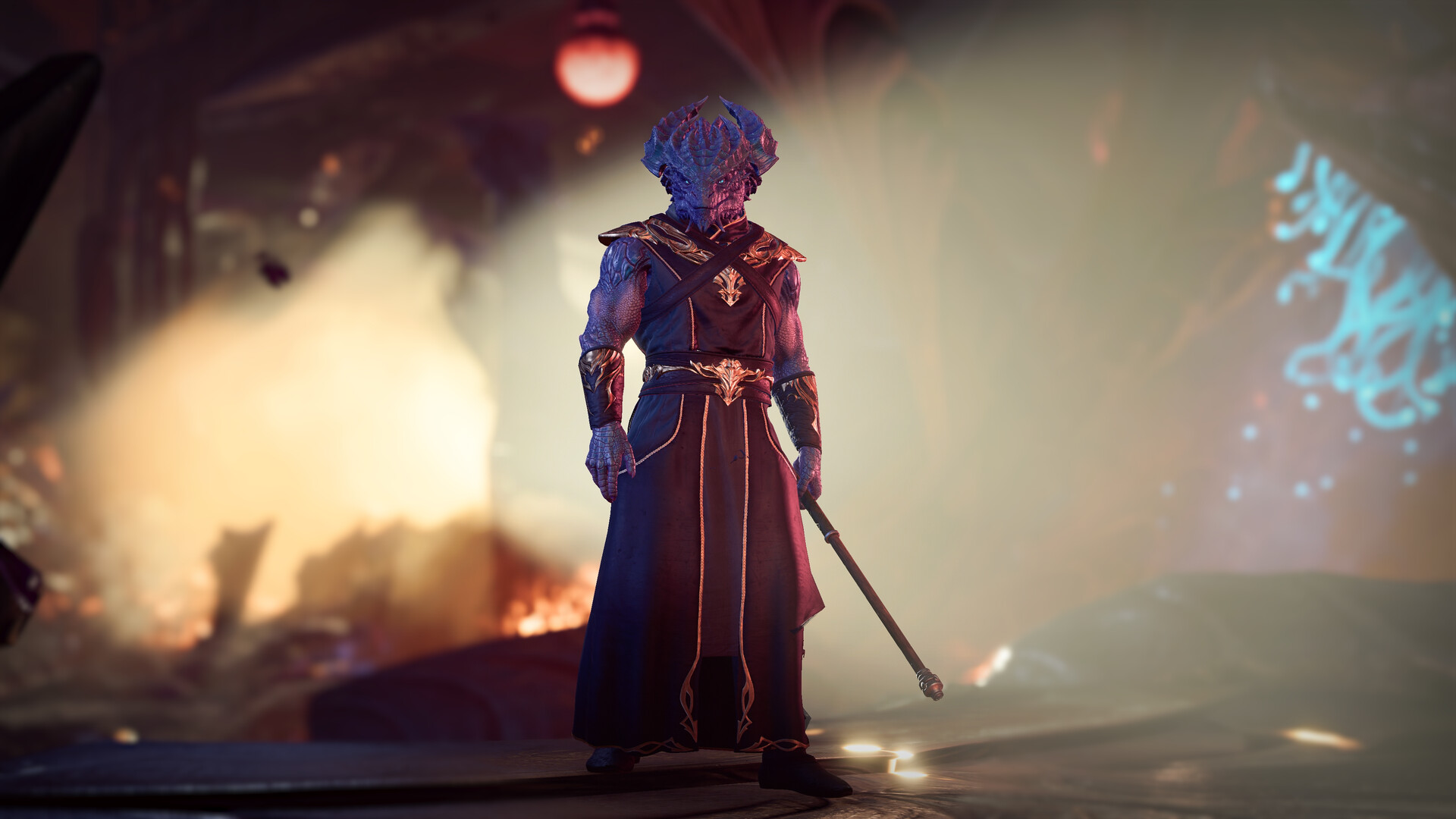
Quick Answer: Baldur's Gate 3 Legendary Action: Mind Claw of Tu'narath is Inquisitor Ch'r'ai W'wargaz's Honour Mode reaction in the Crèche Y'llek fight, letting him summon a temporary psionic claw when he or an ally is hit.
What It Does
Baldur's Gate 3 Legendary Action: Mind Claw of Tu'narath is a passive feature on Ch'r'ai W'wargaz that triggers in Honour Mode and lets him spend a Legendary Action to summon a deadly psionic blade after he or one of his allies is attacked. The core danger is not just the extra body on the field, but the fact that the summon turns your normal attack sequence into a punishment window. In practical terms, the boss is no longer simply waiting for his turn; he is converting your damage into immediate pressure.
The cleanest way to think about the mechanic is that it is a reactionary summon, not a scripted phase change. According to the in-game description, W'wargaz can use the action twice per round, and the resulting Mind-Claw is a temporary enemy manifestation of Vlaakith's rage. The feature is tied to the Inquisitor fight and does not apply as a general enemy ability elsewhere. That matters because players often overgeneralize boss tools in Honour Mode; this one is specific, nasty, and anchored to a single encounter.
A few details are worth separating clearly:
- It is exclusive to Honour Mode.
- It is attached to Inquisitor W'wargaz.
- It can be triggered after the inquisitor or his allies are struck.
- It can happen twice per round.
- The summoned claw is a temporary enemy, not a permanent add.
There is also a second-order threat: when the claw strikes, W'wargaz may apply Mindsteal Link to a target that is not already affected by that condition. That is where the fight can snowball. The claw itself is not the whole problem; it is the setup for the boss's follow-up damage pattern. Players who treat it like a disposable summon often discover too late that the real danger is the debuff chain, not the body on the floor.
For related reading, see Inquisitor W'wargaz guide and Honour Mode boss mechanics.
Effect, Limits, and Requirements
The effect is a passive Honour Mode feature that gives Inquisitor W'wargaz a free-response Legendary Action called Mind Claw of Tu'narath. The requirement is specific: you must be fighting him in Honour Mode, and the trigger condition is that he or one of his allies is attacked. The summon is limited to twice per round, which is enough to matter in a long turn cycle but not so frequent that it completely replaces his normal kit.
Here is the mechanics block in plain terms:
| Part | Detail |
|---|---|
| Feature name | Legendary Action: Mind-Claw of Tu'narath |
| Boss | Inquisitor Ch'r'ai W'wargaz |
| Mode requirement | Honour Mode |
| Trigger | W'wargaz or an ally is attacked |
| Result | Summons a temporary Mind-Claw of Tu'narath |
| Frequency | Twice per round |
| Additional effect | The claw can enable Mindsteal Link on a valid target |
| Special note | Attacking the Mind-Claw does not itself trigger the free reaction |
The most important limiter is also the one players misread most often: attacking the Mind-Claw does not trigger this free reaction. That means the claw is not a loop generator where every hit on the summon spawns another summon. If you assume it is recursive, you may waste turns backing off unnecessarily. The actual threat is much simpler and more brutal: the summon exists to punish your opening aggression and to create a body that can keep the fight messy while the Inquisitor continues acting.
The other limiter is the target condition on Mindsteal Link. When the claw strikes, W'wargaz may use Mindsteal Link on a target that is not already affected by that condition. This matters in fights where you are rotating frontliners or trying to soak damage across multiple party members. If one character is already carrying the debuff, the boss may pivot to another. In other words, spreading out is not a complete answer if your party stays in the claw's reach.
Concrete examples help here:
- If Lae'zel opens on W'wargaz in melee, a nearby ally taking a hit can still buy him a claw summon.
- If Shadowheart or Gale clips a githyanki add with an attack that counts as striking an ally contextually, the reaction window can open.
- If your party burns through the claw with area damage, that does not automatically stop the boss from using the same feature again later in the round.
Treat it as an anti-rush mechanic with a debuff payoff. It is not there to replace the entire fight, but it is there to make your most obvious line of play more expensive.
You might also like
- Baldur's Gate 3 Is There Crossplay Updated 8/3/2023 Crossplay for is currently unavailable Beginner Guide
- Baldur's Gate 3 dungeons and dragons spells players expect work same: what actually changes
- Baldur's Gate 3 best romances dungeons dragons dnd novels feywild job
- Baldur's Gate 3 karlach laezel human versions custom characters
- Baldur's Gate 3 dungeons and dragons mistakes new players make
Where You Encounter It
You encounter Mind Claw of Tu'narath in the Inquisitor W'wargaz fight at the Crèche Y'llek segment of Baldur's Gate 3. It is not something you unlock, craft, equip, or toggle; it is an enemy-specific Honour Mode tool, and your access to it is entirely dependent on whether you choose to fight that version of the encounter. The trigger for the broader confrontation is story and dialogue driven, which means the mechanic is tied to the path you take through the crèche rather than to a loot pickup or class choice.
That distinction matters because players sometimes ask whether a feature like this is "found" in the world. It is not, at least not in the way a weapon or scroll is found. It is embedded in a boss kit. If you talk your way out of the fight, or if you reach the encounter in a non-Honour difficulty, you will not interact with this legendary action in the same way.
A few practical notes about the encounter context:
- The fight is tied to the githyanki crèche sequence.
- W'wargaz and other githyanki are the relevant enemies in the confrontation.
- The action is most dangerous when you are already committed to close combat.
- Dialogue choices can change whether you fight at all, which changes whether you ever see the mechanic.
If you are routing the campaign around boss encounters, this is one of the better examples of why Honour Mode changes your approach. The same encounter that feels straightforward on a lower difficulty becomes a control test here. You can no longer rely on "just hit the boss" as a default solution because the boss is designed to punish that exact instinct.
The nearest adjacent guides for this section are Inquisitor W'wargaz guide, Crèche Y'llek guide, and Honour Mode overview. Those are the natural siblings because they sit on the same encounter path and cover the broader context around the fight.
Best Use Cases and When to Skip It
Baldur's Gate 3 Legendary Action: Mind Claw of Tu'narath is best understood from the player side as a mechanic to plan around, not a tool you can equip. The best use case is therefore not "how do I build for it" but "how do I solve the fight while respecting what it does." That means prioritizing burst, control, and positioning that reduce the number of clean attack windows W'wargaz has to exploit.
The best responses usually look like this:
- Focus fire the Inquisitor instead of splitting damage across the whole room.
- Use crowd control that limits his ability to keep punishing melee entries.
- Keep at least one character ready to punish the claw without overcommitting the party.
- Avoid feeding unnecessary attacks into his reaction window if you are already in danger.
The mechanic rewards disciplined turns. If you can create a turn where you strike decisively, deny the counterplay, and then reposition before the next reaction cycle, the fight becomes much more manageable. That is especially true for parties that can combine hard opening damage with debuffs or prone effects. Examples include a fighter opening with a heavy alpha strike, a wizard pinning the area with control, or a cleric using utility to keep the group stable while the boss is pressured down.
It is also worth knowing when to skip over the whole problem by not triggering the fight in the first place. Careful dialogue can sometimes avoid battles in Baldur's Gate 3, and this encounter belongs in that broader category of "if you do not need the fight, do not volunteer for it." On Honour Mode, that judgment call becomes more valuable because every extra encounter has real run-ending potential.
You should consider deprioritizing or "skipping" the direct response to the claw when:
- Your party is already committed to a stronger line, such as full burst on W'wargaz.
- You have positioning that makes the temporary summon irrelevant for a round.
- You can end the fight before the claw meaningfully matters.
- You are trying to conserve resources and can tolerate one extra enemy turn.
You should not tunnel on the claw itself unless it is actively blocking your formation. That is the main strategic mistake. Many players burn attacks into a summon because it feels like the immediate threat, then discover the boss is still standing, still acting, and still able to chain pressure through Mindsteal Link. In most cases, the right answer is to solve the boss, not the manifestation.
For sibling guides, cross-reference Honour Mode survival tips and Mindsteal Link guide.
Common Mistakes and Misreads
The most common misread is thinking the Mind-Claw is the real boss. It is not. The real danger is the combination of a reactive summon, a finite but meaningful number of triggers per round, and the possibility of Mindsteal Link on top of the claw's attack. If you fixate on the summon, you can lose sight of the Inquisitor's actual tempo advantage.
Another common mistake is assuming the action triggers when you hit the claw. It does not. The source material is explicit that attacking a Mind-Claw of Tu'narath does not trigger this free reaction. That means the summon is disruptive, but not infinitely recursive. Players who think it bounces off every strike tend to overplay defensively, surrendering initiative for no reason.
A third misread is treating the mechanic like a general githyanki trait rather than an encounter-specific Honour Mode feature. It is tied to Ch'r'ai W'wargaz, not to all githyanki, and not to the same fight on all difficulties. If you compare notes with someone who fought the encounter outside Honour Mode, you may end up with conflicting expectations. The correct answer is to anchor your strategy to the mode and the boss, not to broad memory.
Useful corrections in bullet form:
- Do not assume every attack on a summon causes another summon.
- Do not waste a full turn on the claw if W'wargaz is still healthy.
- Do not spread damage casually if you can instead finish the boss faster.
- Do not rely on one frontliner absorbing everything if Mindsteal Link is already active.
One more subtle issue is team composition. Parties that depend on repeated melee contact can feel the mechanic more sharply than ranged or hybrid groups. That does not mean melee is bad here; it means melee needs cleaner sequencing. A paladin, barbarian, or fighter can still perform well, but only if the team is ready to erase the add pressure quickly or control the battlefield so the reaction never becomes a spiral.
The last misread is psychological. Honour Mode encourages caution, and that is healthy, but fear can make players play too slowly. If the mechanic exists and you are already in the fight, the real objective is not to avoid all contact forever. It is to create one decisive series of actions that leaves the boss dead or nearly dead before the summon pattern compounds.
Best Ways to Beat the Fight Around It
The best way to handle Mind Claw of Tu'narath is to attack the whole encounter as a tempo race, because the mechanic punishes any version of the fight that drags. W'wargaz wants you to create repeated attack events, then spend your turns cleaning up the consequences. You want the opposite: one strong sequence that reduces his opportunities to trigger the action in the first place.
A practical approach usually includes these priorities:
- Open with control if your party can lock the field before committing.
- Save your strongest single-target burst for the Inquisitor.
- Use summons, environmental pressure, or durable allies to absorb one claw turn if needed.
- Keep healing and cleansing resources in reserve rather than spending them casually.
- Reposition so the temporary summon does not box in your backline.
Here are three battle shapes that illustrate the logic:
- A ranged-heavy party can trim the fight by focusing W'wargaz from outside the most dangerous reaction range while a durable frontliner buys space.
- A balanced party can use a control opener, then collapse onto the boss once the claw appears and the formation is stable.
- A melee-centric party can still win by committing all burst at once, but only if it accepts that the claw is a speed bump rather than a reason to split damage.
The right choice depends on your build, but the principle is consistent. You are not trying to "outlast" the legendary action in the abstract. You are trying to make the battle short enough that the action never reaches full value. In Honour Mode, shortening a boss fight is often as strong as any defensive tech.
That is also why some general boss-fight habits apply especially well here:
- Use advantage-granting effects before your opening hits.
- Do not let low-value attacks consume your key reaction windows.
- Keep one character flexible enough to finish a claw if the board state turns awkward.
- Respect the extra summoned body without overcommitting a turn to it.
If you want a clean sibling link set, pair this with Inquisitor W'wargaz guide, Honour Mode boss tactics, and Mindsteal Link guide. Those guides sit closest to the problem the legendary action creates.
Related Systems
Mind Claw of Tu'narath sits inside a wider Honour Mode ecosystem that changes how you read boss fights in Baldur's Gate 3. The most relevant related systems are Legendary Actions, temporary summons, and status-driven follow-up damage. Understanding those three pieces makes the mechanic much less opaque.
Legendary Actions are the larger category. In Honour Mode, boss encounters often gain additional tools that let them interrupt your expected rhythm. W'wargaz's version is particularly unpleasant because it is reactive. Instead of waiting for a phase transition, it answers your aggression directly. That makes it feel more personal than many other legendary boss effects.
Temporary summons are the second piece. The Mind-Claw is not a full ally with long-term board presence; it is a short-lived manifestation created to complicate your turn order. That means you should evaluate it by what it enables, not by its existence alone. A summoned enemy that blocks a doorway, threatens a support character, or lines up a debuff is more dangerous than one that merely exists on the edge of the battlefield.
Mindsteal Link is the third piece and the one that players should remember most vividly. The claw can help W'wargaz apply it to a target not already affected by the condition, which turns the fight from "annoying summon" into "escalating damage problem." If your team understands only the summon and not the link, it will misjudge the encounter's real threat curve.
Useful related examples include:
- Bosses in Honour Mode that modify your normal action economy.
- Encounters where adds are mainly there to create pressure and setup.
- Fights where the real danger is a debuff chain rather than raw burst alone.
This is also a good place to think about party planning more broadly. A team with strong single-target damage, one reliable control slot, and enough durability to keep formation usually handles this kind of mechanic better than a party built entirely around spread-out chip damage. That is not because chip damage is weak in general, but because this specific encounter values tempo and focus more than attrition.
For adjacent reading, link this guide to Honour Mode overview, Inquisitor W'wargaz guide, and Mindsteal Link guide. Those are the nearest siblings because they explain the difficulty mode, the boss, and the follow-up condition that make this legendary action matter.
Sources
- https://bg3.wiki/wiki/Legendary_Action:_Mind-Claw_of_Tu'narath
- https://www.thegamer.com/baldurs-gate-3-most-dangerous-legendary-actions/
- https://deltiasgaming.com/baldurs-gate-3-act-1-boss-fights-how-to-defeat-on-honour-mode/
- https://store.steampowered.com/app/1086940/
- https://howlongtobeat.com/?q=bg3
See also
- Baldur's Gate 3 A Greeting to this Home's New Occupants
- Baldur's Gate 3 areas might have missed act 3
- Baldur's Gate 3 act 2 where find arabella parents: Complete Guide
- Baldur's Gate 3 Find a way into Wyrm's Rock fortress Beginner Guide
- Baldur's Gate 3 black myth wukong no xbox launch: Xbox Release Explained
- Baldur's Gate 3 every possible fate for arabella save
- Baldur's Gate 3 Steam Deck Performance Guide and Best Settings
- Baldur's Gate 3 Guide:Reaching Level 12 in Act II
- Baldur's Gate 3 A Home for Every Working Baldurian Reference Guide
- Baldur's Gate 3 Fine at Home: A Cookery Book Reference Guide
Screenshots

Reviewed by
BG3 Hub Editorial
Expertise: Editorial team behind BG3 Hub. Content is compiled from official patch notes, community wikis, and playthrough notes, then reviewed and updated on schedule.
Sources
Related Guides
🔥 Popular Guides
Baldur's Gate 3 Report on Activities of Enver Gortash
Find, read, and use the Report on Activities of Enver Gortash in BG3, including its lore role, Devil’s Fee context, and best use cases.
Baldur's Gate 3 Pact of the Blade passive feature
Pact of the Blade in Baldur's Gate 3: what it does, how to unlock it, best uses, limits, and build advice for Warlocks.
Baldur's Gate 3 Mind Claw of Tu'narath class action
Mind Claw of Tu'narath in BG3 is W’wargaz’s Honour Mode legendary action. Learn what it does, where it appears, and how to counter it.
Baldur's Gate 3 Best Builds: Complete Build Guide
Strong BG3 build advice for roles, stats, gear, counters, and budget variants.
📋 Patch Notes & Updates
🛠️ Popular Tools
Was this guide helpful?
Rate this guide so we can improve it.
Share your own tip
Found something not in the guide? Submit it below — our editors review every tip before publishing. No account required.