 Baldur's Gate 3
baldurs gate 3 beginner class reddit: Beginner Guide for New Players

Quick Answer: The best baldurs gate 3 beginner class reddit advice usually points new players toward forgiving classes like Fighter, Paladin, or Cleric, but the real beginner win is choosing a class you can pilot confidently while learning positioning, action economy, and companion synergy.
Baldur’s Gate 3 is a story-rich, party-based RPG set in the Dungeons & Dragons universe, so your early success depends less on “best class” hype and more on making clean decisions in combat, exploration, and resource use. The game launched on Aug 3, 2023 Source and has a strong critical reception, with a Metacritic score of 96 Source, which is a good reminder that its systems are deep enough to reward fundamentals.
What a Beginner Should Actually Focus on First
A beginner should focus on survivability, simple turn-by-turn decisions, and learning how the game’s party tools work before chasing niche builds. In practice, that means picking a class with straightforward combat loops, using companions to cover missing roles, and resisting the urge to optimize every level-up like a speedrunner.
For most first-time players, the learning priority is:
- Stay alive through the first few encounters.
- Learn how high ground, cover, and terrain affect fights.
- Keep one character available for dialogue checks.
- Bring at least one source of healing or support.
- Use consumables instead of hoarding them forever.
That sounds basic, but in Baldur’s Gate 3, basic habits are what create momentum. A Fighter with a bow, a Cleric with Bless, or a Paladin with heavy armor can all feel far more beginner-friendly than a fragile specialist that demands perfect positioning. If you have been reading baldurs gate 3 beginner class reddit threads, you have probably seen players arguing over the “strongest” starter class. The more useful question is: which class lets you make fewer punishing mistakes while you learn the game’s systems?
A beginner also benefits from treating the first hours as a training segment rather than a “real build” segment. You are not locked into a single approach forever. You can respec later, and the early game is generous enough that most classes can get through it if you play carefully. The bigger trap is not class choice itself; it is rushing into fights underprepared, wasting high-value consumables on trivial encounters, and ignoring companion overlap. If two characters both do the same job, you often end up with a party that lacks either control, healing, or ranged pressure.
In short: choose a simple class, learn the fundamentals, and let the party cover your gaps.
First-Hour Checklist
Your first hour should be spent recruiting tools, stabilizing the party, and unlocking the systems that make the rest of the game easier. The opening stretches of Baldur’s Gate 3 are flexible, but there is a practical sequence that gives new players the cleanest start.
1. Secure your core party and basic roles
As soon as you gain control, prioritize gathering companions and checking what each one brings to the team. Early examples include Shadowheart for support and utility, Astarion for lockpicking and stealth, and Lae’zel for frontline pressure. Even if you do not keep the starting lineup forever, these companions give you immediate coverage for exploration, traps, and combat roles.
What to do:
- Add companions when available instead of soloing.
- Check who can heal, who can pick locks, and who can take hits.
- Avoid overlapping too much on one stat line, especially Dexterity-heavy characters.
2. Learn the map’s verticality and click-through interactions
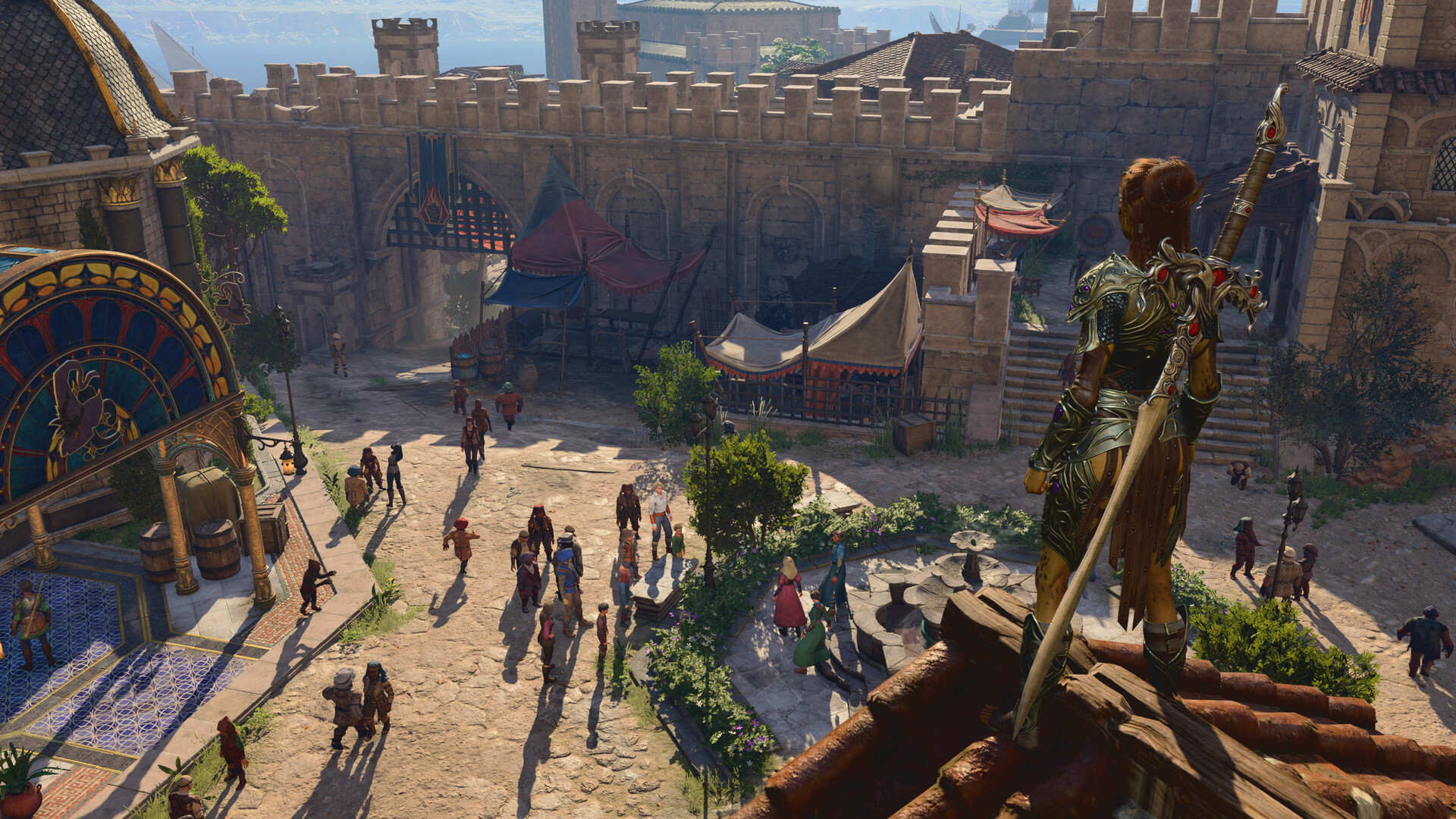
Use the first fights and exploration spaces to notice ledges, ladders, and elevation advantages. Baldur’s Gate 3 strongly rewards positioning, and beginner mistakes often come from standing in the open or fighting uphill without a plan. If you see a rooftop, staircase, or cliff edge in a combat zone, assume it matters.
Practical examples:
- Use high ground for ranged attacks with Astarion or your spellcaster.
- Put tougher characters near choke points.
- Move allies before using ranged attacks so you do not waste bonus movement later.
3. Loot everything useful, but identify the category first
The first hour is the best time to build a habit of checking item quality before clicking “send to camp” or selling. You want to keep weapons that match your proficiency, armor your class can actually wear, and consumables you can use soon. Early gear often includes simple but impactful pieces, and even low-rarity items can carry a fight.
Look for:
- Healing potions
- Scrolls
- Throwables like alchemist’s fire
- Weapons with clear upgrade value
- Armor that fits your class proficiency
4. Use short rests, long rests, and camp properly
Do not try to clear the opening stretch in one nonstop push. Baldur’s Gate 3 is balanced around rest cycles, and beginners often make fights harder by saving every resource “for later.” Use short rests when appropriate and return to camp when your party is running dry. If you are low on health, spell slots, or class resources, resting is usually the correct play rather than gambling on low-percentage turns.
5. Talk to NPCs before forcing combat
Many early situations can be resolved with dialogue, positioning, stealth, or alternate routes. New players often enter combat because they see an enemy and click attack immediately. Instead, inspect the area, talk to important NPCs, and check for environmental tools like explosive barrels, ladders, and traps.
The first hour should end with a stable party, a few consumables in reserve, and a clear understanding that almost every fight has more than one solution. That foundation matters more than any one class pick.
You might also like
- baldur's gate 3 vs elden ring: which should you play?
- Baldur’s Gate 3 beginner tips reddit: A Complete Beginner Guide
- baldurs gate 3 best class for beginners: A Beginner Guide to Starting Strong
- Baldur's Gate 3 Character Builder: Paladin Oathbreaker Frontliner
- Baldur's Gate 3 Paladin Build Guide
Best Beginner Class Mindset, Not Just Best Beginner Class
The best beginner class is the one that reduces decision overload while still teaching you core combat habits. That is why baldurs gate 3 beginner class reddit discussions often circle the same few recommendations: Fighter, Paladin, Cleric, and sometimes Ranger or Warlock depending on taste.
Here is a practical comparison:
| Class | Beginner Strength | Beginner Risk | Why It Feels Easy |
|---|---|---|---|
| Fighter | Very high durability, simple turns | Can feel “plain” if you want magic | You usually attack, reposition, and repeat |
| Paladin | Strong burst and good defenses | Resource management can matter more | Heavy armor and healing tools forgive mistakes |
| Cleric | Great support and survivability | Requires learning spell selection | Bless, heals, and armor make the early game stable |
| Ranger | Good ranged pressure and utility | Companion/spell choices can confuse beginners | Strong from safe distance and flexible outdoors |
| Warlock | Simple spell loop, good ranged damage | Limited slots can punish overuse | Eldritch Blast gives a clear default action |
For a first run, Fighter is the most straightforward “learn the game” class because it asks the fewest questions per turn. You can equip a sword and shield, shoot a bow, or commit to melee without juggling complex resource systems. Paladin is also beginner-friendly if you want stronger burst and a heroic fantasy feel, but it does require more awareness of spell slots and oath-related choices. Cleric is excellent if you want to keep the party alive while also controlling fights, though it asks you to understand which spell does what.
If you are specifically searching baldurs gate 3 beginner class reddit opinions, the most useful takeaway is not “this class is best forever.” It is “pick a class whose default turn is obvious.” A Fighter’s default turn is obvious. A Warlock’s default turn is obvious. A Cleric can become obvious after a short learning period. A full caster with a large spellbook can be powerful, but a new player may spend too much time reading tooltips instead of acting decisively.
The best beginner class also depends on what you want from your protagonist. If you want to be the face of the party, use a class that handles conversation checks well and keep Charisma or utility in mind. If you want to manage the battlefield, a support class can feel more impactful than raw damage because it prevents wipes. If you want a “safe” experience, prioritize armor, healing, and simple attack patterns over flashy combos.
The headline rule is simple: your first class should help you learn, not force you to master five systems at once.
Resource Priority Order
Your resource priority order should be healing, key consumables, useful upgrades, and long-term crafting materials you know you will actually use. Beginners frequently waste resources because they do not understand which items are common and which ones solve problems that gold cannot always solve cleanly.
What to spend first
Spend early resources on:
- Weapons and armor upgrades that clearly improve your current setup.
- Potions when a fight is becoming risky.
- Scrolls if they solve a specific encounter problem.
- Camp supplies only when you need the rest cycle.
- Class respecs only after you know what is not working.
What to hoard first
Hoard these until you understand your party better:
- Rare scrolls that duplicate spell effects you already have.
- Specialized arrows, grenades, and throwables you have not tested.
- Unique quest items until you know their function.
- Crafting components that support potions or combat utility.
- High-value jewelry and one-time-use tools.
What to use freely
Use these without much regret:
- Basic healing potions in tough early fights.
- Common arrows and bombs when enemies cluster.
- Buff consumables before a boss or dangerous elite encounter.
- Class features that refresh on rests.
A lot of beginners over-hoard because they expect an even harder fight later. That is understandable, but Baldur’s Gate 3 rewards efficient use more than museum-style inventory management. If an encounter is already difficult, using a potion, scroll, or throw item to stabilize it is usually the correct choice. A common example is turning an ugly rooftop fight into a safe win by using an Alchemist’s Fire throw, a Scroll of Thunderwave, or a well-timed Healing Potion instead of hoping the enemy misses.
It also helps to separate resources into “reliable” and “situational.” Reliable resources are things like healing, armor, and your primary class attack. Situational resources are niche arrows, scrolls, and environmental items that shine in specific fights. Beginners should invest first in reliability because reliable tools reduce the number of bad turns. A character with a clean default action, decent armor, and access to basic healing will outperform a flashy but fragile loadout in the hands of a new player.
If you want a simple priority ladder, use this:
- Stay alive.
- Improve your default combat turn.
- Cover missing party roles.
- Spend on niche tools only when you understand the encounter.
- Save rare items for fights that obviously deserve them.
That mindset prevents the two most common beginner inventory problems: over-saving and random spending.
Common Mistakes New Players Make
New players usually lose fights because of positioning, poor resource use, and misunderstanding how the party is supposed to function. Below are the mistakes that show up most often, including the ones that appear again and again in baldurs gate 3 beginner class reddit threads.
Mistake 1: Treating every class like a solo hero
Many beginners pick a class they like and try to do everything with one character, which leads to poor party balance.
Why it happens:
- Players come from action games where one character can carry.
- The game’s opening hours can make you feel underpowered until the party grows.
Concrete fix:
- Build a party with at least one frontline, one support or healer, and one ranged damage dealer.
- Let Shadowheart handle support duties, Astarion handle stealth and locks, and Lae’zel or Karlach handle frontline pressure when available.
Mistake 2: Hoarding consumables until they expire in your inventory
Players save potions, scrolls, and throwables for “later,” then finish the act with a full bag and no tactical value gained.
Why it happens:
- Fear of wasting rare items.
- Not understanding which consumables are common enough to use.
Concrete fix:
- Use basic healing potions when a character drops low.
- Throw special items in difficult fights instead of saving them for a hypothetical boss.
- Review your inventory after every major fight and assign a job to each useful item.
Mistake 3: Ignoring elevation and turn order
Beginners often stand where the fight starts instead of using the map to gain a better angle.
Why it happens:
- It feels natural to attack from the nearest spot.
- The tactical layer is easy to underestimate.
Concrete fix:
- Put ranged characters on rooftops, stairs, or ledges when possible.
- Move melee characters into choke points.
- If enemies are on higher ground, consider repositioning instead of forcing a bad shot.
Mistake 4: Picking spells without a plan
New spellcasters sometimes choose based on flavor instead of role coverage, then struggle when they need a specific answer.
Why it happens:
- The spell list is large and tempting.
- Players assume every spell must deal damage.
Concrete fix:
- Keep at least one defensive or support spell.
- Carry one crowd-control option if your class can access it.
- Choose a small set of spells you understand rather than a broad list you never cast.
Mistake 5: Skipping dialogue and exploration to chase combat
Some players rush from fight to fight and miss easier solutions, extra loot, or story-critical context.
Why it happens:
- Combat is exciting.
- New players do not realize how much the game rewards conversation.
Concrete fix:
- Talk to NPCs before engaging.
- Look for alternate routes, hidden doors, and environmental advantages.
- Use stealth or persuasion when the encounter looks questionable.
Mistake 6: Wasting rests too aggressively or too conservatively
Players either long rest after every small skirmish or refuse to rest and enter fights depleted.
Why it happens:
- Rest systems are unfamiliar.
- New players do not yet know how quickly key resources refresh.
Concrete fix:
- Rest when your party is low on health, spell slots, or class resources.
- Do not be afraid to use short rests and camp mechanics.
- Track your team’s ability to handle one more encounter before pushing onward.
These mistakes are fixable, and most of them disappear once you accept that Baldur’s Gate 3 is a tactical party game, not a solo action RPG.
Graduation Threshold: When You Stop Being a Beginner
You are out of the beginner phase when you can build a party purposefully, read combat positions at a glance, and spend resources without second-guessing every action. The transition is less about level and more about confidence in systems.
A good practical threshold looks like this:
- You can explain why one companion is in the party over another.
- You know when to use a potion instead of hoping for a dodge.
- You understand the difference between a safe attack and a greedy attack.
- You recognize when a fight should be approached with stealth, dialogue, or repositioning.
- You can level up a character without needing to pause and consult every tooltip for several minutes.
You are also past the beginner stage when you stop making “single-character” decisions and start making “party” decisions. Examples include using Shadowheart to stabilize the team while your main character goes on offense, or letting Astarion open a route while your tank stays near a doorway. Once you begin thinking in terms of roles, spacing, and encounter tempo, the game changes from overwhelming to readable.
There is also a mental milestone: when you stop asking “What is the best class?” and start asking “What does my current party lack?” That question is a sign of improvement because it means you understand Baldur’s Gate 3 as a system of interactions rather than a class-ranking chart. The same is true for combat. New players ask, “How do I kill this enemy?” Intermediate players ask, “How do I position so the enemy cannot answer efficiently?” That shift is the real graduation point.
If you can complete a difficult encounter without burning every consumable, manage a rest cycle, and keep your party’s roles clear, you are no longer in the beginner phase. At that point, the game opens up into build tuning, multiclass experimentation, and specialized encounter planning.
Pro Tips
These tips go beyond the obvious beginner advice and help you make cleaner decisions in real encounters.
Tip 1. Open fights from better angles whenever possible
If you can start combat with a ranger on high ground, a mage behind cover, or a fighter already in melee range, do it. Pre-positioning before dialogue ends or before a hostile patrol notices you often creates free value. In practice, this means splitting your party slightly before entering places like rooftops, bridges, or narrow corridors.
Tip 2. Keep one companion available for utility, not just damage
If every party member is built to hit hard, your group can still fall apart when a locked chest, trap, or dialogue check appears. Having one character ready for stealth, persuasion, or support creates a smoother run. Astarion, Shadowheart, and your main character are the usual early candidates for this role split.
Tip 3. Use the environment as a weapon
Barrels, fire surfaces, ledges, grease patches, and explosive terrain can solve fights faster than raw damage. If enemies are grouped near a cliff, a shove or Thunderwave-style effect can swing the encounter. If a choke point is narrow, a control spell or a placed hazard can buy a full round of safety.
Tip 4. Build around your default turn, not your dream turn
Your strongest turn is the one you can repeat often. For a Fighter, that might mean attack, move, and attack again. For a Cleric, it might mean buff, heal, or stabilize the field. For a Warlock, it might mean a reliable cantrip plus one key spell. If your turn only works after three setup actions, it is usually too complicated for a first run.
Tip 5. Treat respec as a learning tool
If a build feels awkward, do not cling to it out of pride. A respec can teach you what you actually value in a class. Maybe your Paladin wants better spell choices, or your Ranger needs a simpler companion setup. Learning by comparison is better than forcing a bad setup through an entire act.
Tip 6. Watch enemy movement before committing your action
If an enemy can step out of your ideal line, knock your caster prone, or reach your backline, spend a moment checking threat ranges. This is especially important against melee enemies with mobility or ranged units positioned on platforms. A clean turn is often the one you spent ten extra seconds planning.
Related Guides
These next-step articles are the most useful follow-ups once you understand the basics.
- Baldur’s Gate 3 Best Beginner Classes
- Baldur’s Gate 3 Early Game Build Guide
- Baldur’s Gate 3 Companion Role Guide
- Baldur’s Gate 3 Combat Basics Walkthrough
- Baldur’s Gate 3 Best Starting Party Setup
- Baldur’s Gate 3 Class Tier List
Sources
- https://store.steampowered.com/app/1086940/
- https://www.metacritic.com/game/baldurs-gate-3/
- https://en.wikipedia.org/wiki/Baldur's_Gate_(video_game)
See also
- Baldur's Gate 3 guide for beginners: A Practical Start-to-Finish Primer
- Baldur’s Gate 3 Beginner Guide: Getting Started Without Bricking Your Run
- Baldur’s Gate 3 Best Beginner Builds Guide
- Baldur's Gate 3 Monk Build
- Baldur's Gate 3 Karlach Build Guide
- Baldur’s Gate 3 Bard Build: Best Support, Control, and Damage Setup
- Baldur's Gate 3 Build Guide: Build Ideas That Actually Work
- Baldur's Gate 3 Build Guide: Paladin-Lock Smite Build
- Baldur's Gate 3 Builds Reddit: Best Build Guide
- Baldur’s Gate 3 Beginner Guide: Smart Start, Priority Resources, and Early-Game Mistakes
Screenshots



Reviewed by
BG3 Hub Editorial
Expertise: Editorial team behind BG3 Hub. Content is compiled from official patch notes, community wikis, and playthrough notes, then reviewed and updated on schedule.
Sources
Baldur's Gate 3 Classes Guides →
Browse the complete classes collection and its focused guides.
Related Guides
🔥 Popular Guides

bg3 class tier list act 1
Act 1 BG3 class tier list with S/A/B ranks, matchup flips, mistakes, tips, and an FAQ for new and returning players.
BG3 Top Baldur's Gate 3 Builds Guide
Best BG3 builds explained with roles, stats, gear, counters, budget swaps, and pro tips for any difficulty.
bg3 best builds for honor mode: Baldur’s Gate 3 Build Guide
Top BG3 Honor Mode builds, stat priorities, gear, counters, and budget options for a safer Baldur’s Gate 3 run.
Baldur's Gate 3 Class Tier List
S, A, and B class rankings for BG3 with methodology, situational flips, patch notes, mistakes, pro tips, and FAQs.
📋 Patch Notes & Updates
🛠️ Popular Tools
Was this guide helpful?
Rate this guide so we can improve it.
Share your own tip
Found something not in the guide? Submit it below — our editors review every tip before publishing. No account required.