 Baldur's Gate 3
baldur's gate 3 vs elden ring: which should you play?
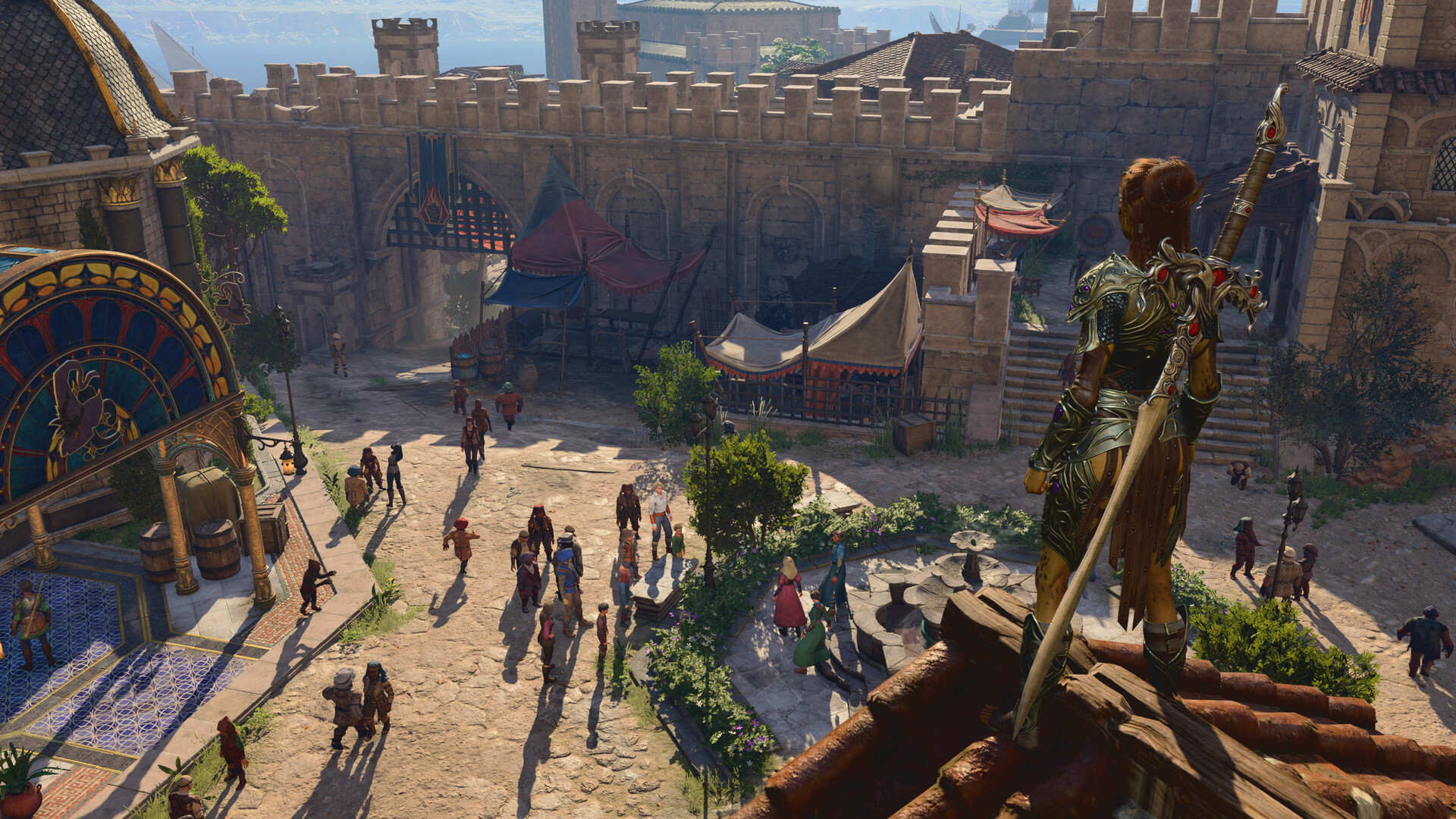
Quick Answer: Pick Baldur's Gate 3 if you want party-based, choice-driven tactical RPG combat; pick Elden Ring if you want a demanding action RPG with open-world exploration, real-time combat, and a stronger focus on execution.
Side-by-Side Comparison
The cleanest baldur's gate 3 vs elden ring comparison is that one game is built around systems, dialogue, and party management while the other is built around movement, timing, and boss mastery. They overlap as premium fantasy RPGs, but they reward very different skills and player habits.
| Category | Baldur's Gate 3 | Elden Ring |
|---|---|---|
| Release year | 2023 | 2022 |
| Developer | Larian Studios | FromSoftware |
| Genre | Adventure, RPG, Strategy | Action RPG, Open World |
| Co-op | Online co-op supported | Online co-op supported |
| Price | Full-priced premium release | Full-priced premium release |
| Steam review score | Extremely positive in Steam user sentiment | Generally very positive in Steam user sentiment |
| Metacritic | 96 | Higher than most genre peers, but platform-specific scores vary |
| Platforms | Windows, macOS | Windows, PlayStation, Xbox |
| Main-story length | Long, especially with companion and side-quest content | Long, especially if you pursue legacy dungeons and major bosses |
Baldur’s Gate 3 is the more readable comparison for players who want a structured RPG with explicit systems: classes, party roles, dialogue choices, turn order, and a long chain of companion interactions. Elden Ring is the better fit if your enjoyment comes from discovery, combat mastery, and learning encounter patterns through repetition. The question is not which is objectively better, but which form of challenge you actually want to repeat for dozens of hours.
Core Differences
Baldur’s Gate 3 is a party-based, turn-driven RPG where the main decisions happen before and between battles, while Elden Ring is a real-time action RPG where the main decisions happen inside the fight itself. That single distinction drives almost every other difference between them: pacing, build planning, difficulty, exploration, and even how you read the world.
In Baldur’s Gate 3, you are constantly making layered decisions about positioning, spell selection, dialogue branches, skill checks, party composition, and resource use. A fight against goblin leaders, the creche encounters, or major Act 2 and Act 3 set pieces can be solved in multiple ways because the game supports stealth, elevation, environmental hazards, crowd control, and party synergy. A Bard can control the battlefield with dialogue and spells, a Wizard can reshape it with area effects, and a Fighter can anchor the front line while companions exploit openings. The systems are explicit, and that makes the game feel like a toolkit.
Elden Ring works differently. It is less interested in explaining itself and more interested in making you learn through movement, stamina discipline, weapon timing, and map exploration. Bosses like Margit, Radahn, Malenia, and late-game field threats are memorable because they force mastery of spacing, dodge timing, and build identity. The game gives you enormous freedom to choose a weapon class, summon support, or lean into sorceries, incantations, bleed, strength, or dexterity, but the execution happens in real time. You are not choosing from a menu during the fight; you are reading animation tells and responding under pressure.
That difference also affects the emotional rhythm. Baldur’s Gate 3 frequently pauses to let you talk, inspect, and plan. Elden Ring is more solitary and kinetic, even when it is quiet. In BG3, your companions are part of the tactical and narrative fabric. In Elden Ring, your build and your personal persistence matter more than party banter or dialogue branches. If you want the game to behave like a tabletop campaign with cinematic presentation, BG3 has the edge. If you want to feel like you personally learned a brutal fantasy world by surviving it, Elden Ring wins.
For players comparing companion depth, BG3 also has the clearer payoff. If you are deciding between a romance-heavy run, a Dark Urge route, or a custom origin-style approach, baldur's gate 3 bard coverage is usually more useful than a general walkthrough. Elden Ring’s build advice is similarly specific: the difference between a quality build, a pure sorcery setup, and a bleed-focused melee setup changes your entire route through the Lands Between.
You might also like
- Baldur's Gate 3 Character Builder: Paladin Oathbreaker Frontliner
- Baldur’s Gate 3 Beginner Guide: Getting Started Without Bricking Your Run
- Baldur's Gate 3 Build Guide: Build Ideas That Actually Work
- Baldur's Gate 3 Builds Reddit: Best Build Guide
- Baldur’s Gate 3 Beginner Guide: Smart Start, Priority Resources, and Early-Game Mistakes
Which Game Is Better for Different Players?
Baldur’s Gate 3 is better for players who enjoy narrative reactivity, party management, and tactical problem-solving, while Elden Ring is better for players who want combat mastery, environmental discovery, and a tougher personal challenge. The right choice depends less on genre labels and more on how you like to spend your attention.
Pick Baldur's Gate 3 if you want:
- Turn-based combat with clear action economy, initiative order, and status effects like Prone, Bleeding, and Hold Person.
- Deep dialogue reactivity, including companion approval, quest branching, and skill checks that can redirect entire encounters.
- Party building around classes such as Fighter, Cleric, Rogue, Wizard, Bard, and Paladin rather than a solo action loadout.
Pick Elden Ring if you want:
- Real-time combat built around dodging, spacing, stamina management, and weapon-specific animations.
- Exploration that rewards curiosity through hidden dungeons, field bosses, legacy dungeons, and optional regions.
- A challenge curve where learning boss patterns and refining your build is the main progression loop.
Baldur’s Gate 3 is also the better choice if you play co-op as a conversation-heavy group and want everyone involved in decisions. It handles social play as a shared campaign rather than a pure action session. Elden Ring co-op is functional, but the structure is more fragmented and the experience is still primarily built around individual combat performance. That makes BG3 the stronger pick for a party of friends who want to talk through decisions, while Elden Ring is better for players who do not mind a more detached multiplayer structure.
The other practical difference is time commitment per session. BG3 supports long sessions where you can make meaningful progress in dialogue, exploration, and combat even without clearing major bosses. Elden Ring also supports long sessions, but much of its progress is tied to traversing hostile spaces and resolving encounters through execution. If you prefer to stop and start without losing your place in a narrative web, BG3 is friendlier. If you prefer the rhythm of “enter zone, learn threats, kill boss, move forward,” Elden Ring is cleaner.
Pros and Cons
Baldur’s Gate 3 and Elden Ring both have strong identities, but each one has friction points that matter depending on the player. The table below keeps the comparison concrete.
| Game | Pros | Cons |
|---|---|---|
| Baldur's Gate 3 | Tactical turn-based combat with class synergies; companion-driven story with branching outcomes; environmental interaction and verticality in fights | Combat pace can feel slow if you prefer real-time action; inventory and party management demand attention; long dialogues can interrupt momentum |
| Elden Ring | Flexible weapon and spell builds; exploration with hidden routes, dungeons, and bosses; high-skill combat with strong boss identity | Difficulty can be punishing for players who dislike repetition; quest structure is intentionally opaque; solo traversal can feel sparse compared with party-driven RPGs |
Baldur's Gate 3 Pros
- The action economy is easy to read, with movement, actions, bonus actions, and reactions making turn planning tangible.
- Companion arcs and approval systems make decisions in camp, dialogue, and quests matter beyond combat.
- Surface interactions, elevation, stealth, and terrain effects turn ordinary encounters into puzzles.
Baldur's Gate 3 Cons
- Some fights can stretch out if you have many summons, effects, or crowd-control chains to resolve.
- Inventory sorting, vendor trading, and party equipment swaps can become busywork in longer acts.
- Players who want immediate reflex combat may find the turn structure too deliberate.
Elden Ring Pros
- Build variety is broad, from colossal weapon strength setups to sorcery-heavy ranged play and bleed-oriented hybrids.
- Boss encounters are designed around readable animation patterns and distinct punish windows.
- Exploration regularly rewards detours with new weapons, ashes of war, spells, and hidden areas.
Elden Ring Cons
- The game often withholds explicit guidance, which can frustrate players who want clearer objectives.
- Repeated deaths are part of the design, so progress can feel harsh in difficult encounters.
- Multiplayer is useful, but it does not replace the social density of a full party RPG.
If you are comparing build complexity, BG3’s class-and-feat structure is easier to discuss in a guide format, while Elden Ring’s weapon-and-stat web usually needs a separate builds beginners tips for beginners and a different one for endgame optimization. That is a good sign of the difference in design philosophy: BG3 wants you to understand the rules; Elden Ring wants you to inhabit them through experimentation.
Steam Price and Review Score Comparison
Baldur’s Gate 3 generally reads as the stronger Steam sentiment winner, while Elden Ring is often the more broadly recognized action RPG, but live pricing and review percentages should be checked on the store pages because they can change with regional pricing and sales. Based on the supplied data, Baldur’s Gate 3 has a Metacritic score of 96 Source, which places it in elite critical territory for the genre.
| Metric | Baldur's Gate 3 | Elden Ring |
|---|---|---|
| Steam price | Not provided in source data | Not provided in source data |
| Steam review score | Not provided in source data | Not provided in source data |
| Metacritic | 96 Source | Not provided in source data |
| Current sale price | Not provided in source data | Not provided in source data |
| Steam user sentiment | Very strong in current community reception | Very strong in current community reception |
| Value proposition | Massive narrative RPG with high systemic density | Large action RPG with a strong exploration and boss loop |
Baldur’s Gate 3 also ships with a concrete Steam description that frames its identity clearly: it is “a story-rich, party-based RPG set in the universe of Dungeons & Dragons, where your choices shape a tale of fellowship and betrayal, survival and sacrifice, and the lure of absolute power” Source. That wording matters because it tells you what you are paying for: authored reactivity, companions, and a campaign structure. Elden Ring, by contrast, is usually a purchase justified by action systems, build freedom, and the sheer amount of boss-and-zone content rather than dialogue density.
Data note: Live store pricing and exact Steam review percentages were not provided in the supplied facts, so this comparison uses qualitative price and sentiment language only.
Steam and Metacritic Verdict
Baldur’s Gate 3 is the cleaner winner on critical consensus, while Elden Ring is the more obvious pick for players who care most about action combat and open-ended exploration. With the supplied data, BG3’s Metacritic score is 96 Source, and that lines up with its reputation for production value, reactivity, and content breadth.
Steam-facing reception also points in a favorable direction for BG3. The game launched on August 3, 2023 Source, and its commercial profile has remained strong because it offers an unusually complete RPG package: long campaign, party banter, dense systems, and repeated playthrough value. If you want to judge the choice through a review lens rather than a genre lens, BG3 is the safer bet for overall acclaim. If you care more about the feel of combat than the breadth of authored story, Elden Ring remains the more compelling action-first recommendation.
That is the short version of baldur's gate 3 vs elden ring from a review-score standpoint: BG3 is the better critical darling, while Elden Ring is the better fit for players who want mechanical pressure and freedom of movement. The recommendation changes less with score and more with taste.
Common Mistakes
Players tend to make the same mistakes in both games, but the punishment looks different in each one. In BG3, the error is usually inefficient planning; in Elden Ring, it is usually overconfidence or under-preparation.
- Treating Baldur’s Gate 3 like a traditional action RPG: Players expect reflex-based combat and rush turns. They fall into this because the presentation is cinematic and the camera feels close. Fix it by planning around control spells, high ground, and initiative order before committing to attacks.
- Ignoring companion builds in Baldur’s Gate 3: Players leave party roles mismatched, such as stacking too many damage dealers and not enough support. They do this because early fights can still be won on raw output. Fix it by assigning clear roles like frontline, healer, control, and utility.
- Saving every resource in Baldur’s Gate 3: Players hoard spell slots, potions, and consumables until major fights, then end up underusing the game’s strongest tools. They do this because many RPGs train scarcity. Fix it by using short-rest and long-rest planning more aggressively, especially in extended dungeon chains.
- Rolling into Elden Ring without a real build goal: Players split stats too widely and weaken their damage, survivability, and casting scaling. They do this because the game offers many options immediately. Fix it by choosing one primary damage path early, such as strength, dexterity, intelligence, faith, or bleed scaling.
- Forcing every Elden Ring boss into melee trading: Players attack during every opening instead of respecting spacing and recovery windows. They do this because action RPG habits reward aggression elsewhere. Fix it by studying boss recovery, using jump attacks or charged heavies only when the punish window is real, and backing off when stamina is low.
- Missing optional systems in both games: Players ignore camp interactions in BG3 or skip side dungeons and NPC lines in Elden Ring. They do this because they want faster progress. Fix it by treating side content as part of progression, not optional filler, since both games hide power and context there.
Pro Tips
The best results in both games come from playing to the systems instead of fighting them. These are the habits that usually separate a smooth run from a messy one.
Tip 1. In BG3, open fights from stealth or high ground
Start combat with a surprise round when possible, especially in multi-enemy encounters like goblin camps or ambushes. A ranged opener from a ledge, rooftop, or elevated rock often determines whether the enemy spends turn one recovering or controlling you.
Tip 2. In BG3, keep one party member focused on control
A spell like Hold Person, Sleep, Web, or Grease can matter more than a single damage spell in the right fight. Against clustered enemies or elite targets, control plus focus fire often outperforms raw damage.
Tip 3. In Elden Ring, lock your build goal before the midgame
If you are leaning toward sorcery, faith, strength, dexterity, or status buildup, commit early enough that your weapon scaling supports it. Players who keep spreading stats across every category usually feel weak when bosses start demanding clean damage windows.
Tip 4. In Elden Ring, treat exploration as power acquisition
Optional caves, catacombs, and side paths are not just map decoration. They frequently hide upgrade materials, ashes, spells, talismans, or weapons that change how you approach later areas.
Tip 5. In BG3, use consumables like tactical tools, not emergency items
Scrolls, grenades, arrows, and elixirs are strongest when they extend your party’s action economy. A well-timed scroll of Haste, a fire surface, or a thrown bottle can do more than saving everything for a “perfect” moment.
Tip 6. In Elden Ring, learn the difference between panic rolling and spacing
Dodging because you feel threatened is not the same as dodging through a hitbox. The cleaner habit is to watch the attack arc, then roll with intent so you can punish the recovery instead of resetting the same mistake.
Recommended Scenarios
Baldur’s Gate 3 is the right choice for players who want a campaign they can discuss, replay, and shape through dialogue and party choices, while Elden Ring is the right choice for players who want a solitary mastery loop wrapped in a huge fantasy world. If you are choosing between them for a specific playstyle, the table below is the simplest filter.
| Player type | Better pick | Why |
|---|---|---|
| Story-first RPG players | Baldur's Gate 3 | Companion arcs, branching outcomes, and dialogue checks are central to the experience |
| Combat mastery players | Elden Ring | Boss patterns, spacing, and execution are the core loop |
| Co-op friends who like discussion | Baldur's Gate 3 | Party decisions and turn-based pacing work well for group play |
| Explorers who like hidden routes | Elden Ring | Optional dungeons, secrets, and detours are a major part of progress |
| Players who like tabletop structure | Baldur's Gate 3 | Classes, actions, and social checks echo tabletop campaign logic |
| Players who like tough action RPGs | Elden Ring | The game emphasizes timing, builds, and repeated improvement |
Pick Baldur’s Gate 3 if you love:
- Party composition, class synergy, and long-form character arcs.
- Dialogues where persuasion, deception, intimidation, and companion approval matter.
- Tactical encounters where elevation, terrain, and control effects shape the result.
Pick Elden Ring if you love:
- Learning boss patterns and refining execution over multiple attempts.
- Building around a weapon, spell path, or status strategy that changes how you fight.
- Exploring a world where secret paths and optional threats are a normal part of advancement.
For a player looking at baldur's gate 3 vs elden ring purely on commitment, BG3 is the better “sit down and think” game, while Elden Ring is the better “enter flow state and react” game. That makes them complementary in a library, but the one you start first should reflect the kind of pressure you enjoy.
Related Guides
- Baldur's Gate 3 beginner guide
- Baldur's Gate 3 best classes guide
- Baldur's Gate 3 companions guide
- Elden Ring best builds guide
- Elden Ring beginner guide
- Elden Ring bosses guide
- Best co-op RPGs like Baldur's Gate 3
- Best open-world action RPGs like Elden Ring
Sources
- https://store.steampowered.com/app/1086940/
- https://en.wikipedia.org/wiki/Baldur's_Gate_(video_game)
See also
- Baldur's Gate 3 Build Guide: Paladin-Lock Smite Build
- Baldur's Gate 3 Character Creation Beginner Guide
- Baldur's Gate 3 Treasure Pack Beginner Guide
- Baldur’s Gate 3 Achievements Beginner Guide
- Baldur's Gate 3 Build Guide: Best All-Rounder Party Carry
- Baldur's Gate 3 Warlock Build Tier List: Best Pacts, Subclasses, and Party Roles
- Baldur's Gate 3 Beginner Guide: Baldur’s Gate 3 Codes, Early Progress, and Smart Starts
- Baldur’s Gate 3 Beginner Guide: Dice, Early Progression, and Smart Starts
- Baldurs Gate 3 PS5 Beginner Guide
- Baldur's Gate 3 Xbox Beginner Guide
Screenshots


Reviewed by
BG3 Hub Editorial
Expertise: Editorial team behind BG3 Hub. Content is compiled from official patch notes, community wikis, and playthrough notes, then reviewed and updated on schedule.
Sources
Related Guides
%27/><stop offset=%271%27 stop-color=%27hsl(80,50%,18%)%27/></linearGradient></defs><rect width=%27460%27 height=%27215%27 fill=%27url(%23g)%27/><text x=%27230%27 y=%27115%27 text-anchor=%27middle%27 font-family=%27sans-serif%27 font-size=%2724%27 font-weight=%27700%27 fill=%27rgba(255,255,255,0.85)%27>App 1086940</text><text x=%27230%27 y=%27142%27 text-anchor=%27middle%27 font-family=%27sans-serif%27 font-size=%2711%27 fill=%27rgba(255,255,255,0.6)%27>no image yet</text></svg>)
🔥 Popular Guides

bg3 class tier list act 1
Act 1 BG3 class tier list with S/A/B ranks, matchup flips, mistakes, tips, and an FAQ for new and returning players.
BG3 Top Baldur's Gate 3 Builds Guide
Best BG3 builds explained with roles, stats, gear, counters, budget swaps, and pro tips for any difficulty.
bg3 best builds for honor mode: Baldur’s Gate 3 Build Guide
Top BG3 Honor Mode builds, stat priorities, gear, counters, and budget options for a safer Baldur’s Gate 3 run.
Baldur's Gate 3 Class Tier List
S, A, and B class rankings for BG3 with methodology, situational flips, patch notes, mistakes, pro tips, and FAQs.
📋 Patch Notes & Updates
🛠️ Popular Tools
Was this guide helpful?
Rate this guide so we can improve it.
Share your own tip
Found something not in the guide? Submit it below — our editors review every tip before publishing. No account required.