 Baldur's Gate 3
Baldur's Gate 3 Patch 8 Explained
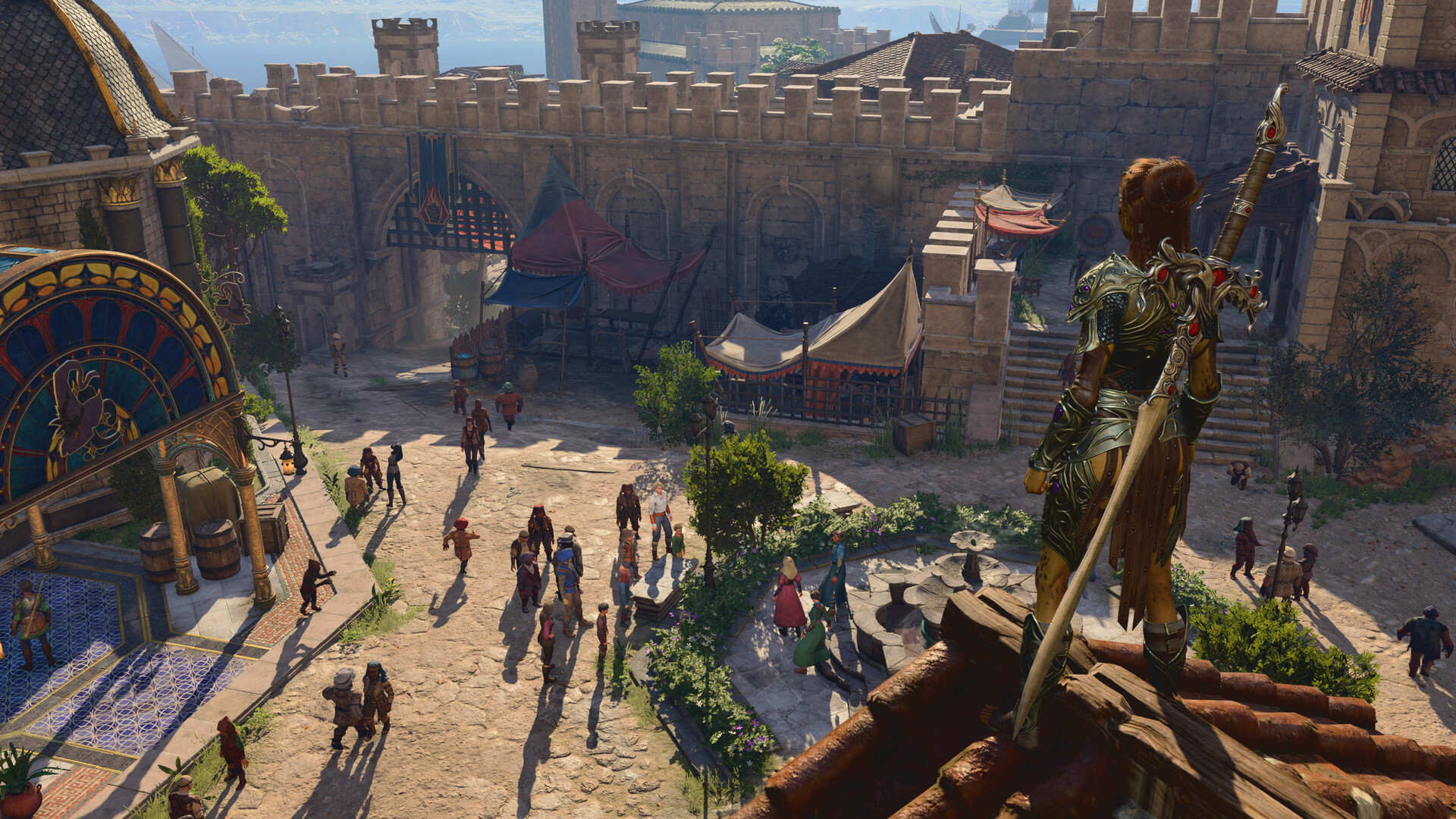
Quick Answer: baldur's gate 3 patch 8 is the game’s final major update, released on April 15, 2025, adding Photo Mode, a new subclass for each of the 12 classes, Steam Trading Cards, and cross-play support.
Patch 8 is the endpoint of Larian’s major post-launch support for Baldur’s Gate 3, and it is best understood as a feature-heavy capstone rather than a balance-only tweak pass. The official framing from the community preview was explicit: “This is it. Our final major game patch for Baldur’s Gate 3.” Source That matters because the patch changes how the game is experienced at a systems level—especially through the new subclasses and Photo Mode—while also signaling that any further updates are now in hotfix territory rather than broad content drops. The latest hotfix since this final major patch is Hotfix 36. Source
This article explains what shipped, who benefited most, what was effectively phased out, and what players should do differently now. It also grounds the patch in the actual release timing: Patch 8 was released on April 15, 2025. Source For a game that Steam describes as a “story-rich, party-based RPG set in the universe of Dungeons & Dragons” Source, a final patch that adds a subclass option to every class is not a small footnote—it reshapes replay value across the full campaign.
TL;DR: What shipped in Baldur’s Gate 3 Patch 8
Baldur's Gate 3 Patch 8 shipped as the game’s final major update on April 15, 2025, and its headline additions were Photo Mode, cross-play, Steam Trading Cards, and a new subclass for each of the 12 classes. Source Source
That makes the patch unusually broad for a “final” update. In most RPGs, a last major patch usually means cleanup, final tuning, and maybe a few accessibility or UI adjustments. Here, the design is more celebratory and player-facing: the additions expand creative expression, party composition, and social play all at once. The inclusion of Steam Trading Cards also signals a finishing touch on the game’s platform identity rather than a combat-system change. Source
From a practical standpoint, the patch is not something you “read once and forget.” If you play solo, Photo Mode changes how you capture builds, boss victories, and narrative moments. If you play multiplayer, cross-play changes who can sit at the table with you. If you enjoy theorycrafting, the 12 new subclasses are the biggest reason to return because each class received an additional build identity rather than a small numerical adjustment. Source
A useful way to think about the update is that it creates a new replay cycle rather than a single best build. One player may now revisit a fresh party around a subclass like Bard or Barbarian, while another may simply use the new features to document an Honor Mode run, a romance scene, or a late-game boss kill. Because this is the last major patch, these additions also carry long-term weight: they define the “final form” of the game for future players entering Baldur’s Gate 3 after the main content cadence has ended. Source
Winners: who benefited most from Patch 8
Patch 8’s biggest winners were players who enjoy replayability, party experimentation, and social or cosmetic features. The update’s most concrete gain is the addition of one new subclass for each of the 12 classes, which instantly multiplies build variety across the entire game. Source
The 12 classes that gained new build paths
Each class getting a subclass is a meaningful buff to the game’s overall content density because it creates a new ruleset, new class identity, and in many cases a new reason to start another run. That matters in a game where the same Act 1 opening can feel dramatically different depending on class fantasy and party role.
| Class family | Patch 8 impact | Why it matters in practice |
|---|---|---|
| All 12 classes | Received a new subclass | More replay paths, more party compositions, more respec choices |
| Single-player players | Gained Photo Mode | Easier to capture cinematics, builds, and outcomes |
| Multiplayer groups | Gained cross-play | Easier to assemble mixed-platform parties |
| Collectors and community players | Gained Steam Trading Cards | Better platform-wide collectibility and profile customization |
The table above captures why Patch 8 is more of a player-engagement update than a narrow balance pass. The subclass additions are the clearest “winner” because they affect the entire campaign loop. If you like exploring class-specific dialogue and combat identity, the patch gives you a reason to rerun encounters with radically different mechanics. A Monk run feels different from a Sorcerer run; a new subclass widens that difference further, rather than simply increasing damage numbers by a small amount.
The exact subclasses are not enumerated in the provided facts, so it is safest to treat the practical benefit as structural rather than naming effects that are not supported here. What can be said confidently is that every class now has a fresh subclass option, and that is a game-defining amount of new content for a final patch. Source
Photo Mode is a content winner, not just a utility feature
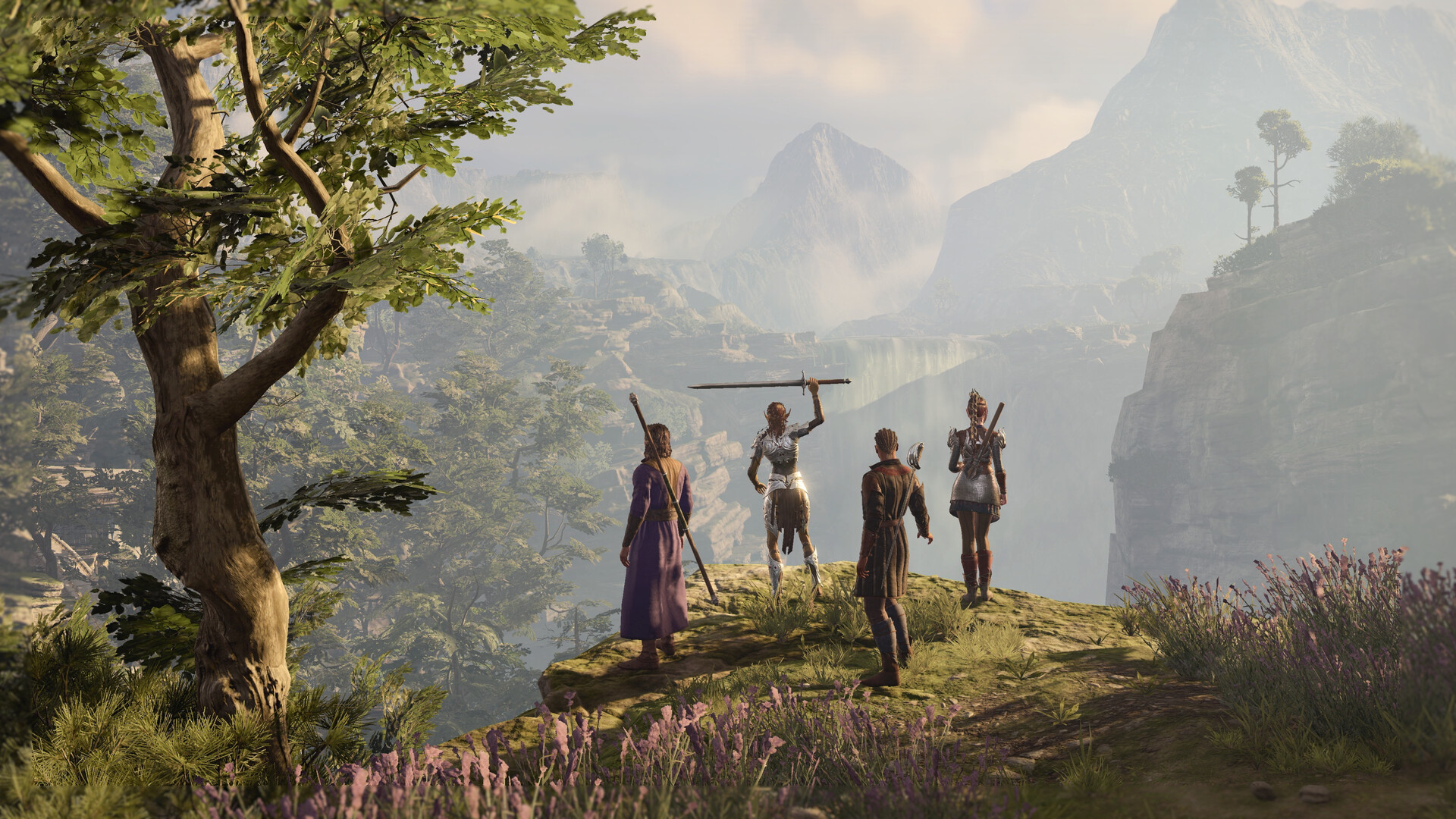
Photo Mode is one of the patch’s largest quality-of-life wins because it creates a new layer of ownership over a playthrough. You can now frame the cinematic details Larian’s art direction already supports: campfire conversations, spell effects, boss arenas, and party poses. In a game built around branching narrative and highly individualized party setups, that is more than a vanity tool. It is a way to archive decisions.
Here are the most obvious scenarios where Photo Mode becomes immediately valuable:
- Capturing a climactic moment after defeating a major boss.
- Showing off a custom party aesthetic, such as a heavily armored frontline with spellcasters behind them.
- Preserving romance or camp scenes without relying on HUD-free screenshots.
- Documenting before-and-after looks for armor sets, transformations, or class swaps.
Because Baldur’s Gate 3 is already a game where players discuss outcomes and builds in detail, Photo Mode turns those discussions into visual evidence. It is especially useful for guide writers, streamers, and players comparing gear choices in the current meta. In a title that still has strong community attention years after launch, the ability to cleanly record the screen is a genuine win.
Cross-play is the biggest social upgrade
Cross-play is the update’s clearest winner for cooperative groups. Baldur’s Gate 3 has always rewarded coordinated party play, but platform fragmentation can make it harder to keep a fixed group together. Patch 8 reduces that friction. If one friend is on Windows and another is on Mac, the patch makes the social layer more flexible than before. Source Source
That matters in a game where the entire campaign structure encourages shared decision-making. A single multiplayer run can last long enough that platform barriers become a real retention problem. Cross-play solves a real-life logistics issue rather than an in-game challenge, which is why it should be treated as one of the headline wins of the patch rather than a footnote.
Steam Trading Cards and final-patch status help long-term engagement
Steam Trading Cards are a smaller feature than Photo Mode or subclasses, but they still help the game’s long-term profile on PC. They provide profile customization, collecting goals, and a visible sign that the game’s platform presence has been fully rounded out. Source
The fact that Patch 8 is also the final major patch adds emotional weight to everything shipped here. This is not merely one update among many; it is the endpoint of a long support cycle. That means returning players are not just checking out a feature drop—they are checking out the finished version of the game’s major content evolution. The latest Hotfix since this final major patch is Hotfix 36, which further reinforces that the broad changes are now complete and the future is about stabilization. Source
You might also like
- Baldur's Gate 3 Tier List Patch 8
- Baldur's Gate 3 Tier List Companions: Best Party Members Ranked
- Baldur's Gate 3 best class patch 8: Patch Notes Explained
- Baldur's Gate 3 Steam Deck Update: Patch Notes Explained
- Baldur's Gate 3 Guide Character Creation
Losers: what got nerfed, removed, or effectively de-emphasized
Patch 8 does not read like a classic nerf patch, but it still creates losers in the practical sense: players who preferred the pre-patch content cadence, players who wanted a different final major update focus, and any build niche that is displaced by superior subclass options. Source
There is no supported evidence here for broad numerical nerfs
The provided facts do not specify concrete balance nerfs, weapon reductions, class downgrades, or exact removals, so it would be inaccurate to invent them. What the patch clearly does is shift value away from older “solve the game once and move on” behavior and toward experimentation. That creates indirect losers.
- Players who only wanted bug-fix cleanup instead of new content may see Patch 8 as “too late” for a final major update.
- Players attached to older class metas may find that the new subclass options change the relative appeal of returning to familiar roles.
- Completionists who already finished every major route may not feel as much benefit from the added replay hooks.
This is an important distinction for patch coverage: not every patch loser is a nerfed spell or a weaker weapon. Sometimes the loser is a playstyle. In Patch 8, the playstyle most affected is the “one main character, one favorite class, one run forever” approach, because the patch invites players to reopen the build space.
The final-major-patch framing changes what gets attention
The phrase “our final major game patch” Source effectively demotes some ongoing community expectations. Players waiting for a massive future overhaul, a new story act, or a broad systems rewrite have been told—through the patch’s framing—that the game’s big evolution is over. That is not a nerf in the mechanical sense, but it is a removal of expectation, and expectations matter in a live game environment.
This also affects players who kept a backlog of planned runs “for when the next big patch lands.” That waiting strategy is now weaker. If you were delaying an Honor Mode attempt, a class-locked run, or a co-op campaign until the next major content drop, Patch 8 is effectively the signal to stop waiting. The game has entered its finished-state era.
Old subclass preferences may be de-emphasized by the new options
Because each of the 12 classes gained a subclass, any earlier “default best choice” mentality is less valuable than before. The loser here is not necessarily a specific named subclass—those details are not supplied in the facts—but the habit of assuming your old preferred subclass remains the best answer in every campaign. New subclass options can push old build priorities into second place, especially when they offer better role coverage, more distinct flavor, or stronger synergy with party composition.
In practical terms, that means any player who has been relying on a narrow meta for example, a single frontline/offensive caster split or a familiar companion setup should expect the patch to reopen decisions. If you are the type to respec only when forced, Patch 8 is a strong signal to revisit that stance.
What changed for builds, parties, and campaign planning
Patch 8 changes campaign planning most by widening the number of viable “reasons to start again,” not by rewriting the entire combat system. That is a subtle but important difference in a game like Baldur’s Gate 3, where class identity, companion synergy, and narrative timing already matter heavily. Source
New subclasses matter across the whole adventure
The fact that there is a new subclass for each class means Patch 8 touches every party archetype. A fresh subclass can alter how you approach early-game resource use, mid-game specialization, and late-game encounter solving. Even without exact subclass mechanics listed in the available facts, the strategic consequence is easy to see: every class now has another identity layer.
Examples of campaign-level impact include:
- A player who normally runs a martial-heavy party may now build around a different subclass balance and respec companions accordingly.
- A co-op group can deliberately assign broader roles, such as one player focusing on control while another leans into mobility or support.
- A returning player can revisit familiar Act 1 encounters with a new class fantasy rather than replaying the same leveling curve.
This matters because Baldur’s Gate 3 is not a game where classes only affect combat. Classes and subclasses also shape dialogue moments, party pacing, and how much value you get from unique gear drops. The patch therefore creates build relevance from start to finish rather than only at level cap.
Photo Mode changes how players document runs and compare setups
Photo Mode also affects build planning, because it makes it easier to compare armor silhouettes, weapon visuals, spell effects, and party composition in a way that is legible to other players. If you are discussing a build with a friend or sharing a run online, screenshots become a more precise record of what actually happened in the campaign.
Useful examples of what players will now likely document more often:
- A party assembled for a dark, evil-aligned run.
- A late-game boss encounter with full UI removed.
- Armor and weapon combinations used on different companions.
- A transformation or spell animation captured at the exact right moment.
That may sound cosmetic, but cosmetics and communication overlap in RPG communities. The better you can show your setup, the easier it becomes to compare choices and identify whether a build is worth respecing into.
Cross-play changes how campaign planning starts
Cross-play does not alter battle tactics directly, but it changes who you can plan a run with in the first place. For co-op groups, the decision now shifts from “which platform are we on?” to “which class roles do we want to cover?” That is a healthier question for a party-based RPG. Source Source
In that sense, Patch 8 improves party planning at the social layer before the first die is rolled. It helps groups think more about synergy and less about hardware. That is particularly valuable for long-form campaigns where one absent player used to derail a session schedule.
Player action items: what to do differently starting today
Patch 8 gives players several immediate action items, and the most important one is to treat the game as newly replayable rather than merely updated. Because this is the final major patch, the best response is to revisit your favorite systems now instead of waiting for a future content wave. Source
Respec or reroll if you have a locked-in main
If you have been playing the same class or the same party structure for multiple runs, Patch 8 is the moment to respec or reroll. The new subclass for each of the 12 classes makes it more valuable to revisit your build assumptions than to cling to an old favorite. Source
What to do:
- Use a fresh respec to test whether your class’s new subclass changes your role in the party.
- If your current campaign is already far along, consider a side-save or alternate run to compare old and new approaches.
- Reevaluate companion assignments, especially if your usual frontline, support, or caster balance is based on a pre-Patch 8 setup.
This is especially relevant if you enjoy min-maxing or theorycrafting. New subclass choices often have the biggest effect when they are paired with different companion builds, rather than when they are simply slotted into an unchanged party.
Change your co-op planning if your group spans platforms
If your multiplayer group includes players on different supported platforms, adjust your scheduling and session planning now that cross-play is part of the equation. Source This is one of the few patch changes that can immediately remove a real-world obstacle before you even load a save.
Action items for co-op groups:
- Confirm which platform each player is using and whether the group can now standardize on one campaign instead of splitting by hardware.
- Set a new shared start date for a fresh playthrough if cross-play was previously the barrier.
- Decide who will host the campaign and whether your group wants a dedicated “photography” save for screenshots and milestones.
Because Baldur’s Gate 3 is heavily choice-driven, cross-play can be the difference between a group actually finishing a campaign and one that stalls out. If hardware separation was slowing you down, this patch should make the next attempt much easier to organize.
Start taking better screenshots and save more moments
If you care about documenting runs, Photo Mode should change your save habits immediately. Source The practical difference is simple: instead of relying on UI-laden screenshots taken mid-combat, you can now capture scenes with much better composition.
Good uses include:
- Recording party lineups at camp before a major Act transition.
- Capturing boss-winning moments for personal archives or guides.
- Saving visual comparisons of armor, weapon, and companion looks.
- Creating a clean reference for roleplay-heavy runs.
If you produce content, this is also the time to revisit your capture workflow. Patch 8 makes the game friendlier to guide writers and social sharing, so you should expect more visual comparison content from the community.
If you were waiting for “the last big update,” stop waiting
The final major patch framing means there is little reason to postpone a new playthrough on the assumption that a bigger systems patch is coming. Source The update is already here, the headline additions are known, and the remaining work is hotfix-level stabilization.
That means today’s smartest action is simple:
- Begin your final-form run now if you have been holding back.
- Revisit your favorite romance, boss, or challenge route with a different subclass.
- Use the patch as a hard reset point for your campaign backlog.
This is the most important behavioral shift caused by baldur's gate 3 patch 8: it converts “I’ll come back when the next big patch lands” into “this is the version to settle into.”
How Patch 8 fits the game’s endgame and long-term future
Patch 8 effectively marks the finish line for Baldur’s Gate 3’s major content roadmap, which changes how players interpret every update after it. The patch’s final-major status is the key context for understanding its broader significance. Source
A final major patch is more about legacy than escalation
Because this is the last major patch, its features are best read as a legacy package. Photo Mode preserves memories, cross-play preserves access, Trading Cards preserve platform presence, and the subclass additions preserve build variety. That is a coherent final statement for a game already celebrated for reactivity and replay value.
This also means that future attention will likely center on the stability of existing features rather than expansion. The mention of Hotfix 36 as the latest hotfix after Patch 8 underscores that the update cycle has narrowed. Source
The patch is important even for players who already finished the game
Even if you have already completed the main story, Patch 8 still matters because it changes the structure of a return visit. A finished save can become the basis for a new class experiment, a cross-play co-op run, or a screenshot project. It is not only a “new content” patch; it is a “make the existing game easier to revisit” patch.
That makes the patch relevant to three main audiences:
- Players who want one more complete run with a different class fantasy.
- Co-op groups who were blocked by platform mismatch.
- Creators and archivists who want better visual documentation.
For those groups, the patch is less a conclusion than a permanent usability upgrade. That is exactly why it deserves explanation rather than just a bullet list of features.
Sources
- https://bg3.wiki/wiki/Guide:Patch_8_preview
- https://www.ign.com/wikis/baldurs-gate-3/Baldur's_Gate_3_Patch_8_Patch_Notes
- https://store.steampowered.com/app/1086940/
See also
- baldurs gate 3 how to get lae'zel down: Beginner Guide for New Players
- Baldur's Gate 3 Fun Builds: Creative, Strong, and Actually Playable
- Baldur's Gate 3 How to Open Gilded Chest: Beginner Guide
- baldurs gate 3 tips and tricks for beginners
- Baldur's Gate 3 Walkthrough Act 2
- Baldur's Gate 3 Walkthrough Act 1
- baldurs gate 3 how to get owlbear cub Beginner Guide
- baldurs gate 3 how to get to the underdark: Beginner Guide
- Baldur's Gate 3 Update August 2026: Patch Notes Explained
- Baldur's Gate 3 bg3 tactician difficulty complete guide
Captures d'écran

Relu par
BG3 Hub Editorial
Expertise: Editorial team behind BG3 Hub. Content is compiled from official patch notes, community wikis, and playthrough notes, then reviewed and updated on schedule.
Sources
🔥 Tendances du moment

Baldur's Gate 3 Gui de l'action de classe Auto-immolation
Auto-immolation dans BG3 : ce que ça fait, comment l’obtenir avec l’Anneau d’auto-immolation, et quand l’utiliser ou passer son tour.
Les meilleurs objets nécromanciens de Baldur's Gate 3 pour les clercs du Domaine de la Mort
Les meilleurs objets nécromanciens pour les Clercs du Domaine de la Mort dans BG3, avec le Staff of Cherished Necromancy, où les trouver et quand les laisser de côté
Rapport sur les activités d'Enver Gortash de Baldur's Gate 3
Trouvez, lisez et utilisez le Rapport sur les activités d'Enver Gortash dans BG3, y compris son rôle de lore, le contexte du Devil’s Fee et les meilleurs cas d’usage.
Action de classe Mind Claw of Tu'narath dans Baldur's Gate 3
Mind Claw of Tu'narath dans BG3 est l’action légendaire du mode Honneur de W’wargaz. Découvrez ce que ça fait, où ça apparaît et comment le contrer.
📋 Notes de patch expliquées
🛠️ Outils populaires
Ce guide vous a-t-il aidé ?
Évaluez ce guide pour nous aider à l'améliorer.
Share your own tip
Found something not in the guide? Submit it below — our editors review every tip before publishing. No account required.