 Baldur's Gate 3
Baldur's Gate 3 How to Play: Beginner Guide
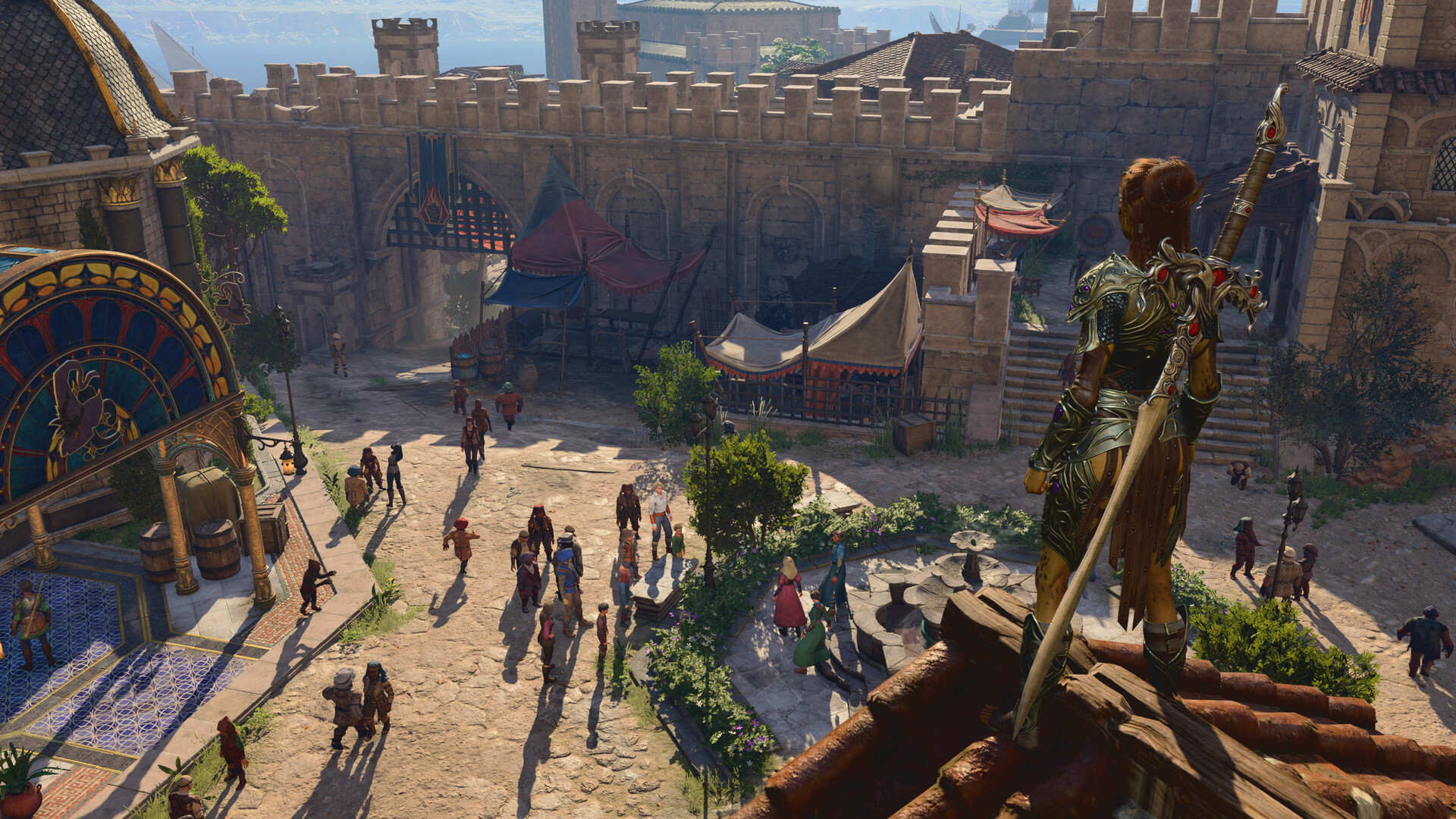
Quick Answer: Learn Baldur’s Gate 3 how to play by making a balanced party, exploring carefully, using turn-based combat smartly, talking to everyone, and managing rests, resources, and positioning instead of rushing fights.
Baldur’s Gate 3 is a story-rich, party-based RPG set in the universe of Dungeons & Dragons, where choices shape the plot and combat rewards planning more than reflexes. The safest beginner approach is to stabilize your party, learn basic action economy, and treat every encounter like a problem to solve.
What Baldur's Gate 3 Is and How It Feels to Play
Baldur's Gate 3 is a party-based role-playing game where you control one custom character or origin hero plus three companions, and every major decision can change how quests, fights, and relationships unfold. The game is not about twitch skill or button mashing; it is about reading the battlefield, understanding your options, and using the right tool at the right moment.
The core loop is easy to grasp once you see it in action. You explore an area, talk to NPCs, pick up quests, inspect enemies and terrain, then switch into turn-based combat when a fight starts. In practice, that means you may spend as much time solving a conversation or route through a dungeon as you do swinging a sword. Examples of this style show up immediately in early areas like the nautiloid prologue, the crash site near the beach, and the first larger settlement hubs where merchants, quest givers, and recruitable companions all appear.
A useful way to think about how to play is this: Baldur’s Gate 3 rewards preparation, not panic. A goblin ambush on a cliff, a flaming oil barrel near a doorway, or a trapped corridor in a ruin can all be handled in multiple ways if you slow down and plan. You can jump to high ground, shove enemies off ledges, cast surface spells like Grease or Fire Bolt, or simply retreat and return after a rest. That flexibility is a big part of why the game can feel overwhelming at first and empowering shortly afterward.
There is also a strong Dungeons & Dragons influence in the rules. Your class, stats, armor, weapon choice, and spell list all matter. A fighter in heavy armor, a cleric with support magic, a rogue built around stealth, and a wizard with crowd control each solve problems differently. The beginner mistake is often trying to play every character like an action hero. The better approach is to let each party member do one job well.
If you want a practical mental model, use this order: survive the early hours, build a reliable party, learn to rest and resource-manage, then start experimenting with synergies. Once that clicks, the game opens up fast.
First-Hour Checklist
Your first hour should focus on recruiting, looting, learning the interface, and securing a stable camp routine rather than sprinting toward every combat encounter. If you do these basics early, the rest of the game becomes much easier to understand.
1. Finish the prologue with basic controls in mind
The opening ship section is the best place to learn movement, camera control, and turn-based combat without much pressure. Pick up the obvious loot, open containers, and test actions like jumping, throwing, and interacting with levers or consoles. Examples include the initial mind flayer ship, the early fight where the nautiloid breaks apart, and the first opportunities to loot useful weapons and scrolls from fallen enemies.
2. Recruit your earliest companions
As soon as you reach the starting wilderness, look for the first companions rather than playing alone. A balanced party in the early game usually wants at least one frontliner, one support or healing character, one damage dealer, and one flexible slot for utility. Concrete early examples include Lae’zel for melee pressure, Shadowheart for support and utility, Astarion for stealth and traps, and Gale for ranged magic. You do not need all four immediately, but getting companions early reduces the number of fights you must brute-force.
3. Talk to every obviously important NPC
Speak to guards, druids, refugees, merchants, and quest-givers before starting major fights. In Baldur’s Gate 3, conversations often reveal alternate routes, warning signs, hidden rewards, or ways to skip dangerous battles. For example, a dialogue with a guard may lead to a social solution, a conversation with a trader can unlock useful gear, and a side talk with a companion can trigger approval or a personal quest.
4. Pick up camp supplies, potions, and scrolls
Take food items, useful consumables, and low-level scrolls whenever you see them. Early game survival depends more on having enough healing, emergency magic, and rest resources than on having perfect weapons. A Potion of Healing, a scroll of Misty Step, and a stack of Camp Supplies can be more valuable than an extra sword you will never use.
5. Learn to save often and in multiple slots
Make manual saves before conversations, before entering unknown rooms, and before risky fights. The game encourages experimentation, but a bad choice can branch into a long fight or a failed quest outcome. Use multiple save slots so you can return to a safe point if you accidentally lock yourself out of a better route.
6. Use the first camp visit to organize your party
Camp is where you manage companions, rest, and some story progression. Visit it early so you understand how resource recovery works, how to swap party members, and how companion scenes appear after key events. The first few camp visits are also a good time to inspect inventories, equip helmets and armor properly, and move items around so each character carries gear that actually fits their role.

You might also like
- baldurs gate 3 how to get owlbear cub Beginner Guide
- baldurs gate 3 how to get to the underdark: Beginner Guide
- Baldur’s Gate 3: how to baldurs gate 3 cross play for beginners
- Baldur’s Gate 3 baldurs gate 3 how to save mayrina Beginner Guide
- baldurs gate 3 beginner class reddit: Beginner Guide for New Players
Resource Priority Order
Your best early-game resource priority is survivability first, then mobility and control, then damage, while hoarding rare consumables until they solve a real problem. This matters because Baldur’s Gate 3 gives you many tempting items, but using the wrong one too early can leave you stuck later.
Spend and hoard priorities at a glance
| Priority | Spend Early On | Hoard Until Needed | Why It Matters |
|---|---|---|---|
| Highest | Healing potions, cheap scrolls, basic armor upgrades | Rare revives, powerful scrolls, unique consumables | Keeps the party alive through early mistakes |
| High | Weapon upgrades that match your class | Odd gear that does not fit your build | A good weapon is only valuable if someone can use it well |
| Medium | Camp supplies for rests | Story items and one-time utility items | Resting restores spells and class resources |
| Medium | Lockpicks, thieves’ tools, alchemy ingredients | Specialty crafting components you have not yet learned to use | Lets you solve chests, doors, and traps consistently |
| Low | Generic food duplicates and low-impact junk | High-value quest items, rare elixirs, unique grenades | Prevents accidental waste on trivial fights |
The biggest beginner instinct is to sell or consume things too quickly. Resist that urge. If an item seems rare, unique, or clearly designed for a specific role, hold it until you understand the encounter design better. A scroll of Revivify, a Potion of Invisibility, a grenade-like throw item, or an emergency mobility spell can completely reverse a bad fight, while a random minor consumable often does little. Early examples of things to save include healing potions for surprise crits, spell scrolls for moments when your wizard is out of slots, and condition-removal tools for poison, silence, or paralysis.
You also want to prioritize resources that create new options. A lockpick or thieves’ tools set opens doors and chests without spending a spell slot. A scroll of Feather Fall can let you move through vertical spaces safely. A Potion of Speed, when used at the right time, can transform a difficult boss setup into an easy win. These are not just “extras”; they are fight-changing tools.
Crafting should stay simple at first. Pick up ingredients if they do not slow you down, but do not build your entire economy around brewing every possible item. When in doubt, use crafting or alchemy to solve immediate needs: healing, poison application, resistance, and movement. If you find yourself with too many ingredients and too few supplies, that is the point where organizing your bag matters more than chasing more loot.
Spending priorities also depend on your class. A wizard benefits from scrolls and spell-saving items, a rogue gets far more value from lockpicking support and stealth gear, a paladin or fighter wants reliable weapons and armor, and a cleric or druid appreciates anything that extends party endurance. The same merchant inventory can be excellent for one character and irrelevant for another, so match purchases to your roles instead of buying by price tag.
Core Combat Basics for New Players
Baldur’s Gate 3 combat is easiest when you focus on positioning, action economy, and advantage rather than raw damage numbers. If you know who moves first, where the cover is, and which enemy is most dangerous, you will win far more fights than by swinging at the closest target.
The four basics that matter most
- Action economy: Each turn, think about whether a character should attack, cast, dash, disengage, hide, or heal.
- Positioning: High ground, choke points, ledges, and line of sight often matter more than gear.
- Focus fire: Remove one dangerous enemy quickly instead of spreading damage across the whole field.
- Terrain use: Fire, grease, ice, poison, and elevation can be more decisive than a basic attack.
A classic beginner example is a goblin encounter on uneven ground. If your archer takes high ground, your rogue hides, your fighter blocks a path, and your spellcaster controls the floor with a surface spell, the fight becomes simple. Another common example is a room with crates, ladders, or narrow doors; if you fight in the doorway instead of running into the open, enemy numbers matter less. A third example is any battle with explosive barrels or environmental hazards: if you notice a ledge, pit, or fire source, you can often reshape the encounter before the first hit lands.
Understanding turn order helps a lot. Characters who act first can remove threats before enemies respond, while slow characters are better used to clean up, buff, or control the field. If a combat starts badly, do not hesitate to retreat behind a doorway, position ranged characters on safer ground, or use a consumable that changes the tempo. The game is built to reward adaptation.
It also helps to stop thinking of “damage” as the only success metric. Knocking enemies prone, pushing them off ledges, blinding them, slowing them, or forcing them to spend movement all create value. A cleric casting Bless, a wizard using Sleep on low-health enemies, or a fighter using a shove near a cliff can each save more resources than a direct attack.
If you are unsure what to do, ask three questions on every turn: Who is the biggest threat? What terrain can I use? What does this character do best right now? Answering those questions consistently will make you better very quickly.
Common Mistakes
New players usually struggle because they treat Baldur’s Gate 3 like a generic action RPG, ignore encounter setup, or waste resources that should be saved for harder fights. The good news is that almost every beginner mistake has a straightforward fix.
Mistake 1: Rushing into combat without scouting
Players fall into this because exploration feels natural and fights often begin abruptly. The fix is to use stealth, high ground, or a cautious forward scout before committing the whole party. Let Astarion or another mobile character check traps, line of sight, and enemy placement first.
Mistake 2: Treating every fight as a damage race
Players do this because low-level enemies can be deleted quickly, so the habit feels correct until a harder encounter punishes it. The fix is to prioritize control: use Grease, shove enemies off ledges, blind dangerous casters, and block doorways so the enemy cannot bring full pressure to bear.
Mistake 3: Burning spell slots and consumables too early
Players often spend resources in easy fights because they are afraid of losing health. The fix is to use basic attacks, cantrips, and positioning against trash encounters, then save bigger tools like crowd control, healing bursts, and scrolls for named fights, ambushes, or boss rooms.
Mistake 4: Ignoring companion roles
Players fall into this when they try to make everyone self-sufficient or equip gear based on aesthetics. The fix is to define jobs clearly: one frontliner, one support, one ranged damage dealer, and one utility slot. Examples include putting Shadowheart in a support role, Lae’zel up front, Gale at range, and Astarion on lockpicks and stealth duty.
Mistake 5: Forgetting to rest and reprepare
Players keep going because they want to preserve supplies, but that can leave the party underpowered for the next major battle. The fix is to rest after meaningful progress, refresh spells and class resources, and return with the right loadout for the area.
Mistake 6: Looting everything without sorting
Players do this because treasure feels scarce and every item looks important. The fix is to sort by role and value: keep consumables, sell obvious junk, and earmark special items for companions who can actually use them.
Common Mistakes
There are also several more subtle beginner errors that show up after the first few sessions, especially once the game starts giving you more freedom. These are worth correcting early because they can quietly slow progression.
Mistake 7: Splitting the party too far apart
Players do it to loot multiple angles or sneak around simultaneously, but it can turn one mistake into four. The fix is to keep the group close enough that everyone can enter combat or help each other quickly, then split only when a specific plan requires it.
Mistake 8: Ignoring dialogue options and skill checks
Players may skip dialogue because they want to “get to the game,” but the game is already happening in dialogue. The fix is to read the options carefully, use companion abilities when relevant, and remember that persuasion, intimidation, deception, and insight can change the entire shape of a quest.
Mistake 9: Underusing verticality and jump mechanics
Players often stay on flat ground because it feels safer. The fix is to jump to rooftops, cliffs, and platforms whenever the battlefield allows it, because elevation can improve ranged attacks and create escape routes.
Pro Tips
Once you understand the basics, a few advanced habits can dramatically improve your results without requiring a full build guide. These tips are especially useful once the game stops holding your hand.
Tip 1. Open fights from stealth when possible
If you can position a rogue, ranger, or invisible character before combat begins, you can often start with a free hit, better initiative positioning, or a surprise advantage. This is especially strong against isolated enemies, patrols, and archers on ledges.
Tip 2. Use doors as tactical tools
A closed door can be better than a shield in the right fight. If enemies are funneling through a single doorway, place a melee character at the choke point, then back them up with ranged damage and area control from behind the line.
Tip 3. Inspect enemies before committing resources
If you right-click or inspect a dangerous target, you can often learn enough to avoid wasting the wrong spell or damage type. This matters against enemies that resist fire, ignore fear, or punish melee positioning.
Tip 4. Save movement for purpose, not habit
Running to the nearest enemy is often worse than taking a small positioning detour. Use movement to secure cover, high ground, or a flank, and only then spend your action. A well-placed character is usually worth more than a slightly earlier attack.
Tip 5. Keep one emergency answer on every character
Every party member should have at least one tool for bad situations: a heal, a shove, a jump, a mobility spell, a smoke-like escape, or a control effect. That way a single stunned, trapped, or separated character does not collapse the whole round.
Tip 6. Rotate companions for utility, not just story
If a locked room, trap corridor, or social scene seems awkward for your current group, swap in the companion best suited to that task. Astarion for locks, Shadowheart for support, Gale for ranged magic, and Lae’zel for brute force each shine in different situations.
Tip 7. Use environmental damage as free value
Fire barrels, grease patches, cliffs, poison clouds, and suspended objects can all convert map knowledge into damage or control. If you see a fight area with these features, build your turns around them before you start trading ordinary attacks.
Graduation Threshold: When You’re No Longer a Beginner
You are out of the beginner phase when you can enter a new area, evaluate a fight, and confidently choose a plan without feeling lost. That does not mean you know every class interaction or quest outcome; it means the game’s systems have become readable enough that your decisions are intentional rather than reactive.
A good way to judge this is by behavior, not level or gear. You have likely graduated from beginner status if you routinely do the following: inspect terrain before fighting, keep a balanced party without panic-swapping every slot, rest at sensible times, use consumables on purpose, and solve at least some encounters through dialogue, stealth, or positioning instead of brute force. Examples of this shift include walking into a goblin camp and immediately looking for high ground, noticing a merchant’s useful utility item and buying it for a reason, or using a companion’s spell because you know exactly what it should accomplish.
You will also notice that your decisions become more consistent. Early on, you may hoard everything, over-heal, or attack the nearest enemy. After the beginner phase, you start asking whether a spell is worth the slot, whether a fight should be delayed, whether a door can be held, and whether a companion is better in another role for this specific area. That is the real transition.
Another sign is that mistakes stop snowballing as badly. A beginner often panics after a missed attack or lost turn, then burns all remaining resources trying to recover. A more experienced player accepts a bad round, stabilizes with terrain or crowd control, and wins the fight over the next two turns. If you can do that reliably, you are no longer just learning the basics—you are playing the game on its own terms.
Related Guides
- tips and tricks Baldur's Gate 3 Best Beginner Classes
- related guide Baldur's Gate 3 Companion Tier Guide
- related guide Baldur's Gate 3 Early Game Walkthrough
- related guide Baldur's Gate 3 Best Starting Builds
- baldurs gate 3 how to get lae'zel down Baldur's Gate 3 Combat Tips and Tricks
- related guide Baldur's Gate 3 Multiclass Guide
- related guide Baldur's Gate 3 Spell Guide for New Players
Sources
- https://store.steampowered.com/app/1086940/
- https://en.wikipedia.org/wiki/Baldur's_Gate_(video_game)
See also
- baldurs gate 3 how to recruit minthara: Beginner Guide for New Players
- baldur's gate 3 vs elden ring: which should you play?
- baldurs gate 3 how to free shadowheart: Beginner Guide
- Baldur’s Gate 3 beginner tips reddit: A Complete Beginner Guide
- baldurs gate 3 best class for beginners: A Beginner Guide to Starting Strong
- baldurs gate 3 how to respec: Beginner Guide for New Players
- baldurs gate 3 beginner class: Beginner Guide for New Players
- baldurs gate 3 how to multiclass: Beginner Guide for New Players
- Baldur's Gate 3 Character Builder: Paladin Oathbreaker Frontliner
- Baldur's Gate 3 Paladin Build Guide
Screenshots


Reviewed by
BG3 Hub Editorial
Expertise: Editorial team behind BG3 Hub. Content is compiled from official patch notes, community wikis, and playthrough notes, then reviewed and updated on schedule.
Sources
Related Guides
%27/><stop offset=%271%27 stop-color=%27hsl(80,50%,18%)%27/></linearGradient></defs><rect width=%27460%27 height=%27215%27 fill=%27url(%23g)%27/><text x=%27230%27 y=%27115%27 text-anchor=%27middle%27 font-family=%27sans-serif%27 font-size=%2724%27 font-weight=%27700%27 fill=%27rgba(255,255,255,0.85)%27>App 1086940</text><text x=%27230%27 y=%27142%27 text-anchor=%27middle%27 font-family=%27sans-serif%27 font-size=%2711%27 fill=%27rgba(255,255,255,0.6)%27>no image yet</text></svg>)
🔥 Popular Guides

bg3 class tier list act 1
Act 1 BG3 class tier list with S/A/B ranks, matchup flips, mistakes, tips, and an FAQ for new and returning players.
BG3 Top Baldur's Gate 3 Builds Guide
Best BG3 builds explained with roles, stats, gear, counters, budget swaps, and pro tips for any difficulty.
bg3 best builds for honor mode: Baldur’s Gate 3 Build Guide
Top BG3 Honor Mode builds, stat priorities, gear, counters, and budget options for a safer Baldur’s Gate 3 run.
Baldur's Gate 3 Class Tier List
S, A, and B class rankings for BG3 with methodology, situational flips, patch notes, mistakes, pro tips, and FAQs.
📋 Patch Notes & Updates
🛠️ Popular Tools
Was this guide helpful?
Rate this guide so we can improve it.
Share your own tip
Found something not in the guide? Submit it below — our editors review every tip before publishing. No account required.