 Baldur's Gate 3
Baldur’s Gate 3 Beginner Guide: How to Start Strong Without Getting Smited by the Tutorial

Quick Answer: A baldurs gate 3 beginner should focus on exploring the Nautiloid, recruiting companions early, learning turn-based combat, hoarding key consumables, and finishing the first hour with a balanced party and fewer bad habits.
Baldur’s Gate 3 is a story-rich, party-based RPG in the Dungeons & Dragons universe where your choices shape the run, so the smartest start is learning the basics fast and not panic-spamming every shiny button.
What Baldur’s Gate 3 Actually Wants From You
Baldur’s Gate 3 wants you to think like a tabletop player, not a loot goblin with a sword addiction. The game is built around exploration, dialogue choices, party management, positioning, and resource use, and that means the “correct” play is usually the one that fits the current situation rather than the one with the biggest damage number. The Steam store description makes that intent pretty clear: it is a story-rich, party-based RPG in the Dungeons & Dragons universe where your choices shape the tale Source.
If you are coming in as a baldurs gate 3 beginner, the biggest mindset shift is this: you are not meant to solo every encounter, and you are absolutely not supposed to hoard every item forever like a dragon with trust issues. The game rewards improvisation. For example, a fight near the crashed Nautiloid can be solved by shoving enemies off ledges, using fire surfaces, or jumping to better high ground. A social encounter with Kagha or Zevlor can be more valuable than winning a random skirmish because dialogue often changes access, rewards, or outcomes later. Even outside combat, simple acts like talking to every companion at camp, inspecting enemy resistances, or using a scroll of Misty Step can completely alter how a situation plays out.
What makes the opening hours tricky is that Baldur’s Gate 3 throws a lot at you very fast: classes, origins, cantrips, concentration, short rests, long rests, inventory clutter, dialogue skill checks, environmental hazards, and a party that can quickly become a chaotic parade of emotional baggage. That is normal. The game is designed to feel a little overwhelming at first, especially if your last RPG was more “walk to marker, collect 7 wolf pelts” and less “replace a bridge with grease, fire, and a bad decision.”
A good beginner approach is to accept three truths early:
- Missing attacks is normal.
- Resting is part of the economy.
- Dialogue is gameplay, not a cutscene you mash through.
Once you internalize that, the rest gets much easier. You stop treating every fight like a personal insult and start treating it like a puzzle. That’s the whole vibe.
First-Hour Checklist: What to Do in Your Opening 60 Minutes
Your first hour should get you off the Nautiloid, recruit your first companions, secure your core combat tools, and learn how not to waste resources. The opening hour is less about “beating” anything and more about setting up a comfortable run before the game opens up into the wilderness. You want a stable party, a few healing options, and enough confidence to move through dialogue and combat without accidentally speedrunning your own disaster.
1) Grab the basics on the Nautiloid
The opening ship is your tutorial zone, and it is packed with useful stuff if you actually look around. Pick up weapons, spell scrolls, potions, and any armor that fits your class. If you see a nearby enemy that can be bypassed or persuaded into fighting someone else, use that. For example, the Mind Flayer can be a temporary ally in the opening chaos, and the cambions in the final ship segment are much easier if you understand high-ground, cover, and spell range.
Useful early actions include:
- Looting every chest and corpse you safely can
- Equipping better armor and weapons immediately
- Trying class actions on weak enemies so you learn the hotbar
- Reading tooltip text for Jump, Shove, and Healing Word
- Looking for explosives and environmental hazards
Do not worry about perfect optimization here. You are just collecting your “this fight won’t be a joke anymore” kit.
2) Learn your first combat loop
The game expects you to act in turns, manage action economy, and use positioning. A simple loop for new players is: move to high ground if possible, use an action on an enemy, use a bonus action if available, and end your turn in a safer position than you started. If you are playing a caster, use a cantrip like Fire Bolt or Ray of Frost when you do not want to spend a spell slot. If you are a martial class, use basic attacks and look for advantage through elevation or enemy status effects.
A few very practical examples:
- A Wizard can open with Grease, then set it on fire on the next turn.
- A Fighter can use Action Surge to delete a priority target early.
- A Cleric can cast Bless before a hard fight and make the whole party more reliable.
That’s the backbone of the game. Fancy stuff comes later. For now, consistency beats heroics.
3) Recruit your first companions quickly
You want a party of four as soon as possible. The early companions are there for a reason, and the game becomes much easier when you stop trying to be the main character, the healer, the damage dealer, and the emotional support in one body. Early companions commonly include Shadowheart, Astarion, and Gale, depending on how you move through the crashed area and nearby wilderness. The game also lets you reshape your group at camp, so don’t overcommit to your first lineup forever.
Why this matters:
- Shadowheart gives you healing and support tools.
- Astarion helps with locks, traps, and precision damage.
- Gale brings ranged magic and battlefield control.
If you are playing a baldurs gate 3 beginner run, this mix gives you a clean balance of frontline, utility, and spellcasting. Even if one companion’s personality annoys you, keep them around long enough to learn what they bring.
4) Start using camp and long rests early
A lot of new players think resting is “wasting time.” It is not. It is how Baldur’s Gate 3 expects you to recover spell slots, class features, and hit points, and it often advances companion scenes. If your spellcasters are out of slots, your frontline is bruised, or your party is carrying multiple conditions, go to camp and reset. If your journal is filling up with dialogue triggers, resting can also help those events surface.
A simple beginner rule: if your team feels one bad fight away from collapse, rest before the collapse happens.
5) Talk to everyone important
In the first hour, dialogue is not optional flavor; it is progression. Speak to companions, read books or notes if they look important, and exhaust key NPC dialogue where sensible. Early conversations often reveal quest routes, party opinions, or alternate solutions. You may meet someone in the Grove, the crashed ship, or the surrounding map who looks unimportant and then turns out to be the person who unlocks a major chain of events.
If you do only one “RPG thing” in your opening hour, make it this: talk, then talk again, then check whether the game just hid a useful option inside a dialogue tree.

You might also like
- baldurs gate 3 beginner class reddit: Beginner Guide for New Players
- baldur's gate 3 vs elden ring: which should you play?
- Baldur’s Gate 3 beginner tips reddit: A Complete Beginner Guide
- baldurs gate 3 best class for beginners: A Beginner Guide to Starting Strong
- baldurs gate 3 beginner class: Beginner Guide for New Players
Resource Priority Order: What to Spend, What to Hoard, and What to Use First
Your best early resources are healing, spell slots, consumable scrolls, and camp supplies, while the stuff you should hoard most carefully is unique gear, rare scrolls, and anything that solves a problem you cannot brute-force yet. Baldur’s Gate 3 is generous with loot, but it is also sneaky about when it expects you to spend it. The game loves making players cling to items until Act 3 and then finish the campaign with a backpack full of “I might need this later” clutter. Don’t be that goblin unless the goblin life truly calls to you.
A beginner-friendly priority system looks like this:
| Priority | Spend/Hoard | Examples | Why it matters |
|---|---|---|---|
| 1 | Spend freely | Basic healing potions, easy-to-replace arrows, common scrolls | These keep you alive now and are usually easy to replace |
| 2 | Use regularly | Spell slots, class cooldowns, short-rest abilities | Your core combat engine is useless if you save it for a fantasy apocalypse |
| 3 | Hoard carefully | Rare scrolls, elixirs, special grenades, unique armor pieces | These can trivialize hard encounters when used at the right moment |
| 4 | Save for decisions | Inspiration, approval, key quest items | Some resources affect dialogue, exploration, or companion outcomes |
| 5 | Never forget | Camp supplies, lockpicks, trap disarm tools | These quietly keep your run smooth and your rogue employed |
The first thing to understand is that healing potions are not sacred relics. Use them when a character is at risk of going down or when spending an action on healing is better than losing a turn. A potion of Healing can pull Shadowheart up before she gets deleted by a goblin crit, or let Astarion survive long enough to finish off a target with Sneak Attack. Scrolls are similar: if you find a Scroll of Feather Fall, Hold Person, or Misty Step, do not let it rot in a backpack just because “maybe later.” Later is now, especially when a cliff, a locked chest, or a dangerous choke point is staring at you.
Spell slots are the biggest resource beginners mismanage. A Wizard’s spell slots, a Cleric’s support magic, and a Druid’s utility spells are meant to be used in encounters that matter. You do not need to cast your best spell on a lone bandit. You do want to cast it on a clustered group of enemies, a boss, or a fight that is already going sideways. Meanwhile, cantrips, basic attacks, and environmental manipulation are the tools that fill the gaps between bigger moments. That’s the rhythm.
Camp supplies are another important piece. They fuel long rests, and long rests in turn refresh your party and unlock scenes. If you are being stingy with supplies, you may accidentally stall your own progression. Pick up food, wine, cheese, and anything else the game classifies as supplies. That crate of vegetables may not look heroic, but it is basically your ticket to recovering after a nasty day.
Crafting and alchemy are also worth light attention. Do not overinvest early, but do keep ingredients that clearly combine into useful consumables. Fire surface materials, poison options, and status-clearing tools can all swing a tough encounter. A single grease bottle plus a fire source can do more work than a full turn of basic attacks when enemies are clustered.
The cleanest beginner rule is this: use common consumables often, hoard rare answers, and spend spell slots when they solve a real problem. If you are unsure, ask whether the item saves a turn, prevents a death, or creates advantage. If yes, it probably deserves use now rather than burial in the inventory tomb.
Common Mistakes New Players Make and How to Fix Them
Common mistakes in Baldur’s Gate 3 usually come from treating it like a standard action RPG instead of a tactical, choice-driven party game. The good news is that almost every beginner error has a simple fix, and most of them become obvious once you stop rushing and start using the tools the game gives you. If you are a baldurs gate 3 beginner, this section will save you from a lot of “why is this goblin somehow bullying my entire party” energy.
Mistake 1: Using only basic attacks and ignoring terrain
Many players stand in the open, click Attack, and hope numbers save them. That habit comes from action games where positioning is secondary. In Baldur’s Gate 3, it gets you punished fast.
Fix: Use elevation, cover, surfaces, and shove mechanics every fight. Example: cast Grease near melee enemies, then hit it with Fire Bolt. Or move Astarion to high ground so ranged attacks become more accurate and Sneak Attack is easier to trigger. If a bridge, ledge, or explosive barrel is available, treat it like a weapon.
Mistake 2: Saving all consumables for “later”
Players hoard potions, scrolls, arrows, and elixirs because they expect an even bigger fight around the corner. Later never comes, and their inventory becomes a museum of unused solutions.
Fix: Use common consumables in the first real fights. A Potion of Healing can rescue a downed companion. A scroll of Thunderwave can knock enemies off a ledge. An elixir that boosts combat performance is better spent on a hard encounter than admired in inventory. If it solves the current problem, spend it.
Mistake 3: Resting too little, then fighting at half power
Beginners sometimes think long rests are expensive or only for emergencies, so they limp through encounters with no spell slots and no class features.
Fix: Rest when your party is drained. If Gale is out of slots, Shadowheart is low on healing, and your frontline is battered, go to camp. Also watch for companion scenes that may require resting to trigger. The game is built around this cycle, and pretending otherwise makes everything harder.
Mistake 4: Ignoring dialogue and auto-clicking through choices
This happens because players want to get to combat or because dialogue trees feel intimidating. Unfortunately, Baldur’s Gate 3 hides quests, party approval, and alternate solutions in conversations.
Fix: Slow down for key NPCs and companions. Read the options, inspect skill checks, and consider whether Persuasion, Deception, or Intimidation is the better approach for the scene. Example: talking to the Grove leadership, dealing with goblins, or calming a tense party member can all pay off more than forcing a fight.
Mistake 5: Building a party with no plan
Some beginners pick whoever they like and then wonder why every fight feels awkward. A group of four damage dealers with no utility is funny for about one battle.
Fix: Cover the basics: one durable frontliner, one source of healing or support, one stealth/lockpick character, and one ranged damage or control caster. Examples include Lae’zel or Karlach up front, Shadowheart for support, Astarion for traps and locks, and Gale for control. You can absolutely deviate later, but this is a safe starting shape.
Mistake 6: Forgetting to inspect enemies
You cannot play around resistances, immunities, or dangerous abilities if you never check what the enemy actually does.
Fix: Use Inspect before committing important spells or elemental attacks. If an enemy resists fire, stop feeding it Fire Bolt like it owes you money. If a target is vulnerable to radiant or bludgeoning damage, adjust your plan accordingly. Small information checks save huge amounts of frustration.
Common Mistakes
The most useful beginner improvements come from correcting a few repeat problems instead of trying to master everything at once. Here are the big ones in a cleaner list for quick reference.
- Staying in one place during fights — Players often stand still because it feels safe. Why it happens: they underestimate turn-based positioning and overtrust AC. Fix: move to high ground, break line of sight, and reposition after attacking when possible.
- Forgetting to toggle turn-based mode outside combat — This makes traps, stealth, and environmental puzzles harder than they need to be. Why it happens: players assume turn-based only matters once initiative starts. Fix: use turn-based mode for trap-heavy hallways, sneaking past guards, or timing jumps.
- Selling or deleting useful gear too early — A “meh” item can become important when a companion respecs or a new spell combo opens up. Why it happens: inventory clutter fatigue. Fix: compare item effects before selling, especially utility gear and niche weapons.
- Splitting the party too aggressively — Trying to scout with one character while the others are miles away can trigger messy fights. Why it happens: players want efficiency or stealth. Fix: regroup before major encounters and only split when the plan is deliberate.
- Ignoring class synergy — New players often cast random spells without thinking about setup or follow-up. Why it happens: the action bar looks like a toybox. Fix: pair control with damage, such as Hold Person into melee attacks or Grease into fire.
- Not using camp for conversations — Companion scenes and approval moments can be easy to miss if you never visit camp. Why it happens: players think camp is just a health refill station. Fix: return often and talk to everyone after major events.
Pro Tips for Smoother Early Progression
These tips go beyond the basic “don’t stand in the fire” advice and help you play smarter from the start. They are especially useful once the early shock of Baldur’s Gate 3 wears off and you start seeing how its systems interact.
Tip 1: Use shove and jump like real combat tools
If a fight has cliffs, ledges, or hazardous ground, shoving enemies can be more valuable than dealing modest damage. Goblins near heights, undead near pits, and enemies on narrow walkways are especially vulnerable to this. Jump also matters more than beginners expect because it changes positioning without always costing your whole turn’s momentum.
Tip 2: Keep one character with trap and lock utility
Astarion is the obvious example, but any character can be built to handle locks and traps with enough investment. Keep a steady source of Thieves’ Tools and do not rush trapped chests unless you are fine with explosions and embarrassment. Locked doors in places like the Druid Grove or goblin-heavy areas often hide better routes than the front door.
Tip 3: Pre-buff before a known fight
If you can see a dangerous encounter coming, use buffs before it starts. Bless, Longstrider, Mage Armor, and similar effects can improve your odds without burning your first combat turns. A pre-buffed party is much smoother in fights against groups like goblins, cultists, or miniboss-style enemies.
Tip 4: Rotate companions to learn more tools
If you only use your favorite four characters, you miss a lot of the game’s tactical variety. Swap in Gale for control, Wyll for ranged pressure, Lae’zel for aggression, or Shadowheart for support depending on the mission. This also helps you learn what the full roster can do, which matters a lot when later quests ask for flexibility.
Tip 5: Make every encounter answer a question
Before acting, ask one simple thing: “What wins this fight?” Sometimes the answer is bursting one target, sometimes it is controlling the room, and sometimes it is just surviving until the enemy walks into your nonsense. That mindset helps with bosses, ambushes, and ugly group fights alike.
Tip 6: Keep an eye on concentration
Many of the strongest spells require concentration, so one hit can shut them off. If Shadowheart casts Bless or a Wizard drops a control spell, protect that character instead of charging off alone. This is one of the fastest ways to improve your results without changing your build.
Graduation Threshold: When You Stop Being a Beginner
You are out of the beginner phase when you can handle fights, dialogue, and resource management without constantly feeling surprised by the game’s basic systems. That does not mean you know everything; it means you can play competently, adapt to new encounters, and recover from mistakes without the whole run collapsing. For most players, the transition happens once the party structure, resting rhythm, and combat fundamentals stop feeling mysterious.
A simple graduation checklist looks like this:
| Skill | Beginner | Ready to Move On |
|---|---|---|
| Party setup | Random companions and mismatched roles | A balanced party with clear jobs |
| Combat | Repeated basic attacks and panic healing | Uses positioning, control, and synergy |
| Resources | Hoards everything or burns everything | Spends commons, saves rares, rests wisely |
| Dialogue | Skips choices or guesses blindly | Reads options and uses skills intentionally |
| Exploration | Misses traps and obvious routes | Checks terrain, inspects enemies, and uses utility |
If you can clear the opening wilderness and major early story beats while actively using these habits, you are no longer just learning the controls; you are actually playing the game. A baldurs gate 3 beginner becomes a comfortable player when they stop asking “what button do I press?” and start asking “what is the smartest plan for this encounter?”
Another good sign is that you begin recognizing patterns. You see a choke point and think of grease or Web. You meet a boss and immediately inspect resistances. You enter a social scene and consider whether Persuasion might be safer than Intimidation. You stop treating short rests like an emergency and start using them as part of your normal loop. At that point, the game opens up a lot more, because Baldur’s Gate 3 is at its best when you are solving its problems like a tactician instead of a tourist.
If you want a practical benchmark, you should feel comfortable after the first major area transition, when you have multiple companions, a functioning combat plan, and a better sense of how the game rewards creativity. That is usually when beginners become players.
Related Guides
These next-step guides are the natural follow-up once you survive the opening hours and want to tighten your build or push deeper into the story.
- Baldur’s Gate 3 Best Beginner Builds
- Baldur’s Gate 3 Party Composition Guide
- Baldur’s Gate 3 Act 1 Walkthrough
- Baldur’s Gate 3 Companions and Approval Guide
- Baldur’s Gate 3 Combat Tips and Tactics
- Baldur’s Gate 3 Class Tier List
- Baldur’s Gate 3 Best Early Game Gear
Sources
See also
- Baldur's Gate 3 Character Builder: Paladin Oathbreaker Frontliner
- Baldur's Gate 3 Paladin Build Guide
- Baldur's Gate 3 guide for beginners: A Practical Start-to-Finish Primer
- Baldur’s Gate 3 Beginner Guide: Getting Started Without Bricking Your Run
- Baldur’s Gate 3 Best Beginner Builds Guide
- Baldur’s Gate 3 Bard Build: Best Support, Control, and Damage Setup
- Baldur's Gate 3 Builds Reddit: Best Build Guide
- Baldur's Gate 3 Build Guide: Build Ideas That Actually Work
- Baldur’s Gate 3 Beginner Guide: Smart Start, Priority Resources, and Early-Game Mistakes
- Baldur's Gate 3 Build Guide: Paladin-Lock Smite Build
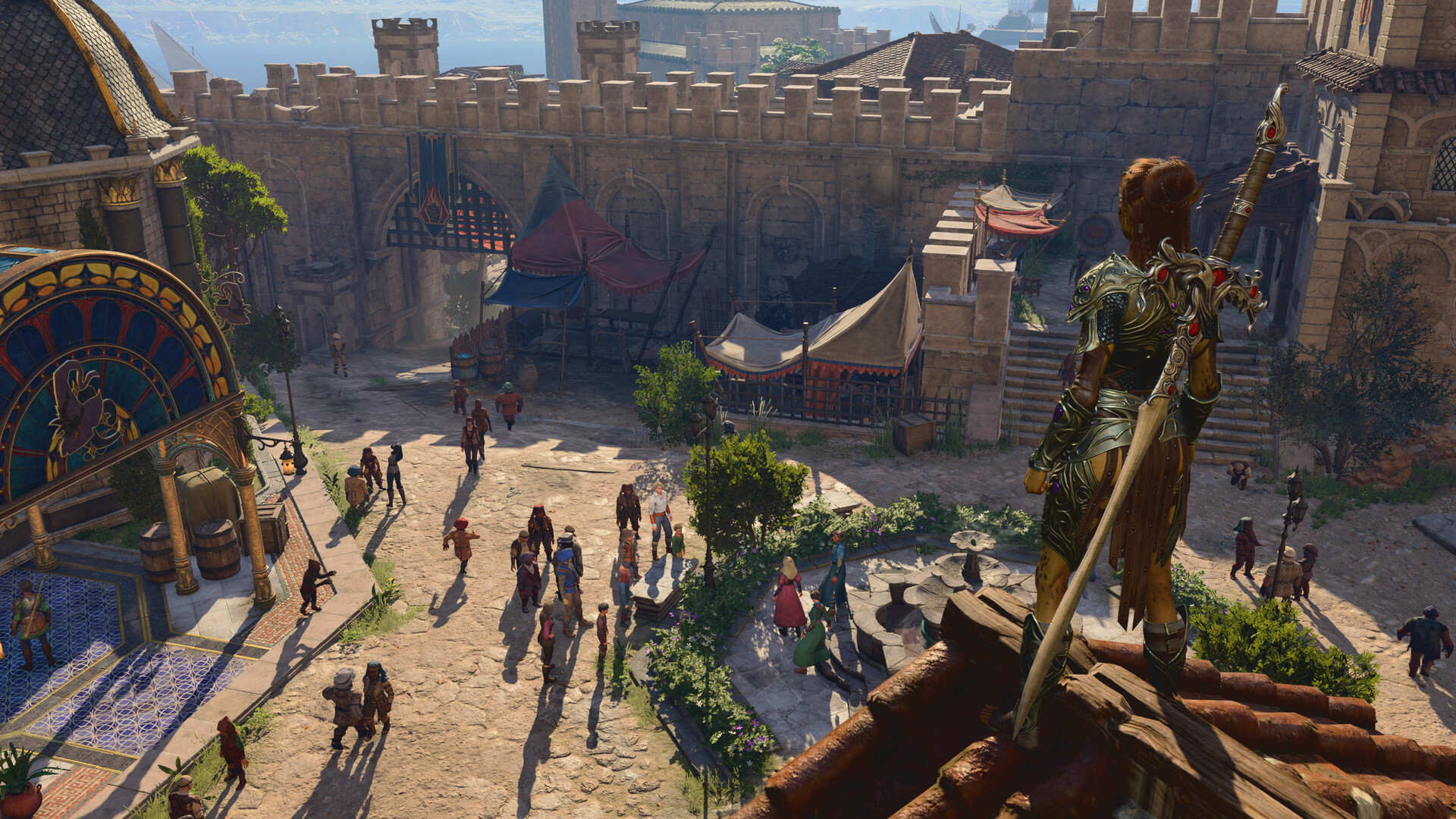
Screenshots


Reviewed by
BG3 Hub Editorial
Expertise: Editorial team behind BG3 Hub. Content is compiled from official patch notes, community wikis, and playthrough notes, then reviewed and updated on schedule.
Sources
Related Guides
%27/><stop offset=%271%27 stop-color=%27hsl(80,50%,18%)%27/></linearGradient></defs><rect width=%27460%27 height=%27215%27 fill=%27url(%23g)%27/><text x=%27230%27 y=%27115%27 text-anchor=%27middle%27 font-family=%27sans-serif%27 font-size=%2724%27 font-weight=%27700%27 fill=%27rgba(255,255,255,0.85)%27>App 1086940</text><text x=%27230%27 y=%27142%27 text-anchor=%27middle%27 font-family=%27sans-serif%27 font-size=%2711%27 fill=%27rgba(255,255,255,0.6)%27>no image yet</text></svg>)
🔥 Popular Guides

bg3 class tier list act 1
Act 1 BG3 class tier list with S/A/B ranks, matchup flips, mistakes, tips, and an FAQ for new and returning players.
BG3 Top Baldur's Gate 3 Builds Guide
Best BG3 builds explained with roles, stats, gear, counters, budget swaps, and pro tips for any difficulty.
bg3 best builds for honor mode: Baldur’s Gate 3 Build Guide
Top BG3 Honor Mode builds, stat priorities, gear, counters, and budget options for a safer Baldur’s Gate 3 run.
Baldur's Gate 3 Class Tier List
S, A, and B class rankings for BG3 with methodology, situational flips, patch notes, mistakes, pro tips, and FAQs.
📋 Patch Notes & Updates
🛠️ Popular Tools
Was this guide helpful?
Rate this guide so we can improve it.
Share your own tip
Found something not in the guide? Submit it below — our editors review every tip before publishing. No account required.