 Baldur's Gate 3
Baldur's Gate 3 Act Three Beginner Guide
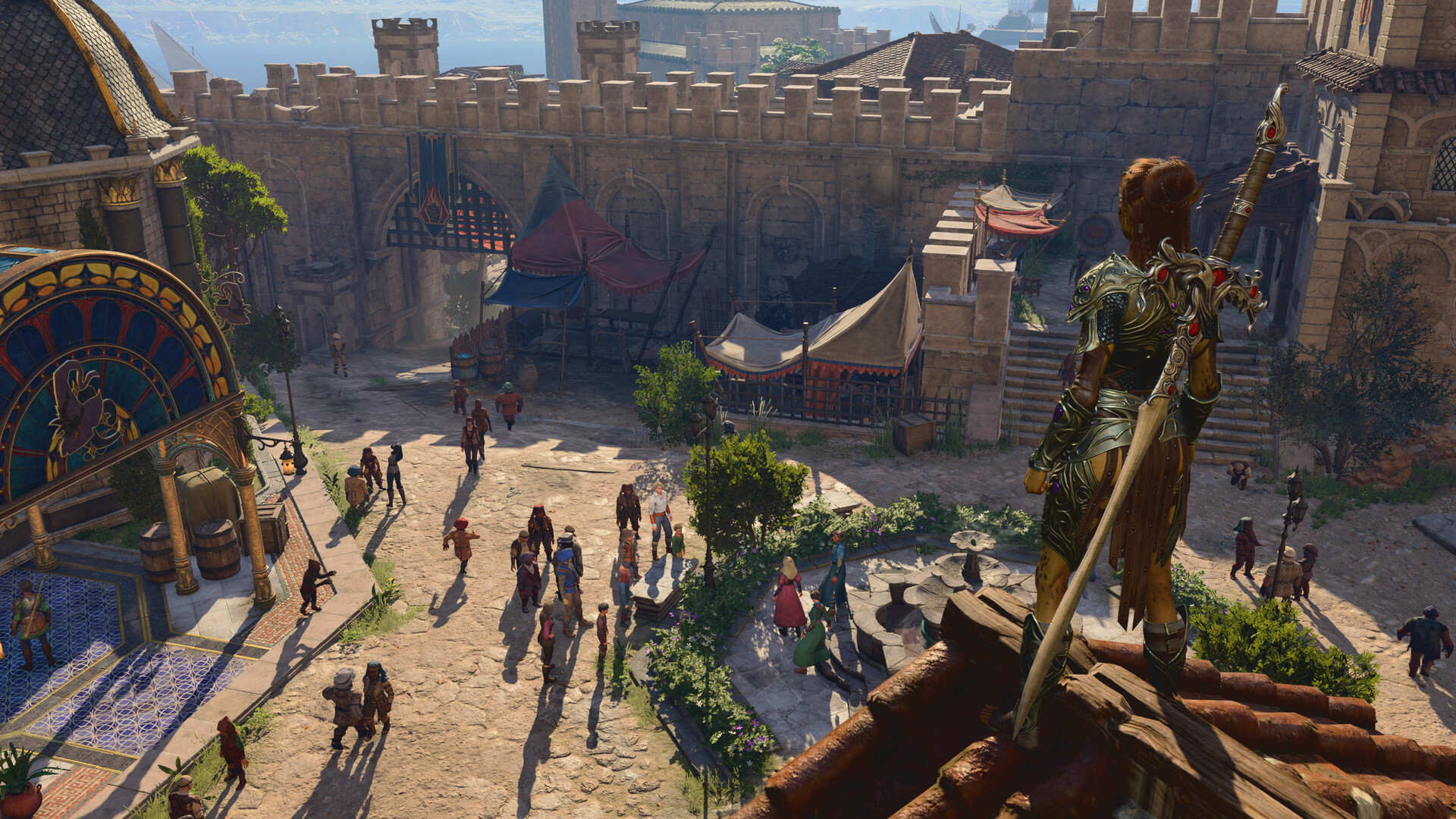
Quick Answer: Baldur's Gate 3 Act Three is the late-game city chapter where you should stabilize your party, finish core questlines, save your strongest consumables, and focus on smart exploration, because mistakes here are harder to undo than in earlier acts.
What Baldur's Gate 3 Act Three Changes for New Players
Baldur's Gate 3 Act Three changes the game by overwhelming you with quest density, political choices, and endgame-ready combat all at once. By the time you reach the city, your party is no longer learning the basics; it is being tested on whether you can manage a full toolkit without wasting resources on every small fight.
That shift matters because Act Three feels different from Acts One and Two in at least three ways. First, you are dealing with many simultaneous objectives: companion stories, main-story momentum, faction tensions, and side content that can easily pull you in different directions. Second, your enemies often punish sloppy positioning, weak target priority, and careless spell use more than earlier enemies did. Third, the consequences of dialogue and quest decisions can branch quickly, so “I’ll come back later” is not always a safe plan.
This guide is built for players who want a practical, beginner-friendly approach rather than a lore deep dive. If you have just entered the city, your goal is not to do everything perfectly. Your goal is to avoid burning key resources, lock in the most important upgrades, and keep your party flexible enough to handle whatever the city throws at you.
The game itself is a story-rich, party-based RPG where your choices shape the outcome, and that design becomes especially clear here. Steam describes it as a tale of “fellowship and betrayal, survival and sacrifice, and the lure of absolute power” Source, which is a good way to think about Act Three. The city is less about safe onboarding and more about consequences, timing, and preparation.
A useful benchmark for pacing is that HowLongToBeat reports roughly 72.71 hours for the main story and 115.69 hours with extras Source. That tells you two things: the game is large, and Act Three is not something you should rush just because the story is nearing its climax. Take your time, but do so deliberately.
First-Hour Checklist for Baldur's Gate 3 Act Three
Your first hour in Baldur's Gate 3 Act Three should be spent stabilizing, not sprinting. The best opening routine is to rest, check quests, sort your inventory, and identify which fights or objectives are immediately dangerous before you wander into the city proper.
1) Long rest and refresh your party
Your first move should be a Long Rest unless your current situation clearly prevents it. In Act Three, companions often have new dialogue, camp scenes, or personal quest updates that can trigger only after resting. That makes rest more than a recovery tool; it is also a narrative checkpoint.
Practical examples:
- After a major transition into the city, you may have multiple companion conversations waiting in camp.
- If you have been conserving spell slots and class resources through the final stretch of Act Two, this is the point to refill them.
- If anyone in the party is carrying important buffs, elixirs, or situational summons, a rest gives you a clean slate before the next wave of decisions.
2) Read your quest log and mark priorities
Open the journal and identify main-story objectives, companion quests, and anything time-sensitive before exploring. Act Three can bury urgent content beneath a long list of tempting side paths, so the journal becomes your navigation tool.
A simple priority order helps:
- Main-story progress that unlocks new areas or major decision points
- Companion questlines for party members you actually use
- Faction or city-based quests that may change the state of the map
- Optional loot and exploration detours
If a quest mentions a named location like Wyrm’s Rock, Lower City, or a character you know is tied to your party’s future, it should usually move up the list.
3) Check your consumables and throwables
Sort your inventory and identify what you can spend now versus what should stay reserved. In Act Three, players often carry a pile of scrolls, grenades, arrows, elixirs, and bombs “for later,” then finish the game with them unused.
Useful examples include:
- Scrolls that replicate key utility spells, such as mobility or emergency defense
- Throwables that create area denial or burst damage
- Potions that fix positioning mistakes or save an ally from dropping
- Scrolls and arrows with niche effects that are too valuable to waste on trivial enemies
Use the first hour to decide what is actually worth hoarding.
4) Rebuild your hotbar and spell loadout
Your hotbar should reflect the city’s demands, not the wilderness loadout you used earlier. Add tools that help with vertical movement, crowd control, sight lines, and emergency escapes. Remove abilities you never press.
Examples of what often earns a slot in Act Three:
- Misty Step-style mobility
- AoE control spells and battlefield shaping
- Lockpick, trap, and investigation tools if your party relies on them
- Dialogue or utility cantrips and class features that open non-combat routes
If a spell or ability has not been useful for several hours, it is probably not the one you want in the city’s final chapter.
5) Visit vendors before you overspend elsewhere
You should check merchants before buying every shiny item you see. Act Three merchants commonly carry gear, arrows, scrolls, and special consumables that are more useful than random loot you might find by pure exploration.
Look for:
- Armor or weapons that cleanly upgrade your current setup
- Rings, cloaks, and amulets that shore up weak saves or positioning
- Scrolls of utility magic
- Camp supplies and basic recovery items if you are running low
Do not buy everything. Buy what fills a real gap.
6) Save before every major conversation or unknown door
This is the safest habit you can form in Act Three. Conversations can pivot into fights, lock you out of quests, or alter the state of an entire district. A clean save before a big dialogue or a suspicious entrance gives you room to experiment without permanent regret.
This matters especially when:
- You are about to confront a named NPC
- A dialogue menu suggests a hard choice
- You are entering a location tied to a companion quest
- You suspect a stealth, disguise, or persuasion route may exist
In short, your first hour should make the city feel manageable. Rest, organize, prioritize, and save aggressively.

You might also like
- Baldur's Gate 3 All Interactive Maps and Locations Beginner Guide
- Baldur's Gate 3 Rescue the Gnome and Stop the Windmill Beginner Guide
- Baldur's Gate 3 How to Solve the Silent Library Puzzle
- Baldur's Gate 3 Get Help from Healer Nettie Beginner Guide
- Baldur's Gate 3 How to Respec Your Character: Beginner Guide
Resource Priority Order in Act Three
Your resource priority order in Baldur's Gate 3 Act Three should be: survival first, permanent upgrades second, flexible consumables third, and luxury purchases last. The reason is simple: the endgame rewards consistency more than hoarding, but it punishes waste even more.
A beginner-friendly order looks like this:
| Priority | Spend On | Why It Matters in Act Three | Examples |
|---|---|---|---|
| 1 | Healing, revival, and emergency survival tools | Keeps key characters from dying in long encounters | Healing potions, Revivify, camp recovery |
| 2 | Permanent equipment upgrades | Improves every battle after the purchase | Weapons, armor, rings, cloaks |
| 3 | Mobility and control consumables | Fixes bad positioning and saves spell slots | Scrolls, arrows, bombs, grenades |
| 4 | Quest-related utility | Opens routes or solves objectives cleanly | Knock-style solutions, invisibility tools, lockpicking aids |
| 5 | Luxury or niche items | Helpful, but not essential for a first clear | Flavor gear, situational trinkets |
What to spend immediately
Spend immediately on upgrades that increase survival or action economy. In practical terms, that means gear that improves your armor class, weapons that raise your reliable damage, and utility items that make your party harder to pin down.
Concrete examples:
- A better shield or armor piece for your frontliner
- A weapon upgrade for your primary damage dealer
- A ring or cloak that helps a squishy caster stay alive
- Scrolls or arrows that solve a problem your party lacks
If an item helps you win more fights with fewer resources, it is often worth buying now.
What to hoard
Hoard rare consumables, one-use high-impact scrolls, and special elixirs until you know the encounter is worth them. Many new players spend these on ordinary fights and then arrive at a major encounter underprepared.
Good candidates to save include:
- Your strongest scrolls
- Rare damage consumables
- Buff elixirs you only need when a fight is clearly dangerous
- Situational items that bypass a difficult mechanic
Hoarding does not mean never using them. It means refusing to waste them on a random hallway battle when a story boss may be two rooms away.
What to craft or convert first
If you are using crafting, conversion, or transmutation-style systems, prioritize the items that support repeated exploration rather than one-off damage spikes. The best first crafts are usually the ones that reduce friction.
Examples include:
- Basic healing support if your party struggles to stay topped off
- Utility tools that help with traps, doors, or movement
- Buff supplies for the characters who fight every encounter
- Situational defenses if you know a district has dangerous enemies
If your crafting or inventory options are limited, lean toward flexibility. In Act Three, versatility is often more valuable than a single huge nuke.
How to think about gold
Treat gold as a tool for fixing problems, not as a trophy. Baldur's Gate 3 Act Three gives you plenty of temptation: flashy gear, premium scrolls, and niche solutions for problems you do not have yet. The best beginner habit is to ask, “Will this help my current party win the next three meaningful fights?”
If the answer is yes, buy it. If the answer is maybe, hold off.
Common Beginner Mistakes in Baldur's Gate 3 Act Three
The most common beginner mistakes in Baldur's Gate 3 Act Three come from rushing, overspending, and assuming the city behaves like earlier zones. That assumption breaks down fast, because Act Three expects you to understand positioning, quest consequences, and resource management.
Mistake 1: Using your best consumables on easy fights
Players often burn rare scrolls, elixirs, and bombs just because they are available.
Why it happens:
- The city throws many small encounters at you.
- New players want to feel powerful.
- It is easy to think, “I have plenty of these.”
Concrete fix:
- Reserve your rarest items for named enemies, large groups, or boss-like encounters.
- Give each character a “standard battle kit” and a “panic button kit.”
- If a fight can be won with basic attacks and one or two spells, save the premium consumables.
Mistake 2: Ignoring companion quests until the end
Many players chase the main story and leave companion threads untouched.
Why it happens:
- The main objective feels urgent.
- Companion markers can look optional.
- Act Three’s map is busy, so side content gets postponed.
Concrete fix:
- Complete companion-related quests as soon as they appear in a stable state.
- Check camp after rests.
- Prioritize any quest that mentions a companion’s past, family, or unresolved enemy.
Mistake 3: Entering every room without scouting
New players often walk straight into ambushes, traps, or unfavorable terrain.
Why it happens:
- The game encourages exploration.
- Doorways and rooftops look harmless.
- Players trust their level more than the environment.
Concrete fix:
- Use stealth, high-ground views, or a disposable scout before committing the full party.
- Check for traps, explosive objects, and elevated enemies.
- Split the party only when you know where the danger is.
Mistake 4: Neglecting defense in favor of damage
A lot of beginners stack offense and forget that living characters deal more damage than dead ones.
Why it happens:
- Big numbers are satisfying.
- Early fights can be won by brute force.
- Defensive gear feels less exciting than weapons.
Concrete fix:
- Make sure at least one party member can stabilize, revive, or protect others.
- Improve armor class, saving throws, or mobility on your most exposed characters.
- Keep a panic escape available for casters and fragile damage dealers.
Mistake 5: Skipping dialogue choices too quickly
Act Three conversations can be as important as combat, but impatient players rush through them.
Why it happens:
- The game is long.
- Dialogue can feel like “story fluff.”
- Players worry about missing action elsewhere.
Concrete fix:
- Read the tone and implications of each choice.
- Save before major conversations.
- If a dialogue seems to offer persuasion, deception, insight, or intimidation, slow down and consider the result.
Mistake 6: Hoarding gear so long it never gets used
Players often finish the game with a full backpack of items they were “saving for the right moment.”
Why it happens:
- Fear of waste.
- Uncertainty about when the right moment is.
- Overvaluing perfect efficiency.
Concrete fix:
- Establish a use rule: if an item meaningfully improves a hard fight, it is fair game.
- Spend medium-value resources often.
- Keep only the truly rare items reserved for major bosses.
Common Mistakes
The biggest beginner errors in this chapter are usually tactical, not mechanical. A cleaner playthrough comes from avoiding a few repeatable habits that quietly weaken your party over time.
Overcommitting to the first fight you see
Why players do it: the city makes every alley look like a potential event.
Fix: scout first, then decide whether to fight, sneak, or return later.Ignoring short rests and long rests as planning tools
Why players do it: they think resting is only for healing.
Fix: rest after major progression beats so you can trigger companion scenes and restore abilities.Forgetting to change prepared spells
Why players do it: they stick with the last loadout that worked.
Fix: reprepare spells before entering dense urban content or a known boss area.Leaving one character overloaded with every useful item
Why players do it: inventory clutter makes the “best” item easy to stack on one hero.
Fix: distribute scrolls, potions, and throwables by role, not by convenience.Treating every side quest as optional forever
Why players do it: the main plot feels urgent and endless.
Fix: do companion and city-faction quests in chunks before moving the main story forward.
Graduation Threshold: When You Are No Longer a Beginner
You are out of the beginner phase in Baldur's Gate 3 Act Three when you can enter unfamiliar encounters with a plan instead of reacting blindly. That does not mean you know every secret; it means you understand your party’s job, your resource budget, and how to recover from mistakes without panicking.
A good self-check looks like this:
You can do these reliably
- Build a party loadout around a clear purpose, such as burst damage, control, or survivability.
- Read a fight’s terrain and identify danger zones before moving in.
- Decide when to spend a scroll, potion, or special arrow without second-guessing every use.
- Finish a companion conversation without missing obvious rewards or consequences.
- Return to camp, rest, and adjust your setup based on what you have learned.
You stop doing these habitually
- Entering a boss room with random spell preparation
- Hoarding every useful item “just in case”
- Ignoring side objectives that clearly matter to your party
- Assuming that raw level alone will carry every fight
- Rushing dialogue because you want to get back to combat
A useful benchmark is whether you can survive a difficult story fight, reload only if you want to experiment rather than because you are lost, and then adapt the rest of your approach on the fly. Once that happens, you are past beginner level and into competent midgame/endgame play.
For many players, that transition happens when they stop asking, “What am I allowed to do?” and start asking, “What is the smartest way to do this with the tools I already have?”
Pro Tips for Safer, Smarter Act Three Play
These pro tips give you more room to breathe in Baldur's Gate 3 Act Three, especially if you are still learning how the city chapter behaves.
Tip 1. Save before every major conversation branch
If a dialogue option looks like it could start a fight, lock a quest, or commit your party to a faction choice, save first. This is especially useful before speaking to major NPCs tied to the city’s power structure or companion arcs.
Tip 2. Carry one emergency escape on every character who can use it
A mobility tool such as a jump, blink, misty step, invisibility, or similar repositioning option saves runs. The trigger is simple: if a character regularly ends turns in exposed spots, they need a way out.
Tip 3. Keep one party member dedicated to utility
A utility-focused character can handle locks, traps, hidden paths, and quick exploration without forcing your whole team to become jack-of-all-trades. A balanced setup often feels better than trying to make everyone do everything.
Tip 4. Use the environment more than you did earlier
Act Three’s urban spaces reward height, chokepoints, door control, and line-of-sight abuse. A narrow stairway, balcony, or doorway can be worth more than a raw damage spell if it funnels enemies into a bad approach.
Tip 5. Re-evaluate your default reaction every few fights
If you always open with the same spell, same dash, or same opener, the city’s tougher encounters will start punishing you. A small pause before combat helps you ask whether this is a “burst now,” “control first,” or “survive and reposition” fight.
Tip 6. Split your inventory by function, not by rarity
Put healing, revival, control, mobility, and damage tools in predictable places. When combat starts, you should not be hunting through a cluttered backpack for the one item that matters.
Tip 7. Talk to camp companions after major quest updates
Act Three often rewards players who return to camp after key events. The trigger is usually some noticeable world change, a completed objective, or a major decision. New dialogue can matter more than a random loot pickup.
Related Guides
These are the next guides most players usually want after learning the basics of Baldur's Gate 3 Act Three.
- gate 3 seek protection from Baldur's Gate 3 Best Beginner Builds
- related guide Baldur's Gate 3 Party Composition Guide
- related guide Baldur's Gate 3 Act Two Walkthrough
- open hand temple murders Baldur's Gate 3 Act Three Walkthrough
- related guide Baldur's Gate 3 Companion Quest Guide
- related guide Baldur's Gate 3 Best Spells for New Players
- related guide Baldur's Gate 3 Best Weapons and Gear
- into wyrm's rock fortress Baldur's Gate 3 Honor Mode Beginner Tips
Sources
- https://store.steampowered.com/app/1086940/
- https://howlongtobeat.com/?q=bg3
- https://steamcommunity.com/stats/1086940/achievements
See also
- Baldur's Gate 3 Update 5 Patch Notes Beginner Guide
- Baldur's Gate 3 Ask the Goblin Priestess for Help: Beginner Guide
- Baldur's Gate 3 Silver Sword of the Astral Plane Beginner Guide
- Baldur's Gate 3 Shar's Spear of Evening Beginner Guide
- Baldur's Gate 3 List of All Side Quests
- Baldur's Gate 3 Caution Before the Seelie: Beginner Guide
- Baldur's Gate 3 The Great Old One Beginner Guide
- Baldur's Gate 3 Help the Cursed Monk: Beginner Guide
- Baldur's Gate 3 Way of the Four Elements Beginner Guide
- Baldur's Gate 3 Way of the Open Hand Beginner Guide
Screenshots



Reviewed by
BG3 Hub Editorial
Expertise: Editorial team behind BG3 Hub. Content is compiled from official patch notes, community wikis, and playthrough notes, then reviewed and updated on schedule.
Sources
Related Guides
🔥 Popular Guides
Baldur's Gate 3 Wyll Origin Character Details: Beginner Guide for New Players
Beginner guide to Wyll’s role, early checklist, resource priorities, common mistakes, and when you’ve outgrown beginner play.
Baldur's Gate 3 A New Character Introduced Beginner Guide
Learn the first-hour checklist, resource priorities, common mistakes, and early-game tips for Baldur's Gate 3 beginners.
Baldur's Gate 3 Act Two Beginner Guide
Learn Act Two basics, first-hour priorities, resource management, common mistakes, and pro tips for BG3 beginners.
Baldur's Gate 3 Act One Beginner Guide
Learn Baldur's Gate 3 Act One with first-hour goals, resource priorities, beginner mistakes, pro tips, and when you’re ready to move on.
📋 Patch Notes & Updates
🛠️ Popular Tools
Was this guide helpful?
Help us grow — rate this guide so we can improve it.
Share your own tip
Found something not in the guide? Submit it below — our editors review every tip before publishing. No account required.