 Baldur's Gate 3
Baldur's Gate 3 Best Character Baldur's Gate 3 Tier List
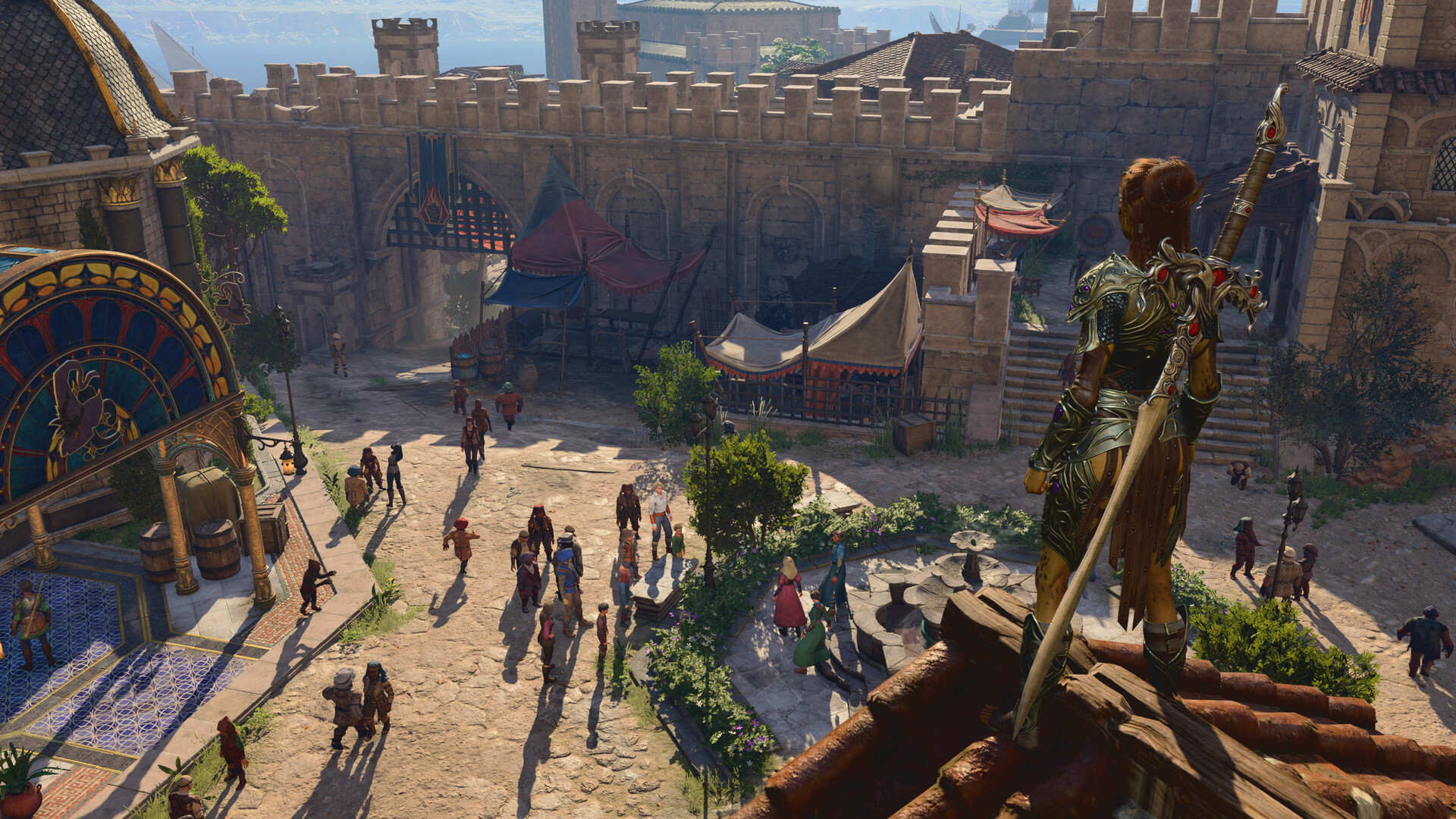
Quick Answer: The best character Baldur's Gate 3 tier list puts S-tier builds like Sorcerer, Bardadin, Open Hand Monk, and Gloomstalker Assassin at the top because they deliver huge damage, strong control, and low-friction power across most of the game.
Ranking Methodology
This tier list ranks BG3 characters by how reliably they solve fights, not by how flashy they look on a character sheet. The focus is on builds that perform well across a full playthrough, including story combat, exploration-heavy chapters, and the punishing endgame conditions that punish sloppy setup. It is aimed at players who want a practical answer to the best character Baldur's Gate 3 tier list question, whether they are new to the system or already comfortable with action economy, concentration, and multiclassing.
The ranking is based on the build pool and tier framing reflected in community references such as Game8's class tier list and GameStegy's best-builds tier list, both of which emphasize usable, game-clearing setups over theorycrafting for its own sake. GameStegy explicitly notes that its tier list is subjective and that even lower-tier builds can still beat the game, while Game8 highlights beginner-friendly classes like Cleric, Sorcerer, Bard, Barbarian, Paladin, and Fighter as strong overall picks. That is the right lens for this article too: power, consistency, and how much a build asks from the player.
A few hard anchors help keep the advice grounded. Baldur's Gate 3 is a story-rich, party-based RPG by Larian Studios on Steam Source. HowLongToBeat reports roughly 72.7 hours for the main story and 180.05 hours for completion Source. Steam currently lists the game as Overwhelmingly Positive at 96.8% across 854370 reviews Source. That volume of playtime and feedback matters because the “best” characters are the ones that stay strong when the campaign has room to pressure weak spots.
The ranking is especially useful for players who care about Honor mode, but it is not limited to that audience. If you are on a first run, the top picks are the builds that let you learn the game while still winning fights. If you are on a challenge run, they are the builds that maximize margin for error. If you like roleplay first, the tier list still helps because it shows which fantasy-forward characters also happen to carry real combat weight.
S, A, and B Tiers
The S/A/B split reflects reliability, ceiling, and how much setup a build needs before it starts doing the job. S tier is for builds that dominate with minimal drag. A tier is for builds that are excellent but may need more gear, more levels, or a narrower fight pattern to peak. B tier is still perfectly playable; it just asks for more planning, more spell support, or more encounter knowledge to match the output of the top group.
| Tier | Build | Why it sits here |
|---|---|---|
| S | Sorcerer | Metamagic turns strong spells into fight-warping turns, especially when you need burst and control on demand. |
| S | Bardadin | Bard utility plus Paladin smite pressure gives you a carry that can talk, buff, and delete priority targets. |
| S | Way of the Open Hand Monk | The class mixes mobility, control, and absurd single-target tempo without demanding heavy gear dependency. |
| S | Gloomstalker Assassin | It starts encounters on your terms and front-loads damage so hard that many fights never stabilize. |
| S | Lockadin | Pact-based setup and smite scaling let it hit above its weight while still having strong class utility. |
| S | Eldritch Knight Thrower | Returning weapons and throw loops make it a brutally efficient martial that also shrugs off awkward positioning. |
| A | Cleric | Incredible flexibility, strong support, and excellent domain identity make it top-tier, even if it is not always the fastest finisher. |
| A | Fighter | Simple, consistent, and gear-friendly; it does almost everything a martial wants with very little friction. |
| A | Barbarian | Great durability and melee pressure keep it dangerous, though it leans more on raw combat than utility. |
| A | Draconic Fire Sorcerer | A narrower Sorcerer path that still hits very hard, but it is more matchup-dependent than the broadest caster setups. |
| B | Rogue | Strong opener and skill value, but it often wants multiclass support to keep pace with the best damage builds. |
| B | Warlock | Reliable, clean, and useful, but usually not as explosive as the top burst-caster or smite packages. |
| B | Ranger | Very good in the right hands, especially with ambush play, but less universally dominant than the S-tier opens. |
| B | Wizard | The ceiling is high, but the build gets more value from system mastery than the average player wants to invest. |
S Tier: the carry picks
S tier is where the game stops feeling like a grind and starts feeling like you are solving combat with a toolset the AI cannot comfortably answer. Sorcerer belongs here because Metamagic turns action economy into a weapon. A well-played Sorcerer can shape encounters with control spells, burst damage, and flexible sequencing that lets the party dictate tempo. That matters in BG3 because enemies are often most dangerous before they lose their positioning advantage.
Bardadin is in the same tier for a different reason: it is one of the cleanest examples of “good at everything, excellent at killing.” Bard support and Paladin smites combine into a character that can handle dialogue, buffs, control, and major damage spikes. It is one of the strongest answers to a best character Baldur's Gate 3 tier list because it does not ask you to choose between party face and combat monster.
Open Hand Monk is here because it leverages BG3’s close-quarters combat beautifully. When enemies move into the wrong lane, Monk punishes them with speed, flurry pressure, and control effects that disrupt fragile backliners. Gloomstalker Assassin gets the nod for the opposite reason: it makes the first round absurdly decisive. If a fight can be partially won before enemies act, that is a huge edge in this game.
A Tier: strong, broad, dependable
A tier picks are not downgrades. Cleric remains one of the best all-around classes because its support package is real, not decorative. It keeps allies alive, patches bad positioning, and still contributes in fights. Fighter sits here because it is the most honest build in the game: it scales, it hits, it wears gear well, and it is never embarrassed by a straightforward combat problem. Barbarian earns its place through durability and raw pressure, especially when a player wants a direct melee plan that does not depend on elaborate spell chains.
Draconic Fire Sorcerer lands in A because specialized elemental damage is excellent when the setup works, but it is less universally free than the broadest Sorcerer package. It is the kind of build that can feel S-tier in one chapter and merely excellent in another, which is why it sits just below the most flexible entries.
B Tier: good, but more conditional
B tier includes builds that can absolutely carry, but their performance depends more on player knowledge, gear timing, or encounter selection. Rogue is valuable for opening damage and utility, but it often wants help to become a whole-party answer. Warlock is dependable and clean to pilot, yet it can feel narrow if you are expecting a giant toolbox. Ranger rewards stealth, initiative, and encounter setup, but it is less universally suffocating than the best burst or hybrid classes. Wizard has one of the highest ceilings in the game, but it pays for that ceiling with more preparation and a steeper learning curve.
That is the important thing about tiers in BG3: B does not mean weak. It means the build asks you to think a little harder about when and how it gets to work.

You might also like
- Baldur's Gate 3 Is There Crossplay Updated 8/3/2023 Crossplay for is currently unavailable Beginner Guide
- Baldur's Gate 3 dungeons and dragons spells players expect work same: what actually changes
- Baldur's Gate 3 best romances dungeons dragons dnd novels feywild job
- Baldur's Gate 3 Baldur's Gate 3 Baldur's Gate 3's Absolute Plot Story Explained
- Baldur's Gate 3 karlach laezel human versions custom characters
Situational Matchups
Some rankings flip hard when the fight changes shape, and that is normal in Baldur's Gate 3. The best class on a flat arena can become merely good in a crowded room, and a supposedly “lower” class can become the exact right answer when the map, enemy composition, or resource pressure changes. These flips are why a one-size-fits-all tier list should always be read as a baseline, not a cage.
- Long, attrition-heavy adventuring days can favor Cleric and Fighter over burst-first builds. If you expect multiple fights without a full reset, the steady value of healing, buffs, armor, and repeatable attacks gets more important. A Sorcerer can absolutely win the opener, but a Cleric keeping the party stable while a Fighter keeps swinging can matter more when resources run thin.
- Surprise-heavy encounters push Gloomstalker Assassin upward. If you can enter combat on your terms, pre-position, and open from stealth, the build’s first-round spike becomes enormous. In dense dungeons, ambush corridors, and scripted enemy clusters, that opening burst often matters more than abstract late-game scaling.
- Crowded melee fights give Open Hand Monk more value than many ranged builds. When enemies stack near ladders, choke points, or narrow interiors, Monk’s movement and single-target disruption become brutally efficient. A build that can cross space, isolate a target, and keep pressure up is worth more there than a backline character that needs breathing room.
- Dialogue-heavy or exploration-heavy campaigns raise Bard and Rogue. The combat ranking is only part of BG3. A Bard that wins conversations, boosts party checks, and still performs in combat becomes better in a practical sense than a more purely destructive build that leaves skill coverage thin.
- Bosses with dangerous concentration breaks can lower spell-heavy builds if your control plan is fragile. Sorcerer and Wizard remain excellent, but if the enemy is built to punish concentration, you may get more mileage from martial burst, smites, or throw builds that do not fold when a key spell drops.
| Scenario | Rankings that rise | Rankings that fall | Why the flip happens |
|---|---|---|---|
| Ambush opener | Gloomstalker Assassin, Bardadin | Slow setup casters | First-round burst decides too much too quickly. |
| Resource drain | Cleric, Fighter, Barbarian | Long-rest-hungry burst builds | Repeatable value beats peak burst when the day runs long. |
| Tight indoor fight | Open Hand Monk, Throw builds | Backline-only ranged setups | Mobility and target access matter more than raw range. |
| Heavy social play | Bard, Rogue | Narrow combat-only picks | Skill coverage and dialogue wins translate into fewer friction points. |
Patch Delta Note
The current tier order should be treated as a live meta snapshot, but a precise “moved up/down from previous patch” map is not available from the supplied facts. I am not going to invent patch movement where there is no grounded patch-by-patch changelog.
What can be said with confidence is that the top of the list is still crowded with the same usual suspects: Sorcerer, Bardadin, Open Hand Monk, Gloomstalker Assassin, Lockadin, and throw-based martial builds continue to show up in community tier discussions. GameStegy’s tier list also signals an important stable idea: S and A-tier builds are not a guarantee by themselves, because player knowledge and encounter knowledge still decide Honor mode runs. That line has remained true across balance conversations because BG3 rewards planning more than it rewards raw stat worship.
The practical patch takeaway is simple. If you are checking this guide after a balance update, re-evaluate three things before rebuilding the whole party: whether your main damage loop still functions, whether your concentration plan still holds under pressure, and whether your gear path still arrives at the right time. If those three survive the patch, the build probably still belongs near the top of the tier list.
Common Mistakes
The biggest mistakes in BG3 tier discussions usually come from misunderstanding what a tier list is actually ranking. It is not ranking fashion, flavor, or even raw ceiling in isolation. It is ranking how often a build solves the problems the game actually throws at you.
- Treating B tier as bad. Players see a lower tier and assume unusable. The fix is to remember that B-tier characters often need better sequencing, better party support, or a clearer game plan, not a miracle.
- Picking a class only for one signature move. A build that looks broken in one clip can still be awkward across a full campaign. The fix is to test how it behaves in ordinary fights, not just highlight-reel turns.
- Ignoring how often you can act first. BG3 combat is heavily shaped by initiative and first-round impact. The fix is to value opens, positioning, and surprise as much as raw damage.
- Overvaluing damage without utility. A character that hits hard but cannot handle dialogue, control, or resource management may force the party to work harder overall. The fix is to weigh the whole run, not just the combat log.
- Forgetting that gear timing changes tier value. Some builds are monsters once a specific weapon or item line comes online, while others are solid from the start. The fix is to ask when the build becomes strong, not just how strong it is at level cap.
- Copying a multiclass without knowing the breakpoint. A lot of strong BG3 builds depend on specific level splits. The fix is to understand which level in the split gives the key feature, then build around that moment.
Pro Tips
The strongest BG3 players usually win by making small structural decisions that compound across the entire run.
Tip 1. Build for the first round
If your party can remove or cripple one enemy before it acts, many fights become much easier. This is why Gloomstalker Assassin and burst casters stay so high in the tier list.
Tip 2. Keep one character flexible on concentration
A Concentration spell is only valuable if it survives contact with the enemy. Put your most fragile control plan on a character with safe positioning, good defenses, or strong initiative so it actually sticks.
Tip 3. Match your carry to your route
If your run leans heavily into exploration and dialogue, Bard or Rogue gets more value. If your run is combat-first and you want fewer moving parts, Fighter or Barbarian can be the better fit.
Tip 4. Use melee pressure to shape enemy movement
Open Hand Monk, Paladin, and Barbarian all become stronger when they force enemies to waste turns repositioning. The win is not just damage; it is making the enemy’s turn inefficient.
Tip 5. Spread roles across the party
A top-tier character gets better when the party covers what it does not. If one slot is dedicated to control, another to burst, and another to skill checks, each build can do its job without overreaching.
FAQ
What is the best overall class in Baldur's Gate 3?
There is no single permanent winner, but Sorcerer, Bardadin, Open Hand Monk, and Gloomstalker Assassin are among the most consistently powerful choices in the current meta.
Is Honor mode the same as normal difficulty for tier lists?
No. Honor mode pushes builds that are stable, resource-efficient, and hard to punish, so safer picks like Fighter, Cleric, and Bard rise in value compared with greedier setups.
Are multiclass builds better than single-class builds?
Often yes, but only when the level split has a real breakpoint. A messy multiclass is worse than a clean single-class build that comes online naturally.
Is Bard really that strong in BG3?
Yes. Bard is strong because it combines party utility, skill dominance, and real combat power, especially when paired into Bardadin-style setups.
Why is Monk so high on the list?
Open Hand Monk is high because it converts mobility, control, and repeated pressure into very efficient turns, especially in fights where enemies cannot spread out comfortably.
Related Guides
- Best BG3 Classes for Beginners
- Best BG3 Honor Mode Builds
- Best Baldur's Gate 3 Multiclass Combos
- Best BG3 Companions Tier List
- Best BG3 Feats for Damage Builds
- Best BG3 Spells for Control
- Best BG3 Party Composition Guide
- Best BG3 Early Game Builds
Sources
- https://gamestegy.com/post/bg3/990/best-builds-tierlist
- https://game8.co/games/BG3/archives/420123
- https://store.steampowered.com/app/1086940/
- https://howlongtobeat.com/?q=bg3
- https://steamcommunity.com/stats/1086940/achievements
- https://api.steambase.io/games/1086940
- https://www.protondb.com/app/1086940
- https://www.cheapshark.com/redirect?dealID=KR6JzYIE5jQz4X%2FqfqZL7uqeWAALnY%2Beipr2lwHIFGI%3D
See also
- Baldur's Gate 3 dungeons and dragons mistakes new players make
- Baldur's Gate 3 Legendary Action: Weird Magic Surge Condition
- Baldur's Gate 3 thief rogue subclass bonus action items
- Baldur's Gate 3 A Greeting to this Home's New Occupants
- Baldur's Gate 3 Mind Claw of Tu'narath class action
- Baldur's Gate 3 act three location third act guide
- Baldur's Gate 3 Find a way into Wyrm's Rock fortress Beginner Guide
- Baldur's Gate 3 Legendary Action: Sanctuary of Loss Condition
- Baldur's Gate 3 Wild Magic: Bolt of Light Activate
- Baldur's Gate 3 areas might have missed act 3
Screenshots

Reviewed by
BG3 Hub Editorial
Expertise: Editorial team behind BG3 Hub. Content is compiled from official patch notes, community wikis, and playthrough notes, then reviewed and updated on schedule.
Sources
Baldur's Gate 3 Classes Guides →
Browse the complete classes collection and its focused guides.
Related Guides
🔥 Popular Guides
Baldur's Gate 3 Best Bard Build 2026
Best BG3 Bard build for 2026 with stats, gear, rotation, counters, budget options, and endgame setup.
Baldur's Gate 3 Baldurs Gate 3 Best NPC Builds
Companion build guide for Baldur's Gate 3 with roles, stats, gear, counters, tips, and budget-to-endgame setups.
Baldur's Gate 3 Origin Characters Tier List
Rank every BG3 origin character with S/A/B tiers, matchup notes, common mistakes, and pro tips for choosing the best campaign lead.
Baldur's Gate 3 baldurs gate 3 best lazel build
Best Lae'zel build for BG3 with stats, rotation, gear, counters, budget picks, and endgame setup.
📋 Patch Notes & Updates
🛠️ Popular Tools
Frequently Asked Questions
Quick answers from the guide · click a question to expand.
What is the best overall class in Baldur's Gate 3?
There is no single permanent winner, but Sorcerer, Bardadin, Open Hand Monk, and Gloomstalker Assassin are among the most consistently powerful choices in the current meta.
Is Honor mode the same as normal difficulty for tier lists?
No. Honor mode pushes builds that are stable, resource-efficient, and hard to punish, so safer picks like Fighter, Cleric, and Bard rise in value compared with greedier setups.
Are multiclass builds better than single-class builds?
Often yes, but only when the level split has a real breakpoint. A messy multiclass is worse than a clean single-class build that comes online naturally.
Is Bard really that strong in BG3?
Yes. Bard is strong because it combines party utility, skill dominance, and real combat power, especially when paired into Bardadin-style setups.
Why is Monk so high on the list?
Open Hand Monk is high because it converts mobility, control, and repeated pressure into very efficient turns, especially in fights where enemies cannot spread out comfortably.
Was this guide helpful?
Rate this guide so we can improve it.
Share your own tip
Found something not in the guide? Submit it below — our editors review every tip before publishing. No account required.