 Baldur's Gate 3
Baldur's Gate 3 disco elysium harry du bois custom character
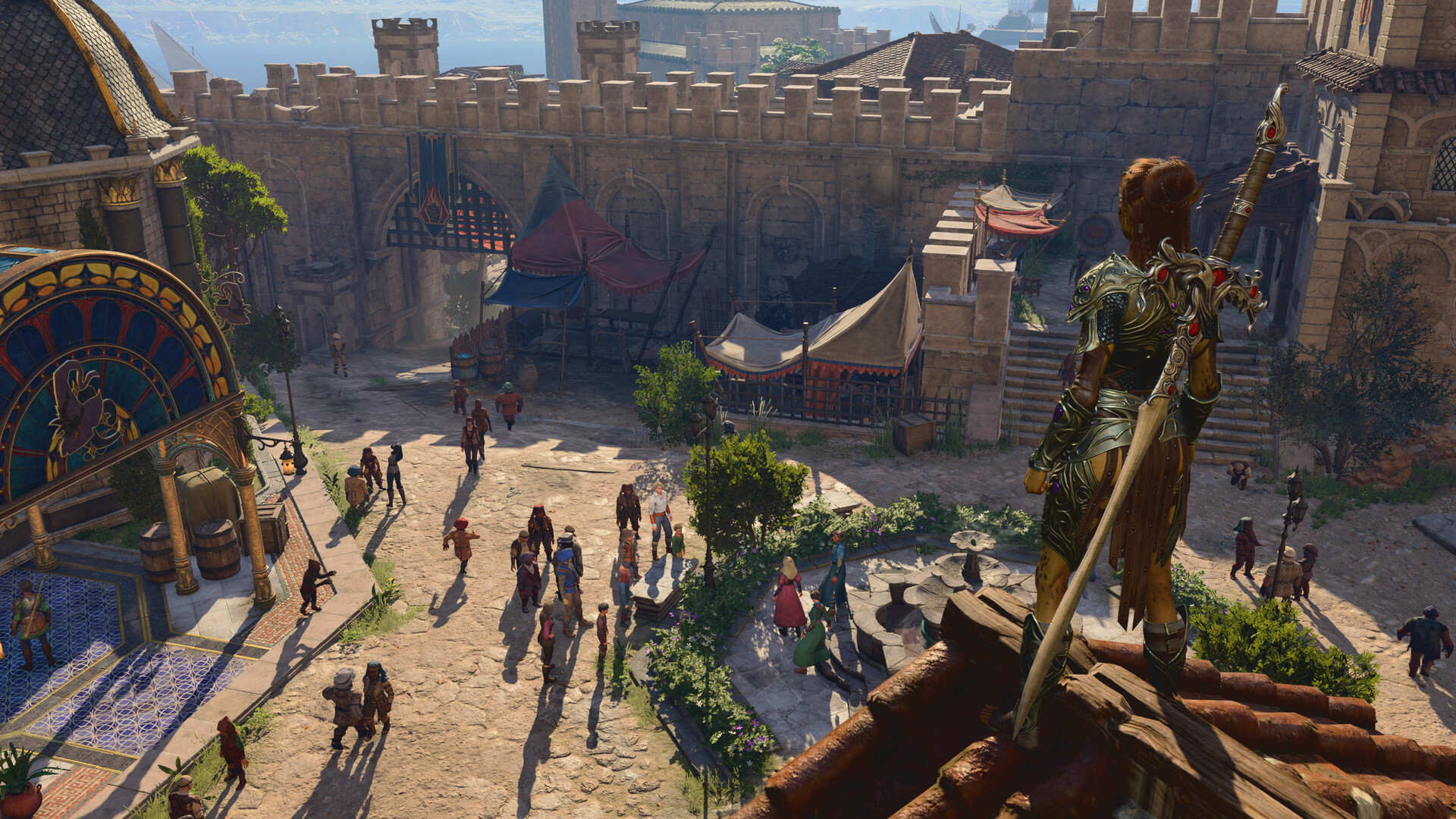
Quick Answer: Baldur's Gate 3 does not have a Harry Du Bois preset or a Disco Elysium-style personality system, but you can build a custom character that captures that vibe through class, background, dialogue choices, and roleplay.
What This Phrase Means
The phrase Baldur's Gate 3 disco elysium harry du bois custom character is not an official in-game feature; it is a roleplay prompt. It usually means a Baldur's Gate 3 character built to feel like Disco Elysium's Harry Du Bois: messy, funny, damaged, analytical, and driven by dialogue rather than brute optimization.
That matters because Baldur's Gate 3 and Disco Elysium handle character expression in very different ways. Baldur's Gate 3 gives you distinct dialogue lines tied to class and species, while Disco Elysium builds much of its identity through internal skills, political theory, and the way failure keeps the story moving. As one comparison piece notes, Disco Elysium uses political theory and knowledge accrued by your character to inform options, while Baldur's Gate 3 offers unique responses based on class and species source. Another PC Gamer piece explicitly ties Harry Du Bois to the appeal of making failure part of the story rather than treating it as a dead end source.
So the real answer is simple: there is no hidden “Harry Du Bois mode” in Baldur's Gate 3, but there is plenty of room to roleplay a custom character who channels that energy.
Definition, Effect, and Requirements
A Harry Du Bois-style custom character in Baldur's Gate 3 is a player-made build and roleplay concept, not a unique class, feat, origin, or item. The effect is expressive, not mechanical: you are using the game's normal systems to support a character who feels verbally rich, emotionally unstable, self-destructive, or oddly insightful.
What the game actually supports
Baldur's Gate 3 gives you three practical levers for this kind of character:
- Class dialogue: many conversations open class-specific lines, especially for Bard, Rogue, Warlock, Wizard, Cleric, and Paladin.
- Species dialogue: different species such as Human, Half-Elf, Tiefling, Githyanki, and Drow can trigger contextual lines.
- Background and skill profile: backgrounds like Acolyte, Charlatan, Criminal, Entertainer, Sage, and Urchin shape your starting skill access and roleplay identity.
That means the “Harry Du Bois custom character” idea is built from ordinary character creation pieces, then reinforced in play by how you handle checks, dialogue, and party composition.
Limits you should know
There are hard limits to what Baldur's Gate 3 can do compared with Disco Elysium:
- There is no internal skill voice system like Inland Empire or Authority.
- There is no dedicated detective-mind or political-thought matrix.
- The game does not automatically reward chaotic self-sabotage the way Disco Elysium can make failure feel narratively central.
- You cannot fully script a character personality in mechanics alone; much of the effect comes from your own dialogue selection and restraint.
That is why this concept works best as a roleplay frame, not as a stat-locked build.
Concrete examples of the concept
A few clean ways to interpret it:
- A Bard 8 / Rogue 4 who talks too much, improvises badly, and survives on charm and bad decisions.
- A Wizard who reads every scrap of lore, sounds brilliant in one sentence, and then collapses into absurdity in the next.
- A Warlock who leans into damaged, self-destructive energy and treats every bargain like a coping mechanism.
Those are all legitimate Baldur's Gate 3 custom characters with a Disco Elysium flavor. None of them is an official preset, and none is required to use a specific item or unlock path. The requirement is simply that you create the character yourself and lean into the dialogue and narrative choices that fit the persona.
You might also like
- Baldur's Gate 3 how save arabella daughter mother father thief locke komira kagha snake tieflings
- Baldur's Gate 3 Is There Crossplay Updated 8/3/2023 Crossplay for is currently unavailable Beginner Guide
- Baldur's Gate 3 dark urge romance reactions astarion laezel shadowheart
- Baldur's Gate 3 dungeons and dragons spells players expect work same: what actually changes
- Baldur's Gate 3 best romances dungeons dragons dnd novels feywild job
Where to Make and Trigger the Build
You create this character in Baldur's Gate 3's normal character creation flow, and you trigger the roleplay mostly through dialogue, skill checks, and class-tag responses during the campaign.
Character creation
The build starts at the very beginning when you choose:
- Origin: pick Custom rather than one of the origin characters.
- Class: choose a class that supports expressive dialogue.
- Background: pick a background that fits your version of Harry Du Bois.
- Species: choose whatever best matches your interpretation, since the character concept is flexible.
If you want the closest in-game analogue to Harry's verbal chaos and self-destructive wit, Bard is the cleanest fit. If you want a more investigative or arcane-read version of the character, Wizard works well. If you want the character to feel like a person who always seems one bad line away from disaster, Warlock can support that tone too.
In-game trigger points
The concept becomes visible during:
- Dialogue checks, especially Persuasion, Deception, Insight, Intimidation, and Religion.
- Class-specific options, which appear in many quests and conversations.
- Exploration and failure states, where you decide whether to accept a bad roll, reload, or let the story bend around it.
- Camp interactions, which are a major place to keep the roleplay consistent.
Practical examples in play
A Harry Du Bois-like custom character shows up clearly in scenes like these:
- Talking your way through a tense negotiation and choosing the weirdest possible honest answer.
- Failing a check and letting the failure stand instead of immediately rewinding the moment.
- Picking dialogue that reveals embarrassment, confusion, obsession, or blunt emotional honesty.
That last point is the heart of the build. The character only feels right if you treat conversation as performance, not just a route to the optimal reward.
Best Build Shapes for the Roleplay
The best Baldur's Gate 3 disco elysium harry du bois custom character usually leans into classes that generate strong dialogue identity, broad skill coverage, and a lot of room for personality.
Bard
Bard is the strongest match if you want charm, improvisation, and verbal chaos. It supports a character who can be theatrical in public, incoherent in private, and somehow still effective in social scenes.
Why it fits:
- Frequent social skill pressure.
- Strong identity in dialogue-heavy content.
- Easy access to a “talk first, think later” feel.
Examples:
- College of Lore for a more cerebral, self-aware version.
- College of Swords for a swagger-heavy, reckless version.
- College of Valor if you want the character to sound more like a broken veteran than a stage performer.
Rogue
Rogue works if you want Harry to feel like a sleuth, a con artist, or someone surviving on instinct and bad habits.
Why it fits:
- Strong Stealth, Sleight of Hand, and Persuasion/Deception support depending on build.
- Good for a character who acts like they know what they are doing, even when they do not.
- Fits the “I can recover from this disaster” energy.
Examples:
- Thief for frantic, improvisational utility.
- Assassin for a colder, more noir-inspired take.
- Arcane Trickster for an investigator who sounds clever but is never quite stable.
Wizard
Wizard is the pick for a hyper-literate, overthinking Harry Du Bois variant.
Why it fits:
- Strong Intelligence identity.
- Feels like a character trying to solve emotional problems with pure analysis.
- Supports the detective angle without needing to play a literal detective class.
Examples:
- Divination if you want the “I know things, but I am still a mess” tone.
- Enchantment if you want manipulative social pressure.
- Abjuration if you want the character to feel fragile but stubborn.
Warlock
Warlock is the best pick for a haunted, damaged, bad-decision version of the character.
Why it fits:
- Strong roleplay hook through pact logic.
- Good for a character whose identity is built around dependency, compromise, and consequences.
- Dialogue can feel sharp, eerie, or dangerously confident.
Examples:
- The Great Old One for uncanny, detached, half-mad energy.
- The Fiend for more openly self-destructive behavior.
- The Archfey for unstable charm and mood swings.
Simple comparison
| Class | Roleplay tone | Strength for this concept | Best fit if you want... |
|---|---|---|---|
| Bard | Charismatic, erratic, performative | Very high | Fast-talking chaos and social momentum |
| Rogue | Streetwise, sly, broken survivor | High | Detective-adjacent improvisation |
| Wizard | Analytical, obsessive, brittle | High | Brainy self-interrogation |
| Warlock | Haunted, compromised, unstable | Very high | Dark bargain energy and emotional damage |
That table is the cleanest way to read the archetype. None of these choices is required, but they are the strongest thematic shells for the idea.
Best Uses and When to Skip It
This custom character concept shines when you want Baldur's Gate 3 to feel like a performance piece rather than a pure build puzzle. It is especially good if you enjoy roleplay, reactivity, and self-imposed narrative rules.
Best uses
Use the concept when you want to:
- Play a dialogue-forward campaign.
- Accept imperfect outcomes for the sake of story.
- Build around the feeling of a damaged narrator rather than a perfect hero.
- Lean into weird, funny, or unexpectedly sincere dialogue.
- Replay the game with a strong internal rule set.
It is also a good fit for players who liked the way Disco Elysium turned failure into content. PC Gamer's comparison captures that idea directly: the appeal is not just winning a roll, but seeing how the character story survives the mistake source.
When to skip it
Skip this approach if you want:
- Maximum mechanical efficiency with minimal self-imposed flavor.
- A tightly optimized party role that never bends for roleplay.
- A straightforward heroic fantasy tone.
- A run where every dialogue choice is selected only for the best material reward.
The concept also struggles if you dislike reloading less often. Baldur's Gate 3 can absolutely punish a bad check, and a pure “Harry Du Bois” mindset can turn that into more chaos than you want. One PC Gamer anecdote describes a botched persuasion roll that escalated into battle with a town the player had already been helping source. That is the kind of outcome this roleplay can either elevate or exhaust, depending on your tolerance.
Practical rule of thumb
- Choose this concept if you care more about story texture than perfect outcomes.
- Avoid it if you want the cleanest tactical line through every encounter.
- Use it in a second or third playthrough when you already know the campaign structure well.
That keeps the roleplay strong without making the whole run feel like a self-inflicted tax.
How to Play It Well
The strongest Baldur's Gate 3 disco elysium harry du bois custom character is one that commits to inconsistency with intention. You are not trying to be random. You are trying to sound like someone whose genius, shame, and nonsense all share the same mouth.
Dialogue habits that sell the concept
- Pick the odd honest line when it reveals character.
- Use Deception only when it feels like the character would bluff badly.
- Lean into Insight when you want the “I can tell something is wrong, but I am not sure what” voice.
- Take class-tag lines that reveal obsession, bravado, or self-awareness.
- Let silence or uncertainty be part of the personality, not just a tactical pause.
Party synergy
The concept becomes stronger when the rest of the party acts as a stable frame around your unstable lead.
Good companions for this style include:
- Shadowheart, for dry, guarded friction.
- Astarion, for self-aware theatricality and bad impulses.
- Gale, for intellectual counterpoint.
- Wyll, for cleaner heroic contrast.
That contrast matters. Harry Du Bois works because the world reacts to him. In Baldur's Gate 3, your party can fill that role if you choose companions who bounce off your dialogue choices.
Combat and build tone
Combat should support the persona, not erase it. That means you can still build efficiently, but you should avoid turning the character into a bland min-max machine.
Good thematic approaches:
- A Bard who uses control spells and support rather than raw damage.
- A Rogue who survives on positioning and opportunistic strikes.
- A Wizard who specializes in information and battlefield control.
- A Warlock who treats every fight like a risky pact written in advance.
Bullet-point tips
- Do not overcorrect every failure with a reload.
- Treat bad rolls as part of the story unless they block a critical quest state.
- Pick a background that supports your intended voice, not just your skill needs.
- Keep your character's “voice” consistent across dialogue, combat, and camp.
That last point is the difference between a fun themed run and a random bundle of choices.
Common Misreads and Troubleshooting
The biggest mistake is assuming the phrase refers to a hidden preset, an official collaboration, or a special cinematic route. It does not. Baldur's Gate 3 has no Disco Elysium crossover system, and there is no canonical Harry Du Bois custom character in the game files you are meant to select.
Common misreads
- “Is this an actual build preset?” No. It is a roleplay concept.
- “Do I need a specific class?” No, but Bard, Rogue, Wizard, and Warlock are the most thematically useful.
- “Is there a unique quest for this?” No. You create the feeling through choices.
- “Will the game react like Disco Elysium?” Not in the same way. BG3 reacts through class/species dialogue and conventional RPG branching, not internal voices.
- “Can failure define the run?” Yes, but only if you choose to let it.
When the concept feels weak
The concept usually falls apart when you over-optimize it into a generic strong build. A hyper-efficient damage dealer can still be fun, but it will not feel like Harry Du Bois unless the dialogue and roleplay support the idea.
It also gets muddy if you are too attached to one exact interpretation of Harry. There is no single correct version. You can emphasize:
- The broken detective.
- The desperate drinker.
- The weird philosopher.
- The accidental hero.
- The man who keeps getting up after bad choices.
That flexibility is the point.
Troubleshooting checklist
- If the character feels too clean, choose messier dialogue.
- If the character feels too random, give them a stable background and one core emotional motive.
- If the build feels too combat-focused, shift toward social or control tools.
- If the roleplay feels repetitive, change how you handle failure instead of changing the class.
That is usually enough to restore the tone without rebuilding the whole save.
Related Guides
This concept sits closest to other Baldur's Gate 3 roleplay and class guides rather than generic beginner material. The most useful sibling pages are the ones that help you tune the personality shell around the build.
- Baldur's Gate 3 Bard guide
- Baldur's Gate 3 Rogue guide
- Baldur's Gate 3 Warlock guide
- Baldur's Gate 3 Wizard guide
- Baldur's Gate 3 dialogue options guide
Those are the best internal cross-links for a Harry Du Bois-inspired custom character, because they map directly to the classes and conversation patterns that make the roleplay work.
Sources
- https://www.thegamer.com/broken-roads-morality-system-bg3-baldurs-gate-disco-elysium-character-creation/
- https://www.pcgamer.com/one-lesson-i-hope-baldurs-gate-3-has-taken-from-disco-elyisum-make-failing-fun/
- https://store.steampowered.com/app/1086940/
- https://steamcommunity.com/app/1086940/discussions/0/3811784760604120054/
See also
- Baldur's Gate 3 best character player creations marvel witcher barbie
- Baldur's Gate 3 Baldur's Gate 3 Baldur's Gate 3's Absolute Plot Story Explained
- Baldur's Gate 3 Best Class for Main Character Tier List
- Baldur's Gate 3 karlach laezel human versions custom characters
- Baldur's Gate 3 thief rogue subclass bonus action items
- Baldur's Gate 3 dungeons and dragons mistakes new players make
- Baldur's Gate 3 Legendary Action: Weird Magic Surge Condition
- Baldur's Gate 3 A Greeting to this Home's New Occupants
- Baldur's Gate 3 Mind Claw of Tu'narath class action
- Baldur's Gate 3 act three location third act guide
Screenshots

Reviewed by
BG3 Hub Editorial
Expertise: Editorial team behind BG3 Hub. Content is compiled from official patch notes, community wikis, and playthrough notes, then reviewed and updated on schedule.
Sources
Related Guides

🔥 Popular Guides
baldurs gate 3 hidden achievements
Hidden achievements, missables, and 100% route for Baldur's Gate 3 with spoiler-marked unlocks, planning order, and sources.
Baldur's Gate 3 dark urge romance reactions astarion laezel shadowheart
Dark Urge romance reactions for Astarion, Lae'zel, and Shadowheart, with approval thresholds, route fit, and common misreads.
Baldur's Gate 3 best character player creations marvel witcher barbie
Learn how to build Marvel, Witcher, and Barbie-inspired characters in BG3 with class, race, and creator tips.
Baldur's Gate 3 how save arabella daughter mother father thief locke komira kagha snake tieflings
Save Arabella in BG3 by stopping Kagha, rescuing the tiefling child, and earning Komira’s Locket.
📋 Patch Notes & Updates
🛠️ Popular Tools
Was this guide helpful?
Rate this guide so we can improve it.
Share your own tip
Found something not in the guide? Submit it below — our editors review every tip before publishing. No account required.