 Baldur's Gate 3
Baldur's Gate 3 Origin Characters Tier List

Quick Answer: The best Baldur's Gate 3 origin characters tier list usually puts Shadowheart and Lae'zel near the top, with Astarion, Gale, and Karlach close behind; Wyll and the Dark Urge can swing higher or lower depending on whether you value story, combat, or roleplay freedom.
Ranking Methodology
This baldur's gate 3 origin characters tier list ranks each origin by three things: how strong the character feels as a playable protagonist, how much story value they add to a full campaign, and how flexible they are when you build a party around them. The list is aimed at players who are choosing a first origin run, planning a replay, or deciding which companion deserves a dedicated campaign instead of a recruit-only slot.
The anchor for this guide is the current long-tail version of the game as represented by the live store and community data in the sources below, plus the post-launch reality that Baldur's Gate 3 remains heavily replayed and actively discussed. Steam currently shows 854,370 reviews with a 96.8% positive rating Source, and HowLongToBeat reports roughly 72.7 hours for the main story, 115.73 hours with extras, and 180.05 hours for completion Source. Those numbers matter here because origin choice is not a one-fight decision; it affects a very long campaign.
The list is for players who want practical advice, not character-purity scoring. I am weighting story integration, reactivity, combat usefulness, and how naturally the origin supports a full playthrough. That means a character can rank high even if they are not the easiest combat shell, and a character can fall if their campaign identity is narrower than their companion version. The origin system itself is one of BG3's core hooks: you can play as a prewritten party member rather than a custom Tav, and the game supports that approach without turning the run into a gimmick Source.
This also means the ranking is not pretending every player wants the same thing. A first-time player usually wants a character with strong story payoff and low friction. A veteran player might prefer the most distinctive roleplay path. Someone chasing Honor Mode may care more about utility and consistency. The table below reflects that broader standard.
S Tier
S tier is for origin characters that are exceptional as a complete playthrough choice, with strong narrative pull, excellent reactivity, and a campaign identity that feels like it was meant to be played from the start.
| Tier | Origin Character | Why It Ranks Here |
|---|---|---|
| S | Shadowheart | She has one of the most complete story arcs, major Act 2 impact, and constant narrative relevance from start to finish. |
| S | Astarion | His personal questline, camp dynamics, and class flexibility make him one of the most replayable origin runs. |
| S | Dark Urge | The run is built around custom identity plus deep main-plot integration, so it offers the biggest unique campaign payoff. |
| S | Lae'zel | She is tightly tied to the core conflict and gets a strong sense of momentum that rewards a full origin playthrough. |
Shadowheart
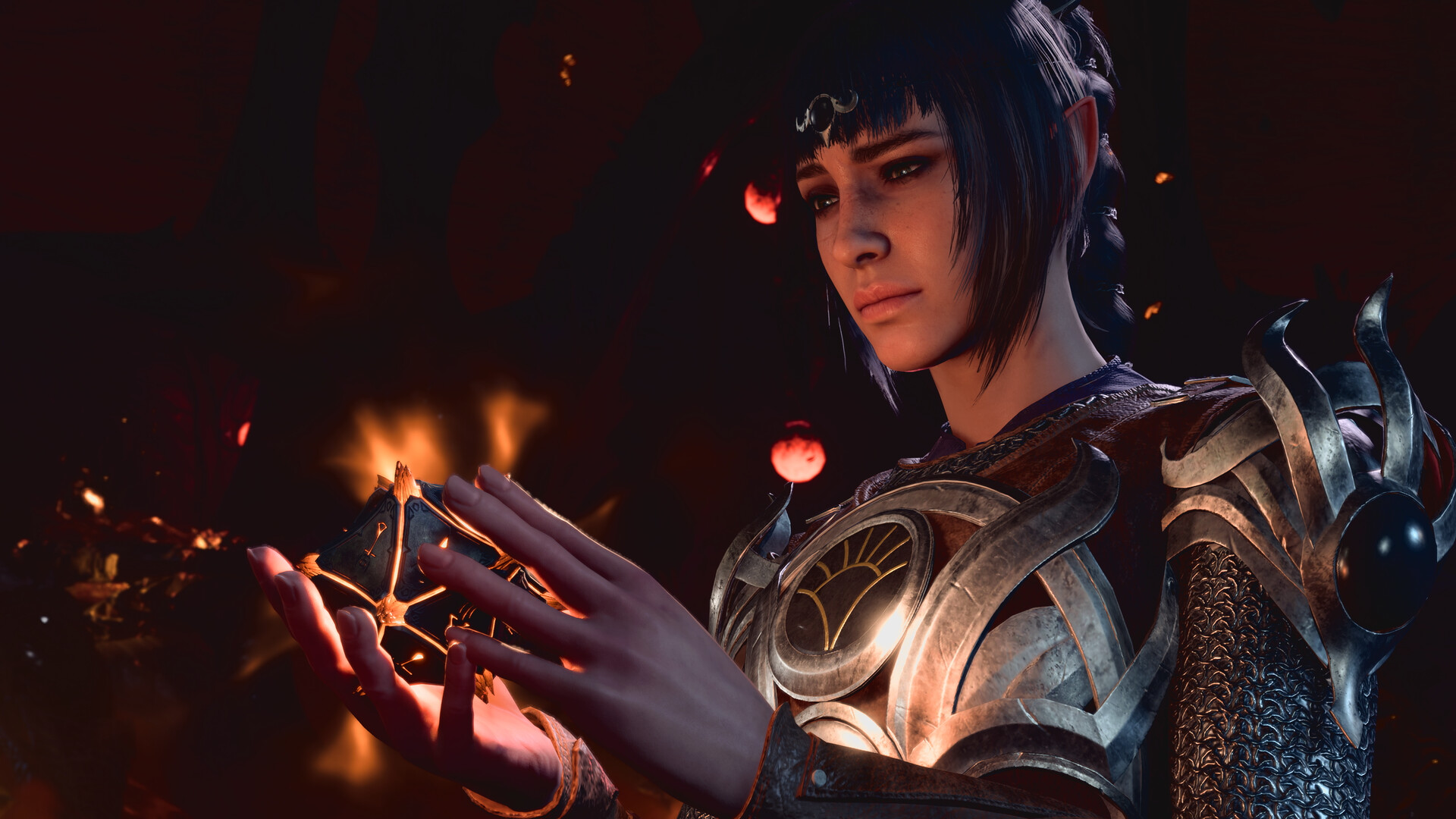
Shadowheart sits in S tier because her story is the most immediately legible and consistently rewarding origin path for a huge range of players. She is one of the rare characters whose personal mystery, faction conflict, and artifact connection all stay relevant across the full game instead of fading after the opening act. Destructoid specifically notes that her story involves delivering a powerful artifact and hiding Shar-linked secrets, which is exactly the kind of setup that keeps a campaign feeling active instead of idle Source.
She also works because she is never a dead end. In combat, she can be built as a support caster, a more aggressive cleric, or a hybrid who carries the party through long encounters. In narrative terms, she is an origin with constant leverage: the artifact, Shar's influence, and her evolving self-understanding all keep producing new scenes. That makes her ideal for players who want their chosen protagonist to matter in every act.
Two real examples show why she ranks so high. First, an early-game run through the ruined chapel and wilderness can immediately center her mystery without requiring any special setup. Second, a late-game path that leans into her personal decisions keeps the finale tied to her identity instead of making her feel like a passenger in someone else's story. In a tier list built for the whole campaign, that kind of persistence is gold.
Astarion
Astarion earns S tier because he is the most naturally replayable origin for players who want a protagonist with strong personality and flexible mechanical direction. As a companion, he is already one of BG3's most recognizable characters; as an origin, he becomes even more interesting because the story frames his hunger, freedom, and survival instincts from the inside.
His class profile helps a lot here. Rogue-style characters always make sense in a party-based RPG, but Astarion benefits from the origin format because the player can lean into stealth, social manipulation, ranged pressure, or even a more unusual multiclass path without the campaign feeling off-brand. That matters in a game where respec exists and companion builds are often shaped by party need rather than story need Source.
Astarion is especially strong for players who want one run to feel different from the usual “hero saves the realm” outline. He makes conversations sharper, he changes how the player approaches risk, and he gives a lot of weight to personal choice in scenes that otherwise might be routine. If Shadowheart is the best all-around story engine, Astarion is the best origin for players who want style, tension, and flexibility in the same package.
Dark Urge
Dark Urge belongs in S tier because it is the most singular origin structure in the game: part custom character, part prewritten narrative engine. It lets the player build almost anything and still have the campaign feel deeply authored. That is why community discussion often treats it as the true centerpiece origin, with players describing it as the character that has the biggest connection to the main quest and the most content density Source.
The huge strength of Dark Urge is not just that it is dramatic. It is that it changes how the entire campaign feels without forcing a specific class or combat role. You can play it as a noble paladin, a cold assassin, or a sympathetic mage and still get a coherent story. For players who want a second or third playthrough to feel meaningfully different, that is hard to beat.
Its only real limitation is taste. Some players want to inhabit one of the established companions with a clear personality and visible social footprint. Dark Urge is more invasive than that. But if the goal is maximum story consequence and unique scene writing, it is absolutely one of the top choices in any baldur's gate 3 origin characters tier list.
Lae'zel
Lae'zel ranks in S tier because she turns BG3's central conflict into a personal march rather than a background plot. She is a character whose entire worldview collides with the setting from the first hour, and that friction is exactly what makes her origin run so compelling. TheGamer notes that she is entirely out of her element in the Forgotten Realms, and that is part of what makes her work so well Source.
As an origin, Lae'zel is especially strong if you want the main plot to feel urgent. She is not built around soft introspection or broad social charm. She is built around mission pressure, cultural conflict, and direct action. That makes her ideal for players who like the game when it is pushing forward with minimal hesitation. She also carries naturally into combat-focused runs because her personality aligns with a direct, aggressive playstyle.
She can rank lower for players who want warmth, flexibility in social scenes, or a protagonist who blends easily into Faerun's culture. But that is exactly why she belongs in S tier for the right audience. She is not universal, yet she is outstanding at what she does.
You might also like
- Baldur's Gate 3 Is There Crossplay Updated 8/3/2023 Crossplay for is currently unavailable Beginner Guide
- Baldur's Gate 3 dungeons and dragons spells players expect work same: what actually changes
- Baldur's Gate 3 best romances dungeons dragons dnd novels feywild job
- Baldur's Gate 3 Baldur's Gate 3 Baldur's Gate 3's Absolute Plot Story Explained
- Baldur's Gate 3 karlach laezel human versions custom characters
A Tier
A tier covers strong origins that are rarely bad choices. They may be slightly narrower, less central to the main plot, or more dependent on player taste than the S-tier picks, but they still deliver a full and satisfying campaign.
| Tier | Origin Character | Why It Ranks Here |
|---|---|---|
| A | Gale | His magical identity and narrative role are rich, but he is a little more dependent on player comfort with wizard-style pacing. |
| A | Wyll | His charisma and pact-driven story are solid, though his origin can feel a bit less explosive than the top tier. |
| A | Karlach | She is emotionally strong and easy to root for, but her origin shines more through personality than sheer quest density. |
Gale
Gale is an A-tier origin because he gives you a classic high-fantasy protagonist with excellent spellcaster identity and a strong personal hook, but he does not quite hit the same constant narrative pressure as the top three. He works especially well if you want a character who feels intelligent, capable, and central to magical stakes without being locked into a narrow morality profile.
In practical play, Gale is a strong pick for players who want to anchor the party with arcane power. A wizard-style protagonist naturally expands tactical options, and BG3 rewards that with battlefield control, ritual utility, and the ability to answer strange encounters with the right spell at the right time. That is a real advantage in a long campaign where different acts reward different preparations.
His lower placement is not a weakness in quality so much as a matter of comparative ceiling. The top tier origins have a more unmistakable campaign identity. Gale is excellent, but he is more traditional. For some players that is exactly the appeal. For others, it is why he ends up just below the most iconic origin runs.
Wyll
Wyll belongs in A tier because he is one of the cleanest roleplay protagonists in the game: heroic on the surface, complicated underneath, and immediately usable in a party where social scenes matter. Destructoid points out that his secret weapon is charisma, and that is the right way to think about him Source.
He is a great origin for players who want their campaign to feel like a straightforward adventure with a heroic core. The pact with the devil gives him stakes, his exile gives him tension, and his social strengths mean he can carry a lot of dialogue without making the run feel passive. He also fits cleanly into a team that wants a face character who can still contribute in combat.
Wyll falls short of S tier because his origin path is a little more conventional than the story engines above him. That does not make him weak. It makes him less volatile. If you want a reliable, polished origin that feels like a classic RPG lead, Wyll is one of the safest selections in the game.
Karlach
Karlach is an A-tier origin because she has enormous emotional appeal and a very strong read on what makes her fun: energy, resolve, and a brutally direct relationship with the world. Even when her story does not dominate a scene, she tends to improve it. That kind of presence matters in a game that spends so much time in dialogue and camp conversations.
She is also a strong choice for players who want a physical, aggressive protagonist. Karlach naturally supports a simple but effective campaign rhythm: get to the fight, survive the fight, enjoy the aftermath. That can sound basic, but in BG3 that clarity is valuable. A lot of runs become much smoother when the protagonist is easy to understand both mechanically and emotionally.
Her only real drawback is that she is not as structurally intertwined with the game's deeper narrative systems as the top-tier origins. She remains excellent, but her value is expressed more through character magnetism than through constant quest-line leverage. For many players, that is enough to make her a favorite.
B Tier
B tier is for origins that are still worth playing, but that require a bit more buy-in, either because they are more situational, more class-dependent, or less compelling as a full origin campaign than the alternatives above.
| Tier | Origin Character | Why It Ranks Here |
|---|---|---|
| B | Shadowheart if you mainly want combat efficiency | She is still strong, but if you only care about tactical output, other origins can be simpler. |
| B | Lae'zel if you want broad social flexibility | She is powerful and focused, but her personality can narrow certain roleplay styles. |
| B | Wyll if you dislike a straightforward heroic frame | He is good, but the run can feel more conventional than his best peers. |
Why B Tier Exists Here
B tier exists because a good tier list has to separate “strong in theory” from “best use of your time right now.” Baldur's Gate 3 makes that distinction important. The game lets you respec, recruit companions, and rebuild compositions, so origin strength is partly about how naturally the character supports repeated decisions across a very long playthrough rather than about one isolated power spike.
For example, a player who wants maximum tactical efficiency may not need an origin with the richest story. They may prefer a character whose class fits the party cleanly and whose dialogue stays out of the way. Another player may want the opposite: a protagonist who is so narratively active that they are willing to accept less flexibility elsewhere. B tier is where those tradeoffs become visible.
The reason this matters in a baldur's gate 3 origin characters tier list is that origin characters are not just alternate skins. They change the emotional center of the run. Some players want that center to be loud and dramatic; others want it to be efficient and quiet. B tier is the space for solid options that don't quite dominate either axis.
Situational Callouts
The ranking flips in several real scenarios, and that is where this genre gets interesting. Different players will honestly get better results from different origins depending on what they value most.
- If you want the strongest first playthrough, Shadowheart often moves to the very top because her story is easy to follow, heavily reactive, and consistently present across all three acts.
- If you want the most distinctive second run, Dark Urge can jump ahead of everyone else because it transforms the campaign structure without asking you to give up class freedom.
- If you want the cleanest dialogue-forward run, Wyll can rise sharply because charisma-driven choices, party leadership, and classic hero framing become more important than raw narrative complexity.
- If you want a combat-first origin with minimal story friction, Lae'zel can overperform because her aggressive identity pairs well with decisive battlefield play.
- If you want the most emotionally magnetic companion-to-origin transition, Karlach can outperform higher-ranked picks for players who care more about attachment than about plot density.
- If you want stealth and opportunistic play, Astarion often becomes the most natural fit because his origin supports a style that rewards patience, positioning, and control.
These flips are not edge cases. They are common. A party-based RPG gives you different kinds of satisfaction depending on whether you are chasing story, power, atmosphere, or replay value. The best origin character is therefore not universal; it is the one whose strengths match your intended run.
Patch-Delta Note
There is no reliable patch-by-patch origin ranking delta available in the provided facts, so I am not inventing one.
What can be said safely is that BG3's origin discussion has remained stable in the broad sense: the same core characters keep drawing attention because the game itself is still a long-lived, heavily replayed RPG with an enormous player base. Steam's current review summary shows 96.8% positive across 854,370 reviews Source, which is a strong sign that players keep returning to these characters over time rather than abandoning the origin system after one cycle.
The practical patch note for readers is simple: if you are using an older tier list, check whether it was written before later balance and quality-of-life changes. Even when the exact ranking of origin characters does not swing wildly, player priorities do. More people now understand how much value origin runs add over a long playthrough, and that has made the top picks feel even more durable. When a game with 54 achievements still has rare completion marks sitting at 2.7% for the rarest achievement Source, you are dealing with a player base that is still exploring the margins of the game rather than exhausting it.
Common Mistakes
Players usually make the same mistakes when choosing an origin character, and most of them come from overvaluing one dimension while ignoring the campaign as a whole.
- Picking a character only because they are strong in combat. The mistake happens because build talk is easier to measure than story value. Fix it by asking whether you want a 100-hour protagonist or just a strong party slot.
- Choosing the most popular origin without checking their tone. The mistake happens because tier lists can make one character feel mandatory. Fix it by reading a few dialogue clips or thinking about whether you want heroic, tragic, sarcastic, or volatile energy.
- Treating Dark Urge like a normal custom character. The mistake happens because it starts with full build freedom. Fix it by remembering that the origin changes the campaign's emotional pressure and can produce scenes a standard Tav never sees.
- Assuming a companion is automatically better as an origin. The mistake happens because some characters are beloved in camp form. Fix it by separating “fun to travel with” from “fun to inhabit for an entire run.”
- Ignoring class comfort when choosing an origin. The mistake happens because the story can overshadow the mechanics. Fix it by making sure you actually enjoy the combat rhythm attached to that protagonist.
- Ranking by first-hour impression only. The mistake happens because early scenes are memorable. Fix it by considering Act 2 and Act 3, where many origins either deepen sharply or level off.
Pro Tips
These tips go beyond obvious beginner advice and are useful when you are actually planning a serious origin run.
Tip 1. Match the origin to your campaign goal
If your goal is story-first immersion, start with Shadowheart or Dark Urge. If your goal is a cleaner heroic line, Wyll is the better lead. If your goal is combat pacing and directness, Lae'zel or Karlach tends to keep the campaign moving.
Tip 2. Use the origin to shape your party face
When you pick an origin, you are also deciding who owns the conversation pressure. Astarion and Wyll naturally support high-dialogue runs, while Lae'zel and Karlach often make the party feel more physical and forceful in tone.
Tip 3. Build around the character's story tension
A strong origin run works better when your build reinforces the narrative. Gale feels better when you lean into arcane problem-solving, Shadowheart feels stronger when you support her with a resilient party, and Astarion benefits from a style that rewards precision and survival.
Tip 4. Reconsider your first origin for a second playthrough
The best origin for run one is rarely the best origin for run two. If you start with the most accessible character, try the most unusual one next. Dark Urge is the cleanest way to make a replay feel materially different.
Tip 5. Let companion overlap work for you
Do not worry about “wasting” a favorite companion by choosing them as an origin. BG3 lets you recruit and rotate the rest of the cast, so origin selection is about whose perspective you want at the center, not about locking out content.
FAQ
Which origin character is best for beginners?
Shadowheart is usually the easiest recommendation for beginners because her story is clear, her presence is constant, and she is easy to understand in both party and narrative terms.
Which origin character has the best story?
Dark Urge and Shadowheart are the strongest story-first picks for different reasons. Dark Urge gives the most unique campaign structure, while Shadowheart gives the most consistently integrated personal arc.
Which origin character is best in combat?
There is no single universal winner, because respec and party composition matter so much. Lae'zel and Karlach are excellent if you want a direct physical front line, while Gale is a top pick if you want broad tactical control.
Can I play an origin character and still recruit the others?
Yes. Origin characters are playable protagonists, and the rest of the cast can still be part of the run as companions.
Is Dark Urge an origin character or something separate?
Dark Urge is an origin-style option with its own special narrative structure. It is often treated separately in discussion because it behaves differently from the standard companion origins.
Should I pick my favorite companion or the strongest origin?
Pick the one you will enjoy for a full campaign. In BG3, the best origin is the one whose story tone, combat style, and dialogue energy you will want to keep living with for dozens of hours.
Related Guides
- Baldur's Gate 3 Class Tier List
- Baldur's Gate 3 Best Companions Guide
- Baldur's Gate 3 Best Builds for Each Origin
- Baldur's Gate 3 Dark Urge Guide
- Baldur's Gate 3 Best Romance Options
- Baldur's Gate 3 Respec and Class Change Guide
- Baldur's Gate 3 Honor Mode Tips
Sources
- https://store.steampowered.com/app/1086940/
- https://howlongtobeat.com/?q=bg3
- https://www.destructoid.com/best-origin-characters-in-baldurs-gate-3-ranked/
- https://www.thegamer.com/baldurs-gate-3-origin-characters-ranked/
- https://steamcommunity.com/app/1086940/discussions/0/3823047564749224860/
- https://steamcommunity.com/stats/1086940/achievements
See also
- Baldur's Gate 3 dungeons and dragons mistakes new players make
- Baldur's Gate 3 Legendary Action: Weird Magic Surge Condition
- Baldur's Gate 3 thief rogue subclass bonus action items
- Baldur's Gate 3 A Greeting to this Home's New Occupants
- Baldur's Gate 3 Mind Claw of Tu'narath class action
- Baldur's Gate 3 act three location third act guide
- Baldur's Gate 3 Wild Magic: Bolt of Light Activate
- Baldur's Gate 3 areas might have missed act 3
- Baldur's Gate 3 Find a way into Wyrm's Rock fortress Beginner Guide
- Baldur's Gate 3 Legendary Action: Sanctuary of Loss Condition
Capturas


Revisado por
BG3 Hub Editorial
Especialidad: Editorial team behind BG3 Hub. Content is compiled from official patch notes, community wikis, and playthrough notes, then reviewed and updated on schedule.
Fuentes
🔥 En tendencia ahora

Lista de niveles de personajes femeninos de Baldur's Gate 3
Clasifica a Karlach, Shadowheart, Lae'zel, Minthara y más en esta lista de niveles de personajes femeninos de BG3 con notas situacionales y consejos.
Lista de niveles de dominios de clérigo de Baldur's Gate 3 <>
Dominios de cleric ordenados para BG3 con tiers S/A/B, notas de matchup, errores comunes, consejos pro y fuentes.
Explicación de la trama de The Absolute en Baldur's Gate 3
Explica la trama de The Absolute en Baldur's Gate 3, quién está detrás, las Netherstones y cómo el culto moldea la historia principal.
Baldur's Gate 3 Wild Magic: Activar Rayo de Luz
Qué hace Rayo de Luz, cómo desbloquearlo, cuándo usarlo y cuándo dejarlo pasar en builds de Bárbaro de Wild Magic.
📋 Notas del parche explicadas
🛠️ Herramientas populares
Preguntas frecuentes
Respuestas rápidas de la guía · haz clic en una pregunta para ver más.
Which origin character is best for beginners?
Shadowheart is usually the easiest recommendation for beginners because her story is clear, her presence is constant, and she is easy to understand in both party and narrative terms.
Which origin character has the best story?
Dark Urge and Shadowheart are the strongest story-first picks for different reasons. Dark Urge gives the most unique campaign structure, while Shadowheart gives the most consistently integrated personal arc.
Which origin character is best in combat?
There is no single universal winner, because respec and party composition matter so much. Lae'zel and Karlach are excellent if you want a direct physical front line, while Gale is a top pick if you want broad tactical control.
Can I play an origin character and still recruit the others?
Yes. Origin characters are playable protagonists, and the rest of the cast can still be part of the run as companions.
Is Dark Urge an origin character or something separate?
Dark Urge is an origin-style option with its own special narrative structure. It is often treated separately in discussion because it behaves differently from the standard companion origins.
Should I pick my favorite companion or the strongest origin?
Pick the one you will enjoy for a full campaign. In BG3, the best origin is the one whose story tone, combat style, and dialogue energy you will want to keep living with for dozens of hours.
¿Te resultó útil esta guía?
Valora esta guía para ayudarnos a mejorarla.
Share your own tip
Found something not in the guide? Submit it below — our editors review every tip before publishing. No account required.