 Baldur's Gate 3
Baldur's Gate 3 Classes Patch 8: Patch Notes Explained
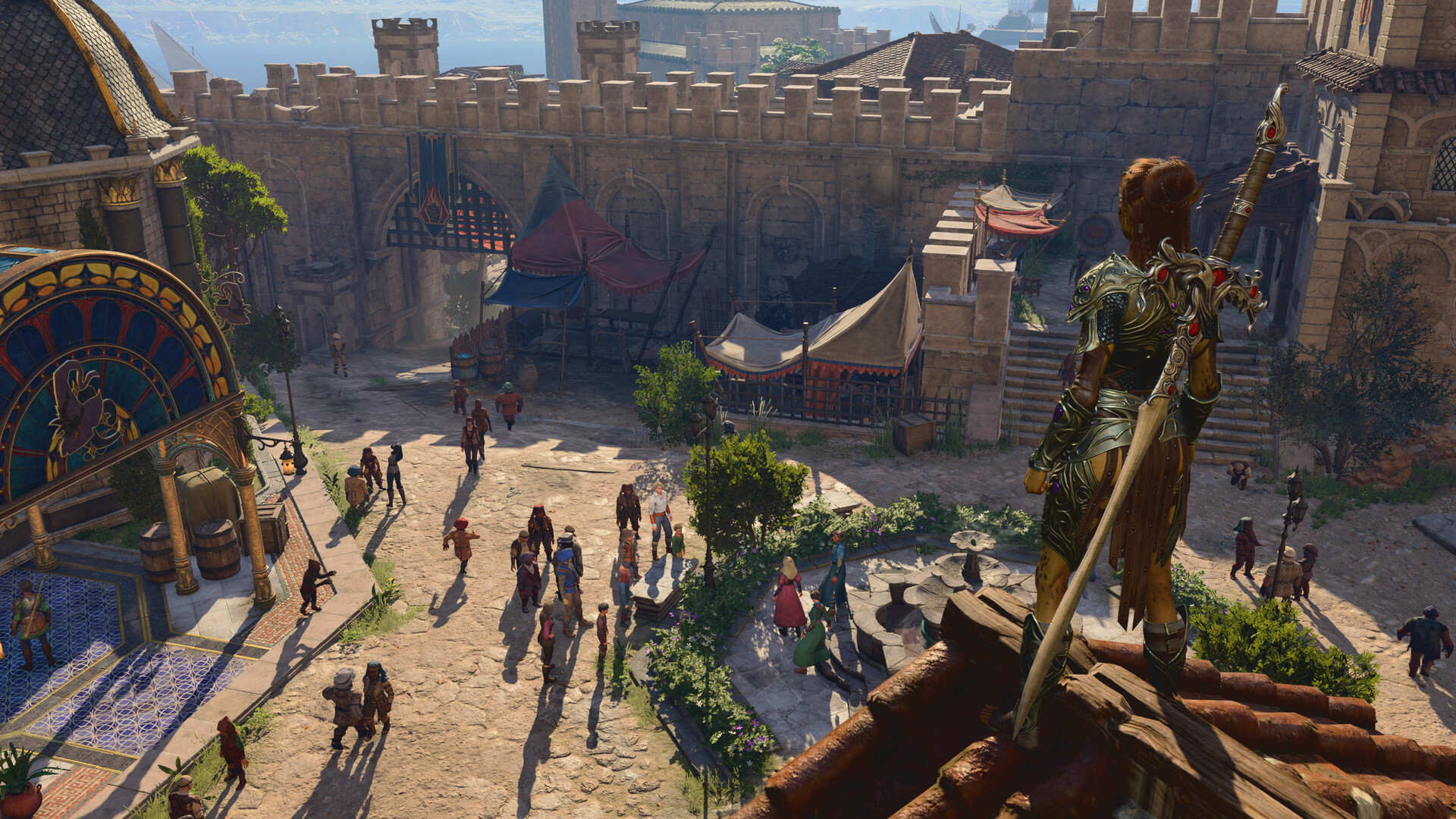
Quick Answer: Patch 8 is Baldur’s Gate 3’s final major update, released on April 15, 2025. It adds a new subclass for each of the 12 classes, plus Photo Mode, new spells, and Steam Trading Cards.
TL;DR Change Summary
Patch 8 is the last major content patch for Baldur’s Gate 3, and it landed on April 15, 2025. That matters because this is not a routine balance pass: it is a broad systems update built around build variety, with the headline change being a new subclass for every one of the game’s 12 classes. Larian also folded in Photo Mode, added new spells that affect both the new subclasses and older builds, and enabled Steam Trading Cards for the game. The official preview page explicitly frames it as the studio’s final major patch, so the update reads like a capstone rather than a stepping stone. Source
For players searching specifically for baldur's gate 3 classes patch 8, the practical summary is simple: the patch expands the class grid instead of narrowing it. You are not looking at a nerf-first meta reset. You are looking at a content injection that changes what each class can do, which in turn changes party composition, respec value, and the relative appeal of older subclasses. IGN’s roundup describes the new subclasses as adding fresh abilities, cantrips, summons, and combat animations, which means the patch affects both mechanical output and how the game feels moment to moment. Source
That also gives this patch a different shape from the kind of update where the answer is just “play the strongest numbers.” Patch 8 changes the menu of options enough that many players will want to revisit old assumptions about class identity. A Druid, Monk, Paladin, or Bard in particular can now push into a new lane without leaving its parent class behind. The result is a wider build space, not just a stronger one.
Winners: Who Got Buffed or Gained New Content
The biggest winners are every class that received a new subclass, because Patch 8 gives each of the 12 classes a fresh way to express its core fantasy. That is the cleanest possible definition of a buff in a content patch: more options, more tools, and more room to build around a different combat plan. The official preview says the highlight is “the addition of a new subclass for each of the 12 classes in the game,” and IGN reinforces that these subclasses bring new abilities, cantrips, summons, and combat animations. Source Source
The most important upside is not the existence of twelve separate subclasses in the abstract. It is the fact that this patch creates twelve different reasons to respec. If you have a character parked at level cap or near the end of a campaign, Patch 8 makes it rational to revisit class structure even if your current build already clears content. That is especially true for classes that naturally scale through action economy, reaction utility, or subclass-specific support pieces. The new options are not cosmetic; they change what you spend turns doing.
The clearest build winners
- Monk benefits from a subclass that can swing encounter tempo by manipulating disadvantage. IGN notes Drunkard’s Luck at Level 11: when you make an Ability Check, Attack Roll, or Saving Throw with Disadvantage, you can spend 2 Ki Points to negate that Disadvantage for the roll. That is a direct survivability and reliability tool, especially in harder fights where one bad die can end a run. Source
- Paladin gains Oath of the Crown, which can interrupt and taunt enemies and use Divine Allegiance to absorb damage for allies while restoring their health. That makes the class more credible as a front-line protector rather than only a burst damage oath-blade. Source
- Druid benefits from new subclass identity plus the continued flexibility of Wild Shape beast options, which the IGN guide specifically calls out as part of the subclass package. That matters because Wild Shape is already one of the game’s most versatile resource systems, and any subclass that improves how you use it has broad value. Source
A compact view of the update’s upside looks like this:
| Patch 8 gain | What it changes | Example impact |
|---|---|---|
| 12 new subclasses | More class paths | A Sorcerer can specialize differently without leaving the class |
| New spells | Extra spell access | Old builds gain fresh utility or damage lines |
| Photo Mode | Non-combat feature | Better capture of cinematic builds and party setups |
| Steam Trading Cards | Meta progression outside combat | More account-side game presence, not a power increase |
Patch 8 also helps classes that already had strong identity but limited subclass variety. When the game adds a new subclass to every class at once, the weakest part of an established class often becomes clearer: not the class itself, but how little room it previously had to branch. A fresh subclass can give a previously stable class a new reason to be replayed. That matters in a game where campaign length is substantial; HowLongToBeat lists roughly 72.7 hours for the main story, 115.73 hours with extras, and 180.05 hours for completion. Source
In other words, the winners are not only the classes with flashy damage spikes. The real winners are players who like experimentation, because Patch 8 multiplies the number of viable ways to build the same party role. A frontline defender, a control caster, a movement-heavy skirmisher, and a summoning-focused specialist can all now occupy older class shells with a different emphasis.

You might also like
- Baldur's Gate 3 Is There Crossplay Updated 8/3/2023 Crossplay for is currently unavailable Beginner Guide
- Baldur's Gate 3 Find a way into Wyrm's Rock fortress Beginner Guide
- Baldur's Gate 3 All Interactive Maps and Locations Beginner Guide
- Baldur's Gate 3 Rescue the Gnome and Stop the Windmill Beginner Guide
- Baldur's Gate 3 Seek Protection from the Shadow Curse: Beginner Guide
Losers: What Got Nerfed or De-emphasized
Patch 8 does not read like a hard nerf patch, but there are still losers in the practical sense. The biggest loss is exclusivity: older subclasses lose some of the spotlight because every class now has a fresh rival option sitting beside the established favorites. If you were attached to a build because it felt uniquely expressive, Patch 8 can make that identity less singular. That is not a stat nerf, but it is a real meta loss.
The second loser is build stagnation. Before Patch 8, many players settled into a familiar set of class choices because the existing subclass map was already well understood. After this update, that comfort can become a liability. If a new subclass gives the same class better utility, better survivability, or a cleaner combat loop, then the old pick is not necessarily weaker in raw damage, but it is weaker in opportunity cost. That is especially important in a game with a long campaign and a lot of marginal combat decisions.
What de-emphasizes old builds
- Subclasses that relied on being the “interesting” version of a class are now competing with fresh content.
- Party roles that were solved by a single old choice now have direct alternatives.
- Specialized builds may need new item support, because Patch 8’s new spells and subclass tools can shift what equipment feels efficient.
A useful way to think about the losers is by category rather than by a list of named nerfs, because the provided patch facts do not support a claim that any specific class took a direct numerical hit. The patch material instead points to displacement. When Larian adds a new subclass to every class, any previous best-in-slot subclass can lose share simply because the opportunity set widened. That is a common real-world outcome in class-based RPG updates: the dominant build does not have to be deleted to stop being dominant.
There is also a subtle loss for players who avoid respecs. Patch 8 rewards flexibility, and that means fixed builds are comparatively worse positioned than before. If you insist on keeping a character exactly as they were pre-patch, you may miss the best use of the update. This is particularly relevant for players who had already optimized around the old class ecosystem. The patch does not force a re-roll, but it does make old habits less efficient.
The most obvious example is Monk. Drunkard’s Luck at Level 11 gives a resource-gated way to cancel Disadvantage on checks, attacks, or saving throws by spending 2 Ki Points. That kind of tool can make older Monk plans feel incomplete if they do not lean into the new subclass’s reliability package. Similarly, Oath of the Crown can make more traditional Paladin lines feel less compelling in party support situations because it can taunt and absorb damage for allies while healing them. Source
So the “losers” are mostly legacy expectations. Old subclass rankings are not erased, but they are pressured. That is the right mental model for baldur's gate 3 classes patch 8: not a massacre, but a displacement event.
New Subclasses and What They Change
The headline feature of Patch 8 is not a single overpowered option; it is the fact that every class got one new subclass. That is why the patch landed so hard with theorycrafters and returning players. A full class roster refresh changes the shape of character creation, the value of respeccing, and the composition of companion runs. Larian’s preview and IGN’s guide both confirm the same structural point: there are 12 new subclasses, one for each class, and they bring new abilities, cantrips, summons, and combat animations. Source Source
That means the patch should be read as a broad class expansion rather than a single power spike. Some subclasses will be obvious favorites for damage-minded players. Others will be better for utility, roleplay fit, or tactical flexibility. In a game like Baldur’s Gate 3, that distinction matters because raw DPR is only one axis of value; control, survival, and party synergies often decide whether a build feels strong in actual play.
Concrete examples of what changed
- Monk: Drunkard’s Luck at Level 11 can cancel Disadvantage by spending 2 Ki Points, which is an unusually direct consistency tool for a class that often wins by sequence and precision. Source
- Paladin: Oath of the Crown can interrupt, taunt, and use Divine Allegiance to absorb ally damage while restoring health, making it a more explicit tank-support hybrid than many players associate with the class. Source
- Druid: the subclass package still interacts with Wild Shape beast options, so the class remains one of the patch’s most obviously form-shifting builds. Source
Because the exact full list of all twelve subclasses is outside the provided fact set, the right approach here is to focus on the structural effect rather than inventing names or effects. The important part is that every class now has a fresh lane. That creates three practical outcomes.
First, party planning becomes less solved. If you already knew what your Fighter, Cleric, or Wizard was supposed to do, Patch 8 gives you a reason to reopen that decision. Second, companion identity becomes more flexible. A class you previously ignored on a companion may now have a subclass that fits your preferred team function. Third, class fantasy becomes more visible in combat because the update adds new animations alongside mechanical changes, which is not just presentation fluff in a turn-based RPG. It helps a build feel distinct enough to justify playing it.
The patch also pairs subclass expansion with new spells that can reach both new and old builds, which means the subclasses are not sealed boxes. They can cross-pollinate the rest of the class system. That matters because a patch like this can alter not only who the strongest subclass is, but also which spells become value picks for ordinary progression.
If you want the short version: Patch 8 makes classes feel newer without replacing them. That is the central change for anyone tracking baldur's gate 3 classes patch 8 in terms of actual play impact.
Player Action Items: What to Do Differently Today
Patch 8 changes what you should spend time on, and the biggest mistake is to treat it like a cosmetic update. If you play Baldur’s Gate 3 seriously, this patch is worth a respec pass, a party audit, and possibly a new campaign start if your old build concept was already close to solved. The patch’s design invites experimentation, and the fastest way to benefit is to make your current roster reflect the new subclass map.
Immediate actions
- Respec any character whose class now has a subclass that better matches your intended role. If your current setup was chosen mostly because it was the best-known option, rerun the decision with Patch 8 in mind.
- Recheck party roles for redundancy. A new subclass that adds taunts, summons, or reliability tools can make one of your existing slots unnecessary.
- Revisit spell preparation and leveling plans. The patch adds new spells available to both the new subclasses and the older ones, so a previously “finished” build may now have stronger utility lines.
- If you are starting fresh, build around class fantasy first and min-max second. Patch 8 rewards players who use the new subclass identity rather than trying to force every class back into the same old template.
That last point matters because the update is broad enough that the optimal response is not the same for every class. A Monk build might value consistency and control more heavily now, while a Paladin build might want to lean into protector duties. A Druid can explore form-based flexibility more aggressively, and classes with spell access may want to test whether one of the new spells changes their early or midgame pacing. The right response is class-specific, not generic.
What to farm or revisit
- Revisit gear that supports survivability, because more subclass tools now reward staying power instead of just ending fights fast.
- Reopen inventory and scroll habits for classes that gained new spell interactions.
- Re-evaluate party composition on honor-style or high-difficulty runs, where reliability tools like Disadvantage negation can matter more than raw damage spikes.
There is also a practical time-management angle. Baldur’s Gate 3 is not a short game; HowLongToBeat’s roughly 72.7-hour main story estimate and 180.05-hour completionist estimate make it expensive to brute-force every experiment in a single save. Source That is why Patch 8 action items should be disciplined. Do not randomly respec every companion at once unless you have a clear testing goal. Start with the characters whose roles are most exposed to the new subclass changes.
For returning players, the safest order of operations is simple: check your current class, compare it to the new subclass option, then decide whether your build plan still makes sense. For new players, the update makes class choice less punishing, because there is now more room to specialize after the opening hours. Either way, the patch strongly favors active reevaluation over passive continuation.
Why Patch 8 Matters For the Meta
Patch 8 matters because it expands the class meta without turning the game into a pure numbers race. The update’s power is structural. A full subclass for every class changes what “best” even means, because classes can now better express support, damage, control, or durability depending on which branch you choose. That is a stronger and more durable kind of patch than a simple balance tweak.
For the current meta, the most important effect is increased choice density. More choice density means more build variance across saves, more reasons to respec, and more opportunities for companion overlap or specialization. A player who previously ignored a class because its subclass lineup felt flat may now have a reason to revisit it. That is especially relevant for long-term players who already know the base campaign structure.
The patch also reinforces the idea that Baldur’s Gate 3 is a system-first RPG. It is not only about content quantity; it is about how class systems shape the run. The official preview calls this the final major patch, which gives it extra weight because it is closing a chapter while adding one last big layer of replayability. Source
Meta-level effects to watch
- Existing tier lists may shift because a new subclass can improve a class’s weakest axis, not just its damage.
- Party composition becomes more flexible because some classes can now double down on support, taunting, or consistency.
- Return visits become more attractive because old campaigns can be reinterpreted through the new subclass layer.
The most concrete meta example in the facts is Paladin. Oath of the Crown does not merely hit harder; it changes battlefield behavior by taunting and by using Divine Allegiance to absorb damage for allies while healing them. That kind of tool can alter how a party handles frontline pressure. Another concrete example is Monk’s Drunkard’s Luck, which directly changes how a player handles bad rolls at Level 11 by spending 2 Ki Points to negate Disadvantage. These are not abstract buffs. They are the kind of mechanics that shift turn-by-turn decision making. Source
Because the patch is broad and late-cycle, the right expectation is not a solved best build. The right expectation is a healthier sandbox. That is why the patch landed as a major event rather than a small update, and why search interest around baldur's gate 3 classes patch 8 centers on subclass changes rather than a single numeric nerf or buff.
Sources
- https://bg3.wiki/wiki/Guide:Patch_8_preview
- https://www.ign.com/wikis/baldurs-gate-3/New_Subclasses_in_Patch_8
- https://howlongtobeat.com/?q=bg3
See also
- Baldur's Gate 3 Best Character Build for Beginners: Easy Oath of Devotion Paladin
- Baldur's Gate 3 How to Solve the Silent Library Puzzle
- Baldur's Gate 3 Get Help from Healer Nettie Beginner Guide
- Baldur's Gate 3 Wyll Origin Character Details: Beginner Guide for New Players
- Baldur's Gate 3 Ask the Goblin Priestess for Help: Beginner Guide
- Baldur's Gate 3 PS5 Best Character Build: Oath of Vengeance Paladin
- Baldur's Gate 3 How to Respec Your Character: Beginner Guide
- Baldur's Gate 3 Silver Sword of the Astral Plane Beginner Guide
- Baldur's Gate 3 Update 5 Patch Notes Beginner Guide
- Baldur's Gate 3 A New Character Introduced Beginner Guide
Screenshots


Reviewed by
BG3 Hub Editorial
Expertise: Editorial team behind BG3 Hub. Content is compiled from official patch notes, community wikis, and playthrough notes, then reviewed and updated on schedule.
Sources
Baldur's Gate 3 Classes Guides →
Browse the complete classes collection and its focused guides.
Related Guides

🔥 Popular Guides
Baldur's Gate 3 best baldurs gate 3 build guide
The best Baldur’s Gate 3 build guide for strong early-game power, safe scaling, gear priorities, counters, and budget-to-endgame upgrades.
Baldur's Gate 3 baldurs gate 3 best build beginner Guide
Best beginner Baldur's Gate 3 build guide with stat priorities, rotations, gear, counters, mistakes, and budget vs endgame advice.
Baldur's Gate 3: how to sneak baldurs gate 3 ps5
Learn how to sneak in Baldur’s Gate 3 on PS5 with crouch timing, turn-based mode, patrol reading, and common mistake fixes.
bg3 best dark urge class patch 8: Patch Notes Explained for Baldur’s Gate 3
Patch 8 adds 12 subclasses but no direct Dark Urge changes; learn the best BG3 Dark Urge classes, winners, losers, and action items.
📋 Patch Notes & Updates
🛠️ Popular Tools
Was this guide helpful?
Rate this guide so we can improve it.
Share your own tip
Found something not in the guide? Submit it below — our editors review every tip before publishing. No account required.