 Baldur's Gate 3
Baldur's Gate 3 Act Two Beginner Guide
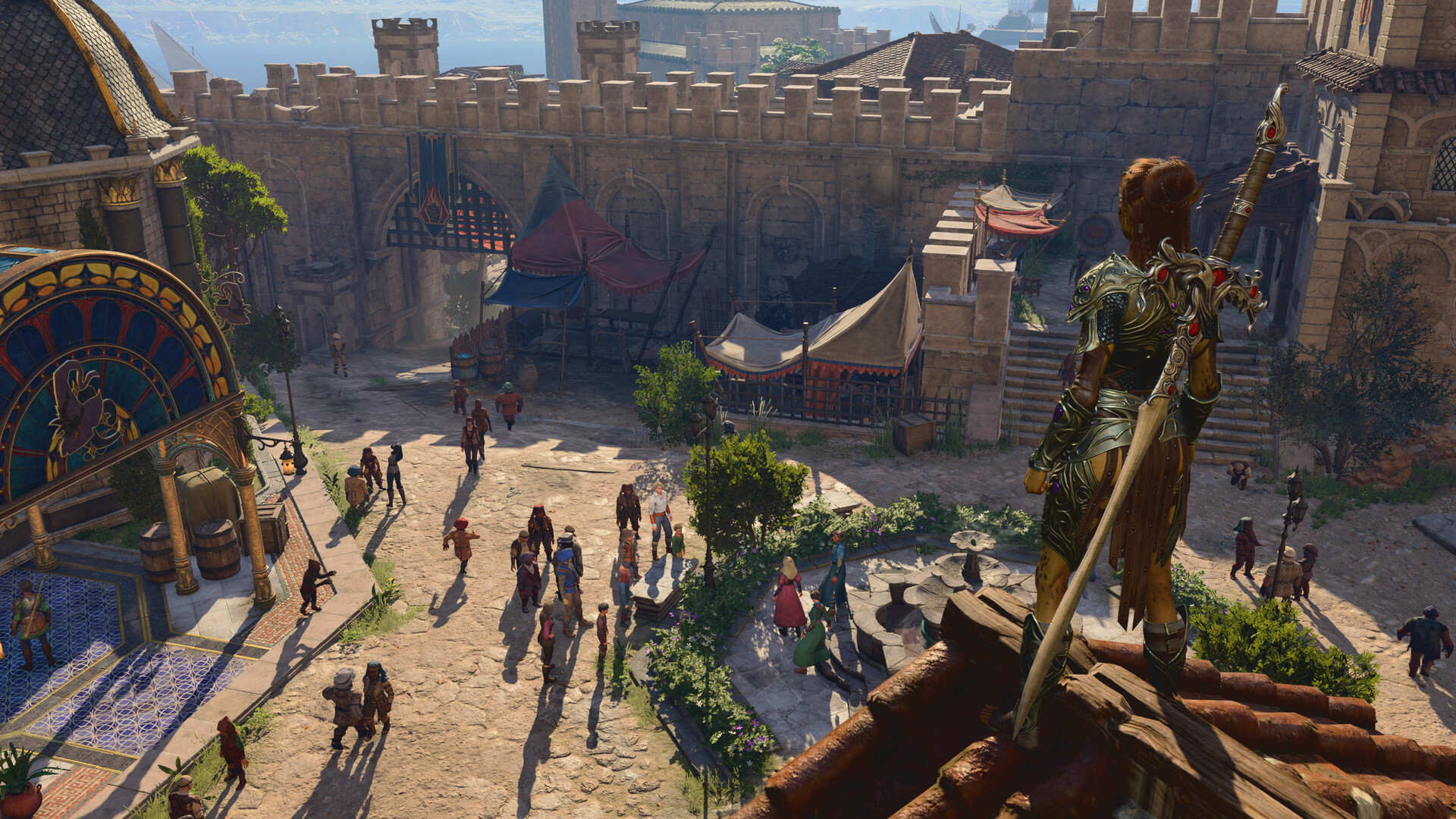
Quick Answer: Baldur's Gate 3 Act Two is the Shadow-Cursed Lands chapter, and beginners should focus on light sources, quest discipline, safe leveling, and resource conservation while clearing key companions, story routes, and Moonrise Tower preparation.
What Baldur's Gate 3 Act Two Actually Changes
Baldur's Gate 3 Act Two changes the game from open-ended exploration into a more dangerous, system-driven chapter where the Shadow Curse, faction timing, and quest order matter much more than they did in Act One. This is the part of the adventure where careless routing can shut off rewards, where darkness is an actual hazard rather than just atmosphere, and where your party composition starts to matter in a more practical way than “pick your favorites and hope.” The chapter is still an RPG sandbox, but it rewards players who treat it like a mission map instead of a sightseeing trip.
The easiest way to think about Act Two is that it is the point where the game expects you to know your fundamentals. You should already understand how to keep your party healed, how concentration works, and how to use short rests and long rests without wasting every resource at once. If you do, the region becomes much more manageable. If you do not, the Shadow-Cursed Lands can feel punishing because ordinary mistakes—walking without protection, skipping rests too long, or rushing Moonrise Towers too early—have bigger consequences here than in the goblin camp or the wilderness.
A useful baseline for the game as a whole is that Baldur’s Gate 3 is a story-rich, party-based RPG set in the Dungeons & Dragons universe, where choices shape the outcome of the journey Source. That matters in Act Two more than anywhere else because many of the chapter’s best outcomes depend on what you do before the obvious “boss door” appears. The main story length also gives a sense of scale: HowLongToBeat lists roughly 72.71 hours for the main story, 115.69 hours with extras, and 179.74 hours for completion Source. In practice, that means Act Two is not a side chapter; it is a major midpoint where beginners often still have a lot to learn.
The core Act Two mindset
- Move deliberately instead of chasing every marker at once.
- Keep a source of light or protection available before entering cursed areas.
- Treat Moonrise Towers as a long-term objective, not your first destination.
- Assume some quests are timed by story progress, even when the journal is vague.
What makes this act different from Act One
- The map itself is more hostile.
- Some encounters are easier if you arrive prepared with consumables.
- Companion and faction outcomes become more sensitive to route order.
- Combat often demands better positioning and better spell selection.
First-Hour Checklist for Baldur's Gate 3 Act Two
Your first hour in Baldur's Gate 3 Act Two should be spent securing survival tools, identifying safe routes, and locking in the major quest threads before you wander into irreversible choices. The best beginners do not “clear the map” immediately; they stabilize the chapter first. That means protecting the party from the Shadow Curse, making sure each character can act in darkness, and opening up the most important story options before you start spending resources freely.
1) Secure a reliable way to survive the Shadow Curse
You should enter cursed territory with a plan for light, protection, or both. Examples include carrying a torch, using light-based spells, or relying on story-provided safe traversal where appropriate. If your party is split, make sure everyone can cross together; a single exposed character can cause problems quickly. In practical terms, do not assume “I’ll just sprint through” will work if you have not already learned the area.
2) Activate every safe hub and waypoint you can reach
You want fast travel options and rest access early because Act Two often pushes you to backtrack after dialogue, combat, or companion changes. Unlocking a central safe zone helps with inventory cleanup, spell preparation, and merchant access. If you find yourself carrying too much loot, do not force a dungeon crawl while overburdened—return, sort, and re-enter with a plan.
3) Talk to every major NPC before committing to a route
You should speak with quest givers, merchants, and faction leaders before triggering the next big story beat. This is especially important for companion-related content and side objectives that can disappear if you rush a main objective. If a conversation sounds urgent, assume it may be.
4) Mark your party’s “must keep” consumables
Before using scrolls and potions casually, identify the few items you really want to save. Keep healing potions, revive tools, emergency mobility items, and condition counters in reserve. Act Two is a good time to start acting like a strategist rather than a scavenger.
5) Do one low-risk fight first to test your loadout
Use an early skirmish to see whether your current party can handle darkness, terrain, and enemy resistances. This is a good moment to test whether your spellcasters are prepared for concentration pressure and whether your melee characters have enough mobility to avoid wasting turns.
6) Make a manual save before major dialogue
Act Two contains several fork points that are much easier to navigate if you can roll back a bad choice. Save before talking to suspicious leaders, before entering important interiors, and before any dialogue that sounds like it could end a quest chain.
A practical first-hour route
- Reach your safe hub.
- Review companions and supplies.
- Unlock nearby waypoints.
- Pick up every major quest thread.
- Scout one easier encounter.
- Stop before forcing a big story decision.
The big lesson is that Act Two rewards preparation more than panic. You do not need to solve everything immediately; you need to stop the chapter from becoming harder than it already is.

You might also like
- Baldur's Gate 3 Find a way into Wyrm's Rock fortress Beginner Guide
- Baldur's Gate 3 All Interactive Maps and Locations Beginner Guide
- Baldur's Gate 3 Rescue the Gnome and Stop the Windmill Beginner Guide
- Baldur's Gate 3 Seek Protection from the Shadow Curse: Beginner Guide
- Baldur's Gate 3 How to Solve the Silent Library Puzzle
Resource Priority Order: What to Spend, Hoard, and Craft First
Your resource priority in Baldur's Gate 3 Act Two should favor survival tools, mobility, and encounter-defining consumables over flashy one-off damage. Beginners often spend too much too early because they see a potion, scroll, or rare ingredient and feel pressure to use it “before it gets wasted.” In this act, that instinct usually backfires. You want to keep your strongest resources for the fights and dialogue outcomes that are hardest to recover from.
A good rule is to spend common items freely, hoard uncommon emergency tools, and reserve rare consumables for boss-level problems. This applies to healing, scrolls, elixirs, and special arrows. If you are unsure whether something belongs in the “use now” pile or the “save it” pile, ask whether it solves a problem you can already solve with a normal action. If yes, save it.
| Resource Type | Spend Early On | Save For | Example Items / Uses |
|---|---|---|---|
| Common healing and recovery | Routine post-fight recovery | Rarely necessary to hoard aggressively | Healing potions, basic restoration after small skirmishes |
| Mobility tools | Escapes, positioning, bridge-crossing, vertical fights | Critical encounters or narrow terrain fights | Misty Step scrolls, jump support, movement boosts |
| Control consumables | When a target would otherwise escape or overwhelm you | Fights with elite enemies or clustered foes | Grease-like setups, paralysis-style effects, battlefield denial |
| Damage spikes | Easy wins against random trash mobs | Bosses, priority targets, or timed fights | Special arrows, high-tier scrolls, one-turn burst options |
| Quest-critical items | Only when a quest explicitly calls for it | Never waste them on generic combat | Unique keys, narrative objects, companion-related items |
What to spend first
- Basic healing potions when a fight ends badly.
- Low-rarity scrolls on fights that are already won or nearly won.
- Cheap arrows and grenades when they remove a dangerous enemy quickly.
- Short-rest recovery when it prevents you from using a full long rest too soon.
What to hoard first
- Revive tools and emergency recovery items.
- Rare scrolls that duplicate high-level spells.
- High-value elixirs that affect multiple turns.
- Any item you only have one copy of and cannot easily replace.
What to craft or prepare first
- Anti-curse and visibility solutions.
- Mobility options for high ground or split terrain.
- Buffs that help before combat starts, not after it has already gone wrong.
- Anything that improves a difficult opening turn.
There is also a broader value lesson in how the game is supported. Steam lists the game’s official review summary as “Overwhelmingly Positive” at 96.8% positive across 848142 reviews Source, which is a good reminder that the game rewards systems knowledge over brute force. In practical terms, you get more value out of learning when to use a scroll than from hoarding the scroll until the credits roll.
Common Mistakes New Players Make in Act Two
The most common beginner mistakes in Baldur's Gate 3 Act Two come from underestimating how much the chapter punishes greed, impatience, and poor quest order. Act One trains many players to explore freely and recover from nearly anything. Act Two narrows that margin. The fixes are straightforward once you know them, but the mistakes are common because the game does not always warn you clearly enough.
1) Entering shadowed areas without a real light plan
Players do this because the region looks navigable and they assume their party can brute-force the curse. The fix is to carry a consistent light source, use protective traversal when available, and make sure the whole party can move safely together.
2) Rushing the main objective before side content
Players do this because the story keeps pointing them toward a dramatic destination, so they assume they should push straight ahead. The fix is to finish nearby companion conversations, rescue opportunities, and safe-zone exploration before committing to the next obvious climax point.
3) Spending rare scrolls and elixirs too casually
Players do this because consumables feel replaceable until they are suddenly not. The fix is to assign every rare consumable a job: boss burst, emergency escape, or quest-critical contingency. If it has no job, keep it.
4) Long resting at the wrong time
Players do this because they are used to resting whenever the party is low. The fix is to check whether you have unresolved companion scenes, active rescue chains, or time-sensitive story beats before you rest repeatedly.
5) Ignoring positioning in tight interior fights
Players do this because early game combat can be won with raw damage and simple front-line stacking. The fix is to enter rooms slowly, place casters behind cover, and use choke points and elevation before enemies surround you.
6) Selling or discarding utility gear
Players do this because inventory pressure makes everything noncombat-looking seem disposable. The fix is to keep utility weapons, movement items, and niche armor pieces until you know what your party actually needs.
7) Letting dialogue choices replace quest awareness
Players do this because they trust the conversation wheel more than the journal. The fix is to read quest updates after important scenes and double-check whether a choice changed your route, allies, or access to a location.
Pro Tips for a Smoother Act Two Run
Advanced play in Baldur's Gate 3 Act Two is mostly about making the game’s hidden systems work for you before they become a problem. These tips are not the obvious “use a healer” basics; they are the habits that make the chapter feel much less fragile, especially if you are playing blind or on a first save.
Tip 1. Open fights from stealth when the terrain favors it
If you can start combat from a doorway, staircase, ledge, or narrow tunnel, do it. Act Two encounters often reward the first round more than earlier chapters, because enemy placement and spellcasters can snowball quickly. A surprise opening from stealth can let you delete the most dangerous target before it acts.
Tip 2. Carry at least one answer to forced movement
When a fight includes cliffs, ledges, bridges, or hazards, shove mechanics become more than a gimmick. Keep a plan for pushing, pulling, or repositioning enemies around places like elevated walkways or cramped rooms. For example, a shove, a thunder-based effect, or a well-placed control spell can flip a fight instantly.
Tip 3. Preserve one “clean turn” spellcaster setup
Do not load every caster with only concentration spells. In Act Two, enemy pressure can break concentration faster than beginners expect. Keep at least one character ready to cast a non-concentration control spell, a defensive buff, or a mobility option when the first plan gets interrupted.
Tip 4. Use the environment to save spell slots
If a barrel, stairwell, doorway, or choke point can do the job, let it do the job. An oil spill, a small ledge, or a narrow corridor can reduce the amount of magic you need to spend. That matters because spell slots are often more valuable than the immediate fight looks.
Tip 5. Treat merchant visits as build audits
Every time you return to a vendor, check whether your party has changed enough to justify new gear. A cleric who needs concentration protection, a rogue who wants stealth support, and a frontline bruiser who needs movement all care about different equipment. Act Two is a good place to stop thinking “best item” and start thinking “best item for this specific character.”
Tip 6. Make companion triggers part of your route
Some of the strongest Act Two experiences come from companion scenes and quest progression happening in the right order. If you know a companion has been quiet for a while, take the time to rest, talk, and move them into the right location. Waiting too long can make it harder to see their best content.
Graduation Threshold: When You Are No Longer a Beginner
You are out of the beginner phase in Baldur's Gate 3 Act Two when you can enter dangerous areas with a plan instead of a hope. That means you no longer need to rely on trial-and-error for every encounter, because you can identify what the game is asking from you before the fight starts. A beginner improvises after the party is already in trouble; a more experienced player prevents the trouble from happening.
A practical graduation threshold looks like this:
- You understand how to keep the whole party protected from the Shadow Curse without scrambling.
- You know which consumables are routine and which ones should be saved.
- You can predict when a dialogue choice might change a quest route.
- You can win a fight by controlling the battlefield, not just by dealing damage.
- You have a habit of manual saving before important story decisions.
- You can read your journal and decide what to do next without wandering aimlessly.
You do not need perfect optimization to leave beginner status. You need consistency. If you can clear the chapter’s early objectives without repeatedly reloading, if you are no longer wasting rare items on random skirmishes, and if you can keep your party alive through darkness, traps, and tight interiors, you have moved beyond the beginner phase.
That milestone also lines up with how players tend to engage the game overall. Steam currently lists about 52201 players in game right now Source, which reflects how many people still return to learn, replay, and refine their approach. Baldur’s Gate 3 is designed for that kind of mastery curve: the more familiar you are with the systems, the more Act Two feels like a tactical puzzle instead of a wall.
Related Guides
- Baldur's Gate 3 Class Tier List
- Best Baldur's Gate 3 Builds for Beginners
- Baldur's Gate 3 Act One Walkthrough
- Baldur's Gate 3 Companion Guide
- Baldur's Gate 3 Moonrise Towers Walkthrough
- Baldur's Gate 3 Best Consumables and Scrolls
- Baldur's Gate 3 Party Composition Guide
Sources
- https://store.steampowered.com/app/1086940/
- https://howlongtobeat.com/?q=bg3
- https://store.steampowered.com/app/1086940/
- https://www.protondb.com/app/1086940
- https://steamcommunity.com/stats/1086940/achievements
- https://steamcommunity.com/stats/1086940/achievements
- https://store.steampowered.com/app/1086940/
See also
- Baldur's Gate 3 Get Help from Healer Nettie Beginner Guide
- Baldur's Gate 3 Ask the Goblin Priestess for Help: Beginner Guide
- Baldur's Gate 3 How to Respec Your Character: Beginner Guide
- Baldur's Gate 3 Silver Sword of the Astral Plane Beginner Guide
- Baldur's Gate 3 Update 5 Patch Notes Beginner Guide
- Baldur's Gate 3 Shar's Spear of Evening Beginner Guide
- Baldur's Gate 3 List of All Side Quests
- Baldur's Gate 3 Caution Before the Seelie: Beginner Guide
- Baldur's Gate 3 The Great Old One Beginner Guide
- Baldur's Gate 3 Help the Cursed Monk: Beginner Guide
Screenshots



Reviewed by
BG3 Hub Editorial
Expertise: Editorial team behind BG3 Hub. Content is compiled from official patch notes, community wikis, and playthrough notes, then reviewed and updated on schedule.
Sources
Related Guides
🔥 Popular Guides
Baldur's Gate 3 Wyll Origin Character Details: Beginner Guide for New Players
Beginner guide to Wyll’s role, early checklist, resource priorities, common mistakes, and when you’ve outgrown beginner play.
Baldur's Gate 3 A New Character Introduced Beginner Guide
Learn the first-hour checklist, resource priorities, common mistakes, and early-game tips for Baldur's Gate 3 beginners.
Baldur's Gate 3 Act Three Beginner Guide
Learn the first-hour checklist, resource priorities, common mistakes, and pro tips for Baldur's Gate 3 Act Three.
Baldur's Gate 3 Act One Beginner Guide
Learn Baldur's Gate 3 Act One with first-hour goals, resource priorities, beginner mistakes, pro tips, and when you’re ready to move on.
📋 Patch Notes & Updates
🛠️ Popular Tools
Was this guide helpful?
Help us grow — rate this guide so we can improve it.
Share your own tip
Found something not in the guide? Submit it below — our editors review every tip before publishing. No account required.