 Baldur's Gate 3
Baldur's Gate 3 Best Class for Main Character Tier List
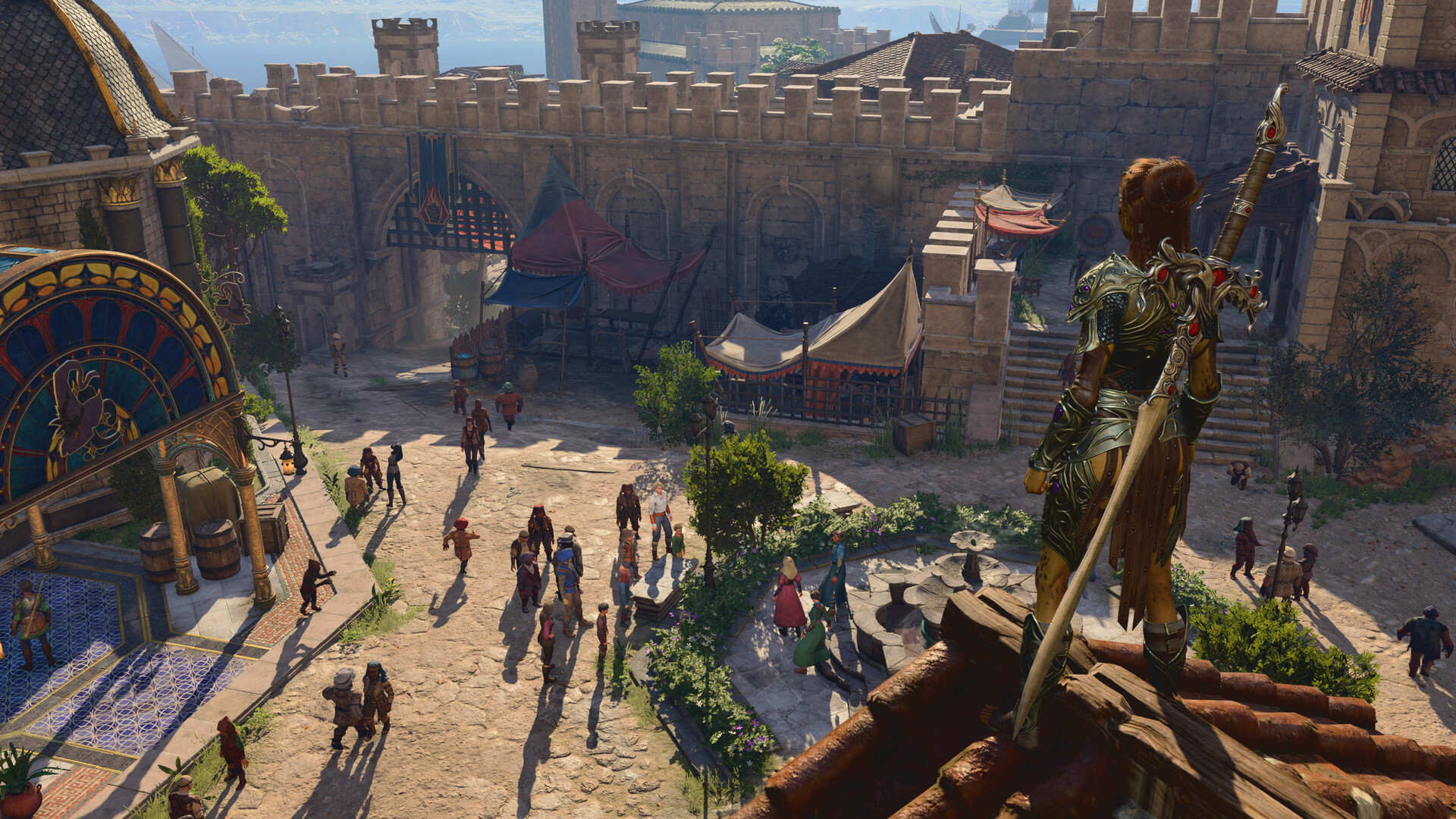
Quick Answer: The best class for a main character in Baldur’s Gate 3 is usually Bard or Paladin, with Cleric, Warlock, and Sorcerer close behind depending on whether you want dialogue power, burst damage, or strong party utility.
Ranking Methodology
This tier list ranks Baldur’s Gate 3 classes specifically for a main character, not just for a party slot. That distinction matters because the protagonist handles more than combat in BG3: they trigger the most dialogue checks, carry story choices, and often need to function without perfect party support. The result is a list built around three practical questions: how well the class performs in combat, how often it stays useful across the whole game, and how much value it gives when your character is the face of the party.
The ranking is informed by the class-focused coverage from IGN, Game8, and Game8’s companion summaries, all of which agree on a key baseline: BG3 classes are broadly well-balanced, and none are useless. IGN explicitly notes that every class is good at something and that none are broken or underpowered, while Game8 and GameStegy frame the list as subjective and tied to general usefulness and combat performance. For this article, that means the tiers are not a claim that one class can “win” the game alone. They are a practical recommendation for which class gives the smoothest main-character experience in a normal playthrough.
The list is also anchored to the current live state of the game as represented by the available background sources. BG3 remains a large, active RPG on Steam with an “Overwhelmingly Positive” review summary at 96.8% positive across 854370 reviews Source, and HowLongToBeat reports roughly 72.7 hours for the main story, 115.73 hours with extras, and 180.05 hours for completion Source. That matters because a main class should stay engaging over a long campaign, not just spike early.
For the baldur's gate 3 best class for main character tier list, I weighted the following factors most heavily:
- Dialogue utility, especially for classes that naturally favor Charisma or social control
- Combat consistency across acts, including resource management and damage reliability
- Party independence, meaning how often the protagonist can solve problems without relying on a specific companion setup
- Replay value, since BG3 is built for branching runs and repeated character creation
- Ease of use for a first-time main character versus ceiling for experienced players
I did not use subclass-only evaluations as the main driver. A class can move upward with the right subclass, but the point of a class tier list is to identify the strongest starting decision for the protagonist. In practice, that keeps the list useful for players who want a straightforward answer, not a theorycraft exercise.
S Tier
S tier classes are the best all-around main-character picks because they combine strong combat, excellent dialogue value, and low friction across the full campaign. They are the classes that feel good when you are doing everything on one character: talking, scouting, fighting, and making long-term build decisions. In BG3, that matters more than in many RPGs because your main character often carries the most visible roleplay pressure and is the one most likely to fail a crucial check in a conversation with Astarion, Karlach, Gortash, or Raphael if built poorly.
The strongest S tier classes in this context are the ones that either scale cleanly into the late game or deliver immediate value with little setup. Paladin stands out because it translates spell slots into explosive burst damage through Divine Smite, and GameStegy calls that its main highlight. Bard is similarly strong because it blends Charisma-based dialogue dominance with broad utility, which is exactly what a main character wants. Cleric also belongs here because IGN specifically calls it the best healing class and notes that Life Domain gives always-prepared healing spells plus an added healing bonus. Warlock is another top-tier main-character option because it is Charisma-based and gets unique dialogue advantages, which makes it unusually natural for a protagonist.
| Tier | Class | Why it belongs here |
|---|---|---|
| S | Bard | Best overall face class; strong dialogue, broad utility, and flexible combat options make the protagonist feel useful in every scene. |
| S | Paladin | Huge burst damage with Divine Smite and a strong heroic roleplay fit, especially when the main character wants to lead fights directly. |
| S | Cleric | Excellent healing and support, with Life Domain offering always-prepared healing and durable spell-slot value over a long campaign. |
| S | Warlock | Charisma-based dialogue power plus distinctive class identity; great for a protagonist who wants social control and reliable offense. |
Bard earns the top spot for many players because it solves the main-character problem cleanly. A protagonist Bard is naturally strong in conversation, can lean into control spells, and still contributes in combat without needing a perfect loot plan. The class also fits a broad range of roleplay styles. A smooth-talking Bard in the Emerald Grove, a silver-tongued manipulator in Moonrise Towers, or a heroic performer in the Last Light Inn all make sense without fighting the system. That flexibility is valuable because BG3 constantly asks your main character to adapt.
Paladin is the best choice if you care more about combat impact than pure dialogue breadth. It is the most satisfying class for players who want their protagonist to make visible, decisive turns in battle. Smite turns spell slots into damage spikes that matter in hard encounters, and the class’s fantasy lines up well with BG3’s big story decisions. In fights against bosses like Ketheric Thorm, Orin, or Raphael, a Paladin protagonist feels like a central combat piece rather than a utility piece.
Cleric sits in S tier because it is the most dependable support platform for a main character who still wants to meaningfully influence fights. Life Domain in particular is exceptional for players who want to keep the party stable without giving up offensive relevance. IGN’s emphasis on higher-level healing access and repeated spell-slot use is the key point: Cleric stays relevant from early levels through the endgame. It is less flashy than Bard or Paladin, but the reliability is exactly why it ranks so highly.
Warlock rounds out S tier because it is one of the best combinations of story-facing and combat-facing design. Charisma lets it dominate dialogue checks, and the class’s unique options make the protagonist feel distinct in conversations. If your priority is a main character who is always relevant in a cutscene and still dangerous in a fight, Warlock is a clean answer.
You might also like
- Baldur's Gate 3 Is There Crossplay Updated 8/3/2023 Crossplay for is currently unavailable Beginner Guide
- Baldur's Gate 3 dungeons and dragons spells players expect work same: what actually changes
- Baldur's Gate 3 best romances dungeons dragons dnd novels feywild job
- Baldur's Gate 3 Baldur's Gate 3 Baldur's Gate 3's Absolute Plot Story Explained
- Baldur's Gate 3 karlach laezel human versions custom characters
A Tier
A tier classes are excellent choices for a main character, but they are slightly more situational or slightly more dependent on party composition, player comfort, or build choices than the S tier picks. They are not weak. They are simply a step below the most universally satisfying protagonist classes. In a normal run, these classes can absolutely carry the campaign. The difference is that they ask for a bit more planning, a specific combat rhythm, or a stronger understanding of BG3’s encounter flow.
Fighter is the simplest example. GameStegy highlights its straightforward power, especially the combination of four feats and Action Surge, which creates a strong foundation for many builds. That makes Fighter excellent for players who want clarity and consistency. The reason it does not rise into S tier is that it brings less natural dialogue utility than the Charisma classes and less built-in support value than Cleric. It is brutally efficient in combat, but the main character often needs more than that.
Sorcerer is another A tier standout because it rewards players who want to lead with high-impact spellcasting. It has the raw burst and flexibility to swing fights, and as a protagonist it can feel superb when you know what you are doing. The caveat is that it is less forgiving than Cleric or Bard when resources are tight, and it asks for sharper spell selection and positioning.
Ranger and Druid are also strong but not always optimal as the first choice for a main character. Ranger can be very comfortable in outdoor exploration and steady ranged combat, while Druid can cover more roles than most classes. The issue is that both are often easier to appreciate as party members than as the protagonist. They do good work, but they do not dominate dialogue or story presence in the same way the top tier does.
| Tier | Class | Why it belongs here |
|---|---|---|
| A | Fighter | Extremely consistent combat value, especially with Action Surge and feat scaling, but less dialogue influence than Charisma classes. |
| A | Sorcerer | Powerful spellcasting and strong burst potential; excellent main-character damage dealer if you manage resources well. |
| A | Ranger | Reliable ranged pressure and practical exploration value, though it is more straightforward than transformative. |
| A | Druid | Flexible and adaptable, but usually less clean as a protagonist pick than the top-tier face and support classes. |
Fighter is the safest “I just want to hit things and keep moving” option. It is particularly attractive if you plan to use heavy weapons, polearms, or archery and you want a class that asks very little of the player outside of positioning and target selection. A Fighter main character can be very effective in Acts 1 through 3, especially when backed by a strong support companion. The limitation is that BG3 often rewards conversational leverage, and Fighter does not naturally solve that problem.
Sorcerer is the class for players who want spellcasting to feel explosive rather than broad. It is excellent in fights where one decisive spell or a carefully timed control effect changes the outcome. A protagonist Sorcerer can shine in encounters like the goblin camp, the Moonrise assault, or the final stretch of the game when big area effects matter. The class loses points because mismanaging spells can make the run feel awkward, especially on a blind first playthrough.
Ranger and Druid remain useful because BG3 has a lot of mixed terrain, scouting, and situational encounters. Ranger is clean and dependable for players who like ranged play and want an uncomplicated adventure. Druid can handle a wide range of scenarios, especially when the party needs adaptation. The reason they stay A rather than S is that they are more “good at the game” than “great as the face of the game.” A main character should ideally carry the story and the mechanics together, and these classes only partly solve the story side.
B Tier
B tier classes are still fully viable main-character options, but they are more specialized, more matchup-dependent, or more awkward when you want your protagonist to be the center of the experience. They can absolutely clear the game. The difference is that they ask you to build around their strengths more aggressively or accept more friction in dialogue and flexible encounter handling.
Barbarian is the clearest example. It is excellent at direct combat and can feel satisfying whenever a fight is solved by raw aggression, but it offers less natural utility outside battle. That matters in BG3 because the main character is asked to carry the party through social scenes, investigation, and branching story decisions. A Barbarian protagonist can be fun in roleplay and strong in melee, but it is not as clean a whole-package pick as the classes above.
Monk is similar. It can be extremely effective in combat, especially for players who enjoy mobility and repeated attacks, but it tends to ask for more build awareness than the best protagonist classes. A Monk main character can absolutely work, but the class feels more specialized than universal.
Rogue is also lower on the list for one main reason: it shines when it is doing Rogue things, but those things do not always overlap with what the protagonist needs most. Sneak attacks, lockpicking, and scouting are useful, yet in BG3 those functions can be covered by companions or items. As a main character, Rogue sometimes feels more like a strong support role than a full-story centerpiece.
| Tier | Class | Why it belongs here |
|---|---|---|
| B | Barbarian | Strong melee presence, but limited dialogue utility and less all-round flexibility for a story-leading protagonist. |
| B | Monk | Fast, mobile, and dangerous, but more specialized than the best face or support classes. |
| B | Rogue | Great for stealth and skill checks, yet often less satisfying as the primary class of a full campaign. |
Barbarian has a clear identity and a lot of combat force, which makes it enjoyable for players who want to turn every problem into a direct confrontation. It is useful in fights against humanoid groups, in cramped spaces where mobility matters less than pressure, and in runs where you want a simple combat loop. The downside is obvious in a protagonist context: your main character is too often the one who has to talk first, and Barbarian does not naturally make those scenes easier.
Monk tends to reward players who understand positioning, action economy, and when to engage rather than overextend. If you are comfortable with BG3’s tactical side, Monk can feel very strong, but that strength is less immediately accessible than Bard, Paladin, or Fighter. It is a class that improves as the player improves, which is valuable but not always ideal for a first main-character pick.
Rogue remains a solid class for players who value stealth, skill checks, and opening fights on favorable terms. It has real practical use in areas like the Underdark, the goblin camp, and urban sections of the later acts where picking your approach matters. The reason it lands in B tier is not that it is weak; it is that it rarely feels like the best answer when the question is “What should my main character be?” It is better when treated as a specialist in a broader party.
Situational Callouts
The ranking flips in several common situations, and those exceptions matter more than pure tier labels. BG3 is flexible enough that the “best” class changes based on whether you are roleplaying, optimizing, or entering a first blind run.
- If you want the strongest dialogue-first protagonist, Bard usually jumps above Paladin and Fighter. The reason is simple: a Bard main character naturally carries persuasion, deception, and performance-style social play better than martial classes. In conversations with the Dream Visitor, Raphael, or the Steel Watch-related storylines, the Bard often feels like the cleanest protagonist face.
- If you want the most satisfying burst-damage hero, Paladin can jump to the top. In boss-heavy stretches such as the fight against Ketheric Thorm or a difficult Act 3 showdown, Divine Smite can produce the kind of decisive turn that changes an encounter immediately.
- If you want a low-friction solo-feeling run, Cleric can outperform more offensive classes. Life Domain in particular makes the protagonist harder to kill and easier to recover, which matters in long exploration chains like the Underdark or the road into Moonrise Towers.
- If you expect to rely on dialogue solutions more than combat solutions, Warlock becomes much more valuable than its damage profile alone suggests. Charisma-based classes are simply better main-character picks when you want the protagonist to feel persuasive in every scene.
- If you are playing with a party built around strong support companions, Fighter and Sorcerer rise. A strong support setup can cover the social and utility gaps, letting these classes focus on what they do best: efficient combat.
These flips are not edge cases. They are the normal way BG3 works. The game constantly rewards adapting to a specific party composition, a specific act, or a specific playstyle. For example, a player running Lae’zel, Shadowheart, and Astarion may prefer a Bard or Cleric protagonist to cover the party’s social and sustain needs. Another player using Karlach and Gale may prefer Fighter or Sorcerer because the party already covers some interaction problems through companion balance and raw combat power. The best class for your main character is therefore not just a damage decision; it is a campaign-shaping decision.
A good rule is this: if your main character must do everything, pick Bard, Paladin, Cleric, or Warlock. If your party will cover weaknesses, Fighter and Sorcerer become much stronger. If your run is roleplay-driven, the tier list bends toward whichever class makes the most conversations feel natural to you.
Patch-Delta Note
There is no reliable patch-by-patch movement map in the provided sources, so I will not invent one. The most defensible reading is that the broad class order has remained stable because the available tier-list sources emphasize balance, not major rank shocks.
IGN’s framing is especially important here: it says every class is good at something and that none are broken or underpowered. That kind of balance statement implies that small balance adjustments are more likely to shift specific subclass builds or edge-case strategies than to completely rewrite the main-character tier order. In practical terms, the S tier still centers on Bard, Paladin, Cleric, and Warlock because those classes combine the same strengths they always have: social value, combat reliability, and party-wide utility.
If you are comparing this article to older tier lists, the safest interpretation is that movement is usually minor unless a patch materially changes class features, spell access, or item synergy. Without an exact patch note set in the provided data, I am not claiming that any class moved up or down from a named prior version. The better takeaway is that the ranking remains stable enough to be useful as a current recommendation rather than a historical snapshot.
A practical patch-delta summary for players is:
- No confirmed class-wide reordering is supported by the provided sources.
- The broad S/A/B structure remains consistent with mainstream BG3 class guidance.
- Subclass tuning, item changes, and exploit adjustments are more likely to change specific builds than the top-level main-character recommendation.
- For a protagonist, dialogue value and long-run consistency still matter more than short-term novelty.
If a future update changes spell access, smite scaling, Bard utility, or class resource flow, this is the section that would need the most attention. Until then, the current main-character ranking remains the conservative, evidence-aligned recommendation.
Common Mistakes
Players often make the same mistakes when choosing a main class in BG3, and most of them come from treating the protagonist like a pure combat slot instead of the character who drives the whole run.
- Picking a class only for combat damage: This happens because big crit numbers are easy to notice, while dialogue friction is easy to underestimate. The fix is to value Charisma classes higher if your protagonist will speak most often, especially Bard, Paladin, and Warlock.
- Ignoring party coverage: Players assume their main character must solve every problem alone. The workaround is to build around companion roles; for example, if Shadowheart is already present, you may not need the protagonist to be the party’s only sustain engine.
- Overvaluing stealth in a main character: Rogue and similar classes feel efficient in isolated fights, but they do not always translate into smoother story progression. The fix is to ask whether the class helps in both combat and conversations, not just in opening chests.
- Choosing a complicated caster for a blind first run: Sorcerer can be excellent, but it punishes sloppy spell use more than some alternatives. If the player is new, Bard or Cleric usually provides a better first-character experience.
- Underestimating resource dependence: Paladin and some burst-heavy builds can feel incredible until spell slots run dry. The workaround is to plan for long adventuring days and keep a backup plan for low-resource encounters.
- Treating “best class” as one universal answer: BG3 is built around branching play and party composition, so the right answer changes by playstyle. The fix is to decide whether you want a face, a frontline hero, a support anchor, or a burst caster before locking in the protagonist.
These mistakes show up repeatedly because the game is generous: almost any class can work, and that makes it easy to choose by theme alone. For a main character, though, theme needs to be supported by mechanics. A heroic Paladin works because it is both powerful and socially legible. A witty Bard works because it is both useful in conversation and flexible in combat. A Rogue works when the player values infiltration, but it can feel thin when the campaign demands leadership. The more your protagonist can do without needing special conditions, the fewer mistakes you make in the long run.
Pro Tips
The best main-character classes in BG3 become much stronger when you build around their actual job in the party, not just their headline feature.
Tip 1. Prioritize dialogue stats on the protagonist
If your main character is Bard, Paladin, Warlock, or Sorcerer, build for conversation first and combat second where possible. That means treating persuasion, deception, and intimidation as real campaign tools, not flavor extras. In practice, this helps in scenes with Raphael, the Steel Watch, and major Act 3 faction decisions.
Tip 2. Let companions cover narrow class gaps
If your protagonist is Fighter or Barbarian, use companions to cover social and utility needs. Shadowheart can help stabilize the party, Astarion can cover key rogue-style interactions, and Gale can fill broad magical gaps. This keeps a martial main character from feeling boxed in.
Tip 3. Save burst classes for known pressure points
Paladin and some Sorcerer builds are strongest when you know a hard fight is coming. Hold resources for bosses like Ketheric Thorm or other major Act 3 encounters instead of spending everything on routine skirmishes. That discipline makes the class look much better over the full run.
Tip 4. Build a backup plan for long adventuring days
A main character who burns through resources too quickly can become awkward in the middle of exploration. This is especially important for Paladin, Cleric, and Sorcerer. Keep at least one low-cost option that still matters when spell slots or class resources are thin.
Tip 5. Use the class to shape how you solve quests
A Bard protagonist should lean into social manipulation and nonviolent route-finding. A Cleric should pay attention to survivability and team stability. A Fighter should focus on direct combat opportunities and positioning. Matching quest approach to class identity makes the run feel cleaner and often more efficient.
Tip 6. Re-evaluate after Act 1
Several classes feel different once the party has better gear, more feats, and stronger spell access. Fighter and Cleric often improve steadily, while some classes feel merely good early and excellent later. If your first impression is lukewarm, check the class again after your build starts coming online.
Tip 7. Choose the class that makes repeated conversations tolerable
BG3 is long enough that your main character’s voice matters more than a one-time damage spike. If you find yourself enjoying the same conversation patterns with a Bard or Warlock, that matters. A class that keeps the story readable and the checks manageable is often the right protagonist choice even when another class has a larger damage ceiling.
Related Guides
- Baldur's Gate 3 Best Companions Tier List
- Baldur's Gate 3 Best Subclasses Tier List
- Baldur's Gate 3 Best Party Compositions
- Baldur's Gate 3 Best Origin Character for First Playthrough
- Baldur's Gate 3 Best Multiclass Builds
- Baldur's Gate 3 Best Feats Tier List
- Baldur's Gate 3 Best Spells for Main Character
Sources
- https://www.ign.com/wikis/baldurs-gate-3/Best_Classes_-_Tier_List
- https://gamestegy.com/post/bg3/992/class-tier-list
- https://game8.co/games/BG3/archives/420123
- https://store.steampowered.com/app/1086940/
- https://howlongtobeat.com/?q=bg3
See also
- Baldur's Gate 3 thief rogue subclass bonus action items
- Baldur's Gate 3 dungeons and dragons mistakes new players make
- Baldur's Gate 3 Legendary Action: Weird Magic Surge Condition
- Baldur's Gate 3 A Greeting to this Home's New Occupants
- Baldur's Gate 3 Mind Claw of Tu'narath class action
- Baldur's Gate 3 act three location third act guide
- Baldur's Gate 3 Find a way into Wyrm's Rock fortress Beginner Guide
- Baldur's Gate 3 Legendary Action: Sanctuary of Loss Condition
- Baldur's Gate 3 Wild Magic: Bolt of Light Activate
- Baldur's Gate 3 areas might have missed act 3
Capturas de tela

Revisado por
BG3 Hub Editorial
Especialidade: Editorial team behind BG3 Hub. Content is compiled from official patch notes, community wikis, and playthrough notes, then reviewed and updated on schedule.
Fontes
🔥 Em alta agora

Baldur's Gate 3 melhores magias clérigo do Domínio da Morte
Melhores magias do Clérigo do Domínio da Morte em BG3, com prioridades de magias, usos, como desbloquear e erros comuns.
Baldur's Gate 3 Wild Magic: Ativar Bolt of Light
O que Bolt of Light faz, como desbloquear, quando usar e quando pular em builds de Barbarian Wild Magic.
Baldur’s Gate 3 Novas Notas de Atualização Explicadas
A nova atualização de Baldur’s Gate 3 foca em ajustes para Steam Deck e correções de desempenho. Veja o que mudou e o que os jogadores devem fazer agora.
Baldur's Gate 3 baldurs gate 3 ps5 update Notas do Patch Explicadas
Explicação do update de Baldur's Gate 3 para PS5: destaques do Patch 7, quem se beneficia, o que mudou e o que fazer antes da sua próxima campanha.
📋 Notas de patch explicadas
🛠️ Ferramentas populares
Este guia foi útil?
Avalie este guia para nos ajudar a melhorá-lo.
Share your own tip
Found something not in the guide? Submit it below — our editors review every tip before publishing. No account required.