 Baldur's Gate 3
BG3 Top Baldur's Gate 3 Builds Guide
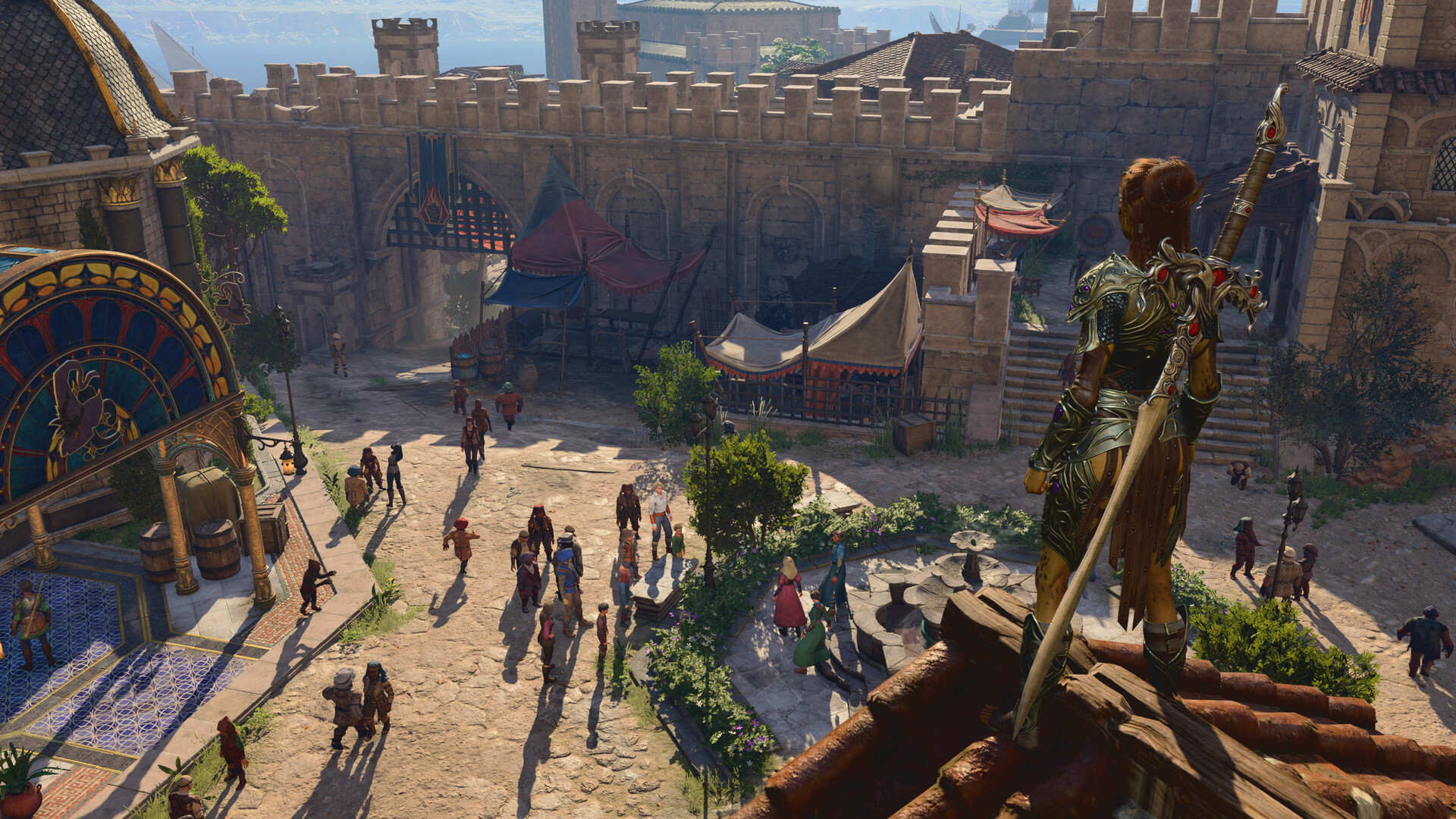
Quick Answer: The top baldurs gate 3 builds are the ones that hit hard, fit a clear party role, and stay easy to pilot under pressure—think Lockadin, Gloomstalker Assassin, and other synergy-heavy setups that work even in Honour Mode.
What Makes a Build Top-Tier in BG3
The best Baldur’s Gate 3 builds are the ones that do three things at once: they solve a problem in combat, they are simple enough to use without brain-melting micromanagement, and they scale cleanly with gear and level-ups. That sounds obvious, but it matters a lot in BG3 because a “good damage build” can still feel awful if it misses its turns, eats concentration every round, or needs three setup pieces that you do not have yet.
A strong build also needs to respect the game’s structure. BG3 has 12 classes and at least 4 subclasses in each class Source, which means the ceiling for weird synergy is sky-high. That’s why the community keeps circling back to a few builds that are easy to recommend across difficulties. In the current meta, the most popular “top baldurs gate 3 builds” usually share a few traits: they attack multiple times, they convert a stat into damage more than once, they get value from mobility or initiative, and they don’t collapse if one spell slot gets burned early.
Another important fact: many build lists for BG3 are created with Honour Mode in mind, and the best ones are still viable on lower difficulties. One tier-list author notes that all the listed builds are made at Honour Mode, while also saying the game is beatable on any difficulty with them Source. That’s a useful framing for this guide. If a build is good enough to survive the most punishing mode, it usually becomes extra comfy in Tactician, Balanced, and co-op runs where your friends are “helping” by standing in the fire.
There’s also a pacing reality to BG3. A full main-story run is about 73.1 hours, while extras push it to 116.74 hours, and completionist play sits around 181.09 hours Source. So a build that is strong at level 12 but miserable for half the campaign is not really a top build in practice. The best ones feel usable in Act 1, stabilize in Act 2, and start turning into supervillain energy by Act 3.
Build Identity: The Best “One-Character Carry” Options
The cleanest way to think about top Baldur’s Gate 3 builds is as role-first packages, not just class labels. A real top-tier build should answer a question for your party: “Who opens fights, who deletes priority targets, who controls the field, or who keeps everybody alive?” If a build cannot answer that, it’s usually more style points than substance.
1) Lockadin: melee burst with absurd action economy
Lockadin is the classic “I hit the enemy, then I hit them again, then I politely ask the boss to reconsider existing” setup. It’s a multiclass that leans on Paladin and Warlock synergies, and one tier-list source specifically calls it the top dog of Tactician and Balanced thanks to the interaction between Extra Attack and Deepened Pact, which can allow 3 attacks per action point Source. That same source flags the interaction as potentially bugged, so it’s the kind of build you should treat like a power tool: amazing, but keep an eye on patches.
This build is ideal if you want:
- front-line presence
- huge single-target burst
- a very straightforward turn plan
- strong scaling with smites and weapon buffs
It shines in fights like the goblin camp bosses, Ketheric-style boss checks, and any encounter where reaching one high-value target matters more than spreading damage.
2) Gloomstalker Assassin: opener and cleanup artist
Gloomstalker Assassin is one of the most reliable “go first, erase something, vanish” builds in BG3. It thrives in ambushes, high initiative, and ranged pressure. If your party likes starting fights on your terms—say, from the rafters in the Goblin Camp, the high ground around the Moonrise Towers approach, or behind a doorway before a bad guy gets cute—this is your kind of chaos.
This build is ideal if you want:
- opening-round dominance
- strong ranged damage
- easy target selection
- excellent battlefield tempo
3) Control caster or support hybrid: the safety net
A top-tier control build does not always have the biggest damage screenshot, but it wins fights by making enemy turns bad. Think of it as the party’s “no, you don’t get to play today” button. In BG3 terms, that means spells and abilities that lock down chokepoints, break enemy formations, or turn enemy casters into decorative scenery.
This style is ideal if you want:
- fewer risky fights
- better control in Honour Mode
- more value in long encounters
- a build that helps any party composition
Quick comparison of top builds
| Build | Best Role | Strength | Main Risk |
|---|---|---|---|
| Lockadin | Melee carry | Massive burst and strong action economy | Can be patch-sensitive if a synergy is adjusted |
| Gloomstalker Assassin | Opener / striker | Wins initiative and deletes targets early | Can feel less dominant if fights start at close range |
| Control caster | Battlefield control | Safer encounters and better enemy shutdown | Needs good spell timing and concentration discipline |
If you’re hunting for the top baldurs gate 3 builds in the current meta, these three archetypes are the ones most players keep coming back to because they do something immediately useful. They are not just strong on paper; they are strong in messy real fights where surprise rounds fail, ranged enemies hide on ledges, and someone in the party forgets what “high ground” means.

You might also like
- Baldur's Gate 3 how save arabella daughter mother father thief locke komira kagha snake tieflings
- Baldur's Gate 3 action economy explained regular standard bonus free reactions all actions
- Baldur's Gate 3 losiir laezel origin character role death loot good why
- Baldur's Gate 3 Is There Crossplay Updated 8/3/2023 Crossplay for is currently unavailable Beginner Guide
- Baldur's Gate 3 where find missing shipment risen road act one
Stat and Attribute Priorities
The best stat priorities for BG3 builds are the ones that make your core plan work before you start chasing luxury bonuses. If you over-invest in cute secondary stats too early, you end up with a character who is technically versatile and practically mediocre. That is not the vibe.
For most of the strongest builds, stats should be ordered around three questions: what makes my main attacks land, what makes my key class features scale, and what keeps me alive long enough to use them again. Because BG3 has a lot of build routes, the exact priority changes by class, but the logic stays the same.
Recommended priority list for top builds
Primary attack stat
This is usually Strength, Dexterity, or Charisma depending on whether you are a melee bruiser, a ranged striker, or a spell-powered multiclass. For example, Lockadin tends to care deeply about Charisma for class synergy, while a Gloomstalker-style build often values Dexterity for initiative, accuracy, and ranged damage.Constitution
Constitution is your anti-regret stat. It keeps front-liners alive through the Nere-style “why are there six enemies in my face” moments and helps casters maintain concentration through stray arrows, AoEs, and general BG3 nonsense.Dexterity or Charisma, depending on the build’s identity
If you are already on your core stat, your next best choice often improves initiative, defense, or save pressure. A Paladin/Warlock hybrid might push Charisma harder, while a stealth archer build may lean into Dexterity for armor class and first-turn control.Wisdom
Wisdom helps with perception, common saving throws, and resisting the kind of enemy effects that turn a clean fight into a clown show. This matters especially in fights with charm, fear, or control pressure.Strength or Intelligence, depending on the build
These are often dump-or-flex stats for many top builds. Strength matters if you want carrying capacity or throw options, while Intelligence is usually not your priority unless your build explicitly wants it.
Stat priorities by build type
| Build Type | Priority 1 | Priority 2 | Priority 3 | Why it matters |
|---|---|---|---|---|
| Lockadin | Charisma | Constitution | Strength or Dexterity | Keeps smites, dialogue, and survivability aligned |
| Gloomstalker Assassin | Dexterity | Constitution | Wisdom | Improves initiative, accuracy, and safety |
| Control caster | Spellcasting stat | Constitution | Dexterity or Wisdom | Helps land spells and keep concentration |
| Melee bruiser | Strength | Constitution | Dexterity | Boosts hit chance and front-line durability |
The important thing is not to chase perfect math at the expense of actual combat flow. A lot of top builds in Baldur’s Gate 3 become top-tier because their stats support a simple game plan, not because they have the prettiest character sheet. The game rewards builds that do their job on turn one. If your character needs four setup actions before they are “online,” you are probably using a hobby project, not a carry build.
Also, don’t forget the practical side of BG3’s long campaign length. Since a main-story run can take 73.1 hours and a completionist run can reach 181.09 hours Source, you want stats that stay relevant from early Act 1 through late Act 3. That is why durable, low-maintenance stats like Constitution are never really “wasted,” even on damage-focused setups.
Rotation and Ability Priority
The best BG3 build rotations are usually not complicated combos; they are priority systems that tell you what to do first, what to save for priority targets, and what to spend when the fight turns ugly. Baldur’s Gate 3 is not an MMO with 12-minute opener spreadsheets. It rewards the player who knows when to spend burst and when to keep a little gas in the tank.
Lockadin priority system
Pre-buff before entering combat when possible
If you know a fight is coming, prep your weapon, positioning, and any support effects you can safely maintain. This is especially useful before boss fights like those in Act 2 and Act 3 where the first round can decide the tempo.Open with your highest-impact attack on the priority target
Use your strongest hit package on the enemy that can most quickly swing the fight. On a Lockadin, that usually means a smite-enhanced melee strike into something that matters, not a random minion living its best life.Spend extra attacks on the same target unless a cleanup kill opens space
The strength of the build is focused pressure. If one enemy is almost dead and another is dangerous, finish the kill only if it changes the board. Otherwise, keep smashing the big problem.Use mobility to stay on top of key enemies
A top build is not just about damage. It is about being in the right place to use it. If your target runs, reposition aggressively rather than wasting turns drifting around the map.Reserve utility for emergencies
Defensive spells, healing, or crowd control are there to stop your turn from collapsing, not to replace your main offense.
Gloomstalker Assassin priority system
- Start fights from stealth or from a favorable angle
- Shoot or strike the highest-value target first
- Use the opening-round burst to create action advantage
- Reposition after the first exchange if the battlefield allows it
- Save control or utility for when you miss a kill and need to stabilize
This is the build equivalent of speedrunning a problem. If the enemy wizard, archer, or support unit can be removed before acting, the fight gets dramatically easier. Good examples are fights in tight indoor spaces, ledge-heavy areas, or rooms where line of sight can be broken after your first volley.
Control caster priority system
- Open with battlefield control, not damage, when the enemy has the better position
- Lock chokepoints or cluster enemies for allied damage
- Target enemy casters and ranged units that can disrupt concentration
- Refresh control when the enemy starts to break formation
- Use direct damage only when the board is already stabilized
The reason this matters is simple: top builds are not just damage per round calculators. They are fight-solvers. The best players in BG3 usually think in terms of encounter flow, not just raw output. If you can force a boss to spend its turn moving, miss, or wasting actions, you effectively gained damage without even rolling the dice.
Gear and Loadout Table
The best gear for top Baldur’s Gate 3 builds is the gear that strengthens the build’s core loop instead of distracting from it. A Lockadin wants weapons and armor that support repeated melee pressure. A Gloomstalker wants items that help with initiative, accuracy, stealth, or ranged damage. A control caster wants gear that protects concentration and amplifies spell reliability.
Because BG3 has many loot routes and build paths, the safest way to choose loadout items is by slot and purpose rather than pretending every player will find the exact same drop in the exact same order. That’s especially true when you are planning for long runs across a campaign that can stretch well beyond a hundred hours with extras Source.
Sample loadout priorities
| Slot | Item Type / Example | Reason |
|---|---|---|
| Weapon | Strong melee weapon for Lockadin, or a reliable bow/crossbow for Gloomstalker | Supports the build’s main damage source without awkward setup |
| Off-hand / Shield | Defensive shield or damage-supporting off-hand | Improves survivability or action efficiency depending on role |
| Armor | Medium or heavy armor for front-liners; stealth-friendly gear for strikers | Keeps you alive while matching your playstyle |
| Helmet | Any item that boosts initiative, saving throws, or class-relevant stats | Helps you act early and survive control effects |
| Gloves | Damage gloves, weapon enhancers, or spell-support gloves | Usually one of the easiest places to squeeze extra power |
| Boots | Mobility boots or positioning tools | Great for closing gaps, escaping danger, or setting up ranged angles |
| Amulet | Class-relevant amulet or concentration support | Often a silent MVP in longer fights |
| Ring 1 | Accuracy, damage, or save support | Small bonuses add up fast across a long campaign |
| Ring 2 | Defense, utility, or spell synergy | Helps round out the build’s weak spots |
Practical examples by build
For a Lockadin, useful gear examples include a weapon that improves melee reliability, armor that lets you stay in the fight, and support items that make smites or class features more consistent. A shield can be excellent if you value staying power, while two-handed pressure works if you want your burst turns to hit like a truck.
For a Gloomstalker Assassin, good examples include bows, crossbows, light or stealth-friendly armor, and items that make the first round easier to win. Anything that improves initiative or positioning tends to be gold, because this build is all about making the first exchange unfair.
For a control caster, look for gear that protects concentration, increases spell reliability, or improves defenses so you survive long enough to keep casting. The exact piece matters less than the job it does: if your spell kit falls apart after one hit, the gear is not doing enough.
Budget vs endgame gear approach
| Stage | Gear Goal | What to Prioritize | Example Play Pattern |
|---|---|---|---|
| Early game | Functional basics | Accuracy, armor, and one reliable weapon | Win fights with simple attacks and positioning |
| Mid game | Synergy pieces | Better class support and survivability | Start leaning on stronger class features |
| Endgame | Full build expression | Best-in-slot power and specialization | Your turns become repeatable, explosive, and efficient |
When you are evaluating gear, ask one question: does this make my turn better every time, or only in perfect circumstances? The top Baldur’s Gate 3 builds usually prefer the first answer. That’s the difference between a build that looks fancy in a screenshot and a build that clears nasty encounters without sweating through your keyboard.
Budget vs Endgame Variants
The best budget version of a BG3 build is the one that plays like the endgame version in miniature, even if the numbers are smaller. You should be able to recognize the same combat plan at level 3, level 6, and level 12, just with less polish. That way the build doesn’t feel like a shopping list waiting for Act 3.
Lockadin: starter to endgame
Budget version
- Use whatever reliable melee weapon you can find early
- Wear your best available armor, even if it is not “ideal” yet
- Prioritize a simple attack-and-smite loop
- Lean on party buffs to cover weak spots
Endgame version
- Move into the full Paladin/Warlock synergy route
- Build around multiple attacks and high-impact burst turns
- Add gear that reinforces your attack stat and frontline durability
- Start treating each round like a mini boss fight
The reason this build stays popular in the current meta is that it feels powerful before it is fully assembled. Even if the exact Extra Attack + Deepened Pact interaction gets adjusted later, the core fantasy of “walk up and fold the enemy” is still fundamentally strong.
Gloomstalker Assassin: starter to endgame
Budget version
- Use stealth, surprise, and basic ranged weapons
- Prioritize initiative and accuracy wherever possible
- Focus on killing one target cleanly instead of splitting damage
- Keep the build mobile and low-risk
Endgame version
- Stack gear that rewards opening-round pressure
- Chain first-turn burst with kill confirmations and repositioning
- Use the build’s initiative advantage to control the pace of the map
- Turn every ambush into a fight-ending event
This build is forgiving because its budget version already resembles its endgame purpose. That’s a huge plus for players who want one of the top baldurs gate 3 builds without waiting forever for the final pieces.
Control caster: starter to endgame
Budget version
- Use basic control spells with good coverage
- Focus on chokepoints, elevation, and enemy clustering
- Pick utility that helps the whole party
- Protect concentration as much as you can
Endgame version
- Upgrade to stronger control combinations
- Layer battlefield effects with ally burst damage
- Use positioning and resistances to force enemy waste
- Keep the fight in your preferred shape from round one
Cheapest substitutes that still make sense
| Build | Cheap Starter Substitute | Why It Works |
|---|---|---|
| Lockadin | Best early melee weapon you can obtain | Keeps the core loop intact before premium gear appears |
| Lockadin | Any armor that improves survivability | Lets you stay in melee long enough to matter |
| Gloomstalker Assassin | Reliable ranged weapon from early vendors or loot | Supports the opening-round plan immediately |
| Gloomstalker Assassin | Stealth-friendly armor | Helps the character play like an ambush striker, not a random archer |
| Control caster | Basic spell focus or defensive utility gear | Preserves the build’s most important job: surviving and controlling |
The budget-vs-endgame lesson is pretty simple: don’t wait to have “the perfect setup” before enjoying the build. If the build identity is real, it should function with scraps. That is what separates a true top build from a fragile late-game meme.
Counters and Hard Matchups
The hardest matchups for top BG3 builds are the ones that break your normal rhythm, deny your opening move, or punish concentration and positioning. A build can be fantastic in a vacuum and still get bullied by enemies that force awkward movement, sudden focus fire, or terrain problems.
What shuts these builds down
Heavy crowd control
- If your Lockadin or melee striker gets held, feared, stunned, or otherwise sidelined, your damage plan stalls.
- Examples include fights where enemy casters or special effects force you to spend turns recovering instead of attacking.
High-ground denial and line-of-sight problems
- Gloomstalker-style builds hate losing their opening angle.
- If you cannot reach a clean shot or start from stealth, your first-turn advantage shrinks.
Concentration pressure
- Control casters fall apart when they get clipped repeatedly or forced into bad saves.
- Random arrows, AoEs, and fast melee enemies are the usual gremlins here.
Enemies that punish overcommitment
- Some encounters bait you into diving too hard, then isolate or surround you.
- If you chase one target too far, you may spend the rest of the fight regretting that very confidently.
Fight setups with surprise interruptions
- Ambushes, reinforcements, or terrain-based complications can mess with a build that expects a perfect opener.
- These are the fights where a “top” build still needs a real plan instead of vibes and hope.
How to adapt
Carry a backup plan for your main role
If your striker gets controlled, have another party member ready to pressure the same target. If your controller loses concentration, switch to direct damage or reposition.Respect positioning more than usual
Don’t stand where enemies can freely dogpile you. High ground, choke points, and doorways are not optional flavor; they are survival tools.Use consumables like a responsible goblin
If a fight is going sideways, use mobility and recovery tools instead of saving everything for a mythical “later.” BG3 absolutely rewards the player who uses the potion now.Focus on enemy pieces that disable your build first
Enemy casters, archers, and control units often matter more than the big bruiser in front. If they can stop your turn, they deserve immediate attention.Be willing to play slower in bad matchups
Some fights are not about sprinting to the finish. They are about making the enemy spend actions badly while your team keeps the board under control.
That last point is especially important in Honour Mode-style play, where a single bad round can swing the whole encounter. Tier-list authors often stress that knowledge of encounters matters just as much as build choice Source. That is absolutely true here. Even the strongest build in the world looks silly if it gets tricked into standing in the wrong place.
Common Mistakes
The most common mistakes with top Baldur’s Gate 3 builds come from overcommitting to raw damage, ignoring positioning, or trying to force endgame theorycraft too early.
Chasing the “perfect” multiclass too early
Players see the final build and rush toward it without a functional early-game plan.
Why it happens: Build videos and tier lists make the final version look easy.
Fix: Keep the build’s core loop alive at every level, even if you are using simpler attacks and cheaper gear.Dumping Constitution on a frontline build
Players get greedy and max offense while leaving survivability thin.
Why it happens: Big damage numbers are fun; getting one-shot is not.
Fix: Keep enough Constitution to survive the rounds where the enemy actually gets to play.Ignoring initiative and positioning
Players assume raw power will rescue them after a bad opening.
Why it happens: “I’ll just kill it first” sounds reasonable until you go second.
Fix: Prioritize movement, line of sight, and early-turn advantage, especially for Gloomstalker-style builds.Burning all resources on trivial fights
Players spend every major cooldown on a random trash encounter, then enter the boss room tired and understocked.
Why it happens: The game keeps tossing fights at you, and resource discipline is hard.
Fix: Save key burst tools for elite enemies, bosses, or encounters with multiple dangerous targets.Treating concentration like a bonus instead of a core resource
Players cast a control spell and then stand in the open like the battlefield owes them a favor.
Why it happens: Concentration loss often feels random until it ruins a plan.
Fix: Build and play around maintaining concentration with cover, distance, or defensive gear.Assuming one build solves every encounter the same way
Players expect the same opener to work in every room.
Why it happens: Success breeds autopilot.
Fix: Adapt to indoor fights, choke points, ambushes, and enemy casters with flexible priorities.
Pro Tips
The best advanced tips for BG3 builds are the ones that make your good turns feel unfair and your bad turns feel manageable.
Tip 1. Plan fights around the first round, not the last
If you can identify the dangerous target before combat starts, you can position for it before initiative is rolled. That matters a lot for Lockadin and Gloomstalker builds, because their strongest turns usually happen immediately.
Tip 2. Save movement for the turn that matters
A lot of players waste mobility on minor repositioning. Keep enough movement in reserve to reach the enemy that actually changes the fight, especially when a caster or archer is hiding behind melee bodies.
Tip 3. Force enemies through doors and chokepoints
BG3 loves cramped spaces, and so should you. Doorways, stairs, and narrow corridors can turn a chaotic encounter into a controlled funnel, which is especially helpful for control casters and ranged burst builds.
Tip 4. Use your strongest resource only when it changes the board
If a smite, high-impact spell, or burst cooldown does not help you secure a kill or lock down a key target, consider holding it. Strong players often win by spending less, not more.
Tip 5. Respect enemies that break concentration or tempo
Some enemies are not “tankier”; they are more annoying. Target the ones that interrupt your plan, even if their health bar is not the biggest one on screen.
Tip 6. Build for the campaign you actually play
If you are in a casual co-op run, your friends may create chaos that makes pure opener builds less reliable. If you are soloing Honour Mode, you may value safety and consistency over peak burst. The same build can be top-tier in one context and merely fine in another.
FAQ
What are the best top baldurs gate 3 builds for beginners?
The easiest strong options are usually Lockadin, Gloomstalker Assassin, and straightforward control casters because they have clear turn plans and do not require crazy mechanical juggling.
Is Lockadin still one of the best builds in BG3?
Yes, Lockadin is still widely regarded as one of the strongest melee multiclass options, especially because of its attack economy and burst potential, though specific synergies can be patch-sensitive.
Do I need Honor Mode knowledge to use a strong build?
No, but it helps a lot. One tier-list source specifically notes that build power alone does not guarantee Honour Mode success; encounter knowledge matters too Source.
Are the best builds different on lower difficulties?
Sometimes they are easier, not different. The same strong setup often feels even better on lower difficulties because the build’s synergies get more room to breathe.
Should I build around gear first or class first?
Class and playstyle come first. Gear should support the build’s core job, not force you into a weird shape just because one item looks shiny.
Can one character carry a whole party?
Yes, but it is much easier if the rest of the team supports the carry with buffs, control, healing, or another source of damage.
Related Guides
- Baldur's Gate 3 Best Classes Guide
- Baldur's Gate 3 Best Party Compositions
- Baldur's Gate 3 Honour Mode Tips
- Baldur's Gate 3 Beginner Guide
- Baldur's Gate 3 Multiclassing Guide
- Baldur's Gate 3 Best Gear by Act
- Baldur's Gate 3 Companion Build Guide
Sources
- https://gamestegy.com/post/bg3/990/best-builds-tierlist
- https://deltiasgaming.com/best-baldurs-gate-3-builds-all-classes-and-companions/
- https://howlongtobeat.com/?q=bg3
See also
- Baldur's Gate 3 List of features and items that interact with unarmed strikes
- Baldur's Gate 3 baldurs gate 4 origin characters return good why
- Baldur's Gate 3 best actions the classes that can use them
- Baldur's Gate 3 what to do act one companions goblins skills
- Baldur's Gate 3 how get ritual dagger location perks characters best
- Baldur's Gate 3 dark urge romance reactions astarion laezel shadowheart
- Baldur's Gate 3 dungeons and dragons spells players expect work same: what actually changes
- Baldur's Gate 3 next update patch 2 origin character epilogues explained
- Baldur's Gate 3 patch 6 legendary actions dror ragzlin karniss: Patch Notes Explained
- Baldur's Gate 3 Legion of Bees: Mighty Teleport class action
スクリーンショット



レビュー担当
BG3 Hub Editorial
専門分野: Editorial team behind BG3 Hub. Content is compiled from official patch notes, community wikis, and playthrough notes, then reviewed and updated on schedule.
出典
🔥 急上昇ワード

Baldur's Gate 3 baldurs gate 3 2026 builds: Tavern Brawler Thrower Build
2026年向けの実用的なBG3ビルドガイド。Tavern Brawler、Berserker Frenzy、ステータス、装備、対策、予算別差し替えまでまとめて解説。
Baldur's Gate 3 Initiate Umberlantsの儀式作法
Initiate Umberlantsの儀式作法についての書物ガイド。内容、入手場所、儀式呪文との違いまでまとめています。
Baldur's Gate 3 の Losiir、Lae'zel origin キャラ役割・死亡・戦利品・使い道まとめ
LosiirはNautiloidのプロローグでLae'zelの代わりに登場し、クラッシュで死んで、浜辺に戦利品を残します。何をするのか、なぜ重要なのかを解説。
Baldur's Gate 3でBloodlessを治す方法
BG3でBloodlessを最速で治す方法を解説。Long Rest、Lesser Restoration、Lay on Handsの使い方に加えて、対処法とコツも紹介します。
📋 パッチノート解説
🛠️ 人気ツール
よくある質問
ガイドの要点を即答 · 質問をクリックで展開。
What are the best top baldurs gate 3 builds for beginners?
The easiest strong options are usually Lockadin, Gloomstalker Assassin, and straightforward control casters because they have clear turn plans and do not require crazy mechanical juggling.
Is Lockadin still one of the best builds in BG3?
Yes, Lockadin is still widely regarded as one of the strongest melee multiclass options, especially because of its attack economy and burst potential, though specific synergies can be patch-sensitive.
Do I need Honor Mode knowledge to use a strong build?
No, but it helps a lot. One tier-list source specifically notes that build power alone does not guarantee Honour Mode success; encounter knowledge matters too Source.
Are the best builds different on lower difficulties?
Sometimes they are easier, not different. The same strong setup often feels even better on lower difficulties because the build’s synergies get more room to breathe.
Should I build around gear first or class first?
Class and playstyle come first. Gear should support the build’s core job, not force you into a weird shape just because one item looks shiny.
Can one character carry a whole party?
Yes, but it is much easier if the rest of the team supports the carry with buffs, control, healing, or another source of damage.
このガイドは役に立ちましたか?
改善のため、このガイドを評価してください。
Share your own tip
Found something not in the guide? Submit it below — our editors review every tip before publishing. No account required.