 Baldur's Gate 3
Baldur's Gate 3 Legion of Bees: Teleport class action
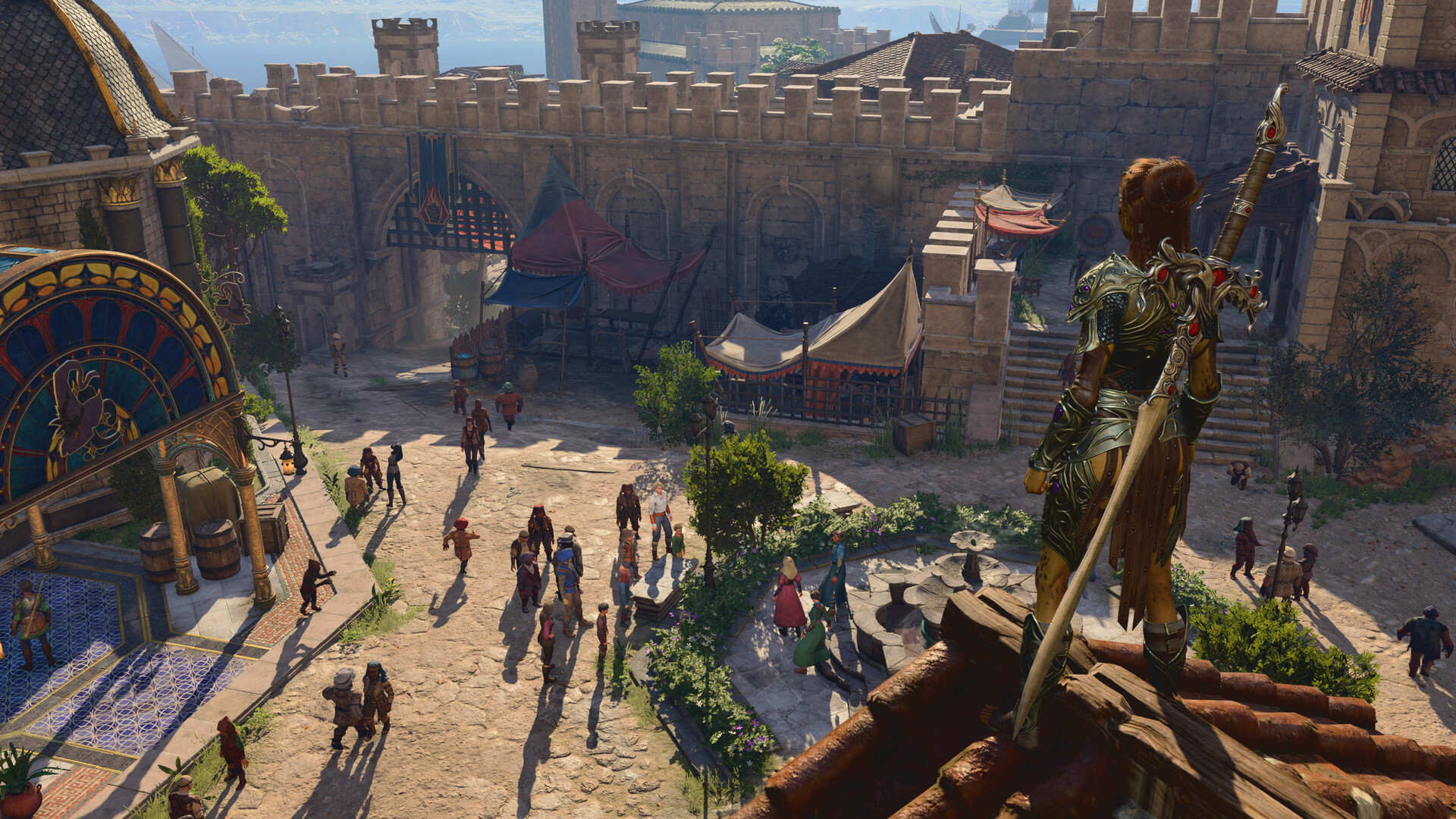
Quick Answer: Baldur's Gate 3 Legion of Bees: Teleport class action is a free-action Swarmkeeper Ranger feature that lets your bee swarm move you a short distance after you hit an enemy, giving you a built-in reposition tool once per turn.
What Baldur's Gate 3 Legion of Bees: Teleport class action does
Baldur's Gate 3 Legion of Bees: Teleport class action is the Swarmkeeper Ranger’s movement-focused swarm option, and it functions as a free action that can be triggered once per turn after you hit an enemy. The effect is simple but very strong in practice: your swarm carries you to a new, safer location instead of spending your normal action economy on movement. In the available game data, the teleport is described as a short-distance reposition, with Fextralife listing its range as 5 m, while bg3.wiki identifies it as a once-per-turn trigger tied to landing a hit. Source Source
That means the action is not a spell slot, not a long-rest resource, and not a general teleport command you can use on demand. It is specifically part of the Swarmkeeper’s Legion of Bees package, which also includes offensive and control alternatives. The same feature family is grouped on bg3.wiki alongside the other swarm variants, including Cloud of Jellyfish, Mighty Flurry of Moths, Mighty Legion of Bees, and Mighty Mighty Swarm, which is a useful clue that this is one of the subclass’s core identity pieces rather than a side bonus. Source
The practical value is that it lets you stick to a target, escape danger, or adjust your angle after committing to an attack. If you are already building around Ranger mobility, ranged pressure, or battlefield spacing, this swarm teleport is one of the cleaner movement tools in the subclass.
Definition, limits, and exact requirement block
Legion of Bees: Teleport is a Swarmkeeper Ranger class feature, and you only get it if you have chosen the Legion of Bees swarm option in that subclass. The exact requirement shown in the source material is that it is available to Swarmkeeper rangers who selected Legion of Bees, and it can be triggered once per turn when hitting an enemy. Source
Core effect and restrictions
- Type: Free action
- Class: Ranger
- Subclass: Swarmkeeper
- Swarm choice: Legion of Bees
- Trigger: After hitting an enemy
- Limit: Once per turn
- Movement: Teleports you a short distance
- Listed range: 5 m on the Fextralife entry Source
That combination matters because free actions in Baldur’s Gate 3 are the game’s way of letting you do something without consuming the same budget as your main action or bonus action. In other words, the teleport is not competing with your main attack sequence in the same way a spell like Misty Step would, and it is not asking you to give up your bonus action for Hunter’s Mark, off-hand attacks, or a similar class staple. It is closer to a rider effect attached to doing what Rangers already want to do: land hits.
What the swarm package implies
The swarm options listed on bg3.wiki include the bee teleport, the bee attack, and the bee knockback variant as neighboring entries under the same feature cluster. That tells you the Legion of Bees is designed around tactical branching: one option moves you, one adds damage, and one shoves the target away. For example, the bee attack is described as dealing 1d6 Piercing damage, while the knockback version pushes a target back 5 m / 17 ft with a Strength save. Source
That comparison matters because it frames the teleport as the positioning branch rather than the damage branch. If you choose Legion of Bees: Teleport, you are effectively saying, “I value board control and self-preservation over raw swarm damage or push utility.” That is a legitimate trade in BG3, especially on difficulties and encounters where getting out of melee range without spending your whole turn is often worth more than a small damage bump.
A concrete way to think about the limit
Because it is once per turn, you cannot use the teleport to repeatedly hop around during the same turn just by chaining multiple hits. If your Ranger attacks multiple times through Extra Attack later on, the swarm teleport still only appears once for that turn. The same once-per-round/once-per-turn style limitation also explains why it is best treated as a tactical reposition, not a travel tool. You use it to finish your attack from one angle and then vanish to another one, not to cross half the map. Source
You might also like
- Baldur's Gate 3 how save arabella daughter mother father thief locke komira kagha snake tieflings
- Baldur's Gate 3 Is There Crossplay Updated 8/3/2023 Crossplay for is currently unavailable Beginner Guide
- Baldur's Gate 3 baldurs gate 4 origin characters return good why
- Baldur's Gate 3 best actions the classes that can use them
- Baldur's Gate 3 how get ritual dagger location perks characters best
Where to get Legion of Bees: Teleport
You get Baldur's Gate 3 Legion of Bees: Teleport class action by playing a Swarmkeeper Ranger and selecting the Legion of Bees swarm choice. The source pages do not present it as a found item, craftable consumable, or equipment-based granted action; it is a subclass feature, meaning it is unlocked through class progression rather than loot. Source Source
Unlock path in practical terms
- Start or respec into Ranger
- Choose the Swarmkeeper subclass
- Select Legion of Bees as the swarm option
- Use the teleport as the swarm’s movement rider after you hit an enemy
That is the cleanest way to think about the unlock, because the feature is tied to subclass identity. It is not something you find in a chest in the Goblin Camp, learn from a scroll in Sorcerous Sundries, or equip from a weapon like Titanstring Bow or Phalar Aluve. Once you have the subclass feature, it lives on your character sheet as part of the Ranger toolkit. Source
What it is not
This is where a lot of players misread the feature. Legion of Bees: Teleport is not:
- A universal Ranger spell
- A consumable or scroll effect
- A movement action available to other subclasses like Hunter, Gloom Stalker, or Beast Master
- A general “teleport to enemy” button
The bg3.wiki page explicitly associates the feature with the Swarmkeeper subclass, and the neighboring class-feature lists on the page reinforce that it sits among Ranger subclass-specific tools, alongside entries like Dread Ambusher, Ranger’s Companion, Umbral Shroud, and Whirlwind Attack depending on subclass or related class-feature indexing. Source
Examples of when you would actually see it
- A Swarmkeeper Ranger in Act 1 hits a goblin archer and uses the bee swarm teleport to step behind cover.
- A Ranger standing next to a dangerous melee enemy in Moonrise Towers lands a hit and uses the teleport to break adjacency without spending the turn on a normal Disengage-style reposition.
- A ranged build fighting on uneven terrain in the Mountain Pass uses the free action to correct spacing after attacking from high ground.
Those examples are important because the feature’s value is not just “teleport exists,” but “teleport exists after you do the thing Rangers already want to do.” That makes the unlock feel natural rather than gimmicky.
Best uses for the bee teleport in real encounters
Baldur's Gate 3 Legion of Bees: Teleport class action is at its best when movement is worth more than another damage button. The feature shines in fights where positioning decides whether you survive the enemy’s next turn, whether you keep advantage from high ground, or whether you can safely maintain distance after attacking. Because it is a free action once per turn, it rewards smart sequencing and lets you attack before relocating.
Strong use cases
- Breaking melee lock: If a hostile enemy has closed the gap, you can hit them and then relocate before they can answer with an opportunity-heavy exchange.
- Maintaining ranged spacing: Archery Rangers frequently want a clean lane and safe distance. The teleport helps you attack and then re-establish spacing without burning your whole action economy.
- Escaping bad terrain: If you are awkwardly placed near hazards, difficult movement, or cramped corridors, the bee teleport can smooth out your turn.
- Setting up ally turns: You can reposition yourself so allies can move in, flank, or cast area spells without you clogging the same tile cluster.
Encounters and scenarios where it feels especially good
A good example is a narrow battlefield where melee enemies are trying to pin your backline, such as the tighter interiors common in Act 2. Another is a fight on vertical terrain where you attack from one ledge and then teleport to another safe ledge or behind a wall. A third is any engagement where you need to attack and then back away from a character that punishes close range, such as a bruiser or a creature that threatens to trap you in place.
The fact that the source describes the teleport as carrying you to “a safer location” is the key clue here. Source This is not a flashy combat nuke; it is a survival and tempo tool. If you know how to create safe angles, you can get a lot of value out of it every encounter.
When the teleport creates the most value
It usually pays off in three patterns:
Attack first, move second.
This is the normal sweet spot. You spend your action on offense, then use the swarm to fix your position.Secure a kill, then disengage from threat.
If your attack drops one enemy or weakens a dangerous target, the teleport can prevent retaliation from the next foe.Hold formation while avoiding clutter.
In party play, it helps you stop standing exactly where your Cleric, Wizard, or melee frontliner wanted to stand.
Why Rangers especially like it
Rangers often sit in a strange middle ground: they can fight at range, but they also have enough mobility and tactical flexibility to dive into awkward spaces when the encounter demands it. The Legion of Bees teleport supports that hybrid style. It is especially appealing if your build already likes to act after attack sequences, because the free action layer means you are less likely to feel punished for repositioning. It pairs naturally with the idea of a skirmisher, which is exactly what Swarmkeeper tends to feel like in play.
When to skip it or replace the role it fills
Baldur's Gate 3 Legion of Bees: Teleport class action is not automatically the best Swarmkeeper choice, and you should skip it if your build already has better movement tools or if you care more about damage and battlefield control than self-repositioning. The same subclass package includes other swarm branches, and those branches can fit some parties better than the teleport does.
Situations where teleport is less valuable
- You already have strong mobility: If your build regularly uses other movement tools, the bee teleport can become redundant.
- You want more damage per swarm use: The bee attack option exists specifically to add 1d6 Piercing damage, which may be preferable for aggressive builds. Source
- You want forced movement on enemies instead of yourself: The knockback version pushes enemies 5 m / 17 ft with a Strength save, which is often more valuable for cliff fights, hazard setups, and melee disruption. Source
Comparable swarm choices
| Swarm option | Main effect | Best for | When to favor it over teleport |
|---|---|---|---|
| Legion of Bees: Teleport | Move yourself to a safer location | Survival, spacing, skirmishing | When your build needs to reposition after attacking |
| Legion of Bees: Attack | Deal 1d6 Piercing damage | Damage-first turns | When you do not need movement and want more pressure |
| Legion of Bees: Knockback | Push a target back 5 m / 17 ft with a STR save | Cliff kills, hazard setups, enemy disruption | When enemy placement matters more than your own |
This table is the most honest way to compare the options because they answer different tactical problems. Teleport is not “better” in a vacuum; it is better when the action economy and terrain favor a safer exit over extra damage or enemy displacement.
When another subclass may suit you better
If you are playing a Ranger and your main goal is raw combat tempo rather than swarm positioning, one of the other Ranger subclasses may fit better. The bg3.wiki page groups Beast Master, Gloom Stalker, Hunter, and Swarmkeeper under the Ranger subclass umbrella, and that alone is a reminder that Swarmkeeper is one path among several. Source
For example:
- Gloom Stalker is often the pick for ambush-style opening turns.
- Hunter tends to appeal to players who want more straightforward combat specialization.
- Beast Master leans into companion-driven play.
Those are not hard rules, but they are a useful decision frame. If you are not actively benefiting from “teleport after hit” positioning, the bee swarm may be less compelling than a subclass feature that pushes your preferred combat pattern harder.
A simple rule of thumb
Choose the teleport if you often think, “I need to attack and then get out.”
Choose the attack or knockback version if you more often think, “I need this hit to matter more right now.”
That is the real comparison, and it is the kind of decision that matters more than raw novelty.
Troubleshooting common misreads and missed value
Baldur's Gate 3 Legion of Bees: Teleport class action has a few easy failure modes, and most of them come from players assuming it works like a full teleport spell instead of a once-per-turn free-action rider. If the feature feels underwhelming, it is usually because the timing or expectation is off rather than because the ability is bugged.
Common mistake 1: expecting unlimited repositioning
The feature is once per turn, not a repeatable hop chain. If you hit multiple enemies or land several attacks, that does not mean you can keep spending the bee teleport again and again in the same turn. The source grounding is explicit about the once-per-turn trigger. Source
Common mistake 2: treating it like a long-range escape
The teleport is described as a short-distance move, and Fextralife lists the range as 5 m. Source That means you should use it to fix positioning, not to cross an entire battlefield or bypass a major obstacle. If you need true map-crossing, a spell or dedicated movement tool will usually be the better answer.
Common mistake 3: forgetting that it depends on hitting an enemy
The trigger is tied to hitting an enemy. If you miss, you do not get the reposition from that attack. That makes accuracy important, and it also means the feature gets more reliable in turns where you are already confident in landing a hit, such as against an exposed target or an enemy already threatened by your party.
Common mistake 4: using it when the attack order is wrong
Because the teleport happens after the hit, the order of your turn matters. If you were planning to move first and then use your action elsewhere, you may not get the same value. The best way to think about it is “attack, then reposition.” That is what makes the feature flow so well with Ranger play.
Common mistake 5: expecting it to replace all other movement tools
Legion of Bees: Teleport is not a substitute for every mobility option in the game. It is best treated as a flexible bonus layer on top of ordinary movement. In fights where your party needs hard disengage, emergency escape, or vertical travel, other tools may still be better.
Pro tips that actually matter
- Use it after committing to a decisive shot. If you already have the kill line, the teleport is most efficient when you can immediately cash out the positioning benefit.
- Think in terms of safety, not spectacle. Moving to a square that avoids opportunity attacks or enemy clustering is often better than trying to be clever.
- Pair it with terrain awareness. A 5 m reposition can be huge if it drops you behind a wall, onto higher ground, or outside a choke point.
- Do not waste the turn’s swarm choice. If you never needed to move in the first place, consider whether the attack or knockback option would have been more valuable.
The main takeaway is that the feature rewards discipline. It is strongest when you treat it as a tactical correction after making a good attack, not as a flashy rescue button after you have already mispositioned badly.
Related systems and sibling guides
Baldur's Gate 3 Legion of Bees: Teleport class action sits inside the Swarmkeeper Ranger’s broader swarm toolkit, so the nearest useful sibling references are the other swarm options and the Ranger features around them. If you are comparing the bee teleport to other choices, these internal links are the right next stops.
Sibling and nearby guide links
- Legion of Bees: Attack — the damage-focused bee variant
- Legion of Bees: Knockback — the control-focused bee variant
- Swarmkeeper Ranger build guide — how the subclass plays across the full game
- Ranger class feature guide — where Swarmkeeper fits among other Ranger paths
- Gloom Stalker Ranger guide — for players comparing opening-turn burst and mobility
- Hunter Ranger guide — for players who prefer cleaner, more direct combat perks
These are the most relevant siblings because they cover the actual decision tree a Swarmkeeper player faces. The teleport is one branch of a three-way swarm identity, so the most useful comparison is not with generic movement content but with the other Legion of Bees options and nearby Ranger subclass kits.
How this feature fits a larger BG3 run
For a long Baldur’s Gate 3 campaign, a movement rider like this can quietly save more turns than it appears to on paper. BG3 is a game where fights often reward initiative control, terrain abuse, and precise placement, and that is one reason Rangers remain attractive throughout a full playthrough. The game itself is a sizable RPG experience, with HowLongToBeat reporting roughly 73.1 hours for the main story, 116.74 hours with extras, and 181.09 hours for completion. Source That length matters here because a small mobility tool can remain relevant across many encounters, not just in one encounter type.
It also helps to remember how widely played and widely supported the game is. Steam’s official review summary currently reads “Overwhelmingly Positive” at 96.8% positive across 855470 reviews, and about 50948 players are in game on Steam right now. Source That scale is one reason deep subclass mechanics like Legion of Bees keep getting discussed: lots of players are still refining their approaches to the same systems, and niche tools can end up being quietly excellent in the right hands.
Sources
- https://bg3.wiki/wiki/Legion_of_Bees:_Teleport
- https://baldursgate3.wiki.fextralife.com/Legion+of+Bees
- https://howlongtobeat.com/?q=bg3
- https://store.steampowered.com/app/1086940/
See also
- Baldur's Gate 3 dark urge romance reactions astarion laezel shadowheart
- Baldur's Gate 3 dungeons and dragons spells players expect work same: what actually changes
- Baldur's Gate 3 next update patch 2 origin character epilogues explained
- Baldur's Gate 3 patch 6 legendary actions dror ragzlin karniss: Patch Notes Explained
- Baldur's Gate 3 important areas outside baldurs gate act 3
- Baldur's Gate 3 best romances dungeons dragons dnd novels feywild job
- Baldur's Gate 3 Cloud of Jellyfish: Mighty Teleport class action
- Baldur's Gate 3 how pact of the blade works warlock hexblade
- Baldur's Gate 3 how revive characters bring back life dead
- Baldur's Gate 3 best character player creations marvel witcher barbie
Captures d'écran


Relu par
BG3 Hub Editorial
Expertise: Editorial team behind BG3 Hub. Content is compiled from official patch notes, community wikis, and playthrough notes, then reviewed and updated on schedule.
Sources
🔥 Tendances du moment

Baldur's Gate 3 patch 6 : actions légendaires de Dror Ragzlin et Karniss : explication des notes de patch
La mise à jour 6 a ajouté une nouvelle pression du mode Honneur à Dror Ragzlin, au drider et au Shambling Mound. Voici ce qui a changé et ce qu’il faut faire maintenant.
Baldur's Gate 3 : Nuage de méduses : Téléportation puissante
Cloud de méduses : explication de Téléportation puissante dans BG3 — déblocage, effets, limites, meilleures utilisations, et quand choisir une autre option de Swarmkeeper.
Baldur's Gate 3 : explication des épilogues des personnages d'origine dans la prochaine mise à jour, patch 2
Le patch 2 promettait des améliorations de performances et le premier travail sur l’épilogue Origin dans Baldur’s Gate 3. Voici ce qui a changé et ce qu’il faut faire ensuite.
Baldur's Gate 3 Comment soigner Bloodless
Découvrez les façons les plus rapides de soigner Bloodless dans BG3 avec Long Rest, Lesser Restoration ou Lay on Hands, plus des fixes et astuces.
📋 Notes de patch expliquées
🛠️ Outils populaires
Ce guide vous a-t-il aidé ?
Évaluez ce guide pour nous aider à l'améliorer.
Share your own tip
Found something not in the guide? Submit it below — our editors review every tip before publishing. No account required.