 Baldur's Gate 3
Baldur's Gate 3 action economy explained regular standard bonus free reactions all actions
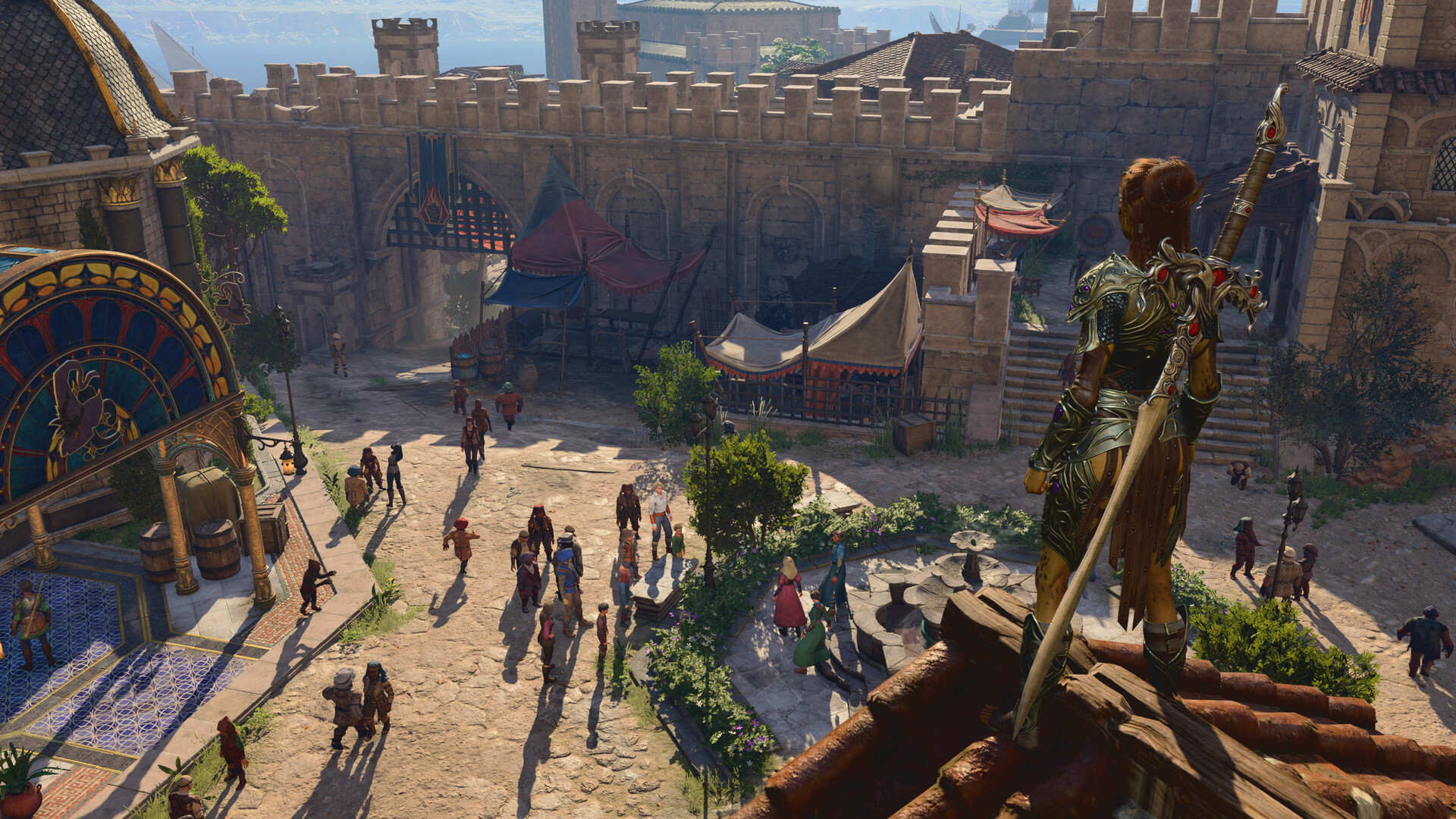
Quick Answer: Baldur's Gate 3 action economy is the turn system that limits each creature to specific spending windows: one main Action, one Bonus Action, and Reaction use outside your turn, with many class features and items modifying those limits.
What It Means
Baldur's Gate 3 action economy explained regular standard bonus free reactions all actions is about how the game divides a turn into limited resources you spend to attack, cast, move, heal, or trigger special abilities. In practice, this means your turn is not just “move and hit.” It is a budget of actions that you must spend deliberately, because unused resources do not carry over to the next turn. The system is the core reason a Fighter, Rogue, Wizard, and Cleric can all feel completely different even when they are standing in the same fight.
At the broadest level, the game uses action-based turn structure in combat and, in some cases, outside combat as well. BG3 wiki describes actions as things a creature can do on its turn, and notes that they are generally used to deal damage, inflict conditions, heal, or aid allies bg3.wiki. That framing matters because many players treat actions as only “attacks,” then miss how much of the combat engine is built around movement, setup, utility, and reaction timing. A good turn is often one where your character does more than one useful thing, even if the turn looks simple from the UI.
There are also important distinctions between regular actions, bonus actions, free actions, and reactions. “Free” or costless actions are not the same as unlimited actions; they are simply things the game lets you do without consuming the main resources. Reactions are especially important because they trigger when conditions are met, usually during another creature’s turn. That means the economy stretches beyond the active character. A well-timed opportunity attack, Shield spell, or Counterspell can be as decisive as a main attack.
The practical effect is that the best turns usually come from sequencing. Example: a Rogue might Hide with a Bonus Action, then attack with the main Action; a Fighter might use Action Surge to squeeze in extra offense; a Cleric might spend an Action on Healing Word-style support only if that spell’s action cost makes sense for the moment. The game rewards asking, for every turn, “What gives me the most value from the limited resources I have right now?”
Definition, Effect, and Limits
The action economy in Baldur’s Gate 3 is the set of per-turn limits that determine how many meaningful things a character can do before ending their turn. The base rule is simple: most characters get one Action and one Bonus Action each turn, and they may also be able to spend or trigger a Reaction when the right condition appears bg3.wiki. Fextralife also notes that all characters can perform at least one Action and one Bonus Action per turn, while abilities such as Action Surge can grant an extra action point baldursgate3.wiki.fextralife.com.
The effect of that system is not just “limits on button presses.” It controls pacing, class identity, and damage spikes. A class with a strong Bonus Action economy, such as Rogue, can translate mobility and stealth into extra value every round. A class with a strong Action economy, such as Fighter, can turn additional Action access into raw output. A spellcaster can burn the Action on a spell and keep the Bonus Action for positioning or a class feature, but many spells and features compete for the same resource, so choosing one can shut out another. This is why the action economy is one of the most important hidden balances in BG3.
Core Resources
| Resource | What it is | Common use cases | Typical limit |
|---|---|---|---|
| Action | Main turn resource | Attack, cast many spells, Dash, Disengage, Help, shove-like utility | Usually 1 per turn |
| Bonus Action | Secondary turn resource | Off-hand attacks, Jump, Hide, Cunning Dash, class features | Usually 1 per turn |
| Reaction | Triggered response | Opportunity attacks, Counterspell, Shield, Sentinel-style responses | Usually 1 when triggered |
| Free action / free interaction | Costless utility | Object handling, some minor interactions, certain special cases | Not a bankable resource |
The most common misread is assuming “regular action” and “bonus action” are just labels for stronger and weaker buttons. They are not. Some Bonus Actions are better than many Actions in the right build, and some classes are built around getting more from Bonus Actions than others. The Rogue is the clearest example because Cunning Dash uses a Bonus Action to Dash instead of the Action, and the Thief subclass can gain two Bonus Actions rather than one, which changes the entire turn structure deltiasgaming.com. That is not a minor convenience; it is a class-defining rules break.
Another key limit is that you cannot bank unused actions for later turns. If you end a round with a spare Action or Bonus Action, it is gone. That point sounds obvious, but it changes play patterns dramatically. It means waiting for a “better” turn is often wrong unless you are deliberately holding position for tactical reasons. The game pays you for spending resources each turn, not for hoarding them.
Examples of how the limits work in real play:
- A Wizard can cast a control spell with the Action, then use the Bonus Action for movement or a class feature if available.
- A Rogue can attack, then Hide or Disengage with the Bonus Action to preserve safety.
- A Fighter can spend an Action on a standard attack and, depending on build and level, layer in extra offense through features like Action Surge.
- A character can also spend a Reaction during another creature’s turn, such as making an opportunity attack when an enemy leaves melee range.

You might also like
- Baldur's Gate 3 how save arabella daughter mother father thief locke komira kagha snake tieflings
- Baldur's Gate 3 losiir laezel origin character role death loot good why
- Baldur's Gate 3 Is There Crossplay Updated 8/3/2023 Crossplay for is currently unavailable Beginner Guide
- Baldur's Gate 3 where find missing shipment risen road act one
- Baldur's Gate 3 baldurs gate 4 origin characters return good why
Where It Comes From and How It Shows Up In Game
You do not find the action economy as a physical item or a single unlock; it is the baseline combat rule set that appears as soon as you start taking turns in Baldur's Gate 3. It becomes visible in the hotbar, the combat log, and the way the UI separates available options into Action, Bonus Action, and Reaction categories. You also feel it in exploration whenever a character feature or item says it uses one of those resources. The system is always there, even when the game does not announce it.
The places where it matters most are class setup, subclass features, and equipment choices. Deltia’s Gaming notes that character actions are based on class and equipment, and gives Rogue as a concrete example: Cunning Dash uses a Bonus Action instead of an Action, while the Thief subclass gains extra Bonus Action access deltiasgaming.com. That is a good model for how BG3 surfaces the economy through class design. You are not “unlocking action economy” in the abstract; you are unlocking ways to spend it more efficiently.
Common Ways It Appears
- Class features: Action Surge, Cunning Action variants, Extra Attack, and similar abilities.
- Subclass features: Thief’s extra Bonus Action, or other subclass-specific resource breaks.
- Spells: many spells consume the Action, while a smaller set are designed around the Bonus Action.
- Reactions: abilities like Shield or Counterspell, which are not spent proactively on your own turn.
- Equipment effects: some gear changes what can be done or when it can be done.
A useful way to think about “where to find it” is to watch the action icons on the bottom bar and the resource pips tied to your turn. If a move is greyed out, it usually means that resource is already spent or the character lacks the required conditions. If a feature is listed as a Reaction, it often has to be enabled or set to Ask/Always on the reactions prompt before it will fire the way you want.
Three in-game examples make the system concrete:
- Rogue with Cunning Dash: a mobility-first turn where Dash is not consuming the Action.
- Thief Rogue: extra Bonus Action access turns Hide plus attack into a repeatable pattern.
- Fighter with Action Surge: a burst turn that temporarily expands what is possible in one round.
The system also changes by context. Outside combat, some actions are tied to exploration, dialogue, or object use rather than strict turn pacing. Inside combat, the turn economy becomes rigid. That is why players who feel comfortable in exploration sometimes get caught off guard when combat starts: the same command that feels free in the world can become a constrained choice in a fight.
Best Uses
The best use of the action economy is to convert every turn into a high-value sequence instead of treating the turn as a single attack plus filler. The more you understand which abilities consume Action, Bonus Action, or Reaction, the more often you can create turns that do multiple jobs at once: damage, positioning, control, and survival. Baldur's Gate 3 rewards that kind of sequencing because fights are often decided by who gets to act more effectively, not just who has the highest single attack number.
One of the strongest patterns is pairing movement with offense. A Rogue can use a Bonus Action to Hide, then use the Action to strike from advantage or safer positioning. A melee character can use a Bonus Action to Jump or reposition, then spend the Action on a meaningful attack or shove. A spellcaster can use the Action on a control or damage spell and keep the Bonus Action available for class-specific utility, if the build has one. The gain is not only efficiency; it is pressure. When your character does two relevant things per turn, the enemy has fewer clean responses.
Strong Use Cases
- Front-loading damage: use Action Surge, Extra Attack, or a high-value spell turn to end threats before they act again.
- Improving safety: spend a Bonus Action on Hide, Disengage-like mobility, or repositioning when staying alive is better than forcing damage.
- Locking down enemies: combine control spells with reactions so opponents lose action value on their own turns.
- Using subclass identity: build around bonus-action-heavy classes like Rogue or around action-heavy bursts like Fighter.
The action economy is also one of the cleanest ways to compare class design without talking past the game. A Thief Rogue’s extra Bonus Action can be better than a generic damage boost if your build leans on mobility, stealth, or item use. A Fighter’s extra Action access can outperform flashy utility in pure combat pressure because it lets the class repeat standard offense while still keeping the turn flexible. Those are different answers to the same question: how do you get more value out of the same turn?
A few practical examples help:
- Rogue with two Bonus Actions from Thief: Hide, move, and still attack or disengage in the same round.
- Fighter using Action Surge: attack, attack again through the surge, and still preserve the turn’s pace for a decisive swing.
- Wizard or Sorcerer using a Reaction spell: hold the spell for the moment an enemy tries to turn the battle.
- Cleric or support class using Action + Bonus Action together: stabilize an ally while still preserving positioning or emergency mobility.
A good rule is to spend resources on outcomes, not labels. If a Bonus Action does more for your turn than an available Action option, use it. If an Action can remove an enemy or force a dangerous position, use it even if it feels “expensive.” The economy is only tight if you leave power unused.
When to Skip or Replace It
You should skip a specific action choice or replace it when the resource cost is too high for the value it creates in that exact round. The action economy is not about always spending everything on offense; it is about not wasting scarce turn value. That can mean ignoring a flashy ability because a simpler move wins the fight more reliably. In Baldur's Gate 3, a bad turn often looks like a flashy turn that fails to change the board.
This is where many players misplay. They use an Action for a low-impact attack when a control spell, reposition, or reaction setup would matter more. Or they spend a Bonus Action on a minor effect when that same bonus would let a Rogue Hide, a Monk trigger class pressure, or a melee character preserve survivability. The right answer changes with encounter structure. If an enemy is already near death, you may not need to optimize for raw damage; if a caster is about to act, the better turn is often the one that prevents that caster from getting value.
When to Skip a Resource Spend
- When moving out of danger is more important than squeezing out one more attack.
- When a control effect will win the round more reliably than direct damage.
- When your reaction is better held for a specific threat, such as an enemy caster or a lethal opportunity attack.
- When the available bonus-action option is weak and saving positioning matters more.
There are also times to replace a normal plan with a class-specific alternative. The Rogue example is the clearest. Deltia’s Gaming highlights that Cunning Dash uses a Bonus Action and that Thief grants two Bonus Actions, which makes the class uniquely mobile while still leaving room for attacks deltiasgaming.com. In that case, you are not “skipping” the economy; you are reassigning it to what the class does best. A Rogue should often replace a generic attack-first instinct with a stealth-first or position-first pattern.
Another replacement case is when action-intensive classes become more efficient by compressing output into fewer turns. Fighters, for example, often aim to convert their Action into repeated damage and then amplify that with action-granting features. Spellcasters may replace repeated damage with a single high-impact control spell that changes enemy action output more than a second attack would. In both cases, the replacement is justified by board impact.
Concrete situations where skipping is correct:
- A low-chance melee attack when stepping behind cover or breaking line of sight will prevent a lethal counterattack.
- A weak bonus action in a turn where a reaction should be preserved for an incoming spell.
- A spell slot or action cost on a target that is already functionally removed from the fight.
- A movement option that wastes positioning when holding a choke point is better.
The guiding principle is simple: every action should pay rent. If a resource spend does not advance damage, safety, control, or positioning enough to matter, do not force it just because the resource exists.
Common Misreads and Troubleshooting
The most common misread is thinking that “action economy” means the game tracks only your own turn. It does not. Reactions happen outside your turn, and enemy turns can force you to decide whether a response is worth the cost. That is why players sometimes feel they “had” the counterplay but never saw it happen. If the reaction prompt is not configured the way you expect, the ability may not trigger when the condition occurs.
Another common mistake is assuming all attacks, spells, and utility moves are interchangeable within the same resource bucket. They are not. Some spells consume the Action, some class features consume the Bonus Action, and some notable abilities can grant extra action access or change the cost structure entirely. The effect is that two characters can appear to have the same number of buttons but very different combat throughput. A Rogue’s Bonus Action mobility, a Fighter’s extra action burst, and a caster’s reaction spell each solve different problems.
Frequent Problems
- Spending the Bonus Action early and then discovering the better use was a Hide, Jump, or class feature.
- Forgetting that Reactions need to be triggered and, in some cases, configured to prompt.
- Trying to “save” an unused Action for the next turn, which the system does not allow.
- Assuming a character’s class-independent baseline is the whole story, when subclass and equipment can change the turn shape.
A second frequent issue is overvaluing raw damage and undervaluing turn efficiency. In BG3, a lower-damage move can be better if it denies enemy action, improves positioning, or creates advantage for the next round. That is why the action economy is not a damage chart; it is a pressure system. If you spend all your resources trying to maximize one number, you may lose the larger exchange.
Three examples of better-than-obvious play:
- A Rogue uses Cunning Dash to reach safety and preserve attack value for the next round.
- A Fighter uses Action Surge in a round where it can actually secure a kill, rather than waiting until the fight is already controlled.
- A caster saves Reaction for Counterspell or Shield instead of spending every turn on proactive offense.
One final misread is treating “free actions” as a loophole for unlimited value. Free interactions are still bounded by game logic, range, and context. They are not a separate infinite economy. If a move feels like it should be free but the UI blocks it, the game is usually enforcing a condition, not hiding a secret resource. When in doubt, read the hover text and compare the resource label carefully.
Related Systems
The action economy connects directly to class design, subclass identity, spell timing, and reaction management, so the nearest useful sibling guides are the ones that explain those systems in practical terms. If you are building around turn efficiency, the most relevant cross-references are Rogue class guide, Fighter class guide, spellcasting guide, and reactions and opportunity attacks guide. Those topics are where the abstract rules become concrete decisions in a build.
The Rogue is the clearest companion system because it showcases how a class can reshape the economy instead of merely consuming it. The Thief subclass, in particular, changes how many Bonus Actions you can spend, which is why it is often discussed alongside mobility and dual-wield patterns. Fighter is the other obvious counterpart because its design rewards hard conversion of Action access into decisive combat turns. Spellcasting matters because many spells are balanced around exact resource costs, so understanding whether something costs an Action, Bonus Action, or Reaction affects not only efficiency but also whether a build can function at all.
Useful Sibling Topics
- Rogue class guide: bonus-action use, stealth turns, and burst sequencing.
- Fighter class guide: Action Surge, Extra Attack, and damage pacing.
- Wizard and spellcasting guide: spell timing, concentration, and reaction spells.
- Reactions and opportunity attacks guide: Shield, Counterspell, and turn interruption.
- Combat basics guide: initiative, turn order, and battlefield positioning.
The reason these systems belong together is that the action economy is the bridge between rules and results. A class feature is only as strong as the turn structure it fits into. A weapon is only as good as the action cost to use it. A spell is only as valuable as the turn window it occupies. That is why experienced players read new gear and class options through the lens of “what does this do to my available Action, Bonus Action, or Reaction?”
This is also where build planning becomes sharper. If your party already has strong reaction coverage, another reaction-heavy character may have diminishing returns. If your frontline is crowded with action-hungry melee classes, a support character that converts Bonus Actions into utility may add more overall value. The economy is party-wide as much as it is individual. That is the part many guides miss when they reduce it to a beginner glossary.
Sources
- https://deltiasgaming.com/baldurs-gate-3-action-bonus-action-explained/
- https://bg3.wiki/wiki/Actions
- https://baldursgate3.wiki.fextralife.com/Actions
See also
- Baldur's Gate 3 best actions the classes that can use them
- Baldur's Gate 3 what to do act one companions goblins skills
- Baldur's Gate 3 how get ritual dagger location perks characters best
- Baldur's Gate 3 dark urge romance reactions astarion laezel shadowheart
- Baldur's Gate 3 dungeons and dragons spells players expect work same: what actually changes
- Baldur's Gate 3 next update patch 2 origin character epilogues explained
- Baldur's Gate 3 patch 6 legendary actions dror ragzlin karniss: Patch Notes Explained
- Baldur's Gate 3 Legion of Bees: Mighty Teleport class action
- Baldur's Gate 3 important areas outside baldurs gate act 3
- Baldur's Gate 3 best romances dungeons dragons dnd novels feywild job
スクリーンショット



レビュー担当
BG3 Hub Editorial
専門分野: Editorial team behind BG3 Hub. Content is compiled from official patch notes, community wikis, and playthrough notes, then reviewed and updated on schedule.
出典
🔥 急上昇ワード

Baldur's Gate 3 の Losiir、Lae'zel origin キャラ役割・死亡・戦利品・使い道まとめ
LosiirはNautiloidのプロローグでLae'zelの代わりに登場し、クラッシュで死んで、浜辺に戦利品を残します。何をするのか、なぜ重要なのかを解説。
Baldur's Gate 3でBloodlessを治す方法
BG3でBloodlessを最速で治す方法を解説。Long Rest、Lesser Restoration、Lay on Handsの使い方に加えて、対処法とコツも紹介します。
Baldur's Gate 3 の「Blocked by Bhaalist Mischief」状態
Bhaalist Mischief の扉条件の意味、解除方法、発生場所、そしてなぜ Farslayer が重要なのかを解説。
Baldur's Gate 3 Home Post Dispatch: Fist Krill
Home Post Dispatch: Fist Krillとは何か、BG3のどこに位置づけられるのか、そしてこのFlaming Fistの伝承アイテムを残すべきか飛ばすべきかを解説。
📋 パッチノート解説
🛠️ 人気ツール
このガイドは役に立ちましたか?
改善のため、このガイドを評価してください。
Share your own tip
Found something not in the guide? Submit it below — our editors review every tip before publishing. No account required.